The atmosphere at Sotheby’s was electric. When the world’s most enigmatic coin finally came to the block, the numismatic community held its breath. The 1933 double eagle auction was more than just a sale; it was a historic event decades in the making, the culmination of a story involving presidents, kings, and federal agents. The final gavel strike at $18.9 million shattered every existing record, reaffirming the power of provenance and rarity. This sale wasn't just a transaction; it was a landmark moment that sent ripples through the market, reshaping perceptions of what is possible for the world’s most sought-after tangible assets.
- A Coin's Story Is Its Greatest Asset: The 1933 Double Eagle's value is driven by its incredible history. Its journey from a presidential gold recall to becoming a forbidden, hunted treasure is what elevates it from a piece of gold to a multi-million dollar artifact.
- True Rarity Is a Combination of Factors: The record-breaking price comes from a perfect formula: its one-of-a-kind legal status as the only privately ownable specimen, its near-perfect MS-65 grade, and its celebrated artistic design. This combination creates a level of exclusivity that is unmatched.
- Landmark Sales Signal a Strong Market: This historic auction reaffirms that top-tier rare coins are a serious asset class. For investors, it demonstrates the powerful potential of tangible assets and injects confidence and excitement into the entire numismatic market.
The 1933 Double Eagle: The Story of America's Forbidden Coin
The 1933 Saint-Gaudens Double Eagle is more than just a coin; it's the stuff of legend. It’s a numismatic outlaw, a piece of history that was never supposed to see the light of day. When one sold for a breathtaking $18.9 million in 2021, it cemented its status as the most valuable coin in the world. But its story isn't just about money. It’s a thrilling tale of presidential orders, a government manhunt, and a legal battle that spanned decades, all centered on a gold coin that technically shouldn't exist. For collectors, it represents the ultimate treasure, a forbidden piece of American history you can hold in your hand.
A Coin That Shouldn't Exist
Imagine a coin so rare that the U.S. government once declared it illegal to own. That’s the 1933 Double Eagle. Nearly half a million of these coins were struck at the U.S. Mint, but they were never officially issued. A presidential order pulled the nation off the gold standard, and the entire mintage was ordered to be melted down. A few pieces, however, mysteriously escaped the Mint’s vaults. For decades, the Secret Service hunted down these escapees, deeming them stolen government property. The fact that any survived makes each one a numismatic miracle, a ghost from the U.S. Mint that defied its own destruction.
A Closer Look at Its Masterpiece Design
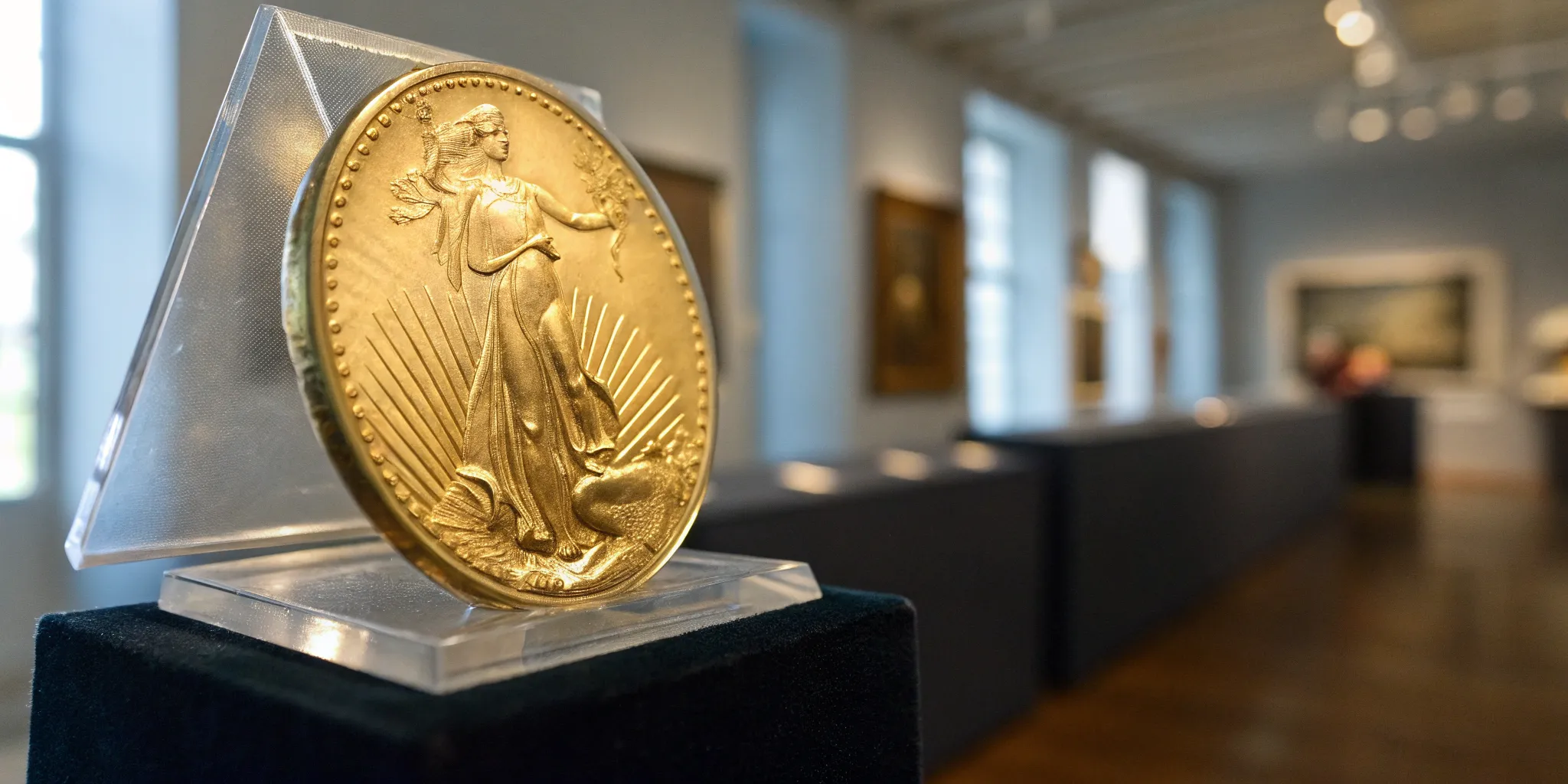
The 1933 Double Eagle is famous for its story, but it’s revered for its beauty. The coin is the culmination of President Theodore Roosevelt’s quest to create American coinage with artistic merit comparable to that of ancient Greece and Rome. He hand-picked renowned sculptor Augustus Saint-Gaudens for the task. The result is widely considered the most beautiful coin ever produced in the United States. The obverse features a powerful image of Lady Liberty striding forward, torch in one hand and an olive branch in the other. The reverse shows a majestic eagle in full flight, soaring above the sun. It’s a masterpiece of design, making it one of the most sought-after rare coins for sale in the world.
Why Collectors Covet This Coin
For collectors, the 1933 Double Eagle is the ultimate prize. Its appeal comes from a perfect storm of factors: an incredible backstory, a breathtaking design, and extreme rarity. Owning one is about more than just possessing a valuable object; it’s about holding a tangible piece of a fascinating American story. This coin’s journey from the U.S. Mint’s melting pots to the world’s most exclusive auction blocks gives it a mystique no other coin can match. It represents the pinnacle of collecting, a testament to the enduring allure of gold bullion and the powerful stories that transform a simple metal disc into a priceless artifact.
What Makes the 1933 Double Eagle So Rare?
The story behind the 1933 Double Eagle’s rarity is a perfect storm of economic crisis, government intervention, and a few coins that slipped through the cracks. Unlike other rare coins that are scarce simply due to age or low mintage numbers, this coin was never meant to reach the public. Its existence is an accident of history, born at the very moment America’s relationship with gold was changing forever.
Nearly half a million of these coins were struck, yet almost all of them were destroyed before they could ever leave the U.S. Mint. The government’s decision to melt them down turned a standard issue coin into a legendary treasure. Understanding what makes it so special starts with a look back at one of the most turbulent times in American financial history.
FDR's Gold Recall Order
The 1933 Saint-Gaudens Double Eagle is not just a rare coin; it represents a pivotal moment in U.S. economic history. In the spring of 1933, at the height of the Great Depression, President Franklin D. Roosevelt signed Executive Order 6102. This order forbade the private ownership of gold coins, bullion, and certificates, requiring citizens to turn in their gold to the Federal Reserve. The goal was to stabilize the economy and stop the public from hoarding gold.
This action effectively ended the gold standard in the United States. Because the 1933 Double Eagles were minted right before this order took effect, they were never officially released into circulation. They became relics of a bygone era before they even had a chance to be used as money, making them a direct link to the country’s departure from the gold standard.
From Mint to Melting Pot
With the gold recall in full effect, the U.S. Mint’s entire production run of 445,500 1933 Double Eagles was ordered to be melted down into gold bars. The government’s swift action was meant to erase the coins from existence, and for the most part, it succeeded. The decision to destroy the majority of the coins transformed them from currency into an almost mythical artifact.
However, a small number of the coins managed to escape the melting pot. It’s believed that around 20 were illicitly taken from the Mint before the rest were destroyed. These smuggled pieces became illegal to own, as they were considered stolen government property. This act of defiance set the stage for decades of mystery and legal battles, cementing the 1933 Double Eagle’s status as a forbidden treasure.
The Journey of the Sole Survivor
While a few other 1933 Double Eagles have surfaced over the years, they have been systematically seized by the Secret Service. What makes the coin that sold for $18.9 million unique is its legal status. Only one surviving specimen was ever monetized and made legal for a private citizen to own, which adds immensely to its mystique and value.
This specific coin, known as the Weitzman specimen, was originally part of King Farouk of Egypt’s collection. It had been granted an export license by the U.S. Treasury Department before the coins were deemed illegal. After a long and complicated legal journey, the U.S. government agreed to issue a certificate of monetization for this single coin, officially making it a piece of legal tender. This one-of-a-kind document makes it the only 1933 Double Eagle anyone can own without breaking the law.
A Decades-Long Battle for Ownership
The story of the 1933 Double Eagle is more than just a tale of a rare coin; it's a high-stakes drama of clandestine sales, government pursuits, and protracted legal fights. Because the coins were never officially released as legal tender, the U.S. government considered every specimen that surfaced to be stolen federal property. This set the stage for a decades-long effort to track down and reclaim these forbidden treasures, turning collectors and dealers into subjects of federal investigations. The few coins that escaped the melting pot became the focus of an intense and fascinating struggle over ownership that would play out in courtrooms and government vaults for nearly a century, cementing the coin's legendary status.
Chasing the Coins: Secret Service Investigations
The 1933 Saint-Gaudens Double Eagle is not just a rare coin; it represents a pivotal moment in U.S. economic history, marking the country’s departure from the gold standard and the government’s intervention in private gold ownership. This historical weight is precisely why the government took the coin’s unauthorized release so seriously. By the 1940s, the Secret Service was actively investigating how several of these coins had made their way into private hands. Their investigation traced the source to a Philadelphia jeweler, Israel Switt. The government successfully recovered several specimens over the years, arguing that since they were never officially issued, they remained government property and were illegal to own.
From Courtrooms to Government Vaults
As the Secret Service tracked down the coins, a series of legal challenges began. The U.S. government seized these coins, and a legal battle ensued over their ownership. One of the most famous cases involved the family of Israel Switt, who discovered ten 1933 Double Eagles in a safe deposit box in 2003. The family, the Langbords, argued the coins were legally obtained, but after a lengthy court battle, a federal appeals court ultimately sided with the government. The coins were sent to the U.S. Bullion Depository at Fort Knox, a secure facility that also holds a large portion of the nation's gold bullion. These cases affirmed the government's position: with one notable exception, all 1933 Double Eagles were considered contraband.
The Breakthrough: A Certificate of Monetization
So how did one coin become legal to own and sell? The answer lies with King Farouk of Egypt, a famous collector who legally obtained an export license for his 1933 Double Eagle in 1944, before the Secret Service had realized its stolen status. After Farouk was deposed, the coin vanished, only to reappear in 1996. After a legal settlement, the U.S. government agreed to issue a unique Certificate of Monetization. This specific coin, along with a few others now owned by the government (like two at the Smithsonian museum), managed to avoid being melted. By paying the U.S. Treasury its $20 face value, the coin was officially monetized, making it the only 1933 Double Eagle that could ever be legally owned by a private individual.
What Happened at the Record-Breaking Auction?
When the world’s most enigmatic coin finally came to auction, the numismatic community held its breath. The sale of the 1933 Double Eagle was more than just a transaction; it was a historic event decades in the making. The atmosphere at Sotheby’s was electric as collectors and investors gathered to witness a piece of American history find a new home and shatter every existing record. The story of what unfolded is a testament to the power of rarity, provenance, and the enduring appeal of tangible assets.
Inside the Historic Sotheby's Sale
On June 8 in New York City, the sole 1933 Saint-Gaudens Double Eagle available for private ownership crossed the auction block at Sotheby’s. The tension in the room was palpable as bidders competed for this legendary coin. After a spirited bidding war, the gavel finally fell, and a new world record was set. The coin sold for an astonishing $18,872,250, making it the most valuable coin ever sold at auction. This sale wasn't just a win for the seller; it was a landmark moment that sent ripples through the entire market, reaffirming the incredible value placed on the world's most sought-after rare coins for sale.
The Allure of Its Famous Owners
A significant part of the 1933 Double Eagle’s appeal is its incredible story and the hands it has passed through. Its most recent owner, luxury shoe designer Stuart Weitzman, acquired the coin in 2002. Instead of hiding it away, Weitzman generously lent the coin to institutions like the New-York Historical Society, allowing the public to see and appreciate this forbidden treasure. This act of stewardship, combined with its mysterious early history involving King Farouk of Egypt, added layers of romance and prestige to the coin. An object’s provenance, or its history of ownership, can dramatically influence its value, transforming it from a simple collectible into a world-renowned artifact. Our team's deep experience, detailed on our About Us page, helps investors understand these crucial nuances.
The $18.9 Million Gavel Strike
The final price of $18,872,250 is a figure that commands attention. It’s more than double the previous record for a coin, held by a 1794 Flowing Hair Silver Dollar that sold for $10 million in 2013. This unprecedented price reflects the perfect storm of factors: extreme rarity, a captivating backstory, and its unique legal status as the only 1933 Double Eagle the U.S. government has ever monetized for private ownership. For investors, this sale underscores the immense potential of tangible assets. While the stock market fluctuates, a one-of-a-kind piece of history like this holds a different kind of value, rooted in its physical existence and irreplaceable story, much like investment-grade gold bullion.
Why Did It Sell for $18.9 Million?
A coin’s value is rarely just about its age or metal content. For the 1933 Double Eagle, the record-breaking price tag comes from a perfect storm of rarity, history, and unparalleled quality. It’s a story where every chapter adds another million to its value, making it one of the most sought-after objects in the world. Four key factors work together to create its monumental price.
Pristine Condition: The MS-65 Grade
First, the coin is in spectacular shape. It holds an MS-65 grade from the Professional Coin Grading Service (PCGS), which means it’s a brilliant, uncirculated piece with strong luster and only minor contact marks. It was never meant to be spent, and it shows. To add another layer of prestige, it also has a sticker from the Certified Acceptance Corporation (CAC), confirming it’s a premium quality coin for its grade. For collectors, this combination of top-tier grading and verification is a powerful signal of quality and authenticity, ensuring the coin is one of the finest examples in existence.
Its One-of-a-Kind Legal Status
This is perhaps the most important factor driving its price. The 1933 Double Eagle is effectively unique because it is the only one the U.S. government has ever legally permitted a private individual to own. While other 1933 Double Eagles exist, they are considered stolen government property and are subject to seizure. This singular legal status creates a market of one. For any collector who wants to own this legendary coin without legal risk, this specific, monetized specimen is their only option. This absolute exclusivity makes it an object of desire unlike any other in the numismatic world.
A Tangible Piece of American History
The 1933 Double Eagle is more than just a coin; it’s a physical artifact from a turning point in American economic history. It represents the moment the country left the gold standard and the government took control of private gold bullion ownership. Holding this coin is like holding the story of the Great Depression and the radical financial policies enacted to combat it. Each detail, from its date to its Saint-Gaudens design, is tied to a dramatic chapter of the nation’s past. This deep historical significance gives it a cultural weight that far exceeds its identity as a simple piece of currency.
The Ultimate Trophy for Collectors
When you combine its flawless condition, unique legal standing, and profound historical narrative, you get the ultimate prize. For the world’s most serious numismatists, owning the 1933 Double Eagle is the crowning achievement of a lifetime of collecting. It’s a legend, an outlaw, and a masterpiece all in one. Its story is filled with international intrigue, legal battles, and famous owners, adding to its mystique. Acquiring this coin isn't just an investment; it's about owning the most famous of all rare coins for sale and securing a permanent place in numismatic history.
Putting the Price in Perspective
An $18.9 million price tag can be hard to wrap your head around, even for a seasoned collector. It’s a figure that places the 1933 Double Eagle in a class of its own, far beyond most other numismatic treasures. This wasn't just a high price; it was a statement about what makes an object truly priceless. To understand how the gavel fell at such a staggering number, we need to look at its place in auction history and break down the unique combination of factors that create a multi-million dollar coin. It’s more than just gold and more than just age. The value is tied to a story, a legal status, and an artistic vision that can never be replicated. This coin represents the absolute peak of the market, a benchmark against which all other great rarities are now measured.
A Look at Past Auction Records
When the 1933 Double Eagle sold for $18.9 million, it didn't just break the previous world record for a coin sale; it completely shattered it. The sale, held at Sotheby’s in June 2021, nearly doubled the price of the former record holder, the 1794 Flowing Hair Silver Dollar, which sold for just over $10 million in 2013. This massive leap in value highlights just how special this particular coin is. It wasn't an incremental increase but a fundamental reset of what the market thought was possible. This sale cemented the 1933 Double Eagle’s status as the undisputed king of all coins, demonstrating the extraordinary value collectors place on one-of-a-kind rare coins for sale with an unbeatable story.
What Makes a Coin Worth Millions?
So, what transforms a piece of metal into a multi-million dollar asset? It’s a perfect storm of rarity, history, and beauty, and the 1933 Double Eagle has all three in spades. Its rarity is absolute; it’s the only one legally available for private ownership. Its historical significance is tied directly to a major turning point in U.S. economic policy: FDR’s decision to take the nation off the gold standard. While its composition is gold bullion, its value far exceeds its metallic content. Finally, its breathtaking design by Augustus Saint-Gaudens is widely considered the pinnacle of American coinage art. When you combine this with its dramatic backstory of seizure, legal battles, and survival, you get more than a coin. You get a legend.
The Ripple Effect: What This Sale Means for Coin Collecting
When a single coin sells for nearly $19 million, it does more than just make headlines; it sends waves through the entire numismatic community. This historic auction was a powerful statement about the enduring value of rare coins. For both seasoned collectors and serious investors, this sale offers a fascinating glimpse into the market's potential and reaffirms the unique position that tangible assets hold. The event has reshaped perceptions of what's possible and sparked new interest in the hobby. Let's look at the key takeaways from this landmark sale and what it signals for the future of coin collecting.
A New Benchmark for High-Value Coins
The sale of the 1933 Double Eagle for a staggering $18,872,250 didn't just break the previous record; it completely shattered it. This price is now the auction record for any coin, establishing a new gold standard for ultra-rare numismatics. This result will likely cause a re-evaluation of other "trophy" coins, potentially lifting the entire high-end market. When a sale of this magnitude occurs, it gives owners of world-class rarities confidence that demand at the top is stronger than ever. It validates the idea that for one-of-a-kind items with incredible stories, the sky is the limit.
Why Rare Coins Belong in Your Portfolio
The 1933 Double Eagle is a perfect example of why collectors and investors are so drawn to numismatics, embodying rarity, historical significance, and beauty. These are the qualities that make rare coins for sale such a compelling asset class. Unlike stocks or bonds, a rare coin is a tangible piece of history you can hold. It offers a unique way to diversify a portfolio with an asset that has intrinsic value and a long track record of appreciation. This sale is a powerful reminder that the world's most sought-after coins are seen as more than just collectibles; they are blue-chip investments with global appeal.
What to Expect from the Market Next
An event like this captures the public's imagination far beyond the usual collecting circles. The news coverage of the 1933 Double Eagle auction has given numismatics significant mainstream publicity, which is fantastic for the market's health. This attention often attracts new collectors and investors, bringing fresh energy and capital. We can expect this "trickle-down" effect to generate more interest across all levels of the market. It reinforces the stability and long-term potential of collecting, encouraging people to explore how assets like gold bullion and historic coins can fit into their own financial strategies.
Could You Own a Hidden Treasure? How to Spot Valuable Coins
The story of the 1933 Double Eagle reminds us that incredible numismatic treasures can be hiding in plain sight. While finding a multi-million dollar coin is a long shot, you might have something valuable in an old collection or inheritance. Knowing what to look for is the first step. Here’s how you can start identifying coins that might be worth more than their face value.
Check for Key Rarity and Condition Markers
Rarity is the single most important factor in a coin's value. A coin can be rare for several reasons: low initial mintage, a high melt rate, or a famous error. The 1933 Double Eagle became a "highly sought-after treasure" precisely because the United States Mint’s decision to melt down the majority of the coins made it nearly extinct. When you examine a coin, look for key dates, mint marks (the small letter indicating where it was made), and any unusual features. Condition is just as crucial. A coin that never entered circulation will have sharp details and original luster, making it far more valuable than a worn, scratched one. You can browse collections of rare US and world coins to see what high-quality examples look like.
Why Professional Grading Is Essential
Assessing a coin's condition can be subjective, which is why professional grading is the industry standard. Companies like PCGS (Professional Coin Grading Service) and NGC (Numismatic Guaranty Corporation) provide an objective evaluation of a coin's physical state on a 70-point scale. For instance, the auctioned 1933 Double Eagle was graded "MS 65," meaning it's a high-quality coin that was never used in circulation. This grade, or "Mint State," tells collectors and investors that the coin is in near-perfect condition. A professional grade removes guesswork, provides a universal standard for value, and is essential for any serious transaction. It’s a step our team of experts relies on to ensure quality and authenticity.
When to Call in an Expert Appraiser
If you suspect you have a rare coin, the next step is to get a professional opinion. An expert appraiser can confirm authenticity, evaluate its condition, and give you an accurate market valuation based on current trends. Events like the 1933 Double Eagle auction give numismatics "helpful publicity," inspiring people to look closer at the coins they own. An appraiser has the specialized knowledge to spot subtle details that can make a huge difference in value, from die varieties to historical significance. Before you decide to sell or insure a potentially valuable coin, an expert appraisal is a critical step to protect your investment and understand exactly what you have.
Related Articles
Frequently Asked Questions
What would happen if I found another 1933 Double Eagle today? If another 1933 Double Eagle were to surface, it would immediately be considered stolen property by the U.S. government. Because these coins were never officially issued as legal tender, any specimen found is subject to seizure by the Secret Service. The only exception is the single coin that was legally monetized after a unique settlement, which is what makes its story and value so extraordinary.
Why is only one of these coins legal for a private citizen to own? The legality of the one famous specimen comes down to a unique historical circumstance. It was originally part of King Farouk of Egypt’s collection and received a U.S. export license in 1944, before the government had fully realized the coins were stolen. After a long legal journey, the U.S. government agreed to "monetize" this specific coin by accepting its $20 face value, officially making it legal tender. This one-time agreement has never been extended to any other 1933 Double Eagle.
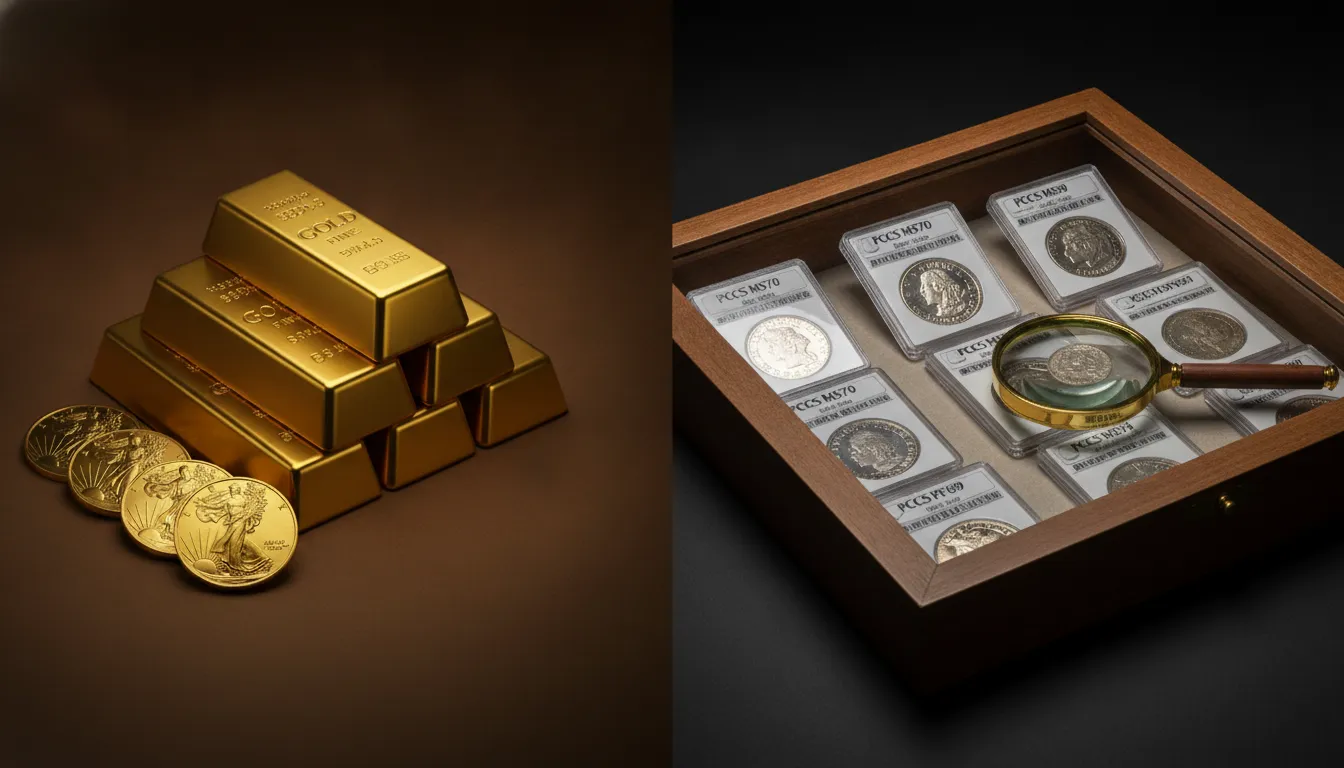
Is the 1933 Double Eagle valuable just because it's made of gold? Not at all. While it is a gold coin, its value has very little to do with its metal content. Its nearly $19 million price tag comes from its incredible story, its absolute rarity as a one-of-a-kind legal specimen, and its beautiful design. This is the key difference between a numismatic treasure and a standard gold bullion coin; one is valued for its story and rarity, while the other is valued primarily for its weight in precious metal.
How can I be sure a rare coin I'm buying is authentic and properly graded? The best way to ensure authenticity and quality is to work with a reputable dealer and rely on third-party professional grading services like PCGS or NGC. These companies encapsulate coins in secure holders with a specific grade that certifies their condition. This professional verification removes guesswork and is the industry standard for buying and selling valuable coins, giving you confidence in your purchase.
What makes a coin valuable, besides being old? Age is just one small factor. A coin's value is primarily driven by a combination of rarity, condition, historical significance, and demand. A coin can be rare because few were minted, most were melted down (like the 1933 Double Eagle), or it has a unique error. A coin in pristine, uncirculated condition will always be worth more than a worn one. When these factors come together, you get a truly valuable piece of history.