Park Avenue Numismatics
5084 Biscayne Blvd, Suite 105
Miami, FL 33137
Toll Free: 888-419-7136
Secure Private Ordering
We use the latest online security processing,
so your order is safe & private.
We DO NOT disclose any customer
information to ANY third party company.
Our customer privacy is our priority.
Over 30 Years Experience
Park Avenue has over 30 years
experience buying and selling
Rare Coin and Precious Metals.
We have the knowledge and
ability to provide our customers
with the best products and services.






Featured Coins
Our featured coins are hand selected by Bob Green, President and founder of Park Avenue Numismatics. Bob's picks move fast due to exceptional coins with superb eye appeal.

2026 American Silver Eagle Brilliant Uncirculated
Product Title 2026 1 oz American Silver Eagle Coin (BU) Year 2026 Mint Mark Not Shown Purity .999 Manufacturer US Mint Thickness 2.98 mm Diameter 40.6 mm Inner Pack Qty 20 Outer Pack Qty 500 Condition Brilliant Uncirculated Face Value $1 Issuing Country United States Obverse Designer Adolph Weinman Reverse Designer Emily Damstra Edge Design Reeded with Anti-Counterfeit Variation Series American Eagle CoA No Capsule Size 40.6 mm Packaging Type Plastic Flip Metal Weight 1 Troy Ounce Theme Eagle Design Eagle Shipping Free Shipping on Orders Over $499 Product Title 2026 1 oz American Silver Eagle Coin (BU) Year 2026 Mint Mark Not Shown Purity .999 Manufacturer US Mint Thickness 2.98 mm Diameter 40.6 mm Inner Pack Qty 20 Outer Pack Qty 500 Condition Brilliant Uncirculated Face Value $1 Issuing Country United States Obverse Designer Adolph Weinman Reverse Designer Emily Damstra Edge Design Reeded with Anti-Counterfeit Variation Series American Eagle CoA No Capsule Size 40.6 mm Packaging Type Plastic Flip Metal Weight 1 Troy Ounce Theme Eagle Design Eagle Shipping Free Shipping on Orders Over $999
Coin Highlights: Coins arrive in plastic flips, acrylic tubes of 20 coins, or Monster Boxes of 500 coins! 40th anniversary of the American Silver Eagle!
Contains 1 Troy oz of .999 pure silver in BU condition. Issued a face value of $1 (USD) by the United States. Walking Liberty on the obverse. American bald eagle on the reverse.
In the obverse design of 2026 1 oz Silver Eagle Coins, you will find Adolph A. Weinman’s iconic Walking Liberty design. Created for the US half dollar in 1916, this breathtaking depiction shows Liberty’s full-length figure in left-profile relief as she strides toward the horizon with the American flag draped around her, her right arm extended, and her left carrying branches of oak and laurel.
For the reverse of 2026 American Silver Eagles, the mint features a naturalistic depiction of the bald eagle from Emily Damstra. Designed in 2020 and released in mid-2021, this design shows the bald eagle descending in flight with its wings raised as it clutches an oak branch.
American Silver Eagles have been available from the United States Mint annually since 1986. This 1 oz silver BU coin is an annual mainstay of US Mint bullion production and has seen various ebbs and flows in demand over the last four decades. The highest point of production for the series came in 2015 when 47 million coins were sold in a single year.
These 2026 1 oz American Silver Eagle Coins are available here in Brilliant Uncirculated condition. Individual coins are packaged in plastic flips, while multiples are available in either acrylic tubes of 20 coins or Monster Boxes of 500 coins. Each Monster Box holds a total of 25 tubes inside.
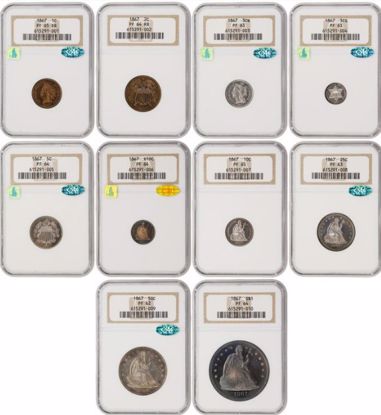
1867 Complete Proof Set of Minor and Silver Coinage
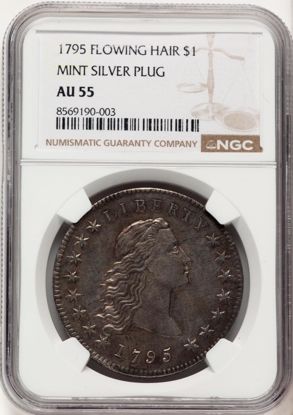
1795 S$1 Flowing Hair AU55 NGC
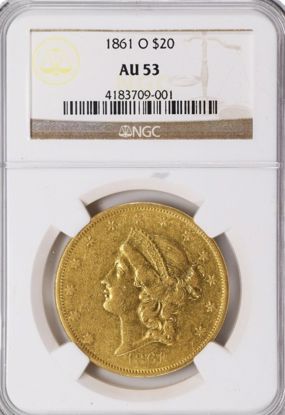
1861-O $20 Liberty AU53 NGC Winter-1
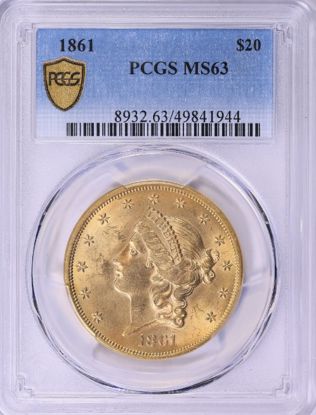
1861 $20 Liberty MS63 PCGS

Silver Dollar Trio Special Offer