
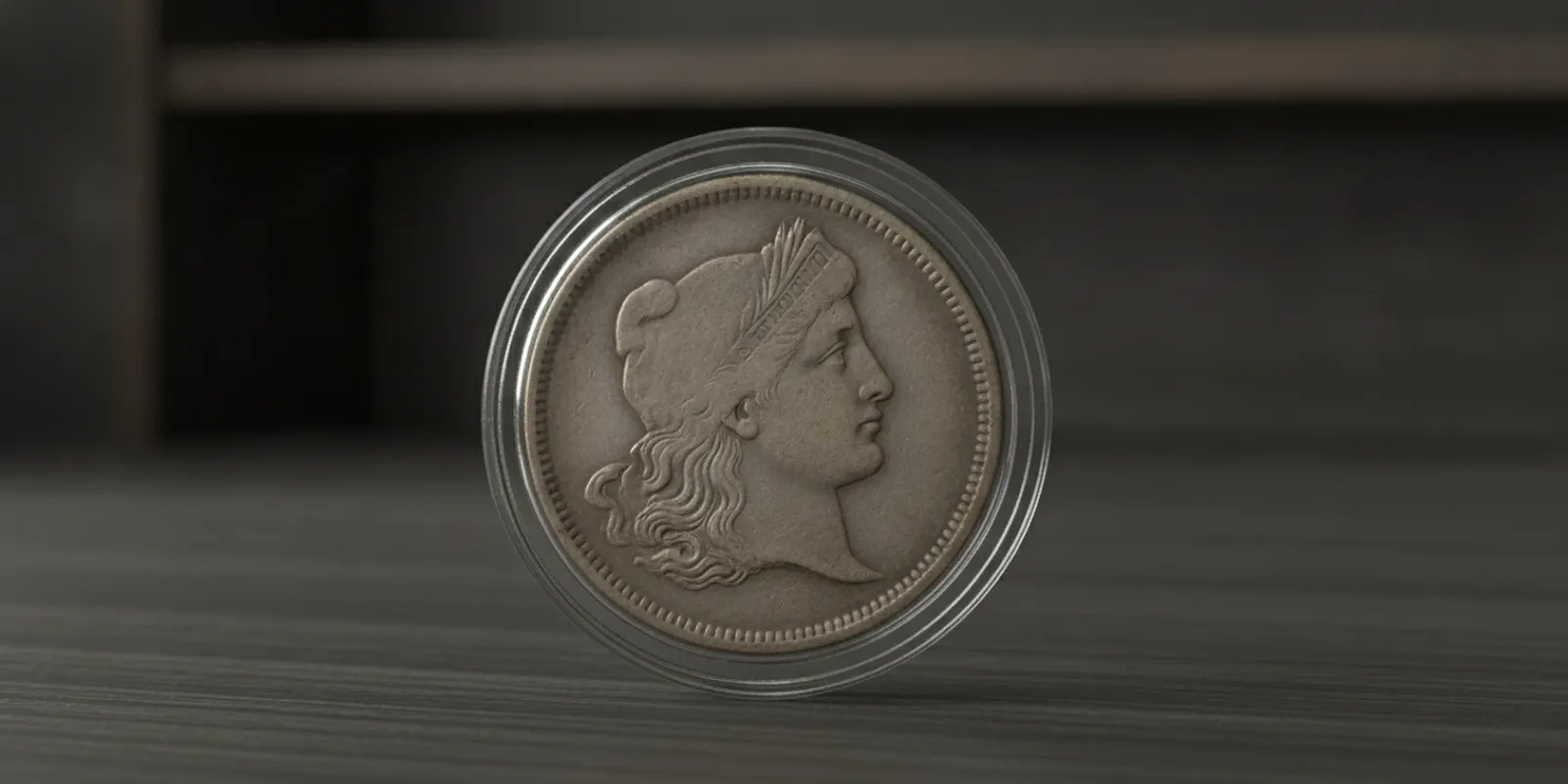
If you are searching for a flowing hair dollar for sale, start by identifying exactly what the coin is and what evidence supports its description. These early United States silver dollars are scarce, historic collectibles, and meaningful differences in date, variety, condition, and authenticity can affect how collectors compare examples. This guide outlines the key checks to make before you decide whether a particular coin fits your collecting goals.
Call 1-888-419-7136 to discuss a Flowing Hair dollar
What is a Flowing Hair dollar?
The Flowing Hair dollar is the first design used for United States silver dollars. The U.S. Mint struck the type in 1794 and 1795. Its obverse shows Liberty with long, flowing hair, while the reverse uses a small eagle design. The coins belong to the earliest period of federal coinage, when the Mint was establishing how national coin designs and production would work.
That history is part of the appeal, but it does not make every coin identical or every listing equally easy to evaluate. The surviving pieces differ in strike, surface preservation, die characteristics, and past handling. A buyer should treat “Flowing Hair dollar” as the beginning of an identification process, not a complete description of an individual coin.
There is also a useful boundary between the original type and modern objects that refer to it. For the 230th anniversary of the 1794 Flowing Hair dollar, the U.S. Mint described a gold coin and silver medal using the historic design. Those anniversary pieces are separate from an original 1794 or 1795 silver dollar. See the U.S. Mint's announcement about the anniversary coin and medal for that distinction.
When you first see a listing, establish the basics before considering its grade or appeal. Read the denomination and date, and check that the images show the familiar Liberty obverse and small eagle reverse. Then note whether the seller describes an original silver dollar, a later commemorative object, or another item connected with the design. This simple first pass prevents an attractive historic name from standing in for a precise identification.
How do 1794 and 1795 Flowing Hair dollars compare?
Date is an important starting point because the two years bring different collecting context and can include different die varieties. But a date alone cannot tell you the coin's condition, originality, or precise variety. Ask for clear photographs of both sides and a complete written description before comparing one example with another.
| Comparison point | 1794 Flowing Hair dollar | 1795 Flowing Hair dollar |
|---|---|---|
| Date and type | First year of the Flowing Hair dollar design. | Second year in which the Flowing Hair dollar type was struck. |
| What to identify | Confirm the date, small eagle reverse, and any stated die variety or distinguishing feature. | Confirm the date, small eagle reverse, and the particular variety; varieties include differences such as two or three leaves beneath the eagle's wings. |
| Condition questions | Inspect the wear, strike, surfaces, and any marks or repairs visible in photographs. | Use the same checks; compare only after confirming the variety and grade information. |
| Best first step for a buyer | Request sharp, balanced images of the obverse and reverse, plus the holder if certified. | Request images and documentation that let you verify the specific variety as well as the grade. |
| Price comparison | Evaluate the individual coin and its documentation; do not infer value from date alone. | Evaluate the individual coin and its documentation; do not assume all 1795 varieties are interchangeable. |
The table is a checklist, not a price guide. Two coins bearing the same date can differ in ways that matter to collectors, and a similar-looking listing may not be a close comparison. If you are reviewing a specific example, you can use a coin's date and description as a starting point and examine the available item details, such as this listed 1794 Flowing Hair dollar. A listing is not a substitute for confirming its current availability or reviewing the coin and its certification details.
For a 1795 coin, read any variety attribution closely instead of assuming that the year alone identifies its design details. The two-leaves and three-leaves descriptions refer to a visible distinction beneath the eagle's wings. A clear reverse image may help you understand the attribution, but an image should be considered together with the seller's written identification and any grading-service label. If those sources do not agree, pause the comparison until the discrepancy is explained.
Which details should you verify in the listing?
A complete listing should make it possible to understand what is being offered without guessing. Look for the date, denomination, type, grade if assigned, grading service if certified, and any variety attribution. The description should also identify notable damage, repairs, cleaning, or other condition details when known. If a listing uses a broad label but leaves out details that distinguish the coin, ask the seller for clarification.
- Date and denomination: Confirm the coin is identified as a 1794 or 1795 silver dollar, not a medal or a different denomination.
- Variety: Check what attribution is being made and how the seller supports it. For a 1795 coin, ask which variety is described rather than assuming from the date alone.
- Grade and service: If a numerical grade is stated, determine whether it is a third-party grade and which organization assigned it.
- Condition disclosures: Look for comments about scratches, cleaning, corrosion, rim damage, repairs, or other surface issues. Ask about anything not covered in the description.
- Photographs: Seek views of both sides and the edge when available. Images should be in focus and clear enough to inspect the surfaces, lettering, date, and holder.
- Sale terms: Understand the return policy, shipping, insurance, and payment terms before completing a transaction.
Images help with screening, but they have limits. Lighting, angle, focus, and image processing can hide or exaggerate surface features. If a detail matters to your decision, request a straight-on image or ask how the seller documents it. A responsible comparison accounts for both what the photos show and what they cannot establish.
It can help to keep a short record as you research a coin. Write down the date, variety as stated, grade and service, visible condition notes, and unanswered questions. Save the listing photos and any written responses with the coin's description. If you later compare another piece, these notes make it easier to see whether the apparent difference is the coin itself, its documentation, or simply the way the listing was presented.
How does condition affect a Flowing Hair dollar?
Condition is more than a grade number. Collectors look at how much original design detail remains, how the coin was struck, and what has happened to its surfaces since it left the Mint. On an early dollar, wear can soften Liberty's hair and facial features, as well as the eagle and surrounding design. Uneven strike can also leave some areas less distinct even when the rest of the coin appears sharper.
Examine the coin as a whole. Compare the high points with the protected areas, then look for scratches, marks, discoloration, corrosion, rim disturbances, or evidence of cleaning. A bright or reflective surface does not by itself establish originality or quality. Nor does a single mark necessarily tell the whole story; its location and severity matter in context.
Ask whether the coin has been graded as problem-free or identified with a qualifier or details designation. If it is not certified, ask what the seller can provide to support the description and whether an independent examination is possible. Grade opinions can vary, and grading cannot remove the need to inspect the specific coin you are considering.
A practical viewing routine can make condition checks less haphazard. Start with the overall impression at a normal viewing distance. Then inspect the date and lettering, Liberty's portrait, the eagle, and finally the open fields and rim. Look for a consistent explanation of the coin's appearance: wear may soften high points, while an isolated scratch or an unusual patch of color may need a separate disclosure. Do not clean or polish a coin to make details easier to see; ask for better images or a qualified review instead.
How can you assess authenticity?
Authenticity deserves particular attention for a historic and scarce coin. A photograph may help you notice inconsistencies, but it cannot reliably authenticate a coin on its own. Weight, diameter, edge characteristics, design details, surfaces, and die features may all be relevant to an examination. Avoid relying on one visual clue or a casual comparison with a low-resolution image.
When possible, consider an example encapsulated and attributed by a recognized third-party grading service. A holder can provide an expert opinion on authenticity and grade, but it is not a reason to ignore the label, holder condition, or coin itself. Verify that the label describes the coin being offered, and review the service's available certification information. If a coin is raw, or outside a holder, ask what return or review options apply and whether the seller will permit an independent opinion.
Be cautious about descriptions that use absolute language without supporting evidence. Ask direct questions: Is the coin guaranteed authentic under the seller's written terms? What happens if an independent examination disagrees with the attribution? Is the coin being sold with a grading-service holder, or is the grade the seller's opinion? Clear answers make it easier to compare the actual purchase terms.
For a remote purchase, make authenticity review part of the transaction plan rather than an afterthought. Before paying, confirm which coin is pictured and whether the images represent the exact piece being sold. Ask how the seller handles a question raised by an independent examiner and whether there is a time limit or other condition for review. Keep the answer in writing alongside the invoice and listing details. These practical steps clarify what recourse exists without treating a photograph or a label as an absolute guarantee.
What should provenance and certification tell you?
Provenance is the documented history of a particular coin's ownership or collection. For a Flowing Hair dollar, relevant documentation might include an earlier sale record, collection notation, or other paperwork that can be connected to the coin. Such records can add useful context, but a story without supporting documentation should not be treated as proof. Ask what records accompany the coin and whether the documentation clearly refers to that exact piece.
Third-party certification is a separate kind of information. It records an outside service's opinion about a coin's authenticity, attribution, and condition under its grading standards. Certification can make comparisons easier, especially when the label provides a variety attribution, but services can differ in their descriptions and a certified coin remains an individual object. Read the label carefully; do not rely on a seller's shortened summary alone.
For a certified example, compare the label details with the listing and the coin photographs. Check that the date and variety match, and look for any stated details or qualifiers. If the holder appears damaged or the label is unclear, ask the seller for additional information. Certification is helpful evidence, not a substitute for understanding what the grade and attribution actually say.
When provenance is offered, check the chain of connection, not just the prestige of a name or sale. A record is most useful when it identifies the same date, variety, or distinguishing marks and can reasonably be tied to the coin in front of you. Ask whether original paperwork is included, whether the coin is pictured in the record, and whether the seller is relying on a documented prior sale or an oral account. If the records cannot be matched to the object, treat them as background rather than decisive evidence.
How should you compare two Flowing Hair dollars?
Make comparisons in a consistent order so that an appealing photograph or headline does not become the only basis for a decision. First make sure the coins are the same date and variety. Then compare certification status and grade, followed by surface quality, strike, eye appeal, provenance, and the sale terms. If a coin is not certified, note that difference rather than treating two descriptions as directly equivalent.
- Match the coin type. Confirm date, denomination, reverse, and variety attribution.
- Compare evidence. Review full-resolution photographs, grading information, and any documentation for each coin.
- Inspect condition details. Note wear, strike, marks, surface issues, and any qualifiers instead of comparing grade labels alone.
- Read the transaction terms. Consider return provisions, shipping, insurance, and how disputes or examination concerns are handled.
- Set a personal collecting standard. Decide which features matter most to you, such as a particular date, variety, grade range, or documented history.
There is no universal best example for every collector. One person may prioritize a certain variety; another may prefer a coin with stronger eye appeal or more complete documentation. The meaningful comparison is between the actual pieces and their terms, not simply between two headline descriptions.
For example, imagine one listing has a clear certification label but less complete photographs, while another offers sharp images but no third-party grade. They are not directly comparable on one feature alone. Record what is confirmed for each, identify what remains uncertain, and request the missing information before deciding whether the difference matters to your goals. The same method applies when an example has a more detailed provenance record but a different grade or variety: weigh each characteristic separately instead of allowing one attractive attribute to settle the entire comparison.
What does rarity mean for an individual coin?
Rarity is not a single label that describes every aspect of a coin. A date, a die variety, the number of examples available to collectors, and the condition of a particular surviving piece can each shape how collectors discuss scarcity. A coin described as scarce by date may still need a precise variety attribution, while a less common variety may appear in a range of conditions. Ask what the seller means by a rarity statement and what reference or attribution supports it.
Separate historical importance from the condition of the specific object. The fact that a coin belongs to an early U.S. dollar type provides historical context, but it does not make two examples interchangeable. One may have a clearer strike or stronger documentation; another may be more appealing to a collector focused on a particular die variety. Describe the feature that matters to you instead of relying only on broad adjectives such as rare or exceptional.
What affects the value of an individual coin?
Coin values are variable. The date and variety, condition, rarity, provenance, certification, and current market demand can all play a role. The quality and completeness of the supporting information can also affect how confidently a buyer can assess an offering. A broad date label or a grade by itself does not determine the value of a specific coin.
For that reason, avoid treating a past sale, an asking price, or an online estimate as a guaranteed value for another example. Differences in grade, originality, variety, and sale context can make two apparent comparisons poor matches. If you are assessing a purchase, use comparable examples with care and ask what the seller's stated terms cover. Do not make a decision based on a promise of future appreciation; this is a collectible purchase, and future demand is uncertain.
If you do look at past sales or asking prices for context, compare like with like as closely as the available records allow. Check the date and variety first, then the grade, certification, condition disclosures, and sale circumstances. Note whether a figure is an asking amount or a completed transaction, and how recent it is. A price without those details can create a misleading anchor. When important attributes differ or are not documented, treat the comparison as a loose reference rather than a direct measure of the coin you are considering.
Where can you discuss a Flowing Hair dollar in Miami?
Park Avenue Numismatics is a Miami rare coin and precious metals dealer. If you are in the area and would like to discuss a particular U.S. coin, you can contact the dealership with its date, variety description, certification information, and clear photographs. For an example of the type of item details to review, compare a listed 1795 Flowing Hair dollar with the questions in this guide; confirm availability and transaction details directly rather than assuming an online page reflects current status.
Before contacting a dealer, organize the information you already have. Include the date and any variety attribution, whether the coin is in a grading-service holder, and what your main question is. If sending images, use clear, well-lit views of both sides and the holder label when present. You can also ask which additional information would help with a discussion and what the next step would involve. A focused inquiry makes it easier to discuss the coin's actual details without assuming that an online description answers every question.
Call 1-888-419-7136 to discuss your coin
Frequently asked questions about Flowing Hair dollars
Were Flowing Hair dollars made in both 1794 and 1795?
Yes. The U.S. Mint struck the Flowing Hair dollar in both 1794 and 1795. Confirm the date on the individual coin and check the rest of its description, since date alone does not establish its variety or condition.
Are all 1795 Flowing Hair dollars the same variety?
No. Different die varieties exist. Among the distinctions collectors identify are two-leaves and three-leaves varieties beneath the eagle's wings. Ask the seller to state the attribution and provide supporting images or certification details.
Does a grading holder guarantee that a coin is a good purchase?
No. Certification offers an independent opinion about aspects such as authenticity, attribution, and grade, but it does not decide whether the coin suits your goals or the asking terms. Read the label, inspect the coin, and review the seller's conditions.
Can photographs establish that a Flowing Hair dollar is authentic?
Photographs can support an initial review, but they cannot replace a qualified in-person examination or reputable certification. Ask for clear images and documentation, and understand your options if questions remain after delivery or examination.
What should I ask before buying one?
Ask for the exact date and variety, grade and grading service if applicable, condition disclosures, provenance records, clear photographs, and written sale and return terms. Also confirm availability and the process for having the coin independently reviewed.
Key takeaway
A thoughtful Flowing Hair dollar purchase begins with careful identification and proceeds through a review of condition, authenticity, certification, provenance, and transaction terms. Compare the specific evidence for each coin, ask questions where details are missing, and choose an example based on your collecting priorities rather than a headline or promise.





