
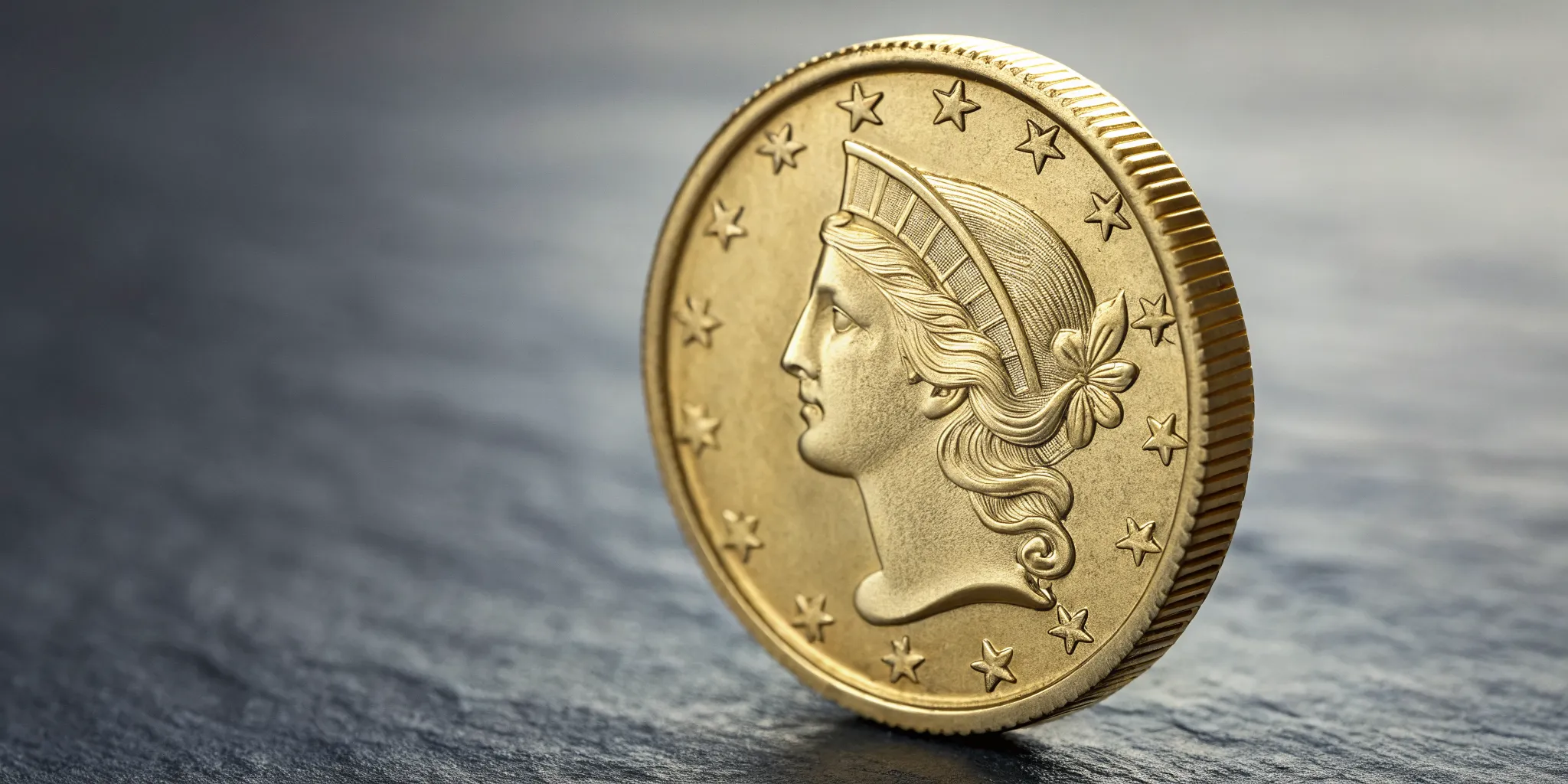
 What makes a gold coin truly rare? It’s more than just its age. For the $10 Liberty Head Eagle, scarcity is a story written by history itself. Many of these coins were heavily circulated, while countless others were melted down by the government following the 1933 Gold Recall. Each surviving specimen is a relic that escaped the melting pot, preserving a piece of pre-Depression American finance. This guide explores the key dates, low-mintage issues, and unique mint marks that make certain examples so sought-after by serious collectors, turning the hunt for these coins into a thrilling pursuit.
Key Takeaways
- Look Beyond Bullion: A Liberty Head Eagle's total value combines its base gold price with a collector premium determined by its rarity, condition, and historical significance.
- Identify Key Rarity Markers: The series is categorized into three main types, and a coin's specific date and mint mark (especially the coveted "CC" mark) are the primary drivers of its scarcity and value.
- Build Your Collection with a Plan: Create a focused strategy, set a realistic budget, and always prioritize coins certified by reputable services like PCGS or NGC to guarantee authenticity and protect your investment.
What's the Story Behind the Liberty Head Eagle?
Every great coin has a story, and the $10 Liberty Head Eagle is no exception. This piece of gold isn't just a collector's item; it's a witness to nearly 70 years of American history, from westward expansion to the turmoil of the Civil War. Understanding its journey from a workhorse of commerce to a treasured collectible gives you a deeper appreciation for its place in any collection. Let's walk through the key moments that shaped this iconic coin.
Christian Gobrecht's Iconic Design
The Liberty Head Eagle made its debut in 1838, a product of the creative mind of U.S. Mint Engraver Christian Gobrecht. This historic American gold coin, minted until 1907, became a staple of the nation's currency. Gobrecht’s design is a classic, featuring a Greco-Roman inspired profile of Lady Liberty on the front, her hair in a tight bun and a coronet inscribed with "LIBERTY." The reverse displays a powerful heraldic eagle, clutching an olive branch and arrows. This design wasn't just beautiful; it was a symbol of American strength and freedom that would endure for decades, making it one of the most recognizable rare coins for sale today.
Fueling American Commerce
Unlike some coins that were minted for show, the $10 Liberty Head Eagle was a true workhorse. It was one of the primary gold coins used in daily transactions, from large business deals to everyday purchases. Its presence was especially vital during the mid-19th century, a period of massive economic growth and westward expansion. During the California Gold Rush, these eagles were essential for converting newfound gold into usable currency, helping to fuel the booming economy of the West. Handling one of these coins means holding a piece of the very currency that built towns, paid for supplies, and financed the dreams of pioneers.
How the California Gold Rush Changed Everything
The California Gold Rush, beginning in the late 1840s, completely transformed the U.S. monetary system. The sheer volume of gold pouring out of the West created a problem for the U.S. Mint: how to process it all efficiently. In response, Congress authorized the creation of new gold coins to absorb the supply. This led to the introduction of the small Gold Dollar and the hefty $20 Double Eagle. The Liberty Head double eagle, in particular, was created to convert large amounts of bullion into a single coin, making it easier to manage and transport wealth. This shift meant the $10 Eagle was no longer the largest denomination, but it remained a critical part of the nation's financial landscape.
Adding "In God We Trust" After the Civil War
The Civil War left a deep and lasting mark on the nation, and that impact found its way onto its currency. In 1866, reflecting a surge of religious sentiment following the conflict, the U.S. Mint added the motto "In God We Trust" to the reverse of the Liberty Head Eagle. The motto was placed on a ribbon above the eagle's head. This change created a distinct new variety of the coin for collectors and serves as a clear historical marker. When you see this motto, you're looking at a coin that was minted in a post-war America, a nation grappling with reconciliation and redefining its identity.
Why the 1933 Gold Recall Made Them So Rare
The final chapter in the story of circulating U.S. gold coins came in 1933. In an effort to stabilize the economy during the Great Depression, President Franklin D. Roosevelt issued an executive order requiring Americans to turn in their gold coins to the government. Most of these surrendered coins, including countless Liberty Head Eagles, were melted down into gold bars. This event drastically reduced the number of surviving specimens, instantly making them much rarer. The recall is the primary reason why these historic gold bullion coins are so sought-after by collectors today. Each surviving coin is a relic that escaped the melting pot, preserving a piece of pre-1933 American financial history.
What Are the Three Types of Liberty Head Eagles?
The $10 Liberty Head Eagle had one of the longest runs in U.S. Mint history, and its design evolved over its 70-year tenure. Collectors categorize these iconic gold coins into three distinct types based on two major design changes. The first was a subtle modification to Liberty’s portrait shortly after its debut, and the second was the addition of the motto "IN GOD WE TRUST" on the reverse following the Civil War. Understanding these variations is the first step for any serious collector looking to acquire these beautiful pieces of American history. Each type tells a unique story about the era in which it was minted, from the nation's westward expansion to its period of solemn reflection.
Type 1: The Original "No Motto" Design (1838–1839)
The first Liberty Head Eagles, known as the Type 1 or "No Motto" design, were minted for just two years. These coins feature Christian Gobrecht's original vision: a classic portrait of Lady Liberty on the obverse, her hair in a bun and a coronet inscribed with "LIBERTY." The reverse displays a proud heraldic eagle clutching an olive branch and arrows, without any motto above it. Because of their very short production run, these early eagles are quite scarce and highly sought after by collectors. Finding a Type 1 coin is a key milestone for anyone building a comprehensive collection of rare coins. Their distinct design and limited mintage make them a prized addition to any portfolio.
Type 2: The Modified "No Motto" Design (1839–1866)
In 1839, the U.S. Mint slightly updated Gobrecht's design, creating the Type 2 Liberty Head Eagle. The portrait of Liberty was subtly refined, most notably at the truncation of her neck and in the details of her hair. This version remained the standard for nearly three decades, becoming a workhorse coin in American commerce, especially during the California Gold Rush. Like the Type 1, these coins lack the "IN GOD WE TRUST" motto. While they were minted for a much longer period, many were heavily circulated or melted down over the years, making high-grade examples particularly rare. These coins represent a significant period of American growth and are a cornerstone of any Liberty Head Eagle collection.
Type 3: The Final "With Motto" Design (1866–1907)
The final version of the Liberty Head Eagle, the Type 3, was introduced in 1866 and produced until the series ended in 1907. The defining feature of this type is the addition of a banner with the motto "IN GOD WE TRUST" on the reverse, placed directly above the eagle. This change was a reflection of the increased religious sentiment in the country following the Civil War. This series had the longest production run of the three types and includes many accessible dates for new collectors. However, it also contains some of the rarest and most valuable issues in the entire series, especially those from the Carson City Mint. These gold bullion coins connect collectors to America's Gilded Age.
How to Spot the Difference Instantly
Distinguishing between the three types of Liberty Head Eagles is straightforward once you know what to look for. The most obvious difference is on the reverse. If you see the motto "IN GOD WE TRUST" in a banner above the eagle, you have a Type 3 coin (1866–1907). If the motto is missing, it's either a Type 1 or Type 2. To tell those two apart, you'll need to look closely at the portrait of Liberty on the obverse. The original Type 1 (1838–1839) has a slightly different bust design than the modified Type 2 (1839–1866). For a quick check, simply flip the coin over; the presence or absence of the motto will tell you most of what you need to know.
A Closer Look at the Liberty Head Eagle's Design
The Liberty Head Eagle is more than just a piece of gold; it’s a small sculpture that tells a story about 19th-century America. When you hold one, you're connecting with a piece of history that circulated for nearly 70 years, witnessing immense national change. Chief Engraver Christian Gobrecht created a design that was both elegant and powerful, capturing the nation's identity in a way that has resonated with collectors for generations. Every element, from the direction of Liberty’s gaze to the objects held in the eagle’s talons, was chosen with intention.
Understanding these design details is key to appreciating the coin beyond its melt value. For a collector, the subtle variations in strike, the placement of a mint mark, or the preservation of original luster are what separate a common coin from a true treasure. Examining these features helps you appreciate the coin not just for its gold content, but for its rich historical and artistic value. It allows you to speak the language of numismatics and make more informed decisions for your collection. Let's explore the specific features that make this coin a classic of American coinage.
The Obverse: A Profile of Lady Liberty
The front, or obverse, of the coin presents a classic left-facing profile of Lady Liberty. Her hair is neatly tied in a bun, and she wears a coronet inscribed with the word "LIBERTY." This portrayal is strong and graceful, inspired by classical Greek art. Encircling her head are 13 stars, a tribute to the original 13 colonies, with the minting date positioned below her portrait. This design is a powerful symbol of freedom and American ideals. When you hold one of these rare coins for sale, you're looking at a face that represented the nation for nearly 70 years.
The Reverse: A Proud Heraldic Eagle
Flipping the coin over reveals its reverse: a bold heraldic eagle, a design that commands attention. The eagle stands with its wings outstretched, clutching an olive branch in its right talon and a bundle of arrows in its left. This iconic imagery symbolizes the nation's desire for peace but its readiness to defend itself. A shield protects the eagle's breast, and the inscriptions "UNITED STATES OF AMERICA" and the denomination, "TEN D.", curve along the coin's edge. This side of the coin firmly grounds it as a piece of official American gold bullion, representing the country's strength and sovereignty.
What Mint Marks Reveal About a Coin's Origin
A tiny letter, or the lack of one, can tell you a great deal about your Liberty Head Eagle's journey. These are called mint marks, and they identify where the coin was produced. Coins from the Philadelphia Mint have no mint mark. Others carry a letter indicating their origin: 'S' for San Francisco, 'O' for New Orleans, 'D' for Denver, and the famous 'CC' for Carson City. For collectors, the mint mark is crucial. It not only tells a story about the coin's past but can also dramatically influence its rarity and value. The experts at Park Avenue Numismatics can help you identify these marks and understand their significance in your collection.
Which Liberty Head Eagles Are the Rarest?
While all pre-1933 U.S. gold coins are inherently scarce, some Liberty Head Eagles are in a class of their own. For collectors, identifying these rare dates is part of the thrill of the hunt. A coin’s rarity often comes down to its original mintage, how many have survived over the decades, and its mint mark. These factors separate a common date coin from a centerpiece of a serious collection, creating numismatic value that can far exceed the base price of its gold content.
Key Dates Every Collector Wants
In any coin series, certain dates are known as "key dates" because they are the rarest and most difficult to acquire. For the $10 Liberty Head series, these are the coins that serious collectors dream of finding. The 1875 Eagle, with an original mintage of just 100 business strikes, is a legendary rarity. Other key dates include the 1838 and 1839 "Type of 1838" Eagles, the 1858, the 1864-S, and the 1870-CC. Finding one of these in any condition is a major achievement. These coins command significant premiums and are often the last pieces needed to complete a world-class collection.
Understanding Low-Mintage and Semi-Key Dates
Beyond the top-tier key dates, you’ll find low-mintage issues and semi-key dates that are also highly prized. Low-mintage coins are exactly what they sound like: coins with very small production numbers from the start. For example, five different Liberty Head Eagle dates had fewer than 1,000 coins produced. Semi-key dates are more accessible than the absolute rarest coins but are still scarce enough to be in high demand. These coins carry significant numismatic premiums that can multiply their worth based on their condition and the current market. They represent a fantastic goal for collectors looking to add scarce and valuable pieces to their holdings without targeting the absolute rarest specimens.
Why Carson City Eagles Are So Valuable
If you see a "CC" mint mark on a Liberty Head Eagle, you know you have something special. The Carson City Mint operated for a relatively brief period to process silver and gold from the nearby Comstock Lode, and its connection to the Wild West gives its coins a unique historical appeal. Coins from Carson City are consistently harder to find and are incredibly popular with collectors. Many of these issues had tiny production runs, making them rare from the moment they were struck. The 1870-CC is a famous example, but nearly every "CC" Eagle is a prized possession that adds a story of American history to any collection.
How to Grade and Value a Liberty Head Eagle
Determining the value of a Liberty Head Eagle goes far beyond its weight in gold. The coin's condition, or grade, is one of the most significant factors driving its price. Grading is a meticulous process of evaluating a coin's physical state against a standardized scale. For collectors and investors, understanding the basics of grading is essential for making informed decisions and recognizing a coin's true numismatic worth. It helps you appreciate the difference between a common, circulated piece and a pristine, investment-quality specimen.
Understand the 70-Point Grading Scale
Professionals use a 70-point scale to assign a precise grade to a coin. A grade of 70 represents a theoretically perfect coin with no visible imperfections, while a grade of 1 indicates it's just barely identifiable. Grades from 1 to 58 are for circulated coins that show varying degrees of wear from being used in commerce. Uncirculated coins, also called Mint State (MS), are graded from 60 to 70. These coins were never used as money and retain their original mint finish. The higher the number, the fewer marks and imperfections the coin has. You can get a feel for these differences by looking at professionally graded rare coins for sale and comparing their grades to their appearance.
Key Factors: Wear, Strike, and Luster
When grading a Liberty Head Eagle, experts focus on three primary elements. The first is wear, which is any loss of detail from circulation. On these coins, wear typically appears first on the highest points, like the hair above Liberty’s eye and the eagle’s wing tips. The second factor is strike, which describes the sharpness and completeness of the design when it was minted. A coin with a strong strike will have crisp, clear details. Finally, there's luster, the original satiny or frosty shine on a coin's surface. This delicate finish is created during the minting process and can be easily damaged by cleaning or handling, so a coin with strong, original luster is always more desirable.
What to Know About Bag Marks and Eye Appeal
Even an uncirculated coin can have imperfections. Bag marks are small nicks and scratches that happen when coins are jostled against each other in large mint bags. The number, size, and location of these marks can significantly affect a coin's grade. A few faint marks in an open field might be acceptable, but a deep scratch across Liberty’s cheek is a major distraction. This all contributes to a coin's eye appeal, which is simply its overall aesthetic attractiveness. Eye appeal is somewhat subjective but incredibly important. It considers the coin's luster, toning (coloration), and the severity of any marks to create a complete picture of its beauty.
Why Certification from PCGS, NGC, and CAC Matters
Because grading has subjective elements, relying on independent, third-party certification is crucial. Reputable grading services like PCGS (Professional Coin Grading Service) and NGC (Numismatic Guaranty Corporation) provide an unbiased opinion on a coin's authenticity and grade. Their certification, which involves sealing the coin in a protective holder with a descriptive label, is the industry standard. For an extra layer of quality assurance, look for a sticker from CAC (Certified Acceptance Corporation). A CAC sticker indicates that the coin is a high-end example for its assigned grade. Working with dealers who prioritize certified coins ensures you are buying accurately graded assets, a principle we stand by in our own expert services.
What Drives the Value of a Liberty Head Eagle?
Understanding what makes a Liberty Head Eagle valuable is about looking beyond its shiny surface. While its gold content provides a solid price floor, the real story of its worth is a fascinating mix of history, rarity, and market dynamics. A coin’s journey from the mint, its survival through the years, and its condition all play a part in its final valuation. For collectors and investors, grasping these key drivers is the first step toward building a truly exceptional collection. Let’s break down the three main components that determine the price of these classic American coins.
Gold Value vs. Collector Value
Every Liberty Head Eagle has two layers of value. The first is its intrinsic or "melt" value, which is based on its gold content (just under half an ounce) and the current market price of gold. This acts as a safety net, ensuring the coin will always be worth at least its weight in gold bullion. This base value fluctuates daily with the global commodities market, providing a tangible foundation for your investment.
The second, and often more significant, layer is its numismatic value. This is the premium that collectors are willing to pay above the gold content. Beyond the intrinsic gold value that provides a floor price, these coins carry numismatic premiums that can multiply their worth based on condition, mint mark, and market demand. A common-date coin in average condition might sell for a small premium, while a rare-date coin in pristine shape could be worth many times its melt value. This collector value is where the true potential of rare coins for sale is found.
How Rarity and Demand Create Premiums
Rarity is a cornerstone of a Liberty Head Eagle’s numismatic value. This starts with the mintage, which is the number of coins produced in a specific year at a particular mint. Coins from years with low production numbers are naturally harder to find. However, the survival rate is just as important. Many gold coins were melted down over the decades, so the number of surviving examples, especially in high grades, can be a fraction of the original mintage. This is what separates common dates from the highly sought-after key dates.
Of course, rarity only matters if people want the coin. Collector demand can add meaningful value, and the Liberty Head Eagle series has a strong and dedicated following. Certain mints, like the historic Carson City Mint, carry a special appeal that creates higher demand. The coin's connection to major historical events, such as the California Gold Rush, also fuels interest. Our team has spent decades analyzing these trends, and we bring that expertise to every client we work with.
The Impact of Market and Economic Trends
The value of a Liberty Head Eagle is also tied to broader economic and market forces. The price of gold is a major influence. When gold prices rise, the base value of every Liberty Head Eagle increases, lifting the entire market. This connection to a tangible commodity makes these coins an attractive asset for diversifying a portfolio and protecting wealth against inflation. You can even include them in a self-directed IRA to prepare for your financial future.
Market trends consistently show that early U.S. gold coins perform well in both stable and uncertain economic conditions. During times of financial instability, many investors turn to physical assets like rare coins, which can increase demand and drive prices higher. The numismatic market also has its own internal cycles, with certain series or coin types gaining popularity among collectors. Staying informed about these trends is essential for making smart acquisition choices and understanding the long-term potential of your collection.
Is a Liberty Head Eagle a Smart Investment?
Many collectors and investors ask this exact question. While any investment comes with its own set of considerations, the $10 Liberty Head Eagle holds a special place for those looking to combine historical significance with tangible value. These coins are more than just beautiful artifacts; they represent a unique asset class with a proven track record. Their value is tied to both the precious metal they contain and their rarity as a collector's item. Exploring the investment potential of a Liberty Head Eagle means looking at it from a few different angles: as a hedge against economic uncertainty, as a dual-value asset, and as a powerful tool for portfolio diversification.
Hedging Against Inflation with a Tangible Asset
When economic forecasts feel uncertain and inflation is a concern, tangible assets often become more attractive. Gold has long been a trusted store of value, and owning a Liberty Head Eagle means you hold a physical piece of that security. Unlike stocks or bonds, it's an asset you can see and touch, which provides a unique sense of stability. Historical market trends show that early U.S. gold coins, particularly those from the 19th century, tend to perform well in various economic climates. Their desirability isn't just tied to the daily fluctuations of the market; it's rooted in their history and finite supply, making them a solid hedge against the declining purchasing power of paper currency.
Balancing Numismatic Growth and Bullion Prices
One of the most compelling aspects of investing in a Liberty Head Eagle is its dual value. At a minimum, the coin is worth its weight in gold, which provides a reliable floor price. You can always track the spot price of gold to know its base value. However, the real potential lies in its numismatic, or collector, value. This premium is determined by factors like rarity, condition, mint mark, and overall market demand from other collectors. A common date in average condition might trade closer to its gold bullion value, but a rare date in pristine condition can be worth many times more. This combination gives you the stability of a precious metal with the growth potential of a sought-after collectible.
How Rare Gold Coins Can Diversify Your Portfolio
A well-rounded investment portfolio often includes assets that don't move in lockstep with the stock market. Rare coins for sale, like the Liberty Head Eagle, can provide exactly that kind of diversification. Their value is driven by a unique set of factors, including collector demand and historical significance, which often insulates them from the volatility of traditional financial markets. Adding a key-date or high-grade Liberty Head Eagle to your holdings introduces an asset with a different risk and growth profile. For those looking to formally incorporate precious metals into their long-term financial strategy, options like a Gold IRA Starter Kit allow you to hold physical gold as part of your retirement savings, blending the security of a tangible asset with tax-advantaged growth.
How to Build Your Liberty Head Eagle Collection
Starting a collection of Liberty Head Eagles is a rewarding journey that connects you to a fascinating era of American history. But before you buy your first coin, it helps to have a plan. A thoughtful approach will make your search more focused, protect your investment, and help you build a collection you’re truly proud of. The most successful collectors don’t just buy coins; they build a collection with intention.
Think of it like creating a personal museum of beautifully crafted gold. Each piece has a story, and your collection tells the larger story of your interests and goals. To get started, you only need to focus on three key areas: defining your collecting strategy, setting a practical budget, and understanding how to verify a coin’s quality. By mapping out these steps, you can confidently begin exploring the market and find the perfect rare coins for sale to launch your collection.
Choose Your Strategy: Collect by Type or by Date
Your first step is to decide on a focus. Most collectors approach the Liberty Head Eagle series in one of two ways: by type or by date. The series is divided into three major subtypes, which can help guide your strategy. These are the No Motto, Type 1 (1838–1839); the No Motto, Type 2 (1839–1866); and the With Motto, Type 3 (1866–1907). A "type set" is a fantastic goal for new collectors, as it involves acquiring one high-quality example of each of the three designs. This approach gives you a complete overview of the coin's evolution without requiring a massive number of coins. A "date set," on the other hand, is a more ambitious project aimed at acquiring a coin from every year and mint, a pursuit that can last a lifetime.
Set a Realistic Budget for Your Goals
Once you have a strategy, establishing a budget is the next crucial step. Liberty Head Eagle prices vary widely depending on the coin's year, mint mark, and condition. You can find nice examples starting around $2,500, while rare, high-grade specimens can command prices well over $40,000. Knowing this range helps you set realistic goals that align with your financial plan. Your budget will directly influence your strategy. For instance, if you're starting with a modest budget, focusing on a beautiful Type 3 coin might be more satisfying than searching for a rare, lower-grade Type 1. A clear budget keeps your collection manageable and ensures every purchase is a smart one.
Know the Top Grading Services: PCGS, NGC, and CAC
In the world of rare coins, quality and authenticity are everything. That’s why familiarizing yourself with the top grading services is non-negotiable. Most reputable Liberty Head Eagles are professionally graded and encapsulated by either the Professional Coin Grading Service (PCGS) or the Numismatic Guaranty Corporation (NGC). These services provide an expert, unbiased opinion on a coin's condition, which secures its value and makes it easier to trade. You may also see a sticker from the Certified Acceptance Corporation (CAC) on a graded coin's holder. This sticker indicates the coin is a premium-quality example for its assigned grade, often making it more desirable. As a company built on over 35 years of experience, we always recommend prioritizing certified coins to ensure you’re getting exactly what you pay for.
How to Choose a Reputable Liberty Head Eagle Dealer
Finding the right Liberty Head Eagle is only half the battle; finding the right dealer is just as crucial for building a valuable collection. Since you can't purchase historic coins directly from the U.S. Mint, you’ll be working with a dealer to source, verify, and purchase your coins. A great dealer acts as your partner, offering expertise and access to quality inventory. They can help you find specific dates, understand market trends, and make confident decisions. The key is to find someone with a proven track record who prioritizes your goals, whether you're a seasoned collector or a first-time investor in rare coins for sale.
Look for Certification, Transparency, and Fair Prices
A trustworthy dealer operates with complete transparency. When you look at their inventory, pricing should be clear and the coin’s condition should be described accurately. Look for dealers who primarily offer coins certified by leading third-party services like PCGS and NGC. This certification guarantees the coin's authenticity and grade, removing any guesswork on your part. Fair pricing is another critical component. While prices for gold coins fluctuate, a reputable dealer will offer competitive rates without hidden fees. They should be able to explain their pricing and help you understand the value you're receiving. A transparent process from start to finish is the cornerstone of a lasting and successful relationship with a dealer.
Prioritize Experience and a Strong Reputation
In the world of numismatics, experience is invaluable. A dealer who has been in the business for decades has weathered market cycles and built a network of contacts, giving them access to exceptional coins. Look for a company with a long history and a strong public reputation. Check for an A+ rating with the Better Business Bureau and memberships in respected industry organizations like the Professional Numismatists Guild (PNG). Reading client testimonials can also provide insight into their level of service. A dealer’s long-standing experience is more than just a number; it’s a direct reflection of their reliability, expertise, and commitment to their clients.
Red Flags to Watch Out for When Buying Gold
Knowing what to avoid is just as important as knowing what to look for. Be cautious of any dealer who uses high-pressure sales tactics or creates a false sense of urgency. If their prices seem significantly lower than the rest of the market, it’s often a sign of a counterfeit or misrepresented coin. Another major red flag is a lack of transparency. A dealer should be willing to provide high-resolution images and full certification details for any coin you’re interested in. Avoid sellers who push uncertified, or "raw," coins without a clear explanation, or who lack a professional website and verifiable business address. A reputable seller will always make you feel confident and informed about your gold bullion purchase.
Find Your Liberty Head Eagle with Park Avenue Numismatics
Finding a Liberty Head Eagle is more than a simple purchase; it’s about acquiring a piece of American history that fits your collection and investment goals. With so many variations, dates, and conditions, knowing where to start can feel like a challenge. The difference between a good addition and a great one often comes down to subtle details that only a trained eye can spot, turning a common coin into a prized asset.
This is where working with a seasoned specialist makes all the difference. At Park Avenue Numismatics, we help you see beyond the coin's basic gold value to understand its true numismatic worth. A Liberty Head Eagle’s value is a blend of its intrinsic gold content and its collector premium, which is influenced by rarity, condition, and market demand. Our team has over 35 years of experience identifying the key dates and unique varieties that serious collectors seek.
We pride ourselves on maintaining one of the industry's most impressive inventories of rare coins for sale, including a curated selection of Liberty Head Eagles. Whether you are searching for a specific mint mark from the California Gold Rush era or a pristine example of a "With Motto" design, we can help you locate it. Our experts are dedicated to transparency and providing the education you need to feel confident in your acquisition.
Building a distinguished collection is a personal journey, and we believe in providing personalized guidance every step of the way. The experts at Park Avenue Numismatics are more than just dealers; we are passionate numismatists committed to helping you make informed decisions that align with your portfolio strategy. Let us help you find the perfect Liberty Head Eagle to add to your collection.
Related Articles
- LIBERTY HEAD DOUBLE EAGLES WITH MOTTO AND TWENTY D. (1866-1876)
- CLASSIC HEAD HALF EAGLES (1834-1838)
- HERALDIC HALF EAGLES (1797-1807)
- $2.50 Gold Indian Head Quarter Eagle
- THE FLYING EAGLE CENTS (1856-58)
Frequently Asked Questions
What's the easiest way to tell the three types of Liberty Head Eagles apart? The quickest way is to look at the reverse of the coin, specifically the space above the eagle. If you see the motto "IN GOD WE TRUST" inscribed on a banner, you have a Type 3 coin, which was minted from 1866 to 1907. If there is no motto, it is either a Type 1 or Type 2. The difference between those two earlier types is a subtle refinement to Liberty's portrait, but the presence or absence of the motto is the most immediate identifier.
Is a Liberty Head Eagle a good starting point for a new gold coin collector? Yes, it's an excellent choice. The series had a long run, so it includes coins at many different price points. A new collector can begin with a beautiful, high-grade example of a more common date from the Type 3 series. This allows you to own a historic 19th-century gold coin and appreciate its design and feel without immediately needing the budget for a major key date. It's a perfect way to enter the world of classic American gold.
How much does the coin's condition really matter if it's made of gold? It matters a great deal. While the gold content gives the coin a solid base value, its condition is what determines its numismatic, or collector, value. A coin that never circulated and retains its original mint luster with sharp details can be worth many times more than a heavily worn coin of the exact same date and mint. Think of it as the difference between a used tool and a pristine antique; both function, but one is a prized collectible.
Why are coins from the Carson City Mint so special? Coins with the "CC" mint mark are special for two main reasons: history and rarity. The Carson City Mint was established to turn the massive amounts of silver and gold from the nearby Comstock Lode into coins, giving them a direct link to the Wild West. The mint also operated for a relatively short time and often produced far fewer coins than other mints. This combination of a romantic backstory and genuine scarcity makes "CC" coins a favorite among collectors.
Besides its gold content, what makes one Liberty Head Eagle more valuable than another? Three main factors drive a coin's value beyond its gold weight: rarity, condition, and demand. Rarity is based on how many coins were made in a specific year and how many are believed to still exist. Condition, or grade, is a measure of the coin's preservation. Finally, collector demand for certain dates or mint marks can significantly influence price. A coin that scores high in all three areas will be a prized and valuable piece.





