
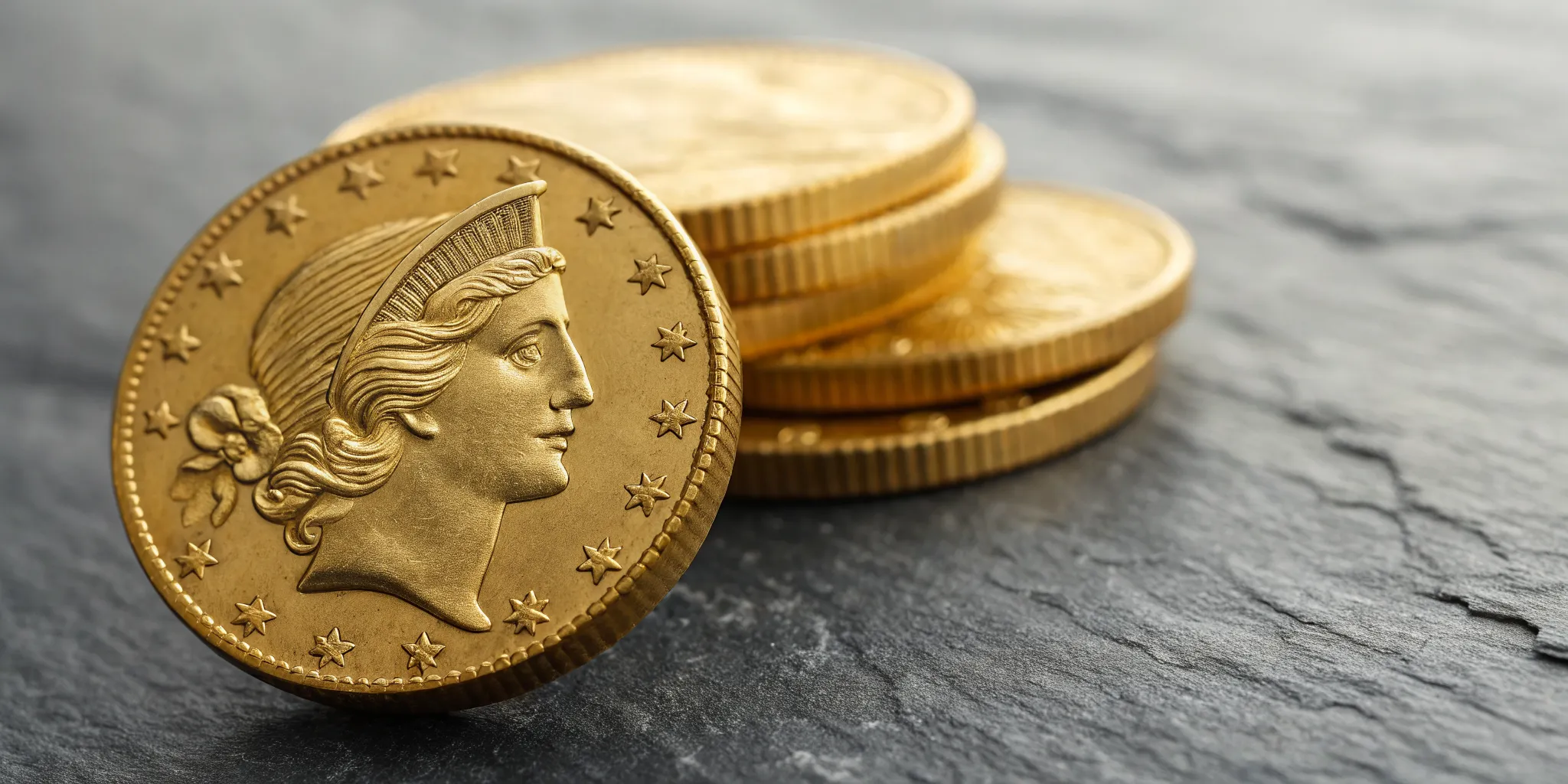
 Two Liberty Head gold coins can look nearly identical but have wildly different values. One might be worth a price close to its gold content, while the other could be a five-figure rarity. The difference often comes down to small, easily overlooked details. A tiny letter indicating its mint of origin, the specific year it was struck, or its state of preservation can transform a common coin into a prized collectible. Understanding what makes one coin common and another a key-date rarity is essential for any serious collector or investor. This guide will walk you through the specific factors that determine the true Liberty head gold coin value, helping you spot the hidden potential in these historic pieces.
Key Takeaways
- Value is More Than Gold: A coin's price begins with its gold content, but its true market value is determined by numismatic factors. Rarity, physical condition, and the mint mark create a collector premium that can far exceed the base metal price.
- Certification is Crucial: A coin's physical condition heavily influences its price, so professional grading is essential. An official grade from a trusted service like PCGS or NGC provides objective proof of authenticity and condition, which is necessary for establishing market value.
- Rarity is in the Details: True scarcity is determined by more than just production numbers. Pay close attention to the coin's date and mint mark to identify key dates, and remember that historical events like the 1933 Gold Recall drastically reduced the survival rates for many issues.
What Are Liberty Head Gold Coins?
If you’re interested in American numismatics, you’ll quickly come across Liberty Head gold coins. These beautiful pieces are more than just precious metal; they are tangible links to a transformative era in United States history. Minted for over 70 years, they represent a period of westward expansion, industrial growth, and the California Gold Rush. For collectors and investors, Liberty Head coins offer a compelling combination of historical significance, intrinsic gold value, and numismatic rarity. Understanding their story is the first step to appreciating their worth.
A Quick History of the Design
The Liberty Head design holds the record as the longest-running motif in U.S. coinage history, spanning from 1838 to 1908. Created by Chief Engraver Christian Gobrecht, the design features a classic, Greco-Roman inspired profile of Lady Liberty, her hair in a coronet inscribed with the word "LIBERTY." This elegant and powerful image graced American gold coins for decades, becoming a symbol of the nation's stability and ambition. Because the design was used for such a long time across various denominations, it offers a fascinating window into the evolution of the U.S. Mint. Exploring the different types of rare coins for sale shows just how iconic this design became.
Exploring the Denominations
Liberty Head gold coins were minted in four primary denominations to meet the needs of a growing economy. These included the $2.50 Quarter Eagle, $5 Half Eagle, $10 Eagle, and the impressive $20 Double Eagle. The creation of the Double Eagle was a direct result of the California Gold Rush. As vast quantities of gold flowed from the West Coast, a larger denomination was needed to facilitate major transactions. These coins were the workhorses of American commerce, used in everything from daily trade to large-scale bank transfers. Each denomination tells a part of the story of America’s economic journey, making them a diverse and interesting series to collect.
Why the Gold Standard Era Still Matters
The story of Liberty Head gold coins is deeply connected to the gold standard and a pivotal moment in U.S. financial history. In 1933, President Franklin D. Roosevelt issued an executive order recalling gold coins from the public to be melted down. This act, intended to stabilize the economy during the Great Depression, drastically reduced the number of surviving Liberty Head coins. It was even illegal for private citizens to own most gold bullion from 1933 until 1974. This historical event is the primary reason these coins are significantly rarer than modern issues, making them highly sought-after artifacts of a bygone era.
What Determines a Liberty Head Gold Coin's Value?
Figuring out the value of a Liberty Head gold coin is about looking at it from two different angles: as a piece of precious metal and as a piece of history. It’s a fascinating blend of tangible and intangible factors. The final price isn't just about how much gold is in the coin; it’s also about its rarity, its condition, and the story it tells. Think of it like appraising a vintage car. You start with the value of the raw materials, but the real worth comes from its make, model, production numbers, and how well it’s been preserved.
For Liberty Head coins, the journey to determining value begins with their intrinsic gold content, which provides a solid price floor. From there, we add layers of numismatic, or collector, value. This is where things get interesting. We look at where the coin was minted, how many were made, and its specific history. A coin from a low-mintage year or a historically significant mint can be worth many times its weight in gold. Understanding these key drivers is the first step to becoming a savvy collector and making smart decisions for your portfolio. We’ll break down each of these components so you can see the full picture of what makes these coins so compelling.
Gold Content and Melt Value
Every valuation of a Liberty Head gold coin starts with its most basic component: the gold itself. These classic pre-1933 coins are made of 90% gold, and this content gives them a baseline "melt value." This is the coin's intrinsic worth if it were to be melted down and sold just for its raw metal. This value isn't static; it changes daily along with the global spot price of gold. You can think of the melt value as the absolute minimum price for the coin. For common, heavily worn coins, the price might not be much higher than this. However, for most Liberty Heads, this is just the starting point of their valuation story.
Numismatic vs. Bullion Value: What's the Difference?
Here’s where collecting gets exciting. While bullion value is tied directly to the spot price of gold, numismatic value is what a collector is willing to pay for a coin's rarity and desirability. A coin's numismatic, or collector, value can be significantly higher than its melt value. This premium is based on factors like the coin's condition, its mintage numbers, and overall demand in the market. Think of it this way: a standard bar of gold bullion has value, but a rare gold coin has value and a story. That story, combined with its scarcity, is what creates the numismatic premium that serious collectors seek.
How Mint Marks Influence Rarity
One of the smallest details on a coin can have one of the biggest impacts on its value: the mint mark. This tiny letter, usually found on the reverse side, tells you which U.S. Mint facility produced the coin. For Liberty Heads, you might see marks for Philadelphia (which often has no mint mark), San Francisco (S), New Orleans (O), Carson City (CC), or Denver (D). Some mints produced far fewer coins than others in certain years, making those coins much rarer today. The "CC" mint mark, for example, is famous among collectors because the Carson City Mint had a short operational life and relatively low output, making its coins highly sought-after.
The Value of a Coin's Story: Provenance and History
Beyond the physical characteristics, a coin's history can add another layer of value. This includes both the coin's individual story (its provenance) and its connection to the broader American story. For instance, the $20 Liberty Head Double Eagle was created in response to the California Gold Rush to facilitate large transactions. Knowing your coin is a direct link to that transformative era adds to its appeal. Furthermore, a coin with a documented provenance, meaning its history of ownership can be traced back to a famous collection, often carries a premium. This historical context is a huge part of what makes collecting rare coins for sale so rewarding.
How Condition Impacts a Coin's Value
When you move beyond a coin's gold content, its physical condition becomes one of the most important factors driving its value. Two Liberty Head Gold Coins from the same year and mint can have wildly different prices based entirely on their state of preservation. For collectors and investors, understanding the nuances of coin condition is essential. A coin that has been carefully preserved since the day it was struck is in a completely different league than one that has passed through thousands of hands. This difference isn't just cosmetic; it's the primary driver of numismatic premium.
The journey from a raw, ungraded coin to a certified, investment-ready asset involves a detailed assessment of its surface, strike, and luster. Let's break down how experts evaluate a coin's condition and why it matters so much.
Understanding the Coin Grading Scale
Coins are graded on a 70-point scale that was developed to standardize how we talk about a coin's condition. A grade of 1 represents a coin that is barely identifiable, while a 70 signifies a theoretically perfect coin with no visible flaws. The most significant threshold on this scale is the "Mint State" (MS) designation, which applies to coins graded 60 and above. A Mint State coin is uncirculated, meaning it never entered public commerce and retains its original mint luster.
For those looking at rare coins for sale as an investment, the grades from MS-63 to MS-66 are often considered "Investment-Grade." Within this range, even a single point difference can translate to a substantial change in value, sometimes by thousands of dollars.
Circulated vs. Uncirculated: What to Know
The most fundamental distinction in coin condition is whether a coin is circulated or uncirculated. A circulated coin has been used as money. It will show varying degrees of wear, from light friction on its highest points to significant loss of detail. An uncirculated coin, on the other hand, was saved from the moment it was produced. It might have minor bag marks from handling at the mint, but it has no wear from use.
As you might expect, the coin's grade dramatically alters its price. A common-date Liberty Head gold coin in a circulated grade might trade for a price close to its gold bullion value. However, a rare, uncirculated example of that same coin can carry an enormous premium, making it a prized possession for serious collectors.
The Importance of Professional Grading (PCGS & NGC)
If you have a Liberty Head Gold Coin that appears to be in great shape, getting it professionally graded is the only way to know its true market value. Independent, third-party grading services like the Professional Coin Grading Service (PCGS) and the Numismatic Guaranty Corporation (NGC) are the industry standard. These organizations authenticate a coin, verify its metallic content, and assign it a precise grade.
This certification process removes subjectivity and provides a universal language for buyers and sellers. A coin encapsulated in a PCGS or NGC holder is trusted across the market, ensuring its liquidity and value. This expert verification is a critical step to protect your investment and confirm you have a genuine, accurately graded piece of history.
A Breakdown of Values by Denomination
The Liberty Head series is fascinating because it spans four distinct denominations, each with its own story and value drivers. While the intrinsic gold content sets a baseline price, the real excitement for collectors comes from the numismatic premium. A coin's year, mint mark, and condition can cause its value to soar far beyond its melt value. Let's look at what you can expect from each denomination, from the small Quarter Eagle to the impressive Double Eagle.
$2.50 Quarter Eagle
The $2.50 Quarter Eagle is the smallest of the Liberty Head gold coins, containing just over a tenth of an ounce (0.12094 oz) of pure gold. Because of their size and relative affordability, they are a fantastic entry point for new collectors of the series. Values for common-date coins in circulated condition often start around a few hundred dollars, not much more than their base gold value. However, the story changes quickly with rarity and grade. Certain dates, like those from the Charlotte and Dahlonega mints, are highly prized. An uncirculated Quarter Eagle or a key date can easily be worth thousands, making it a piece where careful expert appraisal is essential.
$5 Half Eagle
Containing nearly a quarter-ounce (0.2419 oz) of pure gold, the $5 Half Eagle was a true workhorse coin in the 19th century. Its long production run means there are many dates available, but don't let that fool you. This series is filled with scarce dates and rare mint mark combinations that are highly sought after by serious collectors. Common-date examples in average condition might trade for a modest premium over their gold value, but high-grade, uncirculated specimens command significantly higher prices. The fun is in the hunt for those elusive dates that can turn a standard gold coin into a major numismatic find. Many collectors focus on building a complete set of these beautiful rare coins for sale.
$10 Eagle
The $10 Liberty Head Eagle is a substantial coin, holding nearly half an ounce (0.4838 oz) of pure gold. It strikes a perfect balance between significant gold content and rich numismatic history, making it a favorite among both investors and dedicated collectors. Prices for common examples typically start above $1,000 and climb based on condition and rarity. The series is divided into two major types: the "No Motto" design (1838-1866) and the "With Motto" design (1866-1907). Early dates and those from the Carson City mint are particularly valuable. These coins are a cornerstone of many gold bullion portfolios, offering a blend of precious metal security and collector appeal.
$20 Double Eagle
As the largest regular-issue U.S. gold coin, the $20 Liberty Head Double Eagle is an iconic piece of American history, containing almost a full ounce (0.9675 oz) of pure gold. Its sheer size and beauty make it a centerpiece in any collection. The value for a common-date Double Eagle in circulated condition typically starts around its gold melt value plus a small premium, often beginning near $2,400 and increasing with grade. However, rare dates, mint marks (especially Carson City), and high-grade uncirculated examples can be worth tens or even hundreds of thousands of dollars. For many, owning a Double Eagle is the ultimate goal, representing a tangible connection to America's Gilded Age and a solid investment in precious metals.
What Makes a Liberty Head Gold Coin Rare?
When we talk about a coin’s value, rarity is a huge piece of the puzzle. Beyond its weight in gold, a Liberty Head’s scarcity can turn it from a simple piece of bullion into a prized collectible. But what exactly makes one coin rare and another common? It’s not always as simple as how many were made. Rarity is a combination of low production numbers, historical events that reduced their supply, and unique characteristics that set certain coins apart. Understanding these factors is key to spotting a truly special find.
Identifying Key Dates and Low Mintage Years
The first place to look for rarity is the coin’s mintage, which is the total number of coins produced by a specific mint in a given year. A coin’s date and mint mark (a small letter indicating where it was made, like “S” for San Francisco or “CC” for Carson City) tell this story. Some years had incredibly low production runs, making those coins instantly scarce. These are what collectors call “key dates.” For example, a coin from a high-production year at the Philadelphia mint might be easy to find, but the same denomination from the Carson City mint in a low-mintage year could be a once-in-a-lifetime discovery. Learning to spot these key date coins is a fundamental skill for any serious collector.
How Survival Rates Determine Rarity
Mintage numbers only tell us how many coins started their journey, not how many finished it. The actual number of coins available today, or the “survival rate,” is often much lower. History played a huge role here. Many Liberty Head gold coins were melted down over the years for their metal content. The most significant event was the Gold Recall of 1933, when the U.S. government ordered citizens to turn in their gold coins. Millions were melted into gold bars, wiping a huge portion of these beautiful coins from existence. This historical bottleneck means that even coins with seemingly high mintage numbers can be exceptionally rare today. Our team's decades of experience helps us evaluate how these historical factors impact a coin's true rarity.
Special Editions: Proofs and Design Variations
Some coins were rare from the moment they were struck. Proof coins, for instance, were never meant for your pocket. They were produced in very small batches using specially polished dies to create a brilliant, mirror-like finish for collectors. Their mintage numbers are tiny, making them some of the rarest and most sought-after Liberty Heads. Additionally, the Liberty Head series was produced for decades, leading to several design variations. The $20 Double Eagle, created to handle large transactions during the California Gold Rush, is a perfect example. It has three major design types, and certain variations within those types are much harder to find. These special editions and design changes create exciting opportunities for collectors looking for something truly unique compared to standard gold bullion.
How Gold Market Trends Affect Coin Prices
Understanding how the gold market influences the value of a Liberty Head coin is key for any collector or investor. While the daily fluctuations of gold prices certainly play a part, they don't tell the whole story. A coin's final value is a blend of its intrinsic metal worth and its desirability as a historical artifact. This dual nature is what makes these coins such a fascinating asset class, capable of behaving differently than a simple piece of bullion. Let's break down how these forces work together to determine what your coin is truly worth.
The Role of Gold's Spot Price
Every Liberty Head gold coin has a foundational value based on its gold content, often called its "melt value." This baseline is directly tied to the current spot price of gold. Think of the spot price as the live market rate for an ounce of gold, which fluctuates throughout the day. This means that as the price of gold bullion rises, the base value of your Liberty Head coin also increases. This intrinsic value provides a solid floor, ensuring the coin will always be worth at least its weight in gold. For many collectors, this offers a sense of security that isn't always present with other types of collectibles.
What Drives Value Beyond the Gold Price?
This is where things get interesting. The real magic in a Liberty Head's price comes from its numismatic value, which is the premium a collector will pay above and beyond the gold content. Several factors contribute to this premium. Rarity is a huge driver; a coin from a low-mintage year or a specific mint, like Carson City, can be worth many times its melt value. The coin's condition, or grade, is also critical. An uncirculated, pristine coin will command a much higher price than one that shows wear from its time in circulation. These factors are what separate a piece of gold from a piece of history.
Why Liberty Head Coins Can Outperform Bullion
Because Liberty Head coins have these two value components, their performance can be more stable and have greater potential than bullion alone. While bullion's value is tied directly to the spot price, the numismatic premium on a rare coin is driven by collector demand. This demand can remain strong or even grow, regardless of what the gold market is doing. This limited supply of historical coins means their value can appreciate independently. This unique dynamic allows you to own a tangible piece of history that also serves as a hard asset, giving you a way to invest in rare coins that offers benefits beyond a simple commodity.
How to Check for Authenticity and Condition
When you're investing in a piece of history like a Liberty Head gold coin, you want to be absolutely certain you're getting the real deal. Authenticity and condition are the two pillars that support a coin's value, so knowing how to assess them is crucial. It protects you from costly mistakes and ensures your collection is built on a solid foundation of quality. Let's walk through the key steps to verify your coins and protect your investment for the long haul.
Spotting Fakes: Key Red Flags
A counterfeit coin can be a collector's worst nightmare, but you can learn to spot the warning signs. Start by examining the coin's details. Fakes often have a soft, mushy, or "soapy" appearance because they are made from casts of real coins, which don't capture the sharp details of a genuine strike. Look for signs of unusual wear, improper minting, or markings that don't match known varieties. Pay close attention to the weight, diameter, and thickness; if these measurements are off, it's a major red flag. Comparing a potential purchase to images of certified rare coins for sale can help you train your eye to recognize what a genuine, high-quality coin should look like.
What a Third-Party Grade Really Means
While spotting obvious fakes is a good skill, the most reliable way to confirm a coin's authenticity and condition is through professional grading. It's always a good idea to have a valuable coin checked by a top-tier grading service like PCGS or NGC. These experts will confirm if it's real, what it's made of, and its exact condition, which helps determine its true market value. A third-party grade provides an unbiased, standardized assessment that is respected across the industry. This certification not only gives you peace of mind but also makes the coin easier to sell later, as buyers have confidence in its quality and authenticity. It transforms a subjective opinion into a verifiable fact.
Protect Your Investment: Proper Storage and Handling
Your responsibility as a collector doesn't end once you've purchased a certified coin. Proper storage and handling are essential for preserving its condition and value over time. Even a high-grade coin can be damaged by a fingerprint, a scratch, or exposure to humidity. Buying certified coins from trusted graders helps you avoid problems from the start, ensuring you get a coin that is accurately valued. To maintain that value, store your coins in a controlled environment that is cool and dry. Use inert, high-quality holders or slabs to protect them from physical damage and environmental contaminants. Proper care ensures your gold bullion and numismatic treasures remain in pristine condition for years to come.
Common Valuation Mistakes to Avoid
When you're figuring out what your Liberty Head gold coin is worth, it's easy to make a few common missteps. Getting an accurate valuation requires looking beyond the obvious and understanding the nuances that separate a standard gold coin from a true collector's piece. A coin's story is told through its details, and overlooking them can lead to a major underestimation of its value. Let's walk through the most frequent mistakes so you can approach your collection with confidence and a well-trained eye. These errors can be the difference between seeing your coin as simple bullion and recognizing it as a valuable historical artifact.
Focusing Only on Gold Content
The gold in a Liberty Head coin gives it a foundational value, often called its "melt value." This is the price it would fetch if it were melted down. While this intrinsic value is a great starting point, it's just that: a start. Focusing only on the gold content means you're missing the biggest piece of the puzzle, the numismatic premium. This premium is the value added by collectors for the coin's rarity, history, and condition. Depending on the denomination and condition, these coins can be valued anywhere from a few hundred dollars to tens of thousands, far exceeding their simple gold bullion value. Thinking only about melt value is like judging a historic home by the cost of its lumber.
Ignoring Rarity, Key Dates, and Mint Marks
Two Liberty Head Double Eagles might look identical at first glance, but one could be worth thousands more than the other. Why? The answer lies in the small details. Rarity is a massive factor in numismatic value, and it's determined by key dates and mint marks. A "key date" is a year with a very low mintage, meaning few were produced. The mint mark, a small letter on the coin, tells you where it was made. Coins from certain mints, like Carson City (CC) or San Francisco (S), are often much rarer and more sought-after. Ignoring these marks is one of the quickest ways to misjudge a coin's worth. Always check the year and look for that tiny letter; it can make all the difference in your collection of rare coins for sale.
Underestimating Professional Certification
You might have a great eye for detail, but nothing replaces the security of a professional, third-party grade. Services like the Professional Coin Grading Service (PCGS) and the Numismatic Guaranty Company (NGC) are the industry standard for a reason. They provide an objective, expert assessment of a coin's authenticity and condition, which is then sealed in a protective holder. A certified grade removes all guesswork and provides a universally accepted basis for valuation. Trying to sell a high-value raw (ungraded) coin is difficult, as buyers will question its condition and authenticity. Working with a trusted expert who understands these certifications is essential for protecting your investment and realizing its true market value.
Where to Buy and Sell Liberty Head Gold Coins
Finding the right place to buy or sell your Liberty Head gold coins is just as important as choosing the right coin. Whether you're adding to your collection or liquidating an asset, working with a trusted partner ensures you get a fair price and a secure transaction. The market for these historic coins is active, but it requires a bit of know-how to get started. Your goal should be to find a dealer who is not only an expert in numismatics but also committed to transparency and client education. This approach protects your investment and makes the entire process smoother and more rewarding.
How to Choose a Reputable Dealer
When you're ready to buy, a reputable dealer is your most important asset. Look for experts who prioritize transparency and education. A trustworthy dealer will encourage you to purchase coins certified by top-tier grading services like the Professional Coin Grading Service (PCGS) or Numismatic Guaranty Company (NGC). This certification is your assurance of a coin's authenticity and condition, which directly impacts its market value. A great dealer won't just sell you a coin; they will help you understand its history, rarity, and place within the market. They should be able to answer your questions clearly and provide documentation for their inventory, giving you complete confidence in your purchase.
Why Partner with Park Avenue Numismatics
With over 35 years of experience and an A+ rating from the Better Business Bureau, we've built our reputation on trust and expertise. We understand that a coin's value is more than just its gold content. We appreciate the rich history behind these pieces, like the $20 Double Eagle, which was born from the California Gold Rush to facilitate large transactions. Our team of numismatists provides the expert guidance you need to build a meaningful collection or portfolio. When you work with us, you're partnering with a team that is deeply invested in the historical and financial significance of every coin we handle, ensuring you receive unparalleled service and access to a premier inventory.
Tips for a Secure and Successful Transaction
A successful transaction always starts with knowledge. Before you buy or sell, take the time to do your research and consult with an expert. Relying only on a coin's melt value can be a costly mistake, as it ignores the numismatic premium tied to rarity, condition, and historical importance. If you have a Liberty Head gold coin that seems old, rare, or is in exceptional condition, having it professionally evaluated is essential. This step clarifies its true market worth. When you browse our collection of rare coins for sale, you can see how professional grading and detailed descriptions create a transparent and secure environment for both buyers and sellers.
Related Articles
- LIBERTY HEAD DOUBLE EAGLES, NO MOTTO (1849-1865)
- Park Ave Numismatics | Rare Coins | Precious Metals | Collectible Coins
- LIBERTY SEATED DOLLARS, NO MOTTO (1840-65)
- LIBERTY STANDING QUARTERS, STARS BELOW EAGLE (1917-30)
- Blog | Rare Coins, Gold & Silver for Discerning Collectors
Frequently Asked Questions
I have a Liberty Head gold coin. What's the first step to finding out its value? The first step is to identify its key features without cleaning or altering it in any way. Look for the date and a small mint mark, which is a letter like "S," "O," "CC," or "D" usually found on the reverse side. These details help determine its production numbers. Next, make an honest assessment of its condition. A coin with sharp details and original shine is valued very differently from one that is heavily worn. These factors, rarity and condition, are the foundation of its value beyond its simple gold content.
Why can two identical-looking Liberty Head coins have such different prices? The price difference almost always comes down to condition and rarity. A coin that was never used in commerce and still has its original mint luster (an uncirculated grade) is worth much more than a coin that is worn from handling. Beyond that, a tiny mint mark can signal immense rarity. For example, a coin from the Carson City mint (CC) is often far scarcer than one from the same year made in Philadelphia, creating a huge gap in their respective values.
Is it better to invest in a rare Liberty Head coin or just a standard gold bullion bar? This really depends on your personal investment strategy. A gold bullion bar's value is tied directly to the fluctuating spot price of gold. A rare Liberty Head coin contains that same intrinsic gold value, but it also has a numismatic premium. This premium is based on its historical significance, condition, and scarcity. This gives the coin a second layer of value driven by collector demand, which can provide stability and growth potential that is separate from the daily movements of the gold market.
What does it mean if a coin is "certified" by PCGS or NGC? Certification means an independent team of experts has authenticated the coin, graded its physical condition on a 70-point scale, and sealed it in a secure, protective holder. This process provides a universally trusted standard for the coin's quality and authenticity. It removes subjectivity from the equation, giving both buyers and sellers a clear and reliable basis for the coin's market value.
Do Liberty Head coin values go up and down with the price of gold? Yes, but the price of gold is only part of the story. The coin's base value, or "melt value," will rise and fall with the gold market. However, the numismatic premium, which is the value collectors place on its rarity and condition, is driven by separate supply and demand factors within the collector market. For a very rare or high-grade coin, this numismatic value can be the largest component of its price, making it less sensitive to the daily swings of the gold spot price.





