
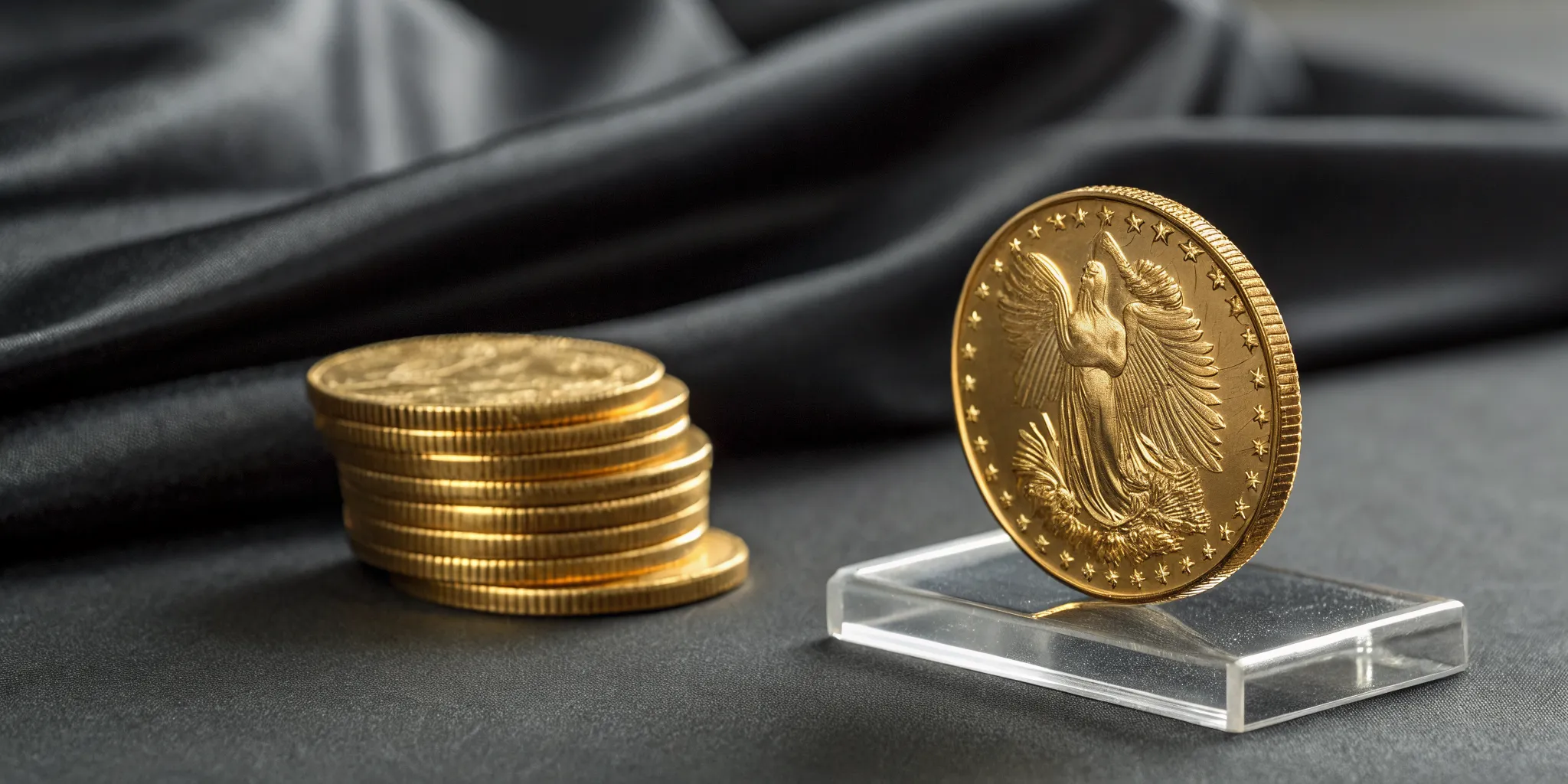
 Some collectibles sit on a shelf, but others carry the weight of history in your hand. The Liberty Eagle Gold Coin is one of those remarkable assets. Minted for nearly 70 years, these coins were the financial backbone of a nation experiencing explosive growth. They were there for the California Gold Rush, the turmoil of the Civil War, and the industrial expansion that reshaped the country. Owning one isn't just about possessing gold; it's about holding a tangible piece of the American story. This guide explores the rich history behind this iconic coin, from its first minting to its sudden end, showing why it remains a cornerstone for serious collectors.
Key Takeaways
- Look beyond the gold weight: While every Liberty Eagle has a base value from its gold content, its numismatic worth, driven by rarity, condition, and history, is what determines its collector price and long-term potential.
- Prioritize certified coins for security: To ensure you're buying a genuine and accurately graded coin, stick to pieces certified by top services like PCGS or NGC. This professional verification protects your investment and removes any doubt about the coin's quality.
- Find a dealer you can trust: A reputable dealer does more than just sell you a coin; they offer expertise, transparent pricing, and a fair buyback policy. This partnership is crucial for building a valuable collection with confidence.
The History of the Liberty Eagle Gold Coin
The Liberty Head Eagle is more than just a gold coin; it’s a tangible piece of American history. Spanning over a century of production, its story mirrors the nation's journey through growth, conflict, and economic transformation. From the early days of the U.S. Mint to the California Gold Rush and the Great Depression, the Liberty Eagle was there. Understanding this history is key for any serious collector, as it directly influences the rarity, design, and value of these iconic coins. For those looking to buy rare coins, the Liberty Eagle series offers a fascinating and rewarding entry point into classic American numismatics.
The First Liberty Eagles: 1795–1804
The story of the Liberty Eagle begins shortly after the birth of the United States itself. The first $10 gold pieces were struck in 1795, marking a pivotal moment for the young nation's currency system. These early coins, known as the Capped Bust or Turban Head Eagles, featured a striking image of Lady Liberty wearing a stylized cap. This design was a powerful symbol of American independence and sovereignty in the country's formative years. Production of this initial series was limited, and it ceased entirely in 1804. This short run, combined with their historical importance, makes these first Liberty Eagles exceptionally rare and highly sought after by collectors today.
The Coronet Head Design: 1838–1907
After a 34-year hiatus, the $10 Gold Eagle returned in 1838 with a completely new look: the Coronet Head design. Created by Chief Engraver Christian Gobrecht, this classic and enduring portrait of Liberty would remain on the coin for nearly 70 years. This long production period coincided with a time of immense change in America, including westward expansion and industrialization. The Coronet Head itself saw minor modifications over the decades, creating distinct varieties that collectors prize. Its longevity makes it one of the most recognizable designs in all of American coinage and a cornerstone of any comprehensive gold bullion collection.
How the Gold Rush Changed Minting
The trajectory of American currency was forever altered by the discovery of gold, first in the Carolinas and Georgia, and later in California. This sudden influx of domestic gold created an urgent need for the U.S. Mint to produce more coins. The Liberty Eagle was central to this effort, as the government worked to convert the raw gold into standardized currency. This period not only increased the mintage of existing coins but also led to the creation of new denominations, like the Double Eagle, to handle the sheer volume of precious metal. The Gold Rush fundamentally changed the American economy and cemented the role of gold coins in commerce.
The 1933 Gold Ban and Its Collector Legacy
In 1933, at the height of the Great Depression, President Franklin D. Roosevelt issued an executive order making it illegal for private citizens to own most forms of gold. This act required Americans to turn in their gold coins to the government, and it abruptly ended the minting of gold currency, including the Liberty Eagle. The ban remained in place until 1974. This event created an instant scarcity for all pre-1933 gold coins, transforming them from everyday money into historical artifacts. For collectors, this ban is a defining moment that separates circulating currency from a protected class of rare coins, adding a unique layer of demand and value.
Types of Liberty Eagle Gold Coins
The Liberty Eagle series wasn't just one coin; it was a family of gold currency that powered American commerce for decades. Each denomination served a different purpose and tells a unique story about the nation's growth. Understanding these distinct types is the first step for any serious collector looking to acquire these beautiful pieces of history. Let's look at the four primary Liberty Head gold coins you'll encounter.
The $2.50 Quarter Eagle
The $2.50 Quarter Eagle was one of the first and smallest denominations in the Liberty Head family. Introduced when gold rushes were transforming the American economy, this coin played a vital role in making gold a part of daily life. Its smaller size made it practical for everyday transactions, unlike its larger, higher-value siblings which were often reserved for banking or large purchases. For collectors, the Quarter Eagle offers a tangible connection to the early days of U.S. gold currency. Owning one is like holding a piece of the economic engine that fueled the nation's westward expansion and commercial growth.
The $5 Half Eagle
The $5 Liberty Gold Half Eagle is a true workhorse of American coinage and a significant piece of history. Minted for nearly 70 years, this coin was a constant presence in the pockets of Americans during a period of incredible economic growth and change. It struck a perfect balance between value and practicality, making it a staple for all kinds of transactions. Each $5 Half Eagle is a small time capsule, reflecting the aspirations and prosperity of the nation during the 19th and early 20th centuries. Its long minting history also provides a fascinating variety of dates and mint marks for collectors to pursue.
The $10 Eagle
The $10 Liberty Head Eagle holds a special place in numismatics as the coin that defined the "Eagle" as the base unit for U.S. gold coinage. First minted in 1838, its production marked a confident return to gold coinage after a multi-decade hiatus. This coin quickly became a cornerstone of American commerce and was trusted in transactions both at home and abroad. With its substantial size and classic design, the $10 Eagle is highly sought after by those who appreciate its historical weight and status. Exploring the different rare coins for sale can show you the variety available within this foundational series.
The $20 Double Eagle
Born from the flood of gold during the California Gold Rush, the $20 Liberty Head Double Eagle was the largest circulating gold coin of its time. First struck in 1849, its creation was a direct response to the need for a way to convert the massive amounts of new gold into coinage efficiently. With nearly a full ounce of gold, the Double Eagle was a powerhouse, primarily used for large-scale banking and international trade. Its impressive size and significant gold content make it a cornerstone for any serious collection of U.S. gold bullion. It represents the peak of American gold coinage in the 19th century.
Decoding the Liberty Eagle's Design
The Liberty Head Eagle’s design is a masterclass in American symbolism, created by U.S. Mint Chief Engraver Christian Gobrecht. Its classic, Greco-Roman style set the standard for U.S. coinage for decades. Every element, from the stars on the obverse to the eagle on the reverse, was carefully chosen to represent the nation's values and strength. For collectors, understanding these details is the first step in appreciating the coin's historical and numismatic significance. The design evolved slightly over its long mintage, and these variations are key to identifying specific issues and their rarity.
Obverse: Lady Liberty
The front, or obverse, of the coin features a distinctly classic portrayal of Lady Liberty. She is shown in a left-facing profile with her hair neatly tied in a bun and held in place by a string of beads. A coronet, or small crown, is inscribed with the word "LIBERTY," sitting elegantly atop her head. Encircling her are 13 stars, a tribute to the original 13 colonies that formed the United States. The coin’s year of mintage is displayed prominently at the bottom, anchoring this timeless design. This portrait is a powerful symbol of freedom and a hallmark of 19th-century American coinage.
Reverse: The American Eagle
On the reverse, you’ll find a proud and powerful American bald eagle, its wings outstretched. This heraldic eagle clutches an olive branch in its right talon and a bundle of three arrows in its left, symbolizing the nation's desire for peace but its readiness to defend itself. A shield is emblazoned on the eagle's chest, representing national protection. The inscriptions "UNITED STATES OF AMERICA" and the coin's denomination, such as "TEN D." for the $10 Eagle, encircle the design. This imagery conveys a message of strength, sovereignty, and resilience that has resonated throughout American history.
Composition: 90% Gold, 10% Copper
Liberty Eagle coins were minted from an alloy of 90% gold and 10% copper. This specific composition wasn't chosen by chance. While the high gold content gives the coin its intrinsic value, the addition of copper was a practical decision. Copper is a much harder metal than pure gold, and adding it to the mix created a more durable coin that could better withstand the wear and tear of daily circulation. This thoughtful blend ensured the coins were not only valuable but also functional for commerce. Today, this composition is a key specification for anyone investing in historic gold bullion.
Why Mint Marks Matter
A tiny letter stamped on a coin can make a world of difference in its value, and the Liberty Eagle is no exception. These letters, known as mint marks, indicate which U.S. Mint facility produced the coin. For example, "S" stands for San Francisco, "CC" for Carson City, "D" for Dahlonega (and later Denver), and "O" for New Orleans. Coins from the Philadelphia Mint typically have no mint mark. Because some mints produced far fewer coins than others in certain years, the mint mark is a critical factor in determining a coin's rarity and, consequently, its value to collectors of rare coins for sale.
Adding "In God We Trust"
A significant design change occurred in 1866 with the addition of the motto "IN GOD WE TRUST." This phrase was introduced on a flowing ribbon placed just above the eagle's head on the reverse side of the coin. The change was a reflection of the increased religious sentiment in the country following the turmoil of the Civil War. This addition creates two distinct varieties for collectors: the "No Motto" type (minted from 1838 to 1866) and the "With Motto" type (minted from 1866 to 1907). The presence or absence of this motto is one of the first things a collector looks for when identifying and valuing a Liberty Eagle.
What Determines a Liberty Eagle's Value?
Figuring out the value of a Liberty Eagle gold coin is about looking beyond its beautiful design and gold content. While its weight in gold gives it a baseline price, the true value for a collector or investor comes from a blend of four key factors. A coin’s story, its scarcity, and its physical condition all play a huge role in its final worth. Understanding these elements is the first step to building a valuable collection and making smart purchases. Let's break down exactly what you should be looking for.
Rarity and Mintage
The basic rule of supply and demand is central to coin collecting: the rarer the coin, the more it's worth. A coin's rarity is primarily determined by its mintage, which is the number of coins produced in a specific year at a particular US Mint branch. For example, a Liberty Eagle from the Philadelphia Mint (no mint mark) will have a different value than one from Carson City (CC), New Orleans (O), or San Francisco (S), even if they are from the same year. Some years had exceptionally low production numbers, making those coins the prized possessions of any collection. Researching mintage figures is a crucial part of assessing any of our rare coins for sale.
Grade and Condition
A coin's condition, or grade, is one of the most significant factors in its value. A well-preserved coin that looks nearly the same as it did the day it was minted will always command a higher price than one that is heavily worn. Professional grading services like PCGS and NGC assess coins on a 70-point scale, evaluating details like surface luster, scratches, and wear. A high grade, especially a "Mint State" (MS) designation for uncirculated coins, confirms the coin's quality and preservation. With over 35 years of experience, our team of experts relies on this certified grading to ensure you are acquiring an authentic, high-quality piece for your portfolio.
Gold Content vs. Spot Price
Every Liberty Eagle contains 90% gold, giving it an intrinsic value based on its weight and the current spot price of gold. This is often called its "melt value." However, for a historic coin like the Liberty Eagle, this is just the starting point. The numismatic value, which is what collectors are willing to pay, is driven by rarity, condition, and demand. This value is almost always higher than the base gold bullion price. Think of the spot price as a safety net that provides a floor for the coin's value, while its numismatic qualities determine how high it can go.
Historical Significance and Demand
Liberty Head gold coins are more than just precious metal; they are tangible pieces of American history. Minted from 1838 to 1907, they circulated during a transformative period that included the Civil War, the California Gold Rush, and westward expansion. This rich history creates strong and consistent demand from collectors who want to own a part of that story. When many people want something that is in limited supply, the value naturally increases. This collector demand is a powerful force that helps sustain and grow the value of these classic rare gold coins.
How to Grade and Authenticate Liberty Eagle Coins
A Liberty Eagle's value is tied directly to its condition and authenticity. For any serious collector or investor, knowing how to assess these coins is a fundamental skill. Grading determines the physical condition, while authentication confirms the coin is genuine. Both processes require a keen eye and a solid understanding of what to look for. While professional services provide the final word, learning the basics helps you make smarter purchasing decisions and appreciate the nuances that make a coin truly valuable. This knowledge protects you from common pitfalls and ensures you’re building a collection with integrity and long-term potential.
Understanding the Sheldon Grading Scale
The first step in assessing any coin is to understand its grade. The numismatic world uses the Sheldon Grading Scale, a 70-point system that measures a coin's condition. A grade of 1 (Poor) means the coin is barely identifiable, while a 70 (Mint State) is a perfect coin with no visible flaws. For Liberty Eagles, this scale is crucial. Coins graded 60 or higher are considered "Uncirculated," meaning they never entered public circulation and retain their original mint luster. Anything below 60 is "Circulated" and will show varying degrees of wear. The difference of just a few points can mean thousands of dollars in value, so understanding coin grading is essential.
PCGS and NGC: The Grading Gold Standard
While you can learn to grade coins yourself, the industry standard relies on third-party grading services. The two most respected names in the business are the Professional Coin Grading Service (PCGS) and the Numismatic Guaranty Corporation (NGC). These organizations authenticate and grade coins, then seal them in protective plastic holders, often called "slabs," with a label detailing the coin's grade and information. A coin certified by PCGS or NGC carries a guarantee of authenticity and condition, which is why they often sell for higher prices. For investors, this certification provides peace of mind and makes the coin easier to sell later. Collectors often debate the finer points of PCGS vs. NGC, but both are trusted authorities.
Certified vs. Raw Coins
When you browse rare coins for sale, you'll see them described as either "certified" or "raw." A certified coin is one that has been graded and encapsulated by a service like PCGS or NGC. A raw coin has not been professionally graded. While raw coins can sometimes be bought for less, they carry significant risks. The grade is subjective, and more importantly, the coin could be a counterfeit. For this reason, most serious investors stick to certified coins. The importance of coin certification can't be overstated, as it provides a layer of security and liquidity to your investment, ensuring you own a genuine piece of history with a verified grade.
Physical Details to Inspect
Whether you're looking at a raw coin or confirming the grade on a certified one, you need to know what to look for. Grab a magnifying glass and start with the coin's high points, like the strands of Liberty's hair and the eagle's feathers, as these are the first areas to show wear. Look for original mint luster, which is the soft, satiny sheen a new coin has. Scratches, rim dings, and any signs of cleaning will lower the grade and value. You should also examine the clarity of the design elements, like the stars and lettering. Learning how to grade coins yourself is a rewarding skill that will make you a more confident buyer.
Red Flags to Watch For
Authentication is just as important as grading. Counterfeiters have targeted valuable gold coins for centuries, and modern fakes can be very convincing. One of the biggest red flags is evidence of cleaning. A coin that has been harshly polished will have an unnatural shine and tiny parallel scratches, which drastically reduces its numismatic value. Also, be wary of odd coloring or a mushy appearance in the details, which can indicate a fake. The best way to protect yourself is to become familiar with genuine examples. By identifying counterfeit coins through careful comparison and buying from a reputable dealer, you can ensure your collection is authentic.
Are Liberty Eagle Gold Coins a Good Investment?
This is a question I hear a lot, and the simple answer is yes, they absolutely can be. But whether they’re the right investment for you depends on your personal financial goals. Liberty Eagle gold coins are fascinating because they hold value in two distinct ways: as a precious metal and as a historical collectible. This dual nature gives them a unique position in the world of tangible assets. They aren't just pieces of gold; they are pieces of American history you can hold in your hand, minted during a transformative era for the country from 1838 to 1907.
This historical weight, combined with their gold content, makes them appealing to a wide range of people, from seasoned numismatists to investors looking to diversify their holdings. Unlike paper assets, their value isn't tied to a company's quarterly earnings report. Instead, they offer a blend of intrinsic metallic worth and the potential for significant appreciation based on rarity and collector demand. For many, adding a physical asset like a Liberty Eagle to their portfolio provides a sense of security and a direct connection to the past. Exploring the world of rare coins for sale can be a rewarding way to protect and grow your wealth, and Liberty Eagles are a fantastic place to start. We'll look at how their value is determined, how they fit into a modern portfolio, and what to consider before you buy.
Numismatic Value vs. Bullion Value
When you evaluate a Liberty Eagle, you're looking at two sources of value. First is its bullion value, which is the base worth of the coin’s physical gold content. This value fluctuates daily with the spot price of gold. Think of it as the coin's floor price; it will always be worth at least its weight in gold bullion. However, the real story for investors is the coin’s numismatic value. This is the premium a coin commands based on factors like its rarity, historical significance, condition, and overall collector demand. A common Liberty Eagle in poor condition might sell for a price close to its gold value, while a rare date in pristine condition can be worth many times more. These coins are tangible pieces of American history, and that story is what gives them their powerful numismatic appeal.
Diversifying Your Portfolio with Rare Gold
Adding physical assets to an investment portfolio is a time-tested strategy for building a stable financial foundation. Rare gold coins like the Liberty Eagle offer a unique form of diversification. Their value is not directly correlated with the fluctuations of the stock or bond markets, which can provide a buffer during times of economic uncertainty. Because they possess both bullion and numismatic value, they have two layers of worth. This can lead to significant long-term appreciation potential that outpaces gold bullion alone. Owning a portfolio of carefully selected rare U.S. coins means you hold tangible assets that are both historically significant and globally recognized for their value, making them a solid component of any long-term wealth strategy.
Using Liberty Eagle Coins in a Gold IRA
You can also hold certain Liberty Eagle gold coins within a self-directed Individual Retirement Account (IRA), often called a Gold IRA. This allows you to combine the tax advantages of an IRA with the security and growth potential of owning physical gold. However, it’s important to know that the IRS has strict requirements for coins to be IRA-eligible; they must meet specific fineness standards. While many pre-1933 gold coins like Liberty Eagles can qualify, not all of them do. Working with an experienced dealer is essential to ensure you select coins that meet these guidelines. A Gold IRA starter kit can help you understand the process of setting up an account and funding it with qualifying precious metals, turning your retirement savings into a tangible legacy.
Tips for Buying Your First Liberty Eagle
Adding a Liberty Eagle to your collection is an exciting step. To make sure your first purchase is a confident one, it helps to approach it with a clear strategy. Thinking through the market, the coin’s quality, and your own goals will help you select a piece you’ll value for years to come. These tips will guide you through the process, ensuring you find the perfect coin for your collection or investment portfolio.
Research the Market
Before you buy, take some time to explore the landscape of Liberty Eagle coins. These coins were minted in four denominations ($2.50, $5, $10, and $20) over many decades, creating a rich variety of options. You’ll find different years, mint marks, and designs, each with its own story. Consider what appeals to you most. Are you drawn to the historical significance of a specific era or the artistic detail of a particular design? Understanding the available rare coins for sale will help you narrow your focus and make a choice that aligns with your personal interests and budget.
Prioritize Certified Coins
For your peace of mind and the security of your investment, always prioritize certified coins. Coins graded and encapsulated by trusted third-party services like the Professional Coin Grading Service (PCGS) or the Numismatic Guaranty Corporation (NGC) have been verified for authenticity and condition by experts. This certification removes any guesswork about the coin's quality and provides a universally recognized standard of value. When you purchase a certified coin from a reputable dealer, you are protecting your investment and ensuring you receive exactly what you paid for. It’s the smartest way to build a collection with confidence.
Diversify Your Collection
As you begin your journey, think about how you want to build your collection over time. Diversification is a great strategy for both collectors and investors. You might choose to acquire Liberty Eagles from different years, mint marks, or denominations. Some collectors focus on completing a series, while others prefer to own a representative example from each major design type. You don’t need to start with the most expensive coin; building a diverse portfolio of gold bullion and numismatic pieces can be a rewarding process that you can tailor to your financial goals. A varied collection is often more interesting and resilient.
Know the Tax Implications
A savvy investor understands the financial responsibilities that come with owning valuable assets. The tax treatment of rare coins and bullion can be complex, so it’s wise to be informed. Depending on the coin and how long you hold it, profits from a sale may be subject to capital gains taxes. On the other hand, certain coins are eligible to be held within a self-directed IRA, which can offer tax advantages. Understanding these rules is crucial for managing your portfolio effectively. For more information, you can explore a Gold IRA starter kit to see how precious metals can fit into your long-term retirement strategy.
What to Look for in a Reputable Dealer
Finding the right Liberty Eagle is only half the equation; finding the right dealer is just as important. Your dealer acts as your guide and partner in building a valuable collection, so choosing one with care is essential for your success and peace of mind. A great relationship with a dealer is built on trust, transparency, and shared expertise. When you're ready to buy, focus on partners who demonstrate a long-term commitment to their clients and the numismatic community. Here are the key qualities to look for in a dealer you can trust.
Industry Credentials and Reputation
A reputable dealer should have a well-established presence and a solid track record. Look for dealers who are authorized by major grading services like the Professional Coin Grading Service (PCGS) and the Numismatic Guaranty Corporation (NGC). This affiliation shows they are a recognized and trusted part of the industry. Check for a long business history, positive client testimonials, and a high rating with the Better Business Bureau. A dealer’s company history and credentials should be easy to find, giving you the confidence that you are working with seasoned professionals who stand by their expertise.
Transparent Pricing and Authentication
You should always feel confident and clear about the price you are paying. A trustworthy dealer provides transparent pricing that reflects a coin's grade, rarity, and the current spot price of gold. They should be able to clearly explain price variations between similar coins and will primarily offer certified coins to guarantee authenticity. Be cautious of dealers who use high-pressure sales tactics or are vague about their pricing structure. When you browse a dealer's rare coins for sale, the information about grade, certification, and value should be straightforward and easy to understand.
Expert Appraisals and Buyback Policies
A great dealer offers more than just a transaction; they provide lasting value through their expertise. They should be able to offer expert appraisals and help you understand the finer points of a coin's condition and historical significance. One of the strongest indicators of a reputable dealer is a clear and fair buyback policy. A dealer who is willing to purchase back the coins they sell shows immense confidence in their inventory and provides you with a crucial path to liquidity. This ensures you have an exit strategy, turning your collection of gold bullion and coins into a flexible and secure asset.
Where to Buy Liberty Eagle Gold Coins
When you’re ready to add a Liberty Eagle Gold Coin to your portfolio, the most important decision you'll make is choosing where to buy it. This step is about more than just finding a coin; it’s about ensuring its authenticity, grade, and long-term value. A trustworthy dealer provides peace of mind and acts as your partner, offering expert guidance that you can rely on for years to come. This is especially true when dealing with historic gold, where provenance and condition are everything.
You will find these coins available through various channels, from large online platforms to specialized numismatic shops. While it might be tempting to browse broad marketplaces, doing so can come with risks, including potential counterfeits and inconsistent grading. For a purchase this significant, it is best to work with an authorized dealer. Companies like LCR Coin are often authorized by PCGS and NGC, which helps ensure the coins are authentic. Similarly, dealers such as GOVMINT offer a wide variety of historic gold pieces.
At Park Avenue Numismatics, we combine decades of experience with a deep passion for numismatics. Our team of experts meticulously curates one of the industry's largest selections of rare coins for sale, including stunning examples of Liberty Eagle Gold Coins. We are committed to transparency and education, ensuring every piece is authenticated and graded to the highest standards. As one of the nation's most reputable dealers, we're here to help you find the perfect coin that aligns with your collection goals and investment strategy, building a relationship based on trust and expertise.
Related Articles
- LIBERTY HEAD DOUBLE EAGLES, NO MOTTO (1849-1865)
- Liberty Gold Double Eagle | Buy $20 Liberty Double Eagle
- CLASSIC HEAD HALF EAGLES (1834-1838)
- LIBERTY HEAD DOUBLE EAGLES WITH MOTTO AND TWENTY D. (1866-1876)
- $2.50 Gold Indian Head Quarter Eagle
Frequently Asked Questions
What makes a pre-1933 gold coin like the Liberty Eagle so special? These coins are special because they represent a closed chapter in American history. When the government banned private gold ownership in 1933, it instantly transformed these coins from everyday money into rare historical artifacts. Unlike modern bullion, every pre-1933 coin has a unique story and a finite supply, which gives it a distinct appeal for collectors and investors who value that historical scarcity.
Is a Liberty Eagle worth more than just its weight in gold? Yes, almost always. While the gold content provides a solid baseline value, a Liberty Eagle's final worth is driven by its numismatic, or collector, value. This includes factors like its rarity (how many were minted), its condition (or grade), and its historical significance. A rare date in excellent condition can be worth many times its simple gold value, which is why these coins are prized by collectors.
What's a good Liberty Eagle for a first-time buyer? A great starting point is a common-date $5 Half Eagle or $10 Eagle in a certified, high-grade circulated condition. These coins are accessible, beautiful, and contain a significant amount of gold. They allow you to own a genuine piece of 19th-century American history without the high premium of a top-tier rarity. Focusing on a certified coin ensures you get a genuine, accurately graded piece for your first purchase.
Do I really need to buy a coin that has been professionally certified? For any serious collector or investor, the answer is yes. Buying a coin certified by a top service like PCGS or NGC guarantees its authenticity and provides an objective assessment of its condition. This removes the risk of buying a counterfeit or overpaying for a coin that has been improperly graded. It provides security, peace of mind, and makes the coin much easier to sell in the future.
Can I include Liberty Eagle coins in my Gold IRA? Yes, many Liberty Eagle coins are eligible for inclusion in a self-directed Gold IRA. The IRS has specific purity and condition requirements that coins must meet to qualify for a retirement account. Working with a knowledgeable dealer is key to navigating these rules and selecting coins that are approved for an IRA. This allows you to combine the tax advantages of an IRA with the long-term security of owning physical, historic gold.





