
You are comparing a British Britannia, Canadian Maple Leaf, or an older European piece, and the design is only part of the decision. Country, year, gold content, condition, and the seller's standards all affect how confidently you can buy.
When you are comparing world gold coins for sale, start with the coin's authenticity, stated weight and purity, recognizable sovereign status, and potential resale market. Modern bullion coins such as Britannias, Maple Leafs, and Austrian Philharmonics offer widely understood specifications, while European and pre-1933 foreign gold can add historical and collecting appeal. Because precious metals prices fluctuate and retail metal dealers are not federally regulated, verify the dealer's physical address, experience, and buyback process before purchasing. Independent grading from PCGS or NGC can also help document a coin's condition and authenticity.
Call 1-888-419-7136 to speak with a Park Avenue Account Specialist about world gold coins.
If you are still weighing historic character against simple metal exposure, our guide to numismatic vs bullion coins can help you compare the two. The right choice depends on whether you value straightforward bullion exposure, historic character, or a balance of both. Understanding what draws collectors and investors to these coins is the first step toward building a focused purchase rather than relying on appearance alone.
Why Collectors and Investors Buy World Gold Coins
When you look at world gold coins for sale, you are evaluating more than a piece of metal. Each coin combines the portability and recognition of gold with the identity of a country, a date, and a design that can give it lasting appeal. That combination attracts both investors seeking a tangible asset and collectors who want ownership of something with cultural and historical meaning.
Gold adds a tangible layer to your holdings
Physical gold is recognized across international markets, which is one reason it has remained relevant through changing currencies, economies, and political conditions. You can hold a coin directly rather than relying solely on a financial account or a paper claim. That does not make gold risk-free, and it does not guarantee a profit. Gold prices can fluctuate, premiums vary, and the value of a particular coin depends on its condition, authenticity, and market demand.
Still, gold has well-documented uses in portfolio diversification. Holding an asset that may respond differently from stocks, bonds, or cash can help you avoid placing every part of your portfolio under the same market pressures. Many buyers also consider physical gold a hedge against inflation because gold has historically retained purchasing-power relevance over long periods. Treat those ideas as portfolio considerations, not promises about future performance.
Recognition matters when you want a widely understood coin
Sovereign bullion coins offer a straightforward entry point. The Canadian Gold Maple Leaf and British Gold Britannia are issued with established face values and are recognized internationally as bullion products. Their national designs and standardized specifications make them familiar to many dealers and buyers. Austrian, South African, Belgian, French, German, and Isle of Man issues can also appeal to you when you want broader geographic variety.
That recognition can support practical ownership. A coin with a known issuing country, denomination, weight, and purity is easier to identify and discuss than an unmarked or poorly documented piece. You can compare its metal content with other gold products while also considering whether its design, date, or scarcity creates additional collector interest.
Collectibility can extend beyond bullion value
Not every world gold coin should be viewed only as bullion. Historical context, limited production, attractive design, age, condition, and demand among specialists can all influence how collectors view an issue. Two coins with similar gold content may attract different premiums because one has stronger historical significance or greater scarcity.
Your challenge is separating durable collector appeal from a temporary fad. Your challenge is separating durable collector appeal from a temporary fad, and a comparison of proof coins vs bullion is a good place to start. A dealer with more than 38 years in the business can help you examine the coin's documentation, condition, market context, and potential buyer audience before you commit. That experience is especially useful when a popular design is being promoted aggressively or when a seller presents a high premium as though it were guaranteed future value.
The Most Trusted Sovereign Gold Coins in the World
When you want a gold coin that is easy for dealers, collectors, and investors to identify, sovereign issues are a practical place to begin. They are produced under the authority of a national mint, carry a stated weight and purity, and have design details recognized across international markets. That recognition can make resale more straightforward, although no coin purchase guarantees a particular price or return.
British Britannia
British Britannia: The modern one-ounce Gold Britannia is issued by the United Kingdom and is typically struck in .9999 fine gold. Its familiar Britannia design, clear denomination, and consistent specifications give buyers a recognizable product rather than an unfamiliar private issue. The one-ounce Britannia, with its 100-pound face value, is recognized globally as bullion. That broad recognition helps you present the coin to a prospective buyer or dealer without having to explain its basic identity first.
Britannia also benefits from a long-standing national minting tradition and security features on newer issues. Those details do not replace authentication, but they give experienced dealers additional points to examine when confirming an example. For liquidity, you should focus on the coin's authenticity, condition, exact weight, and current market demand, not on the denomination printed on its face.
Canadian Gold Maple Leaf
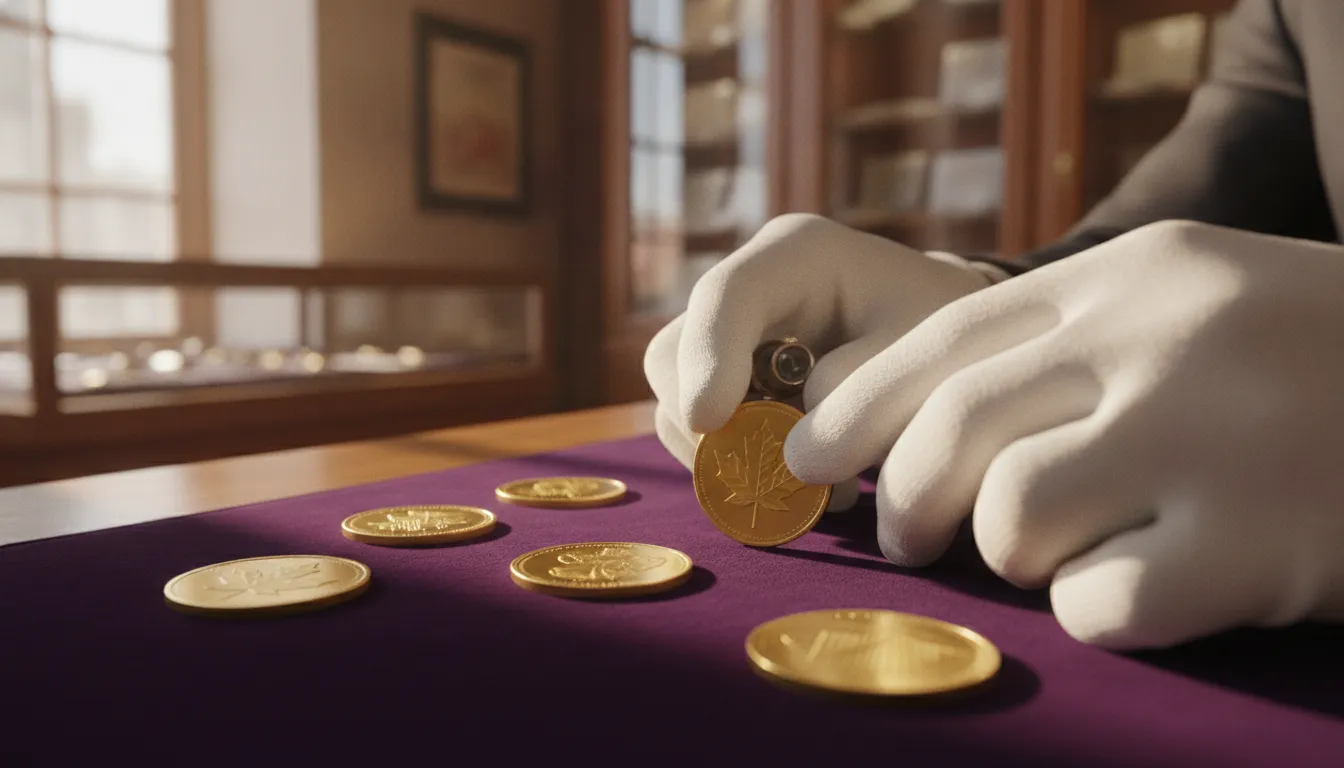
Canadian Gold Maple Leaf: Canada's one-ounce Maple Leaf is known for .9999 fine gold, a $50 Canadian face value, and the distinctive maple leaf design. The one-ounce Maple Leaf is recognized globally as bullion, which supports efficient identification in many established precious-metals markets. Its high fineness appeals to buyers who want a widely understood gold product, while the clear specifications make it easier to compare with other sovereign coins.
You should still verify the year, weight, dimensions, and security details before buying. A recognizable design is not, by itself, proof that a coin is genuine. When you later sell, accurate documentation and a reputable buyer can help reduce avoidable questions and delays.
Austrian Philharmonic
Austrian Philharmonic: Austria's Gold Philharmonic is generally issued in .9999 fine gold and is distinguished by musical instruments from the Vienna Philharmonic on its reverse. It is a familiar European bullion coin with an established identity among collectors and precious-metals professionals. If you are comparing sovereign coins for potential resale, the Philharmonic's recognizable design, stated specifications, and consistent mint origin are useful advantages.
Liquidity is best understood as access to a broad pool of informed buyers, not as a promise of profit. Gold markets move, and the value of a coin can reflect its metal content, condition, premiums, and current demand. You can review authoritative melt-value information from NGC's world gold coin melt-value guide, while remembering that melt value is only one part of a coin's market value.
Where you source the coin matters just as much as which sovereign design you choose. Park Avenue Numismatics has served buyers for more than 38 years and maintains an A+ BBB rating. You can work with the Park Avenue Account Specialists to confirm the coin's specifications, authenticity considerations, and resale profile before you buy. That combination of recognizable sovereign issues and an established source gives you a more informed starting point for building a collection or diversifying with physical gold.
European and Pre-1933 Foreign Gold Coins
When you examine European and older foreign gold, you are collecting more than a precious-metal object. You are handling a piece of monetary history shaped by a country, a ruler, a mint, and the economic system of its time. That context is why two coins with similar gold content can appeal to collectors in very different ways.
Classic European issues connect gold to national history
French gold: Coins from France can reflect changing governments, monarchs, and republics, giving you a direct connection to the country's political and monetary history.
German gold: Older German issues often invite close study of the issuing state, denomination, and date. The same broad region produced many distinct types, so the details can matter as much as the metal.
Austrian and Belgian gold: These coins can add imperial, royal, and national history to a collection while showing how gold circulated across borders.
South African gold: South African issues are especially compelling when you want a coin tied to the development of modern gold production and internationally recognized bullion traditions.
Gold has long been valued across national boundaries, and historic issues from France, Germany, South Africa. Austria, Belgium, and other countries can combine intrinsic metal value with an internationally understood historical appeal. You should still evaluate each coin individually. Country of issue, denomination, date, condition, scarcity, and authenticity all influence how collectors view it.
Why the pre-1933 era attracts collectors
Old-world mintage history: A pre-1933 foreign gold coin may have been struck during a period when gold coins were central to everyday monetary systems. Its design, weight standard, and inscriptions can tell you how governments presented authority and maintained confidence in their currency.
The gold-standard connection: Many older issues belong to an era when national currencies were linked more directly to gold. That does not make every pre-1933 coin rare or automatically valuable, but it gives the period a historical framework that modern bullion issues do not share.
Year-specific significance: A date can change the story completely. The frequently discussed 1933 United States $20 gold piece is a useful reminder. Its ownership history and legal status are not the same as those of an ordinary pre-1933 foreign coin. So you should never assume that a famous date can be bought, sold, or exported under ordinary rules. Ask for documented provenance and professional guidance before pursuing any historically sensitive issue.
For you as a collector, the lesson is practical: do not judge an older gold coin by appearance alone. Identify the country, ruler or authority, denomination, and year before you assess its place in a collection. Then consider condition and certification. If you want a deeper introduction, review our beginner's guide to coin grading so you can better understand how preservation and authentication affect a coin's collector appeal.
Why Country and Year Matter When You Buy World Gold Coins for Sale
A gold coin is not fully identified by its metal content alone. The country that issued it, the year it was struck, its denomination, and its mint characteristics establish the specific coin you are evaluating. That attribution gives you a practical basis for comparing examples, discussing condition with a dealer. And understanding whether the piece is primarily a bullion holding, a collectible, or both.
Country of issue shapes recognition and liquidity
Country matters because different issuing authorities have different histories, designs, production standards, and collector followings. A widely recognized sovereign coin can attract attention from buyers in more than one market. While a less familiar issue may require a specialist who understands its language, catalog references, mint conventions, and regional demand. Recognition does not guarantee a particular resale price. But it can affect how readily a knowledgeable buyer understands what you own and how deeply the market trades that type of coin.
This is one reason established sovereign issues remain important in the world-gold-coin market. The Canadian Maple Leaf and British Britannia are examples of sovereign coins recognized internationally as bullion products. Historical gold from countries such as France, Germany, South Africa, Austria, Belgium, and the Isle of Man can also appeal to buyers. These buyers value both precious-metal content and the story attached to a specific national issue.
Country attribution also helps separate coins that may look similar but carry different specifications. Two gold coins can have comparable dimensions or gold content while differing in denomination, legal-tender status, mintage, design type, and collector demand. A careful dealer begins with the exact identity rather than treating every foreign gold coin as interchangeable metal.
Year and mintage reveal scarcity and collector interest
The year adds another layer of meaning. It places the coin within a particular production period and can point to a change in design, monarch, political era, mint, or manufacturing standard. Mintage is also relevant: a year with a lower production total may receive more collector attention than a common year, although mintage alone does not determine rarity. Survival rates, condition, demand, and the number of pieces available to buyers all matter as well.
For you as a buyer, the year should therefore appear in the description, invoice. And any comparison you make. "A foreign gold coin" is too broad for a meaningful evaluation. A precise attribution, such as country, denomination, type, and year, allows a dealer to check the correct references. It also lets the dealer explain whether the premium reflects metal value, scarcity, condition, historical interest, or a combination of those factors.
Attribution is the foundation of authentication and grading
Authentication and grading apply to a specific coin, not to an unnamed category. Before a grading service can evaluate surface preservation, strike, wear, and overall condition, the coin must be identified by its issuing country, date, denomination, and variety where applicable. PCGS and NGC use the Sheldon grading scale, and understanding how PCGS and NGC grading works helps you read a certification or ask better questions about an uncertified example.
When you buy world gold coins, ask for the complete attribution and confirm that it matches the coin, holder, and supporting documentation. That simple discipline helps you compare like with like, recognize when a collectible premium may be involved. And make a more informed decision about authenticity, condition, and future marketability.
How to Verify Authenticity and Liquidity
When you evaluate world gold coins, authenticity and liquidity answer two different questions. Authenticity asks whether the coin is genuine, correctly identified, and represented accurately. Liquidity asks how readily you could sell it through an established market at a price supported by its metal content, condition, and collector demand. Strong buying practices address both before you commit funds.
Start with independent evidence rather than appearance alone. A reputable third-party grading service such as PCGS or NGC can authenticate a coin, assign a grade using the Sheldon scale, and seal it in a tamper-evident holder. Grading does not eliminate market risk, but it gives buyers and sellers a consistent reference point. If you are unfamiliar with the process, review our step-by-step coin grading guide before comparing certified pieces.
| Factor | Authenticity verification | Liquidity factors |
|---|---|---|
| Independent grading | PCGS or NGC certification provides an independent opinion on genuineness, attribution, and condition. | A recognized grade and holder can make the coin easier for another dealer or collector to evaluate. |
| Melt value proximity | Confirm the coin's country, year, denomination, fineness, and weight before estimating its underlying gold content. | Gold content provides a reference floor, while the current spot market affects melt value. See NGC world gold coin melt values for a live reference. |
| Market depth and recognition | Pedigree, provenance, and documented origin help confirm what the coin is and why it matters. | Widely recognized sovereign issues and well-documented collectible coins generally give you more potential buyers than obscure, poorly attributed pieces. |
| Resale ease | A complete description, clear photographs, certification, and purchase records help a future buyer verify the offering. | Resale depends on condition, demand, dealer spread, gold prices, and the buyer's ability to verify the coin quickly. It is not guaranteed. |
Pedigree matters most when a coin's history affects collector interest. Keep invoices, certificates, prior auction records, and any provenance supplied by the dealer. For an uncertified piece, verify the stated country, year, denomination, weight, diameter, and fineness against a reliable numismatic reference. Differences in these details can signal a problem, an unusual variety, or a simple attribution error that changes the market.
You should also assess the dealer, not just the coin. The CFTC buyer-safety advisory notes that retail metal dealers are not regulated at the federal level. Before buying online, verify the dealer's physical address and years in business, and research the owners or salespeople for prior complaints. A transparent dealer should explain premiums, buyback terms, shipping, insurance, and documentation without presenting gold as risk-free. Precious metals prices fluctuate like other investments, so certification and liquidity support informed decisions, not promises of a guaranteed outcome.
How to Buy World Gold Coins from a Trusted Dealer
Buying world gold coins should feel like a careful acquisition, not a rushed online transaction. Whether you are comparing sovereign bullion or seeking an older European issue. A trusted dealer can help you understand what you are buying, how it is valued, and what documentation supports its authenticity. Use these steps before you commit funds.
- Research the dealer before you request a quote. Confirm that the business publishes a physical address, provides a verifiable phone number, and has a substantial operating history. The U.S. Commodity Futures Trading Commission advises consumers to verify a dealer's physical address and how long it has been operating. While also checking the names of owners or salespeople for prior complaints or criminal allegations. This matters because retail metal dealers are not regulated at the federal level. Review the CFTC's precious-metals buying guidance before purchasing, especially from an unfamiliar online seller.
- Choose a dealer you can visit and evaluate. A physical location gives you an opportunity to discuss the coin face to face, ask questions, and understand the firm's buying and selling process. Park Avenue Numismatics has served collectors and precious-metals buyers for more than 38 years from its Miami location on Biscayne Blvd. The company also maintains an A+ BBB rating. If you are comparing local options for bullion, you can also review this guide to buy gold bars in Miami.
- Ask for the coin's country, year, weight, and gold content. "World gold coin" describes a broad category. Ask whether the piece is a modern sovereign bullion coin, a historical issue, or a numismatic coin whose value may include a collector premium. Confirm the issuing country and date, along with the stated weight and fineness. Canadian Maple Leafs and British Britannias are widely recognized sovereign bullion coins. But an experienced dealer should explain the distinctions rather than assume every buyer wants the same type of coin.
- Discuss grading and certification when condition matters. For collectible or higher-premium pieces, ask whether the coin has been independently graded by PCGS or NGC, and request the certification details when applicable. Grading helps describe condition consistently, but it does not eliminate the need to assess the coin's type, authenticity, and market demand. If you want a foundation before buying, review coin grading and certification basics.
- Compare the offer with melt value and the full premium. Gold content provides an important reference point, but your total price can also reflect fabrication, dealer overhead, scarcity, condition, and collector demand. NGC's world gold coin melt-value guide tracks melt values against the current spot price of gold. Ask the dealer to separate the metal value from any premium, and ask what you could reasonably expect when selling later. Gold prices fluctuate, so no coin should be presented as risk-free or guaranteed to appreciate.
- Get guidance from someone who knows both bullion and numismatics. A genuine specialist will explain tradeoffs, disclose what is known about the coin's origin and condition, and give you time to decide. Ask for an invoice identifying the coin and its specifications, and keep any certification or purchase records. Park Avenue Account Specialists can help you compare world gold coins for sale with your collecting goals and budget.
Frequently Asked Questions
What is the best world gold coin to buy?
There is no single best choice for every buyer. A sovereign bullion coin such as a Canadian Maple Leaf, British Britannia, or Austrian Philharmonic may suit you if you prioritize broad recognition and straightforward ownership. A historic foreign coin may be more appropriate if you value design, rarity, or a specific country and date. Compare gold content, condition, premiums, and your collecting goals before you buy.
How much does a world gold coin cost?
The price usually reflects the coin's gold content, the current spot price of gold, condition, rarity, and the dealer's premium. Melt values change with the current spot price, so a quoted price is time-sensitive. You should also ask whether the coin is being sold for bullion value or whether its historical and numismatic features add a premium. See current world-gold-coin melt values from NGC's price guide.
How can you verify that a foreign gold coin is authentic?
Start with a complete attribution of the country, denomination, year, and mint mark, then compare the coin's weight, diameter, and design with reliable references. For scarce or valuable pieces, independent certification from PCGS or NGC can provide documented grading and authentication. You can also review our guide to how coins are graded before purchasing.
What should you check before buying gold coins online?
Research the dealer's physical address, operating history, ownership, pricing, return terms, and payment process before sending funds. The CFTC notes that retail metal dealers are not regulated at the federal level and recommends verifying a dealer's address and years in business. Read the agency's precious-metals buying guidance, and avoid claims that portray gold as guaranteed or risk-free.
Ready to Buy World Gold Coins with Confidence?
Whether you are comparing sovereign bullion with historic foreign pieces or building a focused collection. A knowledgeable specialist can help you evaluate the coin's country, year, condition, and purpose before you buy. Park Avenue Numismatics serves collectors and investors from its Miami location on Biscayne Blvd. Call 1-888-419-7136 to speak with a Park Avenue Account Specialist about buying world gold coins.





