
When you compare silver bullion coins, rounds, and bars, the best choice depends on what matters most to you: broad recognition, lower premiums, easy storage, or flexible resale. All three formats can contain investment-grade silver, but they differ in who makes them, how they are verified, and how buyers may treat them later.
Call 1-888-419-7136 to speak with a Park Avenue Account Specialist about silver bullion.
This guide explains the practical differences so you can compare products clearly without confusing bullion with collectible numismatic coins. It is educational information, not financial advice or a promise of future performance. Silver prices and dealer buyback offers can change, and past performance is no guarantee of future results.
What is silver bullion?
Silver bullion is physical silver valued primarily for its metal content, weight, and purity. It is commonly sold as government-minted coins, privately minted rounds, or refined bars. Bullion may support portfolio diversification and may serve as a historical hedge against inflation, but it remains exposed to market risk, changing premiums, storage costs, and the spread between a dealer's selling and buying prices.
The phrase "silver bullion" does not automatically mean every silver-colored coin has the same value. A modern one-ounce bullion coin, a privately minted round, and an old rare silver dollar can look similar while being evaluated through different markets. Bullion decisions focus on content and marketability. Numismatic decisions also consider date, mint mark, rarity, condition, eye appeal, and certification.
For a useful starting point, review Park Avenue's silver bullion selection and compare each product's stated weight, fineness, mint or refiner, and condition before buying.
Silver bullion coins: recognition and government specifications
Silver bullion coins are issued by a sovereign mint and generally carry a nominal face value. Their weight and purity are established by the issuing government, which gives widely traded examples a recognizable specification and a familiar design. The face value is usually symbolic because the silver content drives the market value, but the legal-tender status and standardized production can support buyer confidence.
The U.S. Mint states that an American Eagle Silver Bullion Coin contains one troy ounce of 99.9% pure silver and has a one-dollar face value. Its official specifications also identify its weight, diameter, reeded edge, and composition. These details give buyers a reference point when checking an example. See the U.S. Mint's American Eagle Silver Bullion specifications for the authoritative description.
- Recognition: Familiar sovereign coins are easier for many dealers and buyers to identify.
- Standardization: The issuing mint publishes defined weight, fineness, dimensions, and design details.
- Premium: Coins can carry a higher premium than rounds or bars because of minting, distribution, packaging, and recognition.
- Divisibility: One-ounce coins let you sell or exchange smaller units instead of moving one large bar.
- Collectible crossover: Special dates, proof finishes, low populations, or certified grades can add numismatic considerations beyond bullion content.
Silver rounds: coin-like shape without legal-tender status
A silver round is a coin-shaped piece made by a private mint or refiner. It may be one troy ounce and may be marked .999 fine silver, but it does not have a government face value or sovereign legal-tender status. Its value depends on its silver content, condition, maker, design, market demand, and the dealer's willingness to buy that particular product.
Rounds can be an efficient way to own one-ounce units while avoiding some of the added production and recognition costs associated with sovereign coins. They are also available in many designs. That variety can be appealing, but a themed or unfamiliar round may require more verification when you sell it. A reputable producer, clear weight and purity marks, and intact condition can make the product easier to evaluate.
Do not assume that a round is counterfeit simply because it is not a government coin, or that every private-mint round trades the same way. Ask who produced it, what its fineness mark means, whether the weight is stated in troy ounces, and how the intended dealer handles buybacks. The format is only one part of the decision.
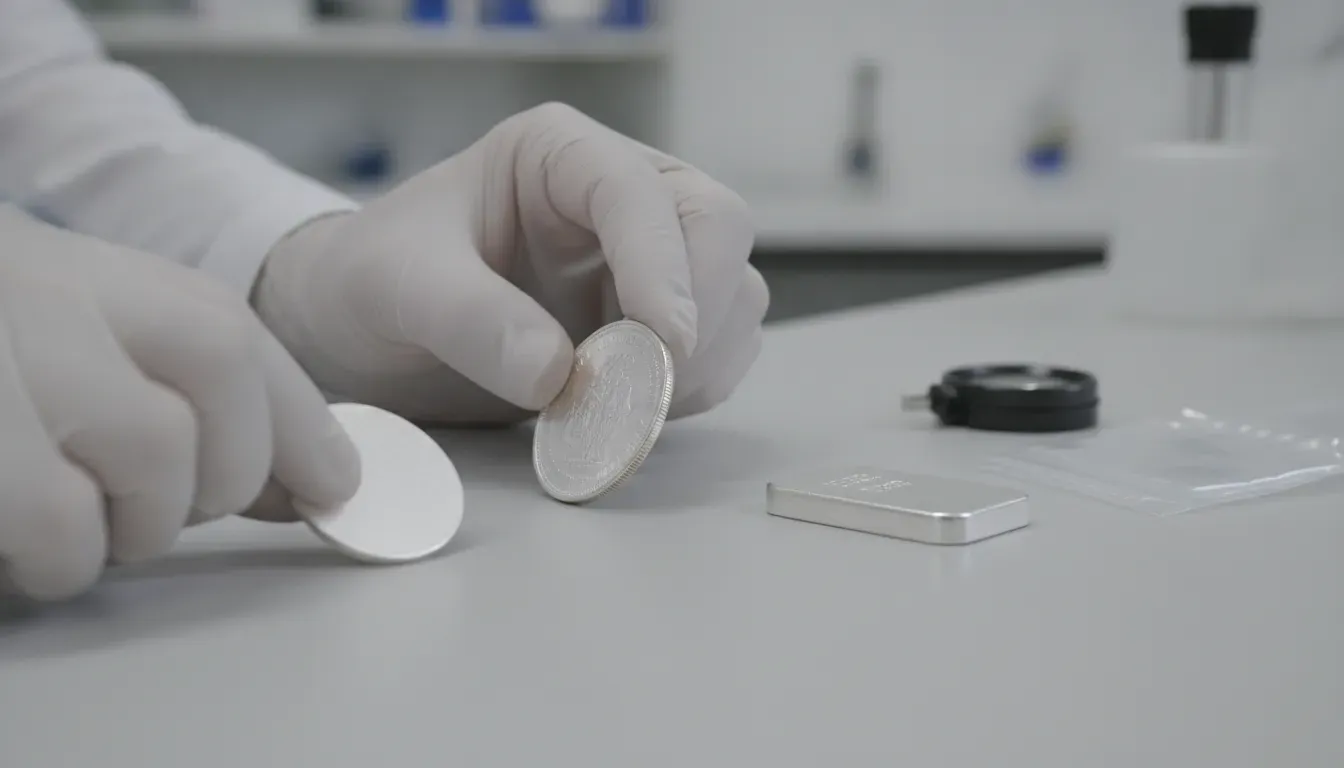
Silver bars: efficient storage and larger units
Silver bars are rectangular or sometimes poured pieces produced by a mint, refinery, or other manufacturer. They are normally marked with a weight, fineness, and producer or refiner information. Bars do not carry a face value, so buyers focus on the metal content and the credibility of the producer. Sizes range from small bars to large formats, and size affects both storage and resale flexibility.
Bars often appeal to buyers who want to accumulate silver in a compact format. A larger bar can reduce the number of individual pieces you store and handle. The trade-off is divisibility: if you later want to sell only part of your holding, a large bar cannot be separated without changing the product. Smaller bars solve that problem but may carry their own per-unit production and packaging costs.
For bars, check the refiner, assay or packaging when applicable, exact weight, fineness, and condition. A recognized producer can make verification simpler. Never rely on a brand name alone. Use a trusted dealer and ask how the specific bar will be evaluated before completing a transaction.
How do silver coins, rounds, and bars compare?
Coins, rounds, and bars can all be legitimate forms of silver bullion. The difference is not simply appearance. Production source, legal-tender status, purity documentation, unit size, recognition, and the expected selling channel all affect the practical experience of owning each format.
| Factor | Silver coins | Silver rounds | Silver bars |
|---|---|---|---|
| Producer | Sovereign government mint | Private mint or refiner | Mint or private refiner |
| Face value | Usually a nominal legal-tender value | None | None |
| Purity check | Published government specifications | Weight and fineness marks plus producer reputation | Weight, fineness, refiner mark, and assay details when applicable |
| Typical strength | Recognition and flexible one-unit resale | One-ounce convenience with private-mint variety | Compact accumulation and larger-unit efficiency |
| Main trade-off | Potentially higher premium | Narrower recognition than a sovereign coin | Less divisible in larger sizes |
These are general comparisons, not guarantees. A well-known bar may be easier to sell than an unfamiliar round, while a sought-after numismatic coin may trade for much more than its silver content. Product, condition, timing, and buyer all matter.
Which silver bullion format has the lowest premium?
There is no permanent ranking that applies to every product, size, date, or market condition. In general, simple bars and common rounds may have lower premiums than widely recognized sovereign coins because they involve different production, distribution, and demand factors. Premiums can change, and a low purchase premium does not guarantee the best resale outcome.
Compare the full transaction rather than a single advertised premium. Ask for the product's total purchase price, the current reference price used by the dealer, the form of payment accepted, shipping or storage costs, and the dealer's buying terms. If you are comparing a quote, confirm that the same unit, purity, condition, and product brand are being compared.
Park Avenue's silver coins versus silver bars guide covers the two-format comparison in more detail. This article adds rounds so you can evaluate all three forms before selecting a product mix.
Which format is easiest to store and sell?
The easiest format depends on the amount you own, where you plan to store it, and who you expect to buy it. One-ounce coins and rounds are easy to count and divide into smaller sales. Bars can use storage space efficiently, especially when you are comfortable selling the entire unit. Familiar government coins may be easier for an unfamiliar buyer to recognize, but a reputable dealer can evaluate all three formats when documentation and condition are clear.
- For flexible unit sizes: Consider one-ounce coins, rounds, or smaller bars that let you separate a sale into manageable units.
- For compact accumulation: Compare medium or larger bars, while acknowledging that larger units can be less divisible.
- For broad recognition: Look at established sovereign bullion coins and well-known products with clear specifications.
- For easier organization: Keep products in protective packaging, record purchase details, and store an inventory with weight, fineness, brand, and date.
- For resale planning: Ask the intended dealer about buyback policies before you buy, not only when you are ready to sell.
Storage also means security and condition control. Keep silver dry, avoid unnecessary handling, and do not clean coins or rounds. Cleaning can damage surfaces and may reduce collector appeal. For larger holdings, discuss secure storage options and insurance with qualified professionals.
How is bullion different from collectible silver coins?
Silver bullion is usually purchased for metal content and standardized weight. A collectible or numismatic silver coin may be valued for scarcity, historical importance, grade, design, provenance, and collector demand in addition to its silver. Two coins with similar silver content can therefore have very different markets.
Before buying a coin that is described as rare, check whether the price is based mainly on bullion content or on numismatic attributes. For collectible coins, independent grading by PCGS or NGC can help document condition and support market liquidity, but certification does not eliminate market risk or guarantee a future sale price. If the piece is important or expensive, obtain an informed appraisal rather than relying on a generic melt-value calculation.
NGC explains that melt value is only the value of the metal and that a coin's numismatic value may be higher. Its American Silver Eagle melt-value reference is a useful example of why bullion content and collectible value should be considered separately.
How should you choose among coins, rounds, and bars?
Start with your intended use, not with a favorite shape. If recognition and easy division matter most, compare common sovereign coins. If one-ounce handling and a potentially lower premium matter most, compare established private-mint rounds. If compact storage and larger-unit accumulation matter most, compare reputable bars in a size you can comfortably store and eventually sell.
- Define the role: Decide whether the silver is for portfolio diversification, collection, gifting, or a mix of goals.
- Set a unit preference: Choose how much flexibility you need if you sell only part of the holding.
- Compare like with like: Match weight, purity, product condition, and producer before comparing premiums.
- Check the market: Ask a dealer how the exact product is bought and sold, including any documentation expectations.
- Plan storage: Consider security, moisture, insurance, packaging, and an inventory record.
- Separate bullion from numismatics: If rarity or grade is driving the price, request a coin-specific explanation.
If you are in Miami, Park Avenue Numismatics can help you compare silver products in person at its Biscayne Boulevard location. Bring the product details you are considering and ask the Park Avenue Account Specialists how purity, producer, format, and resale considerations fit together.
Silver bullion questions buyers often ask
Are silver rounds real silver?
Many silver rounds are made from .999 fine silver, but you should verify the stated weight, fineness, producer, and condition. Unlike sovereign bullion coins, rounds do not have legal-tender status or a government face value. A trusted dealer can explain how a particular round is tested and priced.
Are silver bars better than silver coins?
Neither is always better. Bars can offer compact storage and efficient accumulation, while coins can offer broader recognition and smaller, familiar units. Your intended holding size, storage plan, liquidity needs, and the exact product's premium and buyback terms should guide the comparison.
Do silver coins always have collectible value?
No. Many modern silver bullion coins trade primarily on their metal content and market premium. A coin can gain numismatic value when date, rarity, condition, finish, or collector demand becomes important. Ask whether a quoted value reflects bullion, numismatics, or both.
What should I ask before buying silver bullion?
Ask for the exact weight and fineness, the producer or issuing mint, the product condition, the total purchase cost, and how the dealer handles a future buyback. Also ask about shipping, storage, documentation, and whether the product is being sold as bullion or as a collectible.
Can I sell silver bullion in Miami?
Yes, you can contact a local precious-metals dealer to ask about selling silver bullion in Miami. Park Avenue Numismatics serves buyers and sellers from its Biscayne Boulevard location. Call ahead to confirm what product details and identification, if any, you should bring.
Educational notice: Silver and collectible coins involve market risk. This article is not financial advice, a price prediction, or a guarantee of investment performance. Past performance is no guarantee of future results.





