
When you compare silver products, the format you choose affects more than appearance. It can change your upfront cost, how easily you can sell, and how efficiently you build ounces over time. Silver itself can also be volatile: during the 2020 market recovery, it surged more than 140% in a few months, according to historical market analysis.
Silver coins vs silver bars comes down to your priorities: coins generally offer easier recognition and liquidity, while bars often provide a lower-premium way to accumulate more silver. Neither option is universally better, and both carry market risk, so your purchase should fit your goals, budget, and plans for future liquidation.
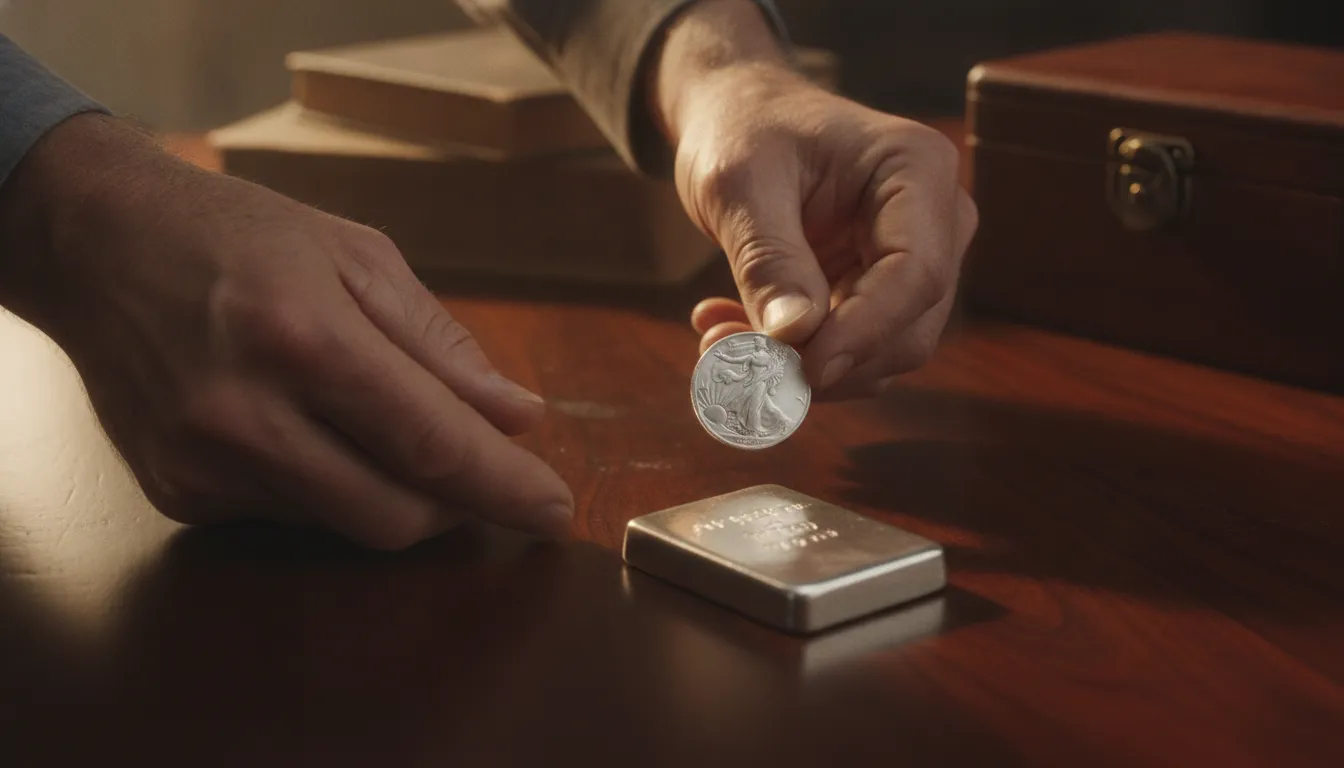
Understanding how government-backed coins differ from privately minted bars gives you a clearer foundation for choosing the right mix. Start by looking at what silver coins offer beyond their metal content, including their recognition, format, and potential premium.
What Are Silver Coins? Government-Backed Silver Bullion
If you want silver that is widely recognized and easy to trade, government-minted bullion coins are a practical place to start. Silver bullion coins are produced by sovereign mints, carry a stated face value as legal tender. And derive most of their market value from their silver content rather than that face value.
Two familiar examples are American Silver Eagles, issued by the United States Mint, and Canadian Silver Maple Leafs, issued by the Royal Canadian Mint. The U.S. Mint's American Eagle reference provides authoritative specifications for the American Silver Eagle program, including its government-issued status and silver content.
Why recognition matters when you sell
Bullion coins are valued for high liquidity and ease of recognition, making them suitable for core holdings. A recognizable sovereign coin can be simpler for another dealer to identify, authenticate, and price than an unfamiliar product. That does not guarantee a particular resale price, and your actual offer will depend on silver's market price, the coin's condition, current demand, and the dealer's spread. Still, broad recognition can make future liquidation more straightforward, especially when you prefer to sell smaller quantities rather than an entire large position at once.
Purity varies by coin type
Many modern sovereign bullion coins are struck in .999 fine silver or higher. However, you should not assume every silver coin has the same purity. Older or constitutional, sometimes called junk, silver issues may contain 90%, 40%, or 35% silver. Those coins can still have bullion value, but their precious-metal content, weight, and premiums must be evaluated differently from a modern one-ounce bullion coin. Check the mint, date, denomination, weight, and stated fineness before buying.
Premiums reflect more than silver content
Popular sovereign silver coins commonly carry premiums of about 15% to 25% above the spot price of silver. That premium can reflect minting, distribution, packaging, demand, and the added recognition of a government-backed product. You pay more upfront than you would for many silver bars, but the tradeoff may be easier recognition and more flexible resale. Compare the premium with your holding period and intended exit strategy, and remember that precious metals remain subject to market risk.
What Are Silver Bars? Low-Premium Silver for Bulk Investment
If your priority is accumulating as many silver ounces as possible for your budget, bars offer a straightforward way to buy bullion. Silver bars are rectangular pieces of refined silver produced by private mints and, in some cases, sovereign mints. Unlike government-issued coins, they generally do not carry legal tender status. Their value is therefore driven primarily by the bar's silver weight, purity, and the current spot price.
Lower premiums can stretch your silver budget
The main financial appeal of bars is their lower premium over spot. Typical silver bars carry premiums of about 5% to 10% above the spot price, while popular sovereign silver coins often carry premiums of approximately 15% to 25%. That difference can make bars more cost-efficient when your goal is to build a larger physical position rather than collect designs or maximize recognition.
For example, a comparison from SD Bullion reports that a 1-ounce silver bar typically costs $3 to $6 less per ounce than a 1-ounce American Silver Eagle. Premiums vary by dealer, product, quantity, market conditions, and availability, so you should compare the total purchase price rather than relying on a fixed spread. Still, the underlying principle remains useful: paying less over spot leaves more of your budget tied to silver content.
Uniform sizes make bars easier to store
Bars also use storage space efficiently. Their consistent rectangular shape allows them to stack neatly, which matters when you are accumulating larger quantities. Ten-ounce bars provide a practical balance between manageable size and efficient storage. One-hundred-ounce bars are even more space-efficient for substantial holdings, although their larger size means you may need to sell the entire bar when you want to liquidate.
Research on bullion formats identifies lower premiums and efficient storage as key reasons silver bars are often preferred for larger investments. You can review available silver bullion products and consider which bar sizes fit your budget, storage plan, and expected resale needs.
Choose a reputable mint or manufacturer
Because bars do not have a government face value backing them, the mint's reputation is important. Established manufacturers provide consistent markings for weight and purity, helping other dealers identify and evaluate the product when you sell. Review the bar's specifications, packaging, and any applicable authentication features before buying. Bars can be a strong choice for cost-efficient accumulation, but your decision should also account for liquidity and the size of future transactions.
How Silver Coins Compare with Silver Bars
Your choice depends on whether you prioritize lower acquisition costs, easy resale, compact storage, or collector appeal. This comparison puts the practical differences side by side.
| Factor | Silver coins | Silver bars |
|---|---|---|
| Premium | Popular sovereign coins commonly carry premiums of about 15% to 25% above spot. | Bars commonly carry premiums of about 5% to 10% above spot. A 1-ounce bar may cost $3 to $6 less than a 1-ounce American Silver Eagle, depending on the market and dealer. Review the premium comparison. |
| Liquidity | Government recognition makes bullion coins highly liquid and easy for buyers to identify. | Reputable bars can be readily sold, but recognition depends more on the mint, refiner, weight, and purity. |
| Storage | Coins are easy to handle, but tubes and individual holders can take more room as your holdings grow. | Uniform, stackable shapes make bars more space-efficient for larger accumulations. |
| Purity | Many modern bullion coins are .999 or finer, although older constitutional silver issues can be 90%, 40%, or 35% silver. | Investment-grade bars are commonly .999 or finer. Verify the stated weight and purity through a reputable mint or refiner. |
| Legal tender | Sovereign coins have a government-issued face value and legal tender status, even though their market value comes primarily from their silver content. | Bars are bullion products, not government-issued legal tender. |
| Divisibility | Fractional coins and smaller denominations can give you more flexibility when selling part of your holdings. | Bars are available in fixed sizes, from small bars to larger formats, so selling usually means choosing among those set weights. |
| Collectibility premium | Some coins carry additional numismatic value based on rarity, condition, design, or collector demand. | Most bars are valued primarily for weight, purity, and brand reputation rather than collector appeal. |
In practical terms, sovereign coins are generally favored for liquidity and recognized value, while bars are often better suited to cost-efficient accumulation. If certification and documented authenticity matter to your purchase, review certified silver bullion before deciding which format fits your goals.
How to Choose Between Silver Coins and Silver Bars
When comparing silver coins vs silver bars, start with the job you want your purchase to do. The format you choose affects how quickly you accumulate ounces, your upfront cost. And how easily you can liquidate later, so there is no single best option for every buyer.
Match the format to your budget and accumulation goal
If your priority is getting the most silver for each dollar, bars are often the more efficient choice. They generally carry lower premiums than sovereign coins, which means more of your purchase price goes toward silver content. Larger bars can make sense when you have a defined budget and plan to build a substantial holding over time. Review available silver bullion products by weight and premium before you buy.
Coins can still be practical for smaller, recurring purchases. Although the premium may be higher. Buying one or a few coins at a time lets you build a position without waiting until you can afford a large bar. Consider both the number of ounces you want and the amount of cash you want committed to each purchase.
Consider liquidity and future selling needs
If you may need to sell only part of your holding, coins offer useful flexibility. Recognized sovereign coins are generally easier for buyers to identify and are commonly viewed as strong liquidity vehicles. You can sell a few coins while keeping the rest, rather than breaking up a larger bar or selling more silver than you intended. This is why sovereign coins are often considered best for liquidity, while bars are favored for cost-efficient accumulation.
Plan for storage and numismatic interest
Bars are uniform, stackable, and usually more efficient to store when you are accumulating in bulk. Coins may require more containers and organization, but they can offer greater variety and personal appeal. If you enjoy collecting, certain coins may carry a premium above melt value because of rarity, condition, design, or collector demand. That potential premium is separate from the value of the silver itself, so ask how much of the price reflects metal content and how much reflects numismatic interest.
Keep market behavior in perspective. Silver can be volatile: during the 2020 recovery, it surged more than 140% in a few months, according to the cited market analysis. Industrial demand also reached a record 680.5 million ounces in 2024, more than half of global silver consumption, according to the Silver Institute. Those facts show why demand and market conditions matter, but they do not guarantee future performance.
A balanced approach may combine lower-premium bars for accumulation with recognizable coins for liquidity and flexibility. If you are unsure which mix fits your goals, contact a specialist before placing an order.
Where to Buy Silver Coins and Bars in Miami
When you are deciding between silver coins and bars, buying locally can give you more than a product page and a checkout button. You can examine available products in person, ask questions about premiums and format, and compare the practical differences before you commit your money.
Park Avenue Numismatics has served precious metals buyers from its Miami location on Biscayne Boulevard for more than 38 years. The company maintains an A+ rating with the Better Business Bureau. Giving you an established local option as you evaluate silver for collecting, portfolio diversification, or a hedge against inflation. You can learn more about the dealer's history and credentials on the about page.
Get guidance suited to your goals
Your choice may depend on whether you prioritize recognizable sovereign coins, efficient accumulation through bars, or a combination of both. The Park Avenue Account Specialists can help you compare available sizes, products, premiums, and potential resale considerations without reducing the decision to a one-size-fits-all answer. That conversation is especially useful when you are still weighing silver coins vs silver bars and want to see how each option fits your objectives.
Visiting a local dealer also gives you the opportunity to discuss questions that are difficult to answer from a generic buying guide. You can ask which products are currently available and how to store or handle your purchase. Before visiting, contact Park Avenue Numismatics for current information, directions, and assistance from the team.
Frequently Asked Questions
Is it better to invest in silver coins or bars?
The better choice depends on your priorities. Silver coins are generally easier to recognize and resell, while bars can provide more ounces for your budget and efficient storage when you are making a larger purchase. Many buyers combine both: coins for flexibility and bars for cost-efficient accumulation.
What is the difference between silver bullion and silver coins?
Silver bullion is the broader category for precious-metal products valued primarily for their metal content, including bars and bullion coins. Silver coins are typically issued by a government mint and may carry legal-tender status. Their design, recognition, and collectibility can affect the premium you pay beyond the silver content.
Are silver bars a good investment?
Silver bars can suit you if your goal is to accumulate silver efficiently, particularly when storage and purchase premiums matter. Before buying, compare the bar's weight, purity, premium, dealer reputation, and resale terms. Silver prices can fluctuate, so bars should be considered as one part of a diversified strategy rather than a guaranteed return.
Which is cheaper to buy, silver coins or silver bars?
Silver bars usually have lower premiums than sovereign bullion coins, especially in larger sizes. Coins can cost more because of minting, design, recognition, and distribution expenses. Compare the full delivered price against the spot price, then consider resale flexibility, storage, and the amount you want to purchase before deciding.
Ready to Choose the Right Silver Format?
Your choice between coins and bars should reflect how you plan to buy, store, and eventually sell your silver. A conversation with an experienced specialist can help you compare the practical tradeoffs for your goals. Call 1-888-419-7136 to speak with a Park Avenue Account Specialist about building your silver portfolio.