
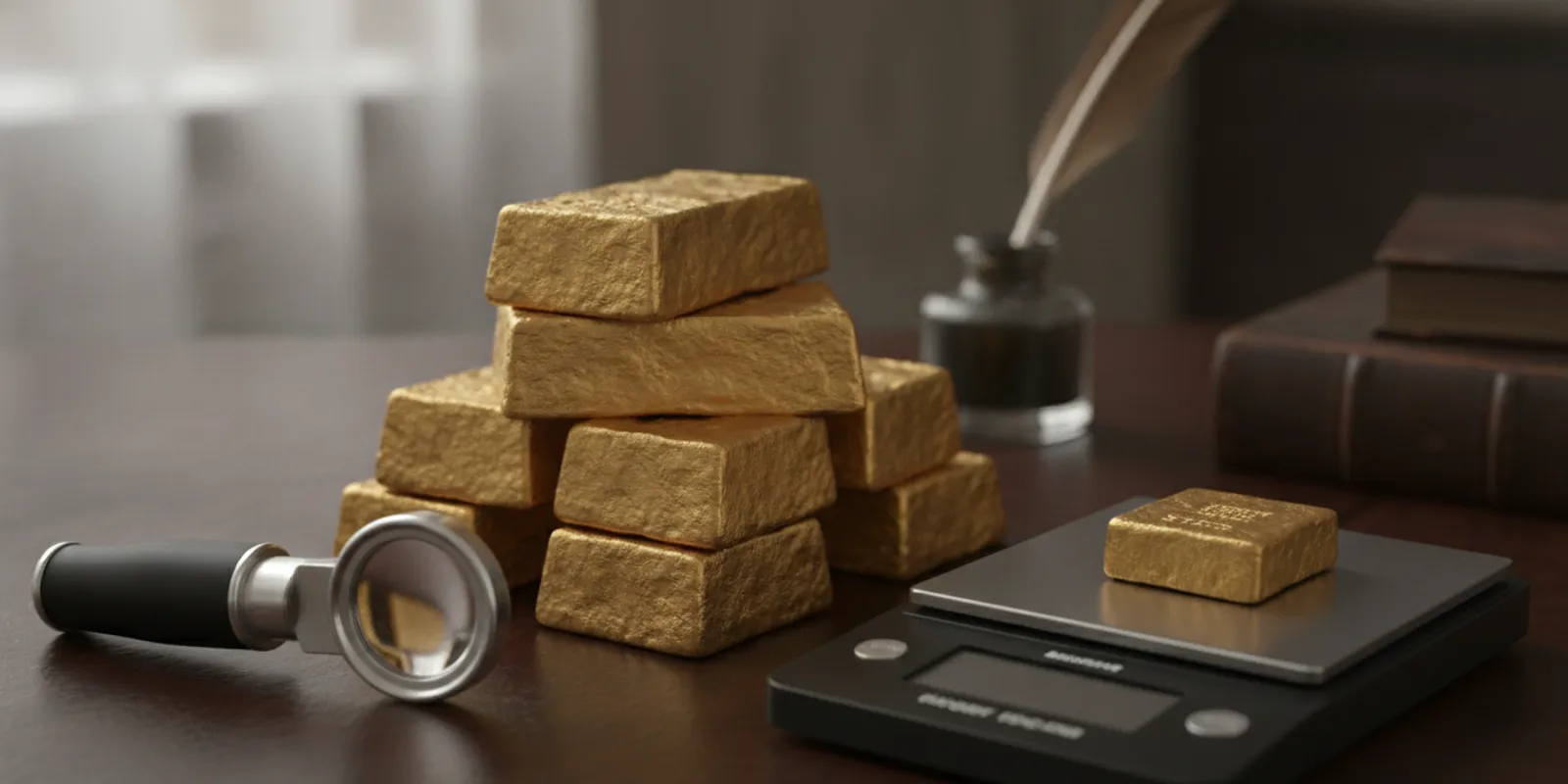
If you are asking how to sell gold bars, begin by identifying each bar and preserving its condition and records. A dealer can review stated weight and purity, refiner, packaging, authenticity indicators, and current marketability. This is more useful than treating every bar as interchangeable or relying on a rough estimate from a photograph.
Contact Park Avenue Numismatics about a review
What is the best way to sell gold bars?
Organize the bar and supporting material, ask a reputable precious-metals dealer how an assessment works, and compare the full terms before deciding. Park Avenue Numismatics buys precious metals and rare coins from the public in Miami. The assessment and any purchase discussion depend on the specific item; no amount should be assumed in advance.
List each bar separately. Record its visible markings, weight unit, stated purity, refiner, serial number if present, packaging, and documents. Mark uncertain information as unknown instead of guessing. If a group contains bars of different sizes or producers, do not combine them into one description. This guide focuses on selling steps, rather than choosing a bar to buy or comparing investment products.
What should you identify before selling a gold bar?
Read the bar and holder carefully without opening or altering anything. Record details exactly as they appear so the dealer can match each item to its paperwork and decide what inspection is appropriate.
- Weight: Note the stated amount and unit, such as grams or troy ounces. Different units are not interchangeable.
- Purity: Record fineness or a percentage marking. This helps assess fine-metal content but is not a standalone valuation.
- Refiner: Note the maker's name or mark. Recognition and market acceptance can affect how straightforward a review may be.
- Serial number: Record it privately and see whether it matches the assay card.
- Package and assay: Note whether the original card, certificate, or sealed holder is present and whether details appear consistent.
- Format: Describe whether it is a standard investment bar or an unusual or commemorative piece.
Photograph the front, back, markings, and holder in even light. Photos help with an initial conversation but do not establish authenticity or guarantee a purchase figure. A dealer may need to inspect the item directly.
How do weight and purity affect the review?
Weight and purity help establish the amount of fine gold represented by the bar. A dealer interprets the marked unit and considers whether stated specifications fit the item. Gross weight alone is not enough: purity affects fine-metal content, while authenticity and the reliability of markings also matter.
Imagine two bars with the same stated gross weight. One has a matching assay card and a recognized refiner; the other is loose, has incomplete markings, and no paperwork. The second may raise more verification questions. That does not prove either bar's authenticity or determine an offer. It shows why items should be assessed individually.
Any purchase figure can vary with the current gold market, authentication, condition, documentation, producer, format, and demand. For multiple pieces, ask whether each was assessed separately and whether a figure applies to one bar or the entire group.
Why do refiner, packaging, and assay details matter?
An assay card or sealed package may identify producer, weight, purity, and serial number. Keeping it with its bar gives the reviewer useful context. Original packaging can help with identification and resale, but it does not prove the contents are genuine.
Check whether the number on the bar matches the card, if both are visible. Note opened, replaced, or damaged packaging and explain what you know. Do not remove a bar from its holder to improve a photo. A loose bar may still be reviewed, though its identification may require more steps.
Bars from recognized producers may be easier to identify and resell than unfamiliar formats. This is one factor, not a guarantee of a particular price. An unfamiliar item may simply prompt more questions or examination.
Should you clean or test a gold bar before selling?
Leave the bar in its existing condition. Do not polish, scratch, drill, file, or apply chemicals. Home alterations can damage it, remove identifying features, or complicate authentication. You do not need to buy testing equipment before requesting a review; a dealer can determine what inspection is appropriate.
Handle the bar carefully and store it securely while preparing. If it is inherited and you do not know its history, say so. A clear account of what is known and unknown helps frame the review without overstating provenance.
What documents should you bring?
Gather records that may help establish identity or history. Useful material includes:
- Original receipt, invoice, or dealer correspondence.
- Assay card, certificate, or packaging that belongs with the bar.
- Account statements, insurance records, or prior professional appraisal.
- Estate or inheritance paperwork, where relevant.
- Private photographs showing the bar or its packaging before current storage.
Records can reduce uncertainty but do not guarantee an outcome. If you have no paperwork, the physical item can still be the starting point. Pair papers with the correct bar; for a group, assign item numbers consistently to the inventory and photos.
When sending preliminary photos, protect unrelated personal and financial information. Share only what is needed for an initial discussion. Bring original records to an appointment if requested, and understand the process before mailing valuable property.
How does condition affect the conversation?
Condition can influence authentication and resale even when a bar is considered mainly for its metal. Dents, scratches, residue, damaged edges, opened packaging, or unclear markings are useful observations to disclose. A sealed bar may be easier to handle, but a loose bar is not automatically unsellable.
Describe what you can see rather than assigning a grade. “Sealed holder, card present, serial appears to match” is more useful than an unsupported claim that a bar is flawless. For a collection, keep each bar with its papers and list weight, purity, producer, serial number, and document status.
How can you compare selling options?
Different routes involve different timing, safety considerations, and costs. The right comparison depends on the item, group size, preference for an in-person explanation, and written terms offered.
| Route | Typical steps | Questions to compare | Preparation |
|---|---|---|---|
| Local dealer | Arrange a review, bring items and records, discuss findings and terms. | How is the item assessed? What costs, payment method, and timing apply? | Inventory, papers, and secure transport plan. |
| Mail-in buyer | Ship under instructions, await inspection, consider the offer. | What are insurance, shipping, inspection, and return terms? | Read written conditions and document the package. |
| Auction or consignment | Submit for acceptance, await a sale, receive proceeds under agreement. | What fees, reserve rules, timeline, and settlement terms apply? | Understand charges and what happens if it does not sell. |
| Private sale | Find a buyer, agree terms, verify payment, transfer the bar. | How will safety, payment, and documentation be handled? | Use a secure setting; do not rely on an unverified promise. |
Do not compare headline figures without their conditions. Ask whether testing, processing, shipping, or other charges apply; when payment is made; and what happens if inspection differs from the description. An in-person review can be useful when discussing multiple pieces.
For a simple comparison, write down the net amount you would receive under each proposal, after stated fees, alongside the timeline and obligations. If one route offers a preliminary figure subject to inspection and another describes a completed transaction, those are not equivalent terms. Ask whether you can decline after inspection, how an item is returned if you do not proceed, and whether you must decide immediately. Keep the answers in writing where practical.
What market factors can affect an offer?
Fine-metal content is one part of the discussion, and the gold market changes over time. Product premiums or discounts, producer, format, packaging, authentication results, and resale demand may also matter. A collectible or unusual bar can require a different analysis from a common investment bar.
The American Numismatic Association says average retail commission for certain one-ounce American Eagle or Maple Leaf gold coins is about five or six percent in its bullion buying and selling guidance. That example concerns specific coins, not a universal fee for gold bars. Ask which costs or market factors apply to the particular item.
Ask the dealer to explain the basis of any figure and whether it depends on further examination. Values vary; an online estimate or previous appraisal is not a guaranteed amount for your bar today.
How should you prepare for an in-person review?
Make your inventory at home, pair each bar with the right records, and keep valuable items out of public view. If carrying several pieces, plan the trip and arrange an appointment rather than making an unplanned stop.
- Photograph and list: Keep private records of markings, packaging, and documents.
- Separate facts from assumptions: Mark uncertain dates, sources, or values as unconfirmed.
- Bring complete context: Include related bars and papers if you want a collection considered together.
- Write down questions: Ask what will be examined and what happens next.
- Confirm terms: Understand whether the discussion concerns one bar or the group, any conditions, and payment details.
For examples of professional numismatic listings for certified U.S. gold coins, see a certified $20 gold coin listing and a certified U.S. gold coin listing. These are coin examples, not direct bar comparisons; they show why identifying details and condition are recorded separately.
What questions should you ask a dealer?
A useful assessment should leave you clear about what was examined and what comes next. Ask how weight, purity, and producer were identified; whether assay and packaging appear consistent; which market factors apply; whether costs apply; whether the amount is for one bar or the group; how payment works; and what happens if you decide not to sell.
Take time to understand the terms, especially for inherited items, bars from several producers, older packaging, or pieces with incomplete records.
Can you sell inherited gold bars?
Inherited bars can be brought for review even when purchase date and history are unknown. Gather estate records if available, preserve bars and packaging together, and be clear about what you know. If several heirs are involved, clarify who is authorized to request an evaluation and complete a sale.
Park Avenue Numismatics buys precious metals and rare coins from the public in Miami. Use the contact page to ask about arranging a discussion and what to bring.
How do you keep an inventory for several bars?
A short, consistent inventory makes a collection easier to discuss without requiring you to decide its value yourself. Give each piece a private item number, then use the same number in your notes, photographs, and document folder. Avoid writing on packaging or attaching labels directly to a bar.
A practical record might include the item number, visible producer, stated weight and unit, fineness, serial number, sealed or loose status, and whether an assay card or receipt is present. Add a separate notes field for observed condition, such as a torn card sleeve or a mark that is hard to read. Keep guesses out of the factual fields; if you have a possible purchase date but cannot confirm it, label it as approximate.
For example, an owner with three bars might record one sealed bar with a matching card, a second loose bar with clear markings but no receipt, and a third bar whose producer mark is difficult to read. That description immediately distinguishes what is documented from what needs examination. The owner can also ask whether to review each item separately or discuss the group together.
Keep the detailed inventory private. For an initial inquiry, share only the information needed to arrange a conversation. Avoid posting serial numbers or photographs that reveal your home, safe, travel routine, or identifying paperwork. Bring records and the items together when the dealer explains what is needed for an in-person assessment.
How can you evaluate a proposal without rushing?
Once a dealer explains a possible purchase, pause and make sure the proposal is understandable. Confirm the item description, whether the figure is preliminary or final, what conditions remain, and how long the terms remain available. If you brought several bars, check that each has been accounted for and that you understand any combined figure.
A useful worksheet can have four columns: item or group, stated amount, costs or conditions, and next step. Add the payment method and expected timing. If a buyer needs further testing, note whether that changes the proposal, whether you can decline, and how the bar will be returned or released. This is especially helpful when comparing an in-person dealer with an auction or mail-in process, because the latter may involve extra time or fees.
Consider a hypothetical comparison: one buyer describes a figure after viewing photographs, while another assesses the physical bars and explains each item separately. The first may be convenient but contingent; the second may offer more detail but require a visit. Neither route is automatically better. Compare the level of certainty, costs, timing, and your comfort with the process rather than treating an early number as final.
Ask for clarification in plain language if a term is unfamiliar. You can request a written summary before making a decision. A transparent process should make it possible to understand what is being offered and what choices remain with you.
What if the bars have different origins or documentation?
Mixed groups are common in estates and long-held collections. One bar may have a receipt and original holder, another may have been stored loose, and a third may have incomplete or unfamiliar markings. Keep them separate in your inventory instead of assuming every piece shares the same history.
When records conflict, preserve them and explain the discrepancy. For instance, a card may show a serial number that differs from the number visible through the packaging, or an old note may use a weight unit that does not match the bar's current marking. Do not edit the paperwork or try to reconcile the mismatch yourself. Record what each source says and let the reviewer determine what further checking is useful.
If a bar came from an estate, identify which documents relate to the estate and which directly identify the item. Estate paperwork can explain ownership or transfer, while a receipt or assay card may contain product details. They serve different purposes and should not be treated as interchangeable proof of authenticity.
Where several family members are involved, agree who will communicate and who has authority to approve a sale. This avoids confusion over instructions after a review. If ownership or authorization is unclear, resolve that question before transferring property.
What should you expect from a careful review?
A review may begin with a visual check of the stated details, packaging, and records. Depending on the bar, additional examination may be appropriate. Ask what the dealer can establish from the visible markings and what remains uncertain. A helpful explanation distinguishes observations from conclusions rather than presenting a photograph or label as proof.
For a group, check that every bar is returned to the correct holder or placed with its matching paperwork after the discussion. Before leaving, confirm which items were examined, whether the conversation resulted in a proposal, and what follow-up is needed. If you choose not to proceed, understand how your property and documents are handed back.
There is no need to prepare a technical verdict in advance. Your role is to provide the items and accurate context, ask questions, and decide whether the terms suit you. The specialist's role is to explain the assessment and any limits to it.
How can Miami sellers start a conversation?
For a local seller, the first step can be a brief inquiry about the kind of material you have and how to arrange a review. Park Avenue Numismatics buys precious metals and rare coins from the public in Miami. Describe the number of bars, broad weight ranges, and whether you have packaging or records; avoid sending sensitive personal details in an initial message.
Before making a trip, ask what appointment arrangements are available, what items or documentation to bring, and whether photographs are useful beforehand. If your group includes unusual formats or a mix of bars and U.S. coins, mention that so the conversation can be framed accurately. An initial inquiry is a way to clarify process, not a promise of a purchase or a particular amount.
Readers considering other precious-metal items can also review a certified U.S. gold coin example; it illustrates that a coin listing records its own date, grade, and certification details rather than serving as a proxy for a bar.
Ask about arranging a gold bar review
Call 1-888-419-7136 to ask about a gold bar review.
Frequently asked questions about how to sell gold bars
Do I need an assay card?
No. It can help identify a bar, but its absence does not prevent an initial conversation. Bring other records if available.
Can a photograph provide a guaranteed price?
No. Photos support an initial discussion, but a dealer may need to inspect the bar directly. Market conditions and authentication results matter.
Is a sealed bar automatically worth more?
Not automatically. Packaging may support identification and resale, but the item, assay details, condition, and market also matter.
Should I sell based on weight alone?
No. Purity, authenticity, producer, packaging, condition, documentation, and current demand can also affect assessment.
Where can Miami residents start?
Organize the bar and records, then contact Park Avenue Numismatics through its contact page.
Key takeaway
To sell gold bars thoughtfully, identify each piece, preserve its condition and records, compare the full terms of possible routes, and ask how its characteristics and current market affect the discussion. That preparation helps you decide whether and when to sell.





