
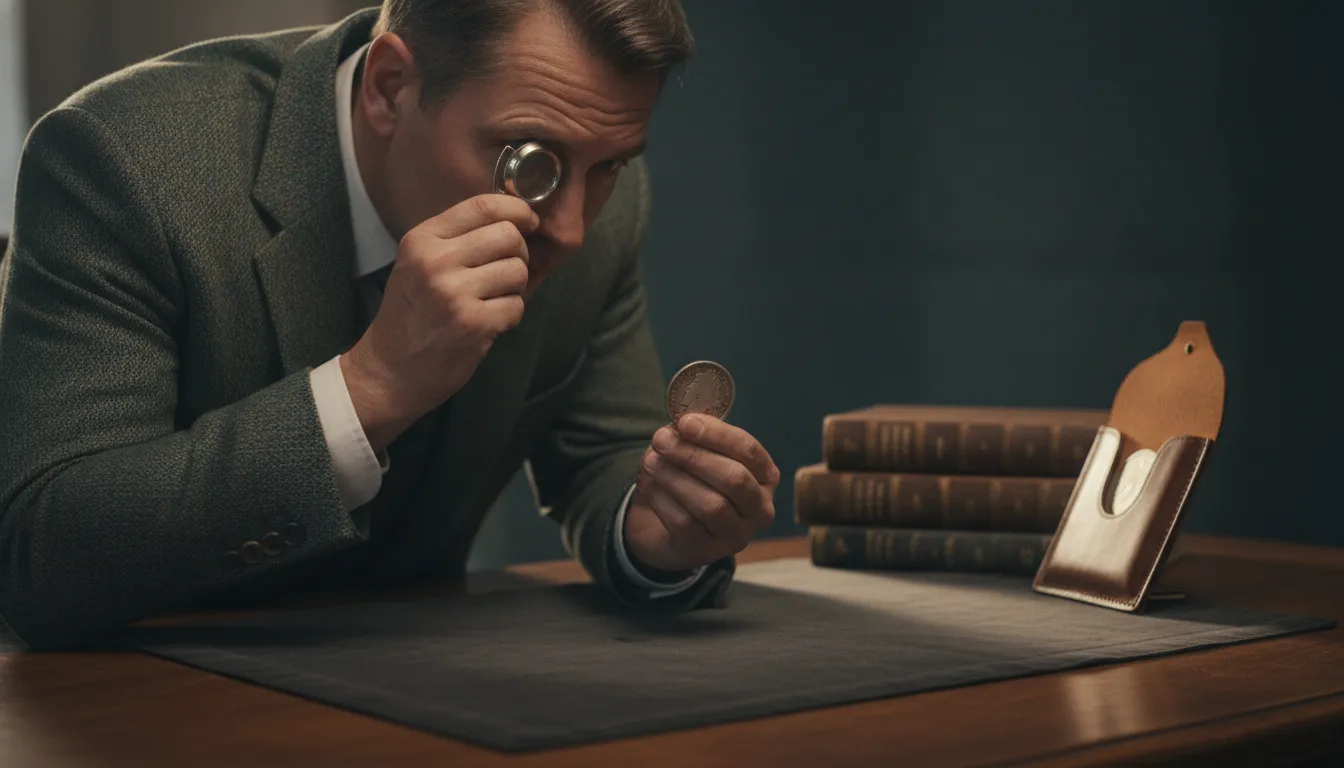
 Buying an early American silver dollar requires more than recognizing Liberty's portrait. Date, reverse design, die variety, preservation, and authenticity all shape how collectors evaluate a Draped Bust dollar, and an attractive surface cannot compensate for an uncertain attribution. This guide focuses on the questions that matter before money changes hands: what type you are viewing, which diagnostics deserve close inspection, and what documentation a seller should provide.
Call 1-888-419-7136 to discuss a Draped Bust dollar for sale with Park Avenue Numismatics.
A draped bust dollar for sale should be evaluated by its exact date and variety, reverse type, condition, surfaces, provenance, and authenticity rather than by silver content alone. Regular-issue Draped Bust dollars date from 1795 through 1803, with early examples including the 1795 Small Eagle reverse and later Heraldic Eagle types. The PCGS reference framework is a useful starting point for organizing those distinctions.
Understanding the series begins with its design history and the transition between its reverse types. That context gives every later authentication and buying decision a more precise foundation.
What Is a Draped Bust Dollar?
A Draped Bust dollar is an early United States silver dollar issued for regular circulation from 1795 through 1803. The design belongs to the Federal period, when the young Mint was establishing the visual language and production standards of American coinage. Liberty appears on the obverse with a draped bust, while the reverse changed during the series. That combination of early Mint history, design transition, and surviving varieties makes the type especially important to collectors.
The design is associated with Robert Scot, the first Chief Engraver of the United States Mint. His work reflects the conventions of late eighteenth-century portraiture while adapting them for a national coinage. Draped Bust dollars followed the preceding Flowing Hair silver dollars, so comparing the two series can help place the Draped Bust design in its historical sequence.
Small Eagle and Heraldic Eagle reverses
The earliest Draped Bust dollars used the Small Eagle reverse. This design shows a relatively small eagle on the reverse, surrounded by a wreath. Later issues adopted the Heraldic Eagle reverse, which features a larger eagle with a shield and a more formal arrangement of stars, clouds, and other elements. The reverse type is not a minor descriptive detail. It is a primary way collectors separate the series into distinct collecting categories.
When evaluating a Draped Bust dollar, begin with the date and reverse type before discussing condition or market demand. The PCGS guide organizes the series around these distinctions along with variety and grade, which reflects how specialists study the coins. A coin offered as a draped bust dollar for sale should therefore be identified specifically, rather than described only by its broad design name.
This article focuses on the questions that matter when researching, authenticating, and buying the type. It is not a duplicate inventory listing, and it does not assign a fixed value. A coin's desirability can depend on its authenticity, variety, preservation, provenance, and current collector demand.
Which Dates and Varieties Should Collectors Compare?
A useful comparison starts with the coin's identity, not with a broad search for a draped bust dollar for sale. Draped Bust dollars were regular-issue coins from 1795 through 1803. The date, reverse design, die marriage, and preservation all affect how one example should be compared with another.
Key comparison points for Draped Bust dollars.
| Comparison point | What to look for | Why it matters |
|---|---|---|
| Date | 1795 through 1803 regular-issue dates. | Each date has its own combinations of varieties, survival, and collector interest. |
| Reverse type | Early Small Eagle or later Heraldic Eagle design. | The reverse type helps establish the coin's design period and attribution. |
| Die variety | Specific die pairing and diagnostic details. | Variety attribution can separate otherwise similar-looking coins. |
| Rarity label | Sheldon categories from R-1 through R-8, where documented. | The label describes rarity, not grade, authenticity, or a guaranteed value. |
Small Eagle and Heraldic Eagle types
The 1795 Type 1 issue is associated with the Small Eagle reverse. Later Draped Bust dollars use the Heraldic Eagle reverse, and the transition is an important first sorting step. Within a type, collectors may compare star arrangements, lettering, date punches, edge details, and other diagnostics used by recognized attribution references. An off-center strike is a minting error caused by a planchet being misaligned between the dies, but an error description should not replace a complete variety examination.
Rarity labels require context
The PCGS Draped Bust dollar guide describes the Sheldon Rarity Scale from R-1, common, through R-8, unique or nearly unique. A plus sign indicates a higher degree of rarity within a category. These labels are useful shorthand, but they do not tell you the coin's grade, surface quality, or authenticity.
Why 1804 needs careful explanation
An 1804-dated dollar should not be treated as an ordinary final-year circulation issue. Regular-issue Draped Bust dollars were struck from 1795 through 1803, and no dollar dated 1804 was struck for ordinary circulation in 1804. The celebrated 1804 dollars were made later: Class I examples were struck in 1834-1835 as diplomatic presentation pieces, while Class II and Class III pieces are later restrikes generally dated to 1858-1859. The PCGS CoinFacts reference on the 1804 dollar explains the class distinctions. Ask for the specific class, attribution, certification, and provenance before comparing one with an 1803 or another 1804-dated example. Avoid relying on the date alone.
How Do Condition and Surfaces Affect a Coin's Appeal?
Condition is more than a single grade on a holder. It describes how much original detail remains, how the coin was struck, and how its surfaces have changed over time. When comparing a Draped Bust dollar, start with the date, reverse type, and variety, then judge preservation in that specific context. A lower-grade coin with honest, problem-free wear may be more appealing than a sharper-looking example with significant surface damage.
Grade and strike detail
Look first at Liberty's hair and drapery, then examine the reverse eagle and surrounding lettering. A weak strike can soften detail even when the coin has seen limited circulation, so missing hair or eagle detail should not automatically be treated as wear. Check the rims as well. Complete, even rims support the coin's overall presentation, while bumps, flattening, filing, or other interruptions can affect its appeal and raise questions about handling.
For a useful foundation, review these coin grading basics before comparing certified examples. The goal is not to chase a grade in isolation. It is to understand what the grade describes and whether the assigned grade fits the visible evidence.
Surface quality and eye appeal
Inspect both sides under consistent lighting for hairlines, scratches, pits, digs, and signs of cleaning. Bright, unnaturally uniform surfaces can indicate that a coin was cleaned, while darker areas around devices may reveal residue or uneven treatment. Toning is not automatically a defect. Natural color can complement the design, but unusual color, spots, or abrupt transitions deserve closer review.
Eye appeal brings these observations together. It reflects the balance of detail, surfaces, color, strike, and overall originality. Two coins with the same stated grade can present very differently. Ask for clear, in-focus images and consider an independent opinion when surfaces are difficult to evaluate. No condition feature guarantees a particular outcome or fixed value; collector demand depends on the complete combination of authenticity, rarity, preservation, and current market interest.
How Can You Tell If a Draped Bust Dollar Is Authentic?
- Match the seller, listing, and coin. Start with the basics before examining the metal. Confirm the dealer's identity, return terms, photographs, stated date, reverse type, variety attribution, grade, and certification number if one is provided. The coin in hand should match the listing in every material respect. A vague description or stock photograph is a reason to pause, not a reason to assume the piece is genuine.
- Use weight and diameter only as screening tests. Compare the coin with reliable reference data and use appropriately calibrated equipment. Measurements that are significantly inconsistent can reveal a problem, but a counterfeit may be made to approximate expected specifications. Wear, damage, alteration, measuring error, and scale accuracy can also affect the result. Passing a home measurement test does not authenticate a Draped Bust dollar.
- Study the edge and lettering. Examine the edge for the expected lettered design, its spacing, and its relationship to the rims. Look for soft, uneven, or malformed letters, suspicious seams, filing, casting texture, or edge damage that appears to conceal a defect. Edge lettering is useful evidence, but it should be assessed with the date, design, and surfaces rather than treated as a stand-alone proof.
- Compare design and variety diagnostics. Check the date style, portrait, eagle, wreath, stars, and other die features against a trusted reference. Draped Bust dollars can differ by reverse type and die variety, so a variety attribution should be supported by specific markers rather than a general resemblance. An unusual feature, such as an off-center strike, may be a genuine minting error, but it can also make close comparison more important.
- Inspect surfaces under good light. Rotate the coin slowly and look for unnatural texture, bubbles, seams, repeating depressions, tool marks, plugged areas, deceptive smoothing, or a surface that does not fit the stated grade. Also note cleaning, scratches, and altered toning. A sharp-looking design is not enough; genuine early dollars can show circulation and surface changes, while altered or counterfeit pieces can be made to look old.
- Obtain an independent opinion. For a significant purchase, rely on an experienced numismatist or an established third-party grading service rather than a home test alone. A holder and label can document an assigned grade and identification. But read them carefully and confirm that the coin, certification details, variety, and surfaces match what you are buying. Authentication is a judgment based on the complete evidence, not one measurement or visual impression.
Why Do Provenance and Certification Matter?
A Draped Bust dollar carries more than a date and a design. Its provenance, or documented ownership history, can help explain where the coin came from and how it has been handled. Useful records may include an old receipt, an auction listing, an appraisal, or correspondence identifying the coin. Provenance is not a guarantee of authenticity, but it gives a buyer more information to evaluate and preserve with the coin.
Ask whether the paperwork describes this specific piece rather than merely the same date and type. Clear photographs, lot numbers, distinctive marks, and consistent descriptions make a record more useful. Auction history can also provide context for attribution and prior opinions, although an earlier listing should not replace a current examination.
What the holder and label can tell you
A third-party holder can protect a coin and record an opinion about its authenticity, grade, and attribution. PCGS and NGC certification may give buyers a standardized reference point, but the holder and label still deserve inspection. Confirm that the certification number matches the correct service's online record, and compare the coin in hand with available images when possible. Check the date, variety attribution, grade, and any notation about cleaning, damage, or other qualifiers. A certification is evidence to consider, not an absolute promise about future value or market performance.
Grading language also requires care. PCGS uses the Sheldon scale, which runs from 1 to 70, but a numerical grade cannot fully communicate a coin's originality, surface quality, or eye appeal. A collector can review these distinctions in the guide to coin grading basics. PCGS's Draped Bust dollar reference provides additional background on rarity terminology and series research: Draped Bust dollar information from PCGS.
When evaluating a draped bust dollar for sale, treat provenance, certification, and the coin itself as related but separate evidence. The strongest buying decision comes from comparing all three with the seller's description and asking questions when anything does not align.
What Should You Ask Before Buying a Draped Bust Dollar for Sale?
A careful purchase begins with a precise description. Ask the seller to confirm the exact date, reverse type, and recognized variety rather than relying on a broad title such as "early dollar." This matters whether you are pursuing a single type, a complete date run, or specialized varieties within the Bust dollar series. For a convenient view of currently listed examples, see the Bust Type silver dollar inventory, then evaluate each coin on its own merits.
- What exactly is the coin? Confirm the date, Small Eagle or Heraldic Eagle reverse, variety attribution, and whether the date or attribution has been independently reviewed.
- What is the grade, and what supports it? Ask for the stated grade, grading service if applicable, and a clear explanation of the coin's wear, strike, rims, and overall eye appeal. A numerical grade does not replace examination of the actual surfaces.
- Are there surface issues? Request disclosure of cleaning, scratches, tooling, repairs, porosity, corrosion, rim damage, or unusual toning. Ask for sharp photographs of both sides and the edge, taken without glare or excessive editing.
- Is it certified? If the coin is in a holder, verify the certification number, label, date, variety information, and holder condition through the grading service. Certification can add useful documentation, but it does not eliminate the need to inspect the specific coin.
- What is the provenance? Ask whether earlier auction records, collection history, or attribution notes accompany the coin. Provenance may help explain a coin's background, but any documentation should be distinguishable from an unsupported story.
- Is the pictured coin the coin being offered? Confirm that the photographs, serial number, and description refer to the same piece. Availability can change, so ask whether the coin remains in stock before arranging payment or travel.
- What is the return policy? Clarify the inspection period, return conditions, shipping responsibility, and whether the policy changes for certified or attributed coins. Written terms are preferable to assumptions.
Collectors who prefer to examine material in person can ask about visiting Park Avenue Numismatics' Miami store. Whether buying remotely or in person, these questions create a record of what was represented and help keep the decision focused on authenticity, condition, documentation, and fit with your collection.
Call 1-888-419-7136 to ask about authentication, provenance, and current Draped Bust dollar availability.
Frequently Asked Questions
What should I check first when reviewing a Draped Bust dollar?
Start by confirming the date, reverse type, stated grade, and whether the coin is certified. Then inspect clear photographs for edge lettering, rims, surfaces, and signs of cleaning or tooling. These checks narrow the question from whether the coin looks appealing to whether its attribution and condition support the seller's description.
Can a scale and calipers prove that a Draped Bust dollar is genuine?
No. Weight and diameter are useful screening details, but they cannot establish authenticity by themselves. Compare the measurements with a reliable reference, then review the edge, die characteristics, surfaces, and provenance. The U.S. Mint cautions that consumers can have difficulty distinguishing replicas from genuine coins, so an independent expert opinion remains important: U.S. Mint guidance on identifying genuine coins.
Is an 1804 Draped Bust dollar the same as every other date in the series?
No. The date requires especially careful attribution. Regular-issue Draped Bust dollars were minted from 1795 through 1803, and no dollar dated 1804 was struck for ordinary circulation in 1804. The later 1804-dated dollars were diplomatic presentation pieces and restrikes, classified as Class I, Class II, or Class III. Confirm the specific class, variety, production history, and certification rather than relying on the date alone.
Should I buy a certified Draped Bust dollar?
Certification can provide an additional layer of confidence about authenticity, attribution, and stated grade, but the holder and label should still be checked against the grading service's records. Review the coin itself, images, provenance, and return terms. A certified coin is not a substitute for understanding the surfaces and variety you are buying.
Ready to Discuss a Draped Bust Dollar?
A careful conversation can help you compare available Draped Bust dollars, review authentication questions, and identify buying options that fit your collecting goals. Park Avenue Numismatics can help you think through the details before you make a decision. Call Park Avenue Numismatics at 1-888-419-7136 to discuss available coins and your next collecting step.





