
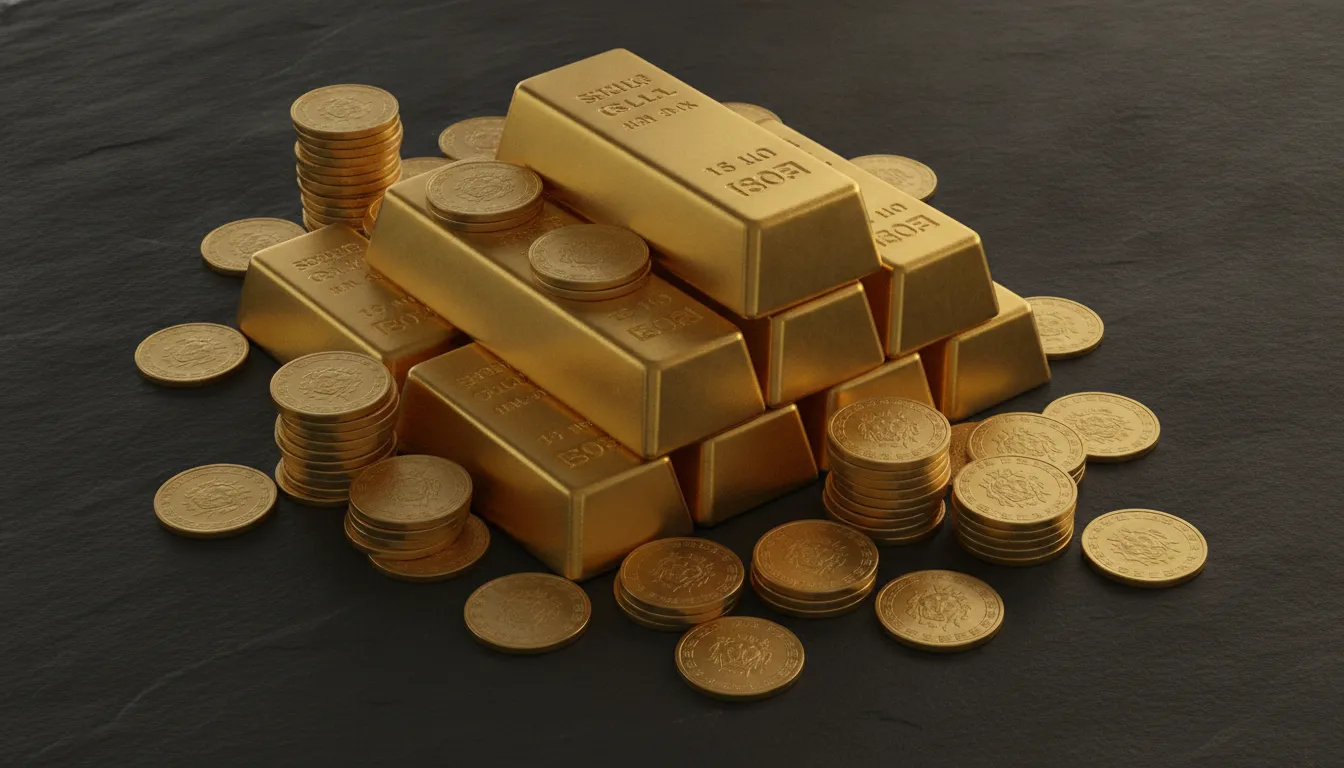
Gold has a timeless reputation as a safe-haven asset, a reliable store of value when other markets feel uncertain. This global trust is anchored by a universally understood value: the "AU price per ounce." This figure is more than just a number; it’s a real-time indicator of investor confidence, economic stability, and currency strength around the world. By tracking this price, you're essentially taking the pulse of the global financial system. Understanding what makes the spot price move is key to appreciating gold’s role in a diversified portfolio. This article will explore the major drivers behind gold's value and explain how you can use this knowledge to protect and grow your wealth.
Key Takeaways
- Understand the Total Cost of Gold: The price you pay isn't just the live market "spot price"; it also includes a "premium" that covers minting and distribution. This total cost is influenced by factors like economic stability, interest rates, and currency values.
- Choose Your Product and Dealer Wisely: The type of gold you buy, whether it's a bar or a coin, affects its premium over the spot price. Always partner with a reputable dealer to guarantee authenticity and get transparent pricing for a secure investment.
- Invest with a Clear Strategy: You don't need to time the market perfectly. Use disciplined methods like dollar-cost averaging to build your position over time, and set price alerts to spot buying opportunities without the stress of constant monitoring.
What Does "AU Price Per Ounce" Mean?
If you're looking into buying gold, you'll constantly see the term "AU price per ounce." It might look a bit technical, but it's quite simple. "AU" is the chemical symbol for gold on the periodic table of elements. So, the AU price per ounce is just the market price for one troy ounce of gold. This price isn't static; it moves throughout the day based on a variety of factors like global economic health, investor demand, and geopolitical stability. This live market rate is often called the "spot price," which is the price you could expect to pay for gold if you were to buy it for immediate delivery. Understanding this baseline price is the first step for any serious investor looking to add gold bullion to their portfolio.
Key Gold Pricing Terms to Know
To really get a handle on gold pricing, a few key terms are essential. First is the "troy ounce." When you see gold priced per ounce, it’s referring to a troy ounce, not the standard ounce (known as an avoirdupois ounce) you use for cooking. A troy ounce is slightly heavier, weighing in at 31.10 grams, and it's the universal unit of measurement for precious metals. Another critical term is the "spot price," which I mentioned earlier. This is the raw price of the metal itself, determined by the markets. It doesn't include any additional costs, like the premium a dealer adds to cover fabrication, distribution, and their own profit margin. Think of the spot price as the foundation upon which the final retail price is built.
Why Ounces Are the Standard for Gold
The practice of measuring gold in troy ounces is a tradition that goes back centuries, creating a universal standard for trade. This consistency is crucial in a global market. Major exchanges, like the London Bullion Market Association (LBMA) and the Chicago Mercantile Exchange (COMEX), use this standard to set the benchmark for the spot price of gold worldwide. By having a single, recognized unit of measurement, an investor in New York can trade with a seller in London or Tokyo with complete clarity. This standardization removes confusion and ensures that everyone is operating on a level playing field, making the process of buying and selling precious metals transparent and straightforward, no matter where you are.
How to Find the Current Price of Gold
Before you buy or sell, the first thing you need to know is the current price of gold. This price, often called the "spot price," is the market rate for one troy ounce of pure gold that's ready for immediate delivery. It fluctuates constantly throughout the day based on global trading activity, so having a reliable source for real-time data is essential for making informed decisions. Think of it as your starting point for every transaction, giving you the baseline value before any dealer premiums are added for specific products.
Where to Check Real-Time Prices
You can find live gold prices on major financial news websites like Bloomberg and Reuters, as well as specialized commodity tracking sites. These platforms typically show the spot price per ounce, gram, and kilogram, often refreshing every few minutes during trading hours. This gives you a clear picture of the market at any given moment. While these sites provide the raw market data, it's also helpful to check the pricing on dealer websites. This is where you'll see the spot price translated into the cost of actual products, like American Gold Eagles or Perth Mint gold bullion bars, which include a small premium.
The AUD vs. USD Effect on Gold Value
Globally, gold is priced in U.S. dollars (USD). For anyone in Australia, this means the local price is directly affected by the AUD/USD exchange rate. When the Australian dollar is strong against the U.S. dollar, it takes fewer Aussie dollars to buy one U.S. dollar's worth of gold, potentially making it cheaper for local buyers. Conversely, a weaker AUD means gold becomes more expensive. This currency relationship is a key reason why the price of gold in Australia can change even when the global USD spot price is stable. Keeping an eye on both the spot price and the exchange rate gives you a complete view of the market.
What Factors Influence Gold Prices?
The price of gold isn't set in a vacuum. It responds to a complex web of global economic, political, and market forces. Understanding these key drivers can help you make more informed decisions about when to buy or sell. Think of it less like a fixed price tag and more like a dynamic indicator of the world's financial health. Let's look at the four main factors that cause the price of gold to shift.
Economic Health and Interest Rates
Gold often acts as a financial barometer. During times of economic uncertainty, inflation, or currency devaluation, investors frequently turn to gold as a safe-haven asset. Its long history as a store of value makes it an attractive option when traditional markets feel volatile. This is why you'll often see the price of gold bullion rise when economic news is negative. Interest rates also play a significant role. When central banks keep interest rates low, the return on savings accounts and bonds is minimal. This reduces the opportunity cost of holding gold, a non-yielding asset, making it a more appealing choice for preserving wealth.
Currency Strength
Because gold is priced in U.S. dollars on the international market, the strength of the USD has a direct impact on its value. Generally, a weaker U.S. dollar leads to a higher gold price, as it takes more of those weaker dollars to purchase one ounce. Conversely, a strong dollar can put downward pressure on gold prices. For buyers in Australia, the AUD-to-USD exchange rate adds another layer. A stronger Australian dollar can make gold more expensive for foreign buyers, which can affect global demand and the local price. It’s a constant balancing act between global pricing and local currency value.
Global Events and Market Stability
Gold has a reputation for being a crisis commodity, and for good reason. Geopolitical instability, such as international conflicts or contentious elections, often creates market uncertainty. During these periods, investors tend to reduce their exposure to riskier assets like stocks and move toward the perceived safety and stability of precious metals. This flight to safety increases demand for gold, which in turn pushes its price higher. Gold’s value isn't tied to any single government or corporation, making it a reliable store of wealth when confidence in political and financial systems wavers. This is a key reason people use gold to diversify their portfolios for long-term security.
Supply and Demand Dynamics
At its core, the price of gold is driven by the simple economic principle of supply and demand. The global supply of gold is limited, growing slowly each year through mining operations. Any disruptions to mining, whether from political issues or operational challenges, can constrain supply and affect the price. On the other side, demand comes from several areas, including jewelry and industrial applications. However, the most significant driver of price is investment demand. When more investors want to buy physical gold, whether as bars, rare coins, or through ETFs, the increased demand puts upward pressure on its price. This is especially true when institutional buyers and central banks increase their holdings.
How Pricing Differs for Various Gold Products
When you decide to buy gold, you’ll quickly see that not all gold products carry the same price tag, even if they weigh the same. The form of the gold, from a large bar to a small, intricate coin, plays a huge role in its final cost. Understanding these differences is key to making a smart investment that aligns with your goals.
Gold Bullion Bars
Gold bullion is valued purely for its precious metal content, not for any collectible rarity. It’s the most straightforward way to own gold, as its price is tied closely to the current spot price of the metal. You can find gold bullion in various forms, including bars and rounds, available in a wide range of sizes and purities. Because they are produced for investment purposes, bullion bars typically have lower premiums compared to government-minted coins. This often makes them the preferred choice for investors who want to acquire the most gold for their money without paying extra for collectibility or intricate designs.
Gold Coins and Rounds
When you look at gold coins, you have a choice between pure gold and more durable alloys. For instance, you can choose 24-karat coins like the Canadian Maple Leaf for pure gold, or 22-karat coins like the American Gold Eagle, which are tougher but still contain a full troy ounce of pure gold. The additional metals in 22-karat coins are added to increase durability. Many government-minted rare coins for sale also carry a numismatic or collectible value beyond their metal content. This historical significance and rarity can result in a higher premium over the spot price compared to a simple bullion bar.
Gold ETFs and Paper Gold
Investing in physical gold, like coins or bars, is very different from investing in "gold derivatives" such as gold ETFs or shares in mining companies. These financial products, often called "paper gold," don't give you ownership of the actual metal. While they might seem convenient, derivatives can have hidden management fees that add up over time, making them potentially more expensive than owning physical gold. When you own the metal itself, you have a tangible asset without the counterparty risk associated with paper products. A Gold IRA Starter Kit is one way to hold physical gold within a tax-advantaged retirement account, giving you direct ownership.
Why Premiums Vary
The price you pay for a gold product is never just the spot price. There’s always an additional cost called a "premium." This extra amount you pay above the spot price helps cover the complete journey of the gold, including the costs of mining, refining, manufacturing, and selling it. Premiums are not one-size-fits-all; they vary based on the product type, its size, and demand. For example, a one-ounce gold coin requires more intricate work to produce than a one-ounce slice of a large gold bar, so its premium is usually higher. Similarly, smaller bars have higher percentage premiums than larger bars because the fabrication cost is spread over less gold.
Where to Buy Gold in Australia
Finding the right place to buy gold is just as important as deciding when to buy. In Australia, you have several options, from local brick-and-mortar shops to global online platforms. Your primary goal should be to find a source that is trustworthy, transparent about its pricing, and has a solid reputation. Making the right choice here ensures your investment is secure from the very first step.
Work with a Premier Dealer like Park Avenue Numismatics
Working with a premier dealer means you get more than just a transaction; you get a partner. Top-tier dealers provide expert guidance, a carefully curated selection of products, and a secure, professional process from start to finish. While we are based in the U.S., the principles of choosing an excellent dealer are universal. Look for a company with a long history and deep expertise in the market. A premier dealer is committed to client education and building long-term relationships, which is central to our company philosophy. This ensures you’re not just buying gold, but also gaining a trusted resource for your investment journey.
Reputable Dealers vs. Other Sellers
While you might find seemingly good deals on peer-to-peer marketplaces or from private sellers, the risks involved can be significant. Reputable dealers, in contrast, operate with transparency and have a proven track record. They offer competitive pricing tied to live market rates and provide a wide selection of products, from various weights of gold bullion to certified rare coins. An established dealer provides a level of security and authenticity that you simply can’t guarantee with an unverified seller. This peace of mind is an essential part of making a sound investment in precious metals.
Buying Online vs. In-Person
Deciding whether to buy gold online or in person often comes down to personal preference and comfort level. Online dealers offer fantastic convenience, with 24/7 access to browse inventory and make purchases from anywhere. This is an excellent option for investors who know what they want and value efficiency. Visiting a dealer’s physical location, however, provides a different kind of assurance. You can inspect the products up close, ask questions face-to-face, and build a personal connection. Many of the best dealers offer both online and in-person services, giving you the flexibility to choose the method that suits you best.
How to Choose a Trusted Dealer
Before committing to a purchase, it’s crucial to do your homework on the dealer. Start by confirming they have a physical address and clear contact information. Look for independent reviews and check their ratings with business bureaus. A trustworthy dealer will always be transparent about their pricing, including any premiums over the spot price. They should also provide clear policies on payment, shipping, and insurance. Taking the time to properly vet a potential dealer is the most important step you can take to safeguard your investment for the long term.
How Dealers Determine Their Prices
When you look at the price of a gold product, you're seeing more than just the raw value of the metal. A dealer's final price is a carefully calculated figure that starts with the global market rate and adds costs related to sourcing, manufacturing, and running a business. Understanding these components helps you see exactly what you're paying for and why prices can differ between products and dealers. A reputable dealer will always be clear about how they arrive at their pricing.
Spot Price vs. Retail Price
The first term you need to know is the "spot price." Think of this as the live, wholesale price for one ounce of gold that can be bought or sold immediately on the global market. This price is in constant motion, influenced by everything from economic news to geopolitical events. However, the spot price isn't what you'll pay as a retail customer. The retail price is the final cost, which includes the spot price plus a premium. This is the price you'll see listed for gold bullion products online or in a showroom. The difference covers the journey of the gold from a raw commodity to a finished product in your hands.
What Are Premiums and Spreads?
The "premium" is simply the amount charged over the spot price. This additional cost isn't arbitrary; it covers the real-world expenses of producing and selling a physical gold product. These costs include mining, refining, fabrication, minting, shipping, and insurance. The premium also includes the dealer's operational costs and a small margin. Premiums vary based on the product’s type, rarity, and condition. For example, a newly minted American Gold Eagle will have a different premium than a vintage sovereign. The "spread" is the difference between a dealer's selling price (ask) and buying price (bid), which is how dealers facilitate a two-way market.
Does Buying in Bulk Make a Difference?
Yes, it absolutely can. In most cases, the premium per ounce decreases as the amount of gold you purchase increases. For instance, buying a single one-kilogram gold bar will almost always have a lower per-ounce premium than buying 32 individual one-ounce gold coins. This is because the dealer's handling and transaction costs are lower for a single, larger item compared to many smaller ones. For investors looking to diversify their portfolios with a significant allocation, purchasing in larger quantities is a smart way to get more gold for your money by minimizing the premium paid on each ounce.
Key Considerations Before You Buy
Once you understand the market and are ready to make a purchase, a few final steps can protect your investment for the long term. Thinking through storage, taxes, and authenticity isn't just about ticking boxes; it's about building a solid foundation for your precious metals portfolio. A smart purchase involves more than just finding the right price. It means planning for the entire lifecycle of your investment, from the moment you buy it to the day you decide to sell. Taking the time to address these key areas ensures your experience is smooth, secure, and financially sound.
How to Store and Insure Your Gold
Physical gold is a tangible asset, which means you need a concrete plan for keeping it safe. Your first option is storing it at home in a high-quality, fireproof safe that is well-hidden or bolted down. While this gives you direct access, it also carries risk. For greater security, consider a specialized third-party storage service, often called a depository. These facilities offer high-security environments with climate control and are fully insured. Regardless of where you store your gold, make sure your investment is covered by an appropriate insurance policy. Your standard homeowner's policy may not cover the full value, so you might need a separate rider or a specialized policy.
Know the Tax Rules
Understanding the tax implications of buying and selling gold is essential for managing your investment effectively. Tax laws can vary significantly depending on where you live, and they can impact your overall returns. For example, investors in Australia should familiarize themselves with the specific tax rules that apply to precious metals transactions. These regulations can influence everything from how you report capital gains to whether GST applies to your purchase. Before you buy, it’s a good idea to consult with a financial advisor or tax professional who understands precious metals to ensure you are compliant and making informed decisions.
Verify Purity and Authenticity
The best way to protect yourself from counterfeit products is to verify the purity and authenticity of your gold before you buy. Always work with a reputable dealer with a long history of customer satisfaction and industry expertise. An established dealer will guarantee the authenticity of their gold bullion and coins. Look for products that come directly from sovereign mints or trusted private refiners, which often include features like assay cards or distinct markings. Learning to recognize the key traits of genuine gold products and following best practices for transactions will help you build your collection with confidence.
Smart Strategies for First-Time Gold Buyers
Jumping into gold investing can feel like a big step, but you don’t need a massive budget to get started. The key is to begin with a clear, manageable strategy. By approaching your first purchase thoughtfully, you can build a solid foundation for your portfolio. These proven methods help you enter the market with confidence and make informed decisions.
Start Small and Grow Your Holdings
You don’t have to buy a large gold bar on your first day. In fact, it’s often wiser not to. Starting with a small investment allows you to get a feel for the market’s rhythm without taking on too much risk. Think of it as a learning experience. You can observe how prices move and become more comfortable with the process of buying and selling. As your knowledge and confidence grow, you can gradually add to your holdings. Many investors begin with popular one-ounce coins or smaller gold bullion bars, which are easy to acquire and trade.
Consider Dollar-Cost Averaging
Trying to time the market perfectly is a stressful game that even seasoned experts rarely win. A much more disciplined approach is dollar-cost averaging. This strategy involves investing a fixed amount of money in gold at regular intervals, whether that’s monthly or quarterly, regardless of the current price. By doing this, you buy more gold when the price is low and less when it’s high. Over time, this method can smooth out the effects of volatility and lower your average cost per ounce. It’s a simple, powerful way to build your position steadily without getting caught up in short-term price swings.
Use Gold to Diversify Your Portfolio
One of gold’s most valuable roles is as a portfolio diversifier. It acts as a powerful counterbalance to traditional assets like stocks and bonds. When the stock market is volatile or facing a downturn, gold often holds its value or even increases in price. This is because its value isn't tied to the performance of any single company or government. Adding gold to your investment mix can provide a crucial hedge against inflation and economic uncertainty, creating a more stable and resilient portfolio. For long-term planning, a Gold IRA can be an excellent way to incorporate physical gold into your retirement strategy.
How to Monitor Gold Prices Like a Pro
Staying on top of gold's price movements is the difference between a passive holder and a strategic investor. You don’t need to be glued to a financial news channel to do it, either. With the right tools and a little know-how, you can track the market effectively and make informed decisions that align with your financial goals. It’s all about understanding what to watch for and knowing how to interpret the signals the market sends.
By developing a simple monitoring routine, you can learn to spot trends, understand the drivers behind price shifts, and identify moments that might be right for you to buy or sell. This proactive approach gives you more control over your investments. Instead of reacting to market news after the fact, you’ll be prepared to act when the time is right. Think of it as learning the language of the market so you can participate in the conversation with confidence.
Set Up Price Alerts
One of the simplest and most effective ways to keep track of the market is by setting up price alerts. Many financial websites and dealer platforms allow you to set a specific price point for gold, and you’ll receive an automatic email or text notification when the market hits that number. This is a fantastic tool because it does the work for you, freeing you up from constantly checking live charts.
You can set alerts for a price you’d be comfortable buying at or a target price where you might consider selling. For example, if you believe a dip is coming, you can set an alert for a lower price to signal a potential buying opportunity. By keeping an eye on the prices of different gold bullion products, you can time your purchases strategically.
Watch Key Economic Indicators
Gold prices don’t move in a vacuum; they are deeply connected to the health of the global economy. Understanding a few key indicators can give you incredible insight into why prices are moving. Gold often performs well during times of economic uncertainty, as investors seek it out as a safe-haven asset. Keep an eye on factors like inflation rates, interest rate decisions by central banks, and major geopolitical events.
For instance, rising inflation can devalue currency, making tangible assets like gold more attractive. Similarly, low interest rates reduce the opportunity cost of holding gold, which doesn't pay dividends. As a firm with over 35 years of experience, we at Park Avenue Numismatics have seen these patterns play out time and again, reinforcing gold’s role as a stabilizing force in a portfolio.
Identify Potential Buying Opportunities
Monitoring prices isn’t just about watching numbers go up and down; it’s about recognizing patterns that signal a good time to act. Use price charts to look at historical data over different timeframes, like daily, weekly, or even monthly. This helps you see the bigger picture beyond short-term volatility. A temporary price dip might look alarming on a daily chart, but on a monthly chart, it could simply be a minor correction in a larger upward trend.
These dips can represent excellent buying opportunities for long-term investors looking to add to their positions at a lower cost. It’s also a smart way to diversify your portfolio and hedge against market risk. For those looking to protect their retirement savings, using a Gold IRA Starter Kit can be a great way to incorporate physical gold into your long-term strategy.
Related Articles
- Precious Metals Glossary | Precious Metals & Rare Coins Dealer | Antique Coins - Park Ave Numismatics
- Gold Coins for Sale | Golden Eagle Coins | Park Ave Numismatics | Precious Metals & Rare Coins Dealer | Antique Coins - Park Ave Numismatics
- Gold Bars 1 oz Gold Bar Perth | Precious Metals & Rare Coins Dealer | Antique Coins - Park Ave Numismatics
- Park Ave Numismatics | Rare Coins | Precious Metals | Collectible Coins | Precious Metals & Rare Coins Dealer | Antique Coins - Park Ave Numismatics
- 1 oz American Gold Eagle PCGS70 Ultra High Relief | Precious Metals & Rare Coins Dealer | Antique Coins - Park Ave Numismatics
Frequently Asked Questions
Why is the price I pay for a gold coin higher than the "spot price" I see on the news? Think of the spot price as the wholesale cost of the raw material, pure gold. The price you pay, called the retail price, includes that spot price plus a "premium." This premium covers all the real-world costs to get that gold from a mine into your hands, including refining, manufacturing the coin or bar, shipping, insurance, and the dealer's operational costs. Every physical gold product will have a premium.
Is it better to buy one large gold bar or several smaller coins? This really depends on your personal investment strategy. Buying a single large bar, like a one-kilogram bar, typically comes with a lower premium per ounce, meaning you get more gold for your money. However, smaller coins or bars offer more flexibility. If you ever need to sell a portion of your holdings, it's much easier to sell a few one-ounce coins than to find a buyer for a piece of a large bar.
What's the single biggest driver of gold's price? While many factors are at play, the price of gold is most sensitive to economic uncertainty. Gold has a long history as a safe-haven asset. When investors are worried about things like inflation, stock market volatility, or global instability, they often turn to gold for its perceived safety and stability. This increased demand is what typically pushes the price higher.
How can I be sure the gold I'm buying is authentic? The most effective way to protect yourself from counterfeits is to buy exclusively from a highly reputable and established dealer. A trusted dealer guarantees the authenticity of every product they sell because they source their inventory directly from sovereign mints and respected refiners. Their reputation is built on trust, so they take every step to verify their products.
What's a smart way to start buying gold if I don't have a lot of money to invest? You don't need a large sum to get started. A great approach is to begin with a single, widely recognized one-ounce gold coin, like an American Gold Eagle or Canadian Maple Leaf. Another effective strategy is dollar-cost averaging, where you invest a set amount of money at regular intervals. This allows you to build your holdings over time and reduces the stress of trying to time the market perfectly.





