
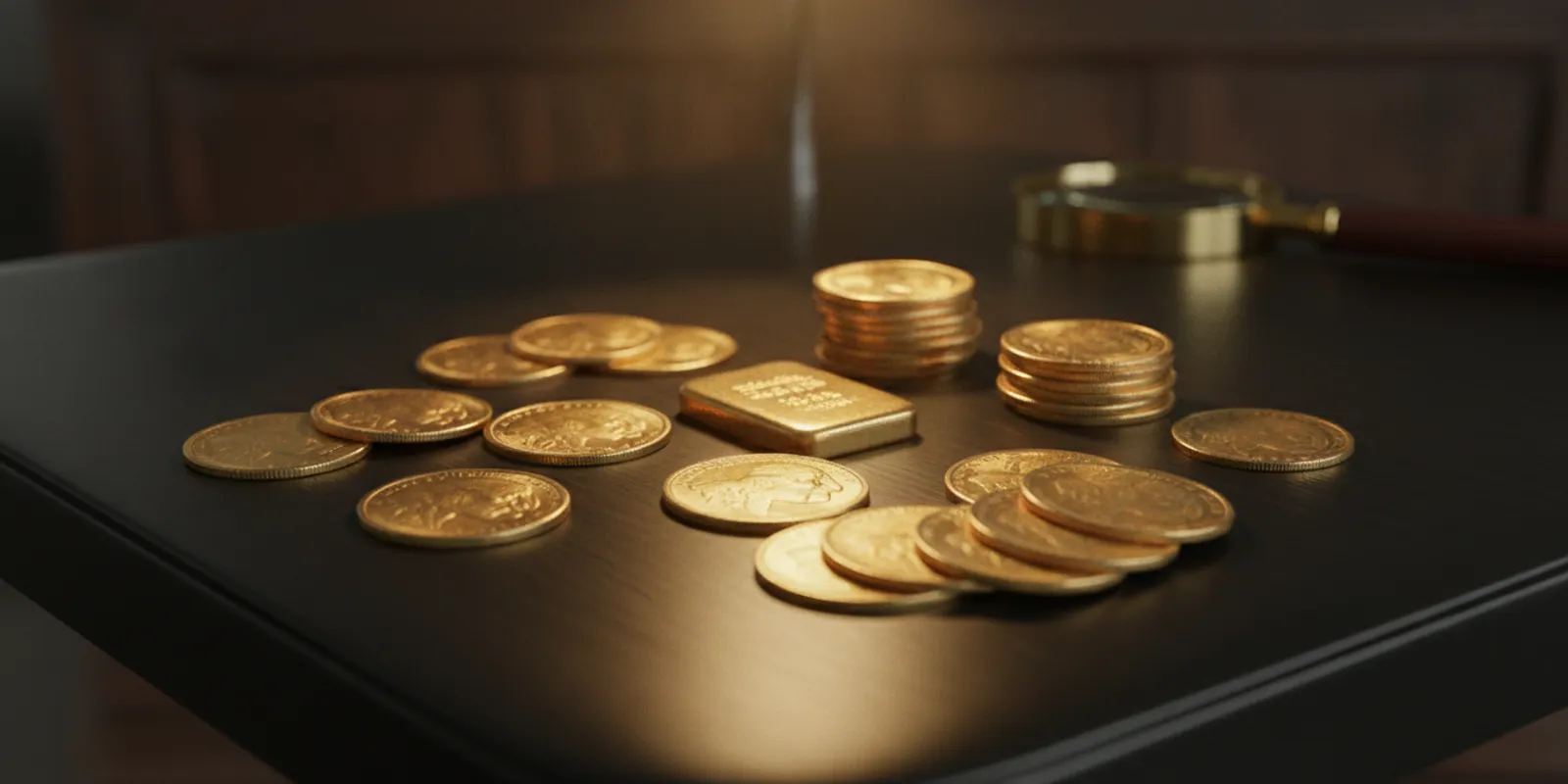
If you are asking where the best place to sell gold is, start with a buyer whose experience fits your item and whose assessment and terms you can understand. Bullion, jewelry, and collectible U.S. coins may need different expertise. Compare the process and fit, not just a headline offer.
Arrange a conversation about your gold
First decide what matters most: an in-person assessment, convenience, a potential collector-market route, or a clear opportunity to decline. That priority helps narrow the options without assuming that one kind of buyer is always best.
What makes a place the best place to sell gold?
A strong fit is a buyer who can identify the kind of gold involved, explain what will be examined, describe the offer and its conditions, and tell you what happens if you do not accept. A quick quote or polished storefront alone does not show whether the process fits your item.
A plain bullion bar, a modern bullion coin, and an older U.S. gold coin are not interchangeable. Collectible coins can have features beyond metal content, including date, mint mark, condition, rarity, provenance, certification, and current demand. Their effect varies; no single feature guarantees a particular value.
Park Avenue Numismatics buys rare coins and precious metals from the public in Miami and has operated since 1988. Sellers can share photographs, visit for an assessment, and decide whether to proceed with a purchase. This is one local, in-person route for people who want to discuss items face to face.
How do the main gold-selling options compare?
Use this table to identify questions for each route. Processes and terms vary, so confirm details directly before transferring custody of your gold.
| Route | May suit | Ask about | Trade-off |
|---|---|---|---|
| Local coin and bullion dealer | U.S. gold coins, bullion, or mixed collections needing an in-person review | Experience with your item, assessment steps, written terms, and whether you may decline | Requires a visit; expertise should match the items |
| Online precious-metals buyer | Items that can be described and shipped under defined procedures | Shipping, insurance, evaluation timing, return arrangements, and payment | You may not be present during examination |
| Jewelry buyer | Jewelry transactions centered on metal content | How weight and purity are assessed and whether stones or design are considered | May not be suited to collectible coin evaluation |
| Auction house | Potentially collectible or unusual coins considered for a sale | Fees, timing, reserve terms, and what happens if an item does not sell | Proceeds and timing depend on the sale |
Consider the actual terms rather than relying on these general descriptions. Catalog examples such as a 1893 $20 gold coin and a 1909-S $20 gold coin illustrate the individual details collectors may discuss. A listing is an example, not an estimate for a coin you own.
What should you compare before choosing a buyer?
Knowledge that matches your items
Ask whether the buyer reviews your particular type of gold. For a collectible U.S. coin, ask how date, mint mark, condition, rarity, provenance, certification, and demand may enter the discussion. For bullion, ask what identifying features and metal characteristics are examined. The relevant factors depend on the item.
If you have a mixed group, find out whether each piece is considered separately or whether the buyer makes one combined offer. Ask how the process distinguishes metal content from possible collector interest. That explanation helps you understand what you are being asked to sell.
A clear assessment process
Ask what information the buyer needs and which parts of the examination can only happen in person. For coins, visible dates and mint marks can help begin identification; a photograph may not show every detail of condition or authenticity. For bars, ask how identifying marks and other characteristics will be reviewed.
Request an explanation in plain language. If an offer is based mainly on metal content, ask how the buyer assesses weight and purity. If collector interest is considered, ask which features affect the discussion. It is reasonable to ask what an offer covers and whether it is preliminary or final after examination.
Understandable terms and room to decide
Before agreeing, confirm the amount, which items it covers, how payment works, and whether any conditions apply. Ask whether you can accept for only part of a group. An assessment does not by itself require you to sell; understand the buyer's process for returning items if you decline.
An informal phone estimate or online calculator is not necessarily a final offer. A direct examination may change what is known about an item. Values vary with factors such as condition, rarity, provenance, certification, and current market demand; no estimate guarantees a sale price.
Handling and logistics
For an in-person visit, ask where the assessment takes place and how items are handled. For a shipment, confirm packing instructions, insurance, transit responsibility, when custody changes, evaluation timing, and return shipping if you decline. Keep a written inventory and photographs for your records before items leave your possession.
How should you prepare gold for an assessment?
Preparation can make the conversation more focused without requiring specialized equipment or your own estimate of each item. Present the items as they are, share reliable records, and make it easy to confirm which pieces are being discussed.
- Sort items by broad type, such as U.S. gold coins, bullion coins, bars, and jewelry.
- Write down visible dates, mint marks, weights if known, and identifying marks.
- Photograph both sides of coins and marks on bars. Keep the images for your records.
- Gather certificates, receipts, provenance records, and prior appraisals, while recognizing documents do not guarantee value.
- Keep coins in their existing holders and do not clean or polish them before review.
- List the questions you want answered before considering an offer.
Do not risk damaging an item in an attempt to test or improve it. If you are unsure whether a coin may be collectible, preserve its condition and ask how it will be assessed.
How can you compare offers fairly?
Use the same inventory and questions at each discussion. This helps when one buyer considers pieces separately and another makes a group offer. It also helps distinguish a difference in assessment from a difference in the items or conditions included.
Record the amount, items covered, payment method and timing, fees, and any conditions. Ask whether an amount is preliminary or based on direct examination. If the buyer groups several items, ask whether the offer can be broken down or whether you can sell only part of the group.
For example, imagine a group with a modern bullion coin and an older U.S. gold coin. One may be discussed primarily in terms of metal characteristics, while the older coin may prompt questions about collector features too. Ask each buyer to explain the basis for the offer and what happens if you want to keep one piece. That makes the comparison more meaningful than simply writing down two totals.
A simple comparison worksheet
- List each item or clearly defined group included.
- Note the factors the buyer says matter to the assessment.
- Write down the amount and whether it is preliminary or final after examination.
- Record payment timing, costs, custody, and return terms.
- Mark unanswered questions and resolve them before accepting.
This method will not identify a universal top offer. It clarifies what each offer means for your items and priorities. If you seek another opinion, share the same inventory and ask comparable questions.
Worked example: an inherited mixed group
Suppose you have inherited several U.S. gold coins, a modern bullion coin, and a bar. Make separate inventory lines instead of calling everything âgold.â Note visible dates and mint marks, identify the bar's marks, and photograph each piece without cleaning it or removing protective holders. Bring any paperwork you received, while treating it as context rather than a guarantee of value.
Ask the first buyer whether each piece is considered separately and whether the offer is preliminary or based on examination. At another discussion, use the same list and confirm whether the amount covers the same items. If one coin's collector status is uncertain, ask what features the buyer will review. A visible date can help identify it, but does not alone establish condition, authenticity, or demand.
If the offers differ, compare their explanations and terms before drawing a conclusion. One may include a different item, use a different grouping, or depend on a condition that the other does not. Clarifying these points can be more useful than treating the total alone as the full story.
What questions should you ask a gold buyer?
Use a consistent list when comparing buyers:
- Do you evaluate this kind of U.S. coin, bar, or other gold item?
- What details will you consider in the assessment?
- Can you explain how the offer applies to each item or group?
- Can I decline and take the items with me?
- What payment method and timing apply if I accept?
- Are there fees, shipping costs, or other terms to know?
- For a mailed transaction, how do insurance, custody, and returns work?
Compare the answers as well as the amounts. If a process or condition is unclear, ask for an explanation before proceeding. More than one informed opinion may help you understand differing assessments without assuming that they must match.
When does a Miami coin dealer make sense?
A Miami-area seller may prefer a local assessment to discuss U.S. coins and precious metals in person. Park Avenue Numismatics is a Miami-based dealer that purchases rare coins and precious metals from the public. Its process can begin with photographs and continue with an in-store assessment, followed by a purchase if both sides agree.
An in-person discussion gives you an opportunity to ask how an item is being reviewed and hear the terms directly. It does not mean every item will have the same market interest or produce a particular offer. A 1915 $5 gold coin catalog example shows how date, denomination, grade, and certification can appear in an individual coin description. A listing is not a valuation for your coin.
For general consumer information on researching a business and understanding a transaction, see the Federal Trade Commission's consumer information. It is general guidance, not an appraisal or a determination of a particular coin's worth; review the specific terms offered for your items.
Call 1-888-419-7136 to discuss your coins or precious metals.
Frequently asked questions
Is a local dealer or online buyer better for selling gold?
It depends on the items and the process you prefer. A local dealer can examine items with you present. An online buyer may require shipping, so check insurance, custody, return, and payment terms in advance. Compare relevant experience for your particular gold.
Should I sell gold coins for their metal content?
Not automatically. Some coins may have collector characteristics beyond metal content, while others may be treated mainly as bullion. Ask how the buyer assesses your particular coin and which factors are relevant.
Will a photograph tell me what my gold is worth?
A clear photo can help identify an item and start a discussion, but it may not show condition, authenticity, weight, or other details needed for an assessment. Treat an amount discussed before examination as preliminary unless the buyer clearly states otherwise.
Do I have to accept an offer after an assessment?
Ask about the process and confirm whether you can decline and take your items with you. You can review the terms and compare information before deciding.
Discuss your coins or precious metals
Key takeaway
The best place to sell gold is a buyer whose experience fits your items and whose assessment, terms, and handling process you understand. Prepare an inventory, ask direct questions, and decide after reviewing the offer and its conditions.





