
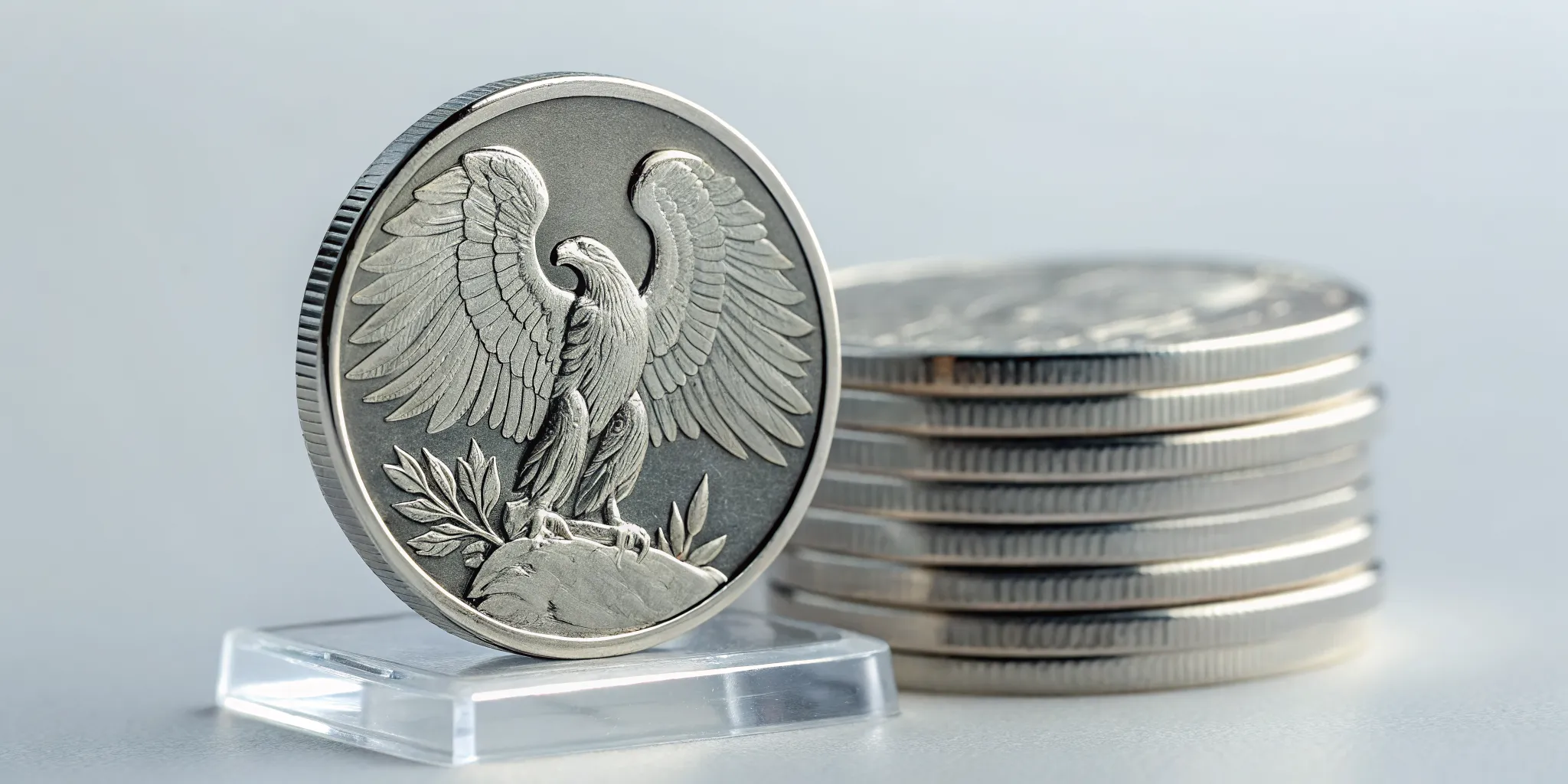
 When the U.S. Mint releases a new coin, collectors take notice. But when it sells out on the very first day, it becomes a legend. That’s the story of the American Palladium Eagle. Since its debut, this coin has been defined by its extreme scarcity and the intense demand it generates. With mintages often capped at just 15,000 pieces, securing one is a major achievement for any serious collector. This isn't a coin with a century of history; it's a modern classic whose reputation is built on its rarity. If you're intrigued by assets that are both beautiful and exceptionally hard to find, the palladium eagle coin deserves your full attention.
Key Takeaways
- It's Both a Commodity and a Collectible: The Palladium Eagle's worth comes from two sources: its one troy ounce of .9995 fine palladium and its numismatic value. The coin's limited production and historic Weinman designs give it a collector appeal that goes beyond its raw metal content.
- A Unique Role in Your Portfolio: Palladium's price is heavily influenced by industrial demand, particularly from the auto industry. This causes its value to move differently than gold or stocks, making it a powerful tool for diversifying your investments and adding a component with high-growth potential.
- Buy Smart by Prioritizing Certification and Expertise: To protect your investment, focus on certified coins graded by reputable services like PCGS and NGC. Partnering with an established dealer is the best way to guarantee authenticity, understand a coin's true market value, and make a confident purchase.
What Is the American Palladium Eagle?
The American Palladium Eagle is one of the newer and more fascinating players in the world of precious metals. As the official palladium bullion coin of the United States, it holds a special place for both collectors and investors. Unlike its gold and silver counterparts, which have been around for decades, the Palladium Eagle is a modern creation, born from a growing appreciation for palladium's unique properties and investment potential. Its story is one of rarity, artistry, and incredible demand. If you're curious about what makes this coin so special, it helps to start from the beginning.
The Origin Story of the Palladium Eagle
So, what exactly is this coin? The American Palladium Eagle is a special coin produced by the United States Mint, and it’s made from a rare, silvery-white precious metal called palladium. This metal is part of the platinum group and is highly valued for its industrial uses, particularly in catalytic converters for cars. The U.S. Mint’s decision to create a coin from this metal highlights the growing interest in palladium bullion as a tangible asset. It represents a unique and modern addition to the Mint’s prestigious American Eagle coin program, offering a fresh option for diversifying a precious metals portfolio.
How the Coin Became Official
A coin like this doesn't just appear out of thin air; it takes an act of Congress. The journey of the Palladium Eagle into an official U.S. coin began with legislation. The American Eagle Palladium Bullion Coin Act of 2010 was the key piece of law that authorized its creation. This bill was signed into law by President Barack Obama in December 2010, officially giving the U.S. Mint the green light to produce and issue these coins. This legislative step was a major milestone, recognizing palladium's standing as a valuable precious metal and establishing it as legal tender in the United States.
The Rarity Factor: Why It Sells Out Instantly
One of the biggest draws of the Palladium Eagle is its scarcity. The U.S. Mint intentionally produces a limited number of these coins each year, which fuels intense demand from the moment they are released. For example, the very first bullion version of the coin, which came out on September 25, 2017, was limited to just 15,000 pieces. It sold out completely on the first day. The first proof version in 2018 saw a similar story with its own 15,000-coin mintage. This history of instant sell-outs underscores the coin's high desirability and makes securing one a top priority for serious collectors.
A Closer Look: Palladium Eagle Specs
When you're considering adding a coin to your collection, the details matter. The American Palladium Eagle isn't just a beautiful piece; it's a meticulously crafted asset with specifications that define its quality and value. Understanding these specs is the first step to making a smart purchase. From its purity to its size, every detail is set by the U.S. Mint to ensure it meets the highest standards for investors and collectors alike. Let's get into what makes this coin a standout in the world of precious metals.
Composition and Purity
The American Palladium Eagle is struck from .9995 fine palladium, meaning it's 99.95% pure. This exceptional level of purity is what gives the coin its brilliant, silvery-white luster and makes it an investment-grade precious metal. When you hold one, you're holding a piece that meets the U.S. Mint's strictest quality standards. This high purity ensures its intrinsic value is directly tied to the palladium bullion market, making it a reliable asset for your portfolio. It’s this commitment to quality that separates official government-minted coins from other forms of palladium.
Weight and Dimensions
Each Palladium Eagle contains exactly one troy ounce of pure palladium, the standard unit for precious metals, equivalent to about 31.1 grams. The coin has a diameter of 34.036 millimeters, making it a substantial piece with a satisfying presence. These precise, government-guaranteed specifications are important because they make the coin easily verifiable and universally recognized. This standardization, detailed on the U.S. Mint's official catalog, simplifies the process of buying, selling, and appraising, giving you confidence in every transaction you make.
Face Value vs. Market Value
While the Palladium Eagle has a legal tender face value of $25, this number is mostly symbolic. Its true worth is much higher and is determined by its market value. This value is a combination of two key factors: the intrinsic worth of its one troy ounce of palladium, known as the spot price, and its numismatic premium. The price of palladium can change daily based on global supply and industrial demand. As a beautifully designed and often limited-mintage item, the Palladium Eagle typically carries a higher premium than a simple palladium bar, reflecting its appeal to serious coin collectors.
The Artistry of the Palladium Eagle
A coin's value often goes beyond its precious metal content, and for the American Palladium Eagle, its artistic merit is a huge part of its appeal. The U.S. Mint didn't create new designs for this modern coin; instead, it revived two of the most beloved images from the golden age of American coinage. Both sides feature the masterful work of sculptor Adolph A. Weinman, making each coin a small piece of art history you can hold in your hand. Let's take a closer look at the stunning details that make this coin a collector's favorite.
The "Winged Liberty" Obverse
The face of the Palladium Eagle showcases the iconic "Winged Liberty" design. You might recognize this image from the classic Mercury dime, which circulated from 1916 to 1945. The design features the Goddess of Liberty wearing a Phrygian cap, a classic symbol of freedom, adorned with wings to represent liberty of thought. This powerful and elegant portrait has captivated collectors for over a century. Its revival on the Palladium Eagle pays homage to a high point in American coin design, connecting this modern palladium bullion coin to a rich numismatic legacy. It’s a timeless representation of American ideals, beautifully rendered by a master artist.
The Eagle Reverse
On the reverse, you’ll find an equally compelling design: a powerful eagle perched on a rock, using its beak and talons to pull a laurel branch. This isn't the familiar heraldic eagle seen on many U.S. coins. Instead, it's a dynamic and naturalistic portrayal that conveys strength and resilience. The eagle's determined posture, combined with the laurel branch symbolizing victory and honor, creates a truly memorable image. This design was originally created by Weinman for the 1907 American Institute of Architects Gold Medal. Its selection for the Palladium Eagle gives collectors a chance to own a celebrated piece of medallic art in the form of a beautiful coin.
Meet the Artist: Adolph A. Weinman
The genius behind both the obverse and reverse designs is Adolph A. Weinman, a celebrated German-American sculptor. Weinman was a central figure in the American numismatic renaissance of the early 20th century. His vision gave us not only the "Winged Liberty" dime but also the breathtaking Walking Liberty Half Dollar, a design still used today on the American Silver Eagle. By choosing two of his most acclaimed works for the Palladium Eagle, the U.S. Mint honored his enduring legacy. Owning one of these coins means you are collecting a piece of work from an artist whose influence on rare coins for sale is still felt today.
Decoding the Different Finishes
One of the most exciting aspects of collecting Palladium Eagles is the variety of finishes the U.S. Mint produces. Each finish gives the coin a distinct look and feel. The standard Mint State or bullion version has a brilliant, consistent luster perfect for investors. For collectors, the Proof finish offers a stunning contrast, with frosted, detailed designs set against a mirror-like background. Then there's the Reverse Proof, which flips that script with mirrored designs on a frosted field. These special finishes are often produced in smaller quantities, adding to their rarity and appeal. Understanding these differences is key to building a collection that reflects your personal taste and investment goals.
How Palladium Compares to Other Precious Metals
When you're building a precious metals portfolio, it's helpful to understand how each metal fits into the bigger picture. Palladium has a unique profile that sets it apart from gold, silver, and even its sister metal, platinum. While they all offer intrinsic value, their price drivers and market behavior can be quite different. Understanding these distinctions will help you make more informed decisions about how to diversify your holdings and where the Palladium Eagle fits in your strategy.
Palladium vs. Gold
The main difference between palladium and gold comes down to what drives their value. The price of gold bullion is often tied to big-picture economic factors like inflation, currency strength, and global uncertainty. Investors tend to flock to gold as a safe haven when markets are shaky. Palladium, on the other hand, is primarily an industrial metal. Its price is closely linked to manufacturing demand, especially from the automotive sector, where it's a critical component in catalytic converters. This industrial connection means palladium's value can move independently of gold, making it an interesting diversification tool.
Palladium vs. Silver
While both are industrial metals, palladium and silver play in different leagues when it comes to price. Silver is often seen as a more accessible entry point for new investors due to its lower price point. Its value tends to be more stable, though it certainly has its moments. Palladium has a history of more dramatic price swings and has shown significant appreciation in recent years, often trading at a much higher value per ounce than silver. This volatility can present greater risk, but it also offers the potential for higher returns, attracting investors with a different risk appetite than those who prefer the steady nature of silver bullion.
Palladium vs. Platinum
Palladium and platinum are often grouped together since they are both in the platinum group metals (PGMs) and are used in catalytic converters. The key difference, however, is scarcity. Palladium is significantly rarer than platinum, and this limited supply can have a major impact on its price when demand is strong. While platinum bullion has its own industrial uses and investment appeal, its more abundant supply gives it a different market dynamic. Palladium's rarity is a core component of its investment potential, as tight supply in the face of consistent demand often leads to price appreciation.
What Drives the Palladium Eagle's Value?
The value of a Palladium Eagle isn't just about its weight in a rare metal. It's a fascinating blend of industrial utility, collector demand, and global economics. Unlike a simple bar of palladium, the coin carries a numismatic premium, which is the value above its base metal price. This premium is influenced by several key factors, from the coin's scarcity and physical condition to the worldwide demand for palladium in manufacturing. Think of it as the difference between the raw material and the finished work of art. The metal itself has an intrinsic value, but the coin's design, history, and rarity add layers of desirability that appeal directly to collectors. Understanding these drivers is essential for any collector or investor looking to add this unique piece to their portfolio. Let's break down the four main components that give the Palladium Eagle its distinct value.
Industrial Demand
A huge part of palladium's story is its role in industry. The metal is a critical component in catalytic converters, which are used in car exhaust systems to reduce harmful emissions. As global emissions standards become stricter, the automotive industry's need for palladium grows, creating strong and consistent demand. This industrial consumption provides a solid foundation for palladium's market price, which can be subject to supply constraints. When you hold a Palladium Eagle, you're holding a piece of a metal that is essential to modern technology. This utility helps support the value of palladium bullion and, by extension, the coins minted from it.
Rarity and Mintage Limits
The U.S. Mint is known for producing American Palladium Eagles in very limited quantities, which is a major factor for collectors. For example, the first bullion coin in 2017 and the first proof coin in 2018 were each capped at just 15,000 pieces. This intentional scarcity makes each release an immediate event for the numismatic community. When supply is low and collector interest is high, the value of these coins can appreciate well beyond their metal content. This rarity is what separates a bullion investment from a true collectible and is a key reason why these rare coins for sale are so sought after.
Global Economic Factors
Like other precious metals, palladium's price is sensitive to the ups and downs of the global economy. Factors such as inflation rates, currency fluctuations (especially against the U.S. dollar), and overall economic stability play a significant role. During times of geopolitical uncertainty or economic downturns, investors often seek the security of tangible assets, including precious metals. This "safe haven" appeal can influence demand for palladium. While it has strong industrial ties, its role as a hard asset means its value is also connected to investor sentiment and the broader financial landscape, making it a compelling option for diversifying a precious metals IRA.
Coin Condition and Grade
For any collectible coin, condition is everything. A Palladium Eagle's state of preservation, professionally evaluated and graded by services like PCGS and NGC, has a massive impact on its market value. A coin in perfect, uncirculated condition (graded MS-70) or a flawless proof (PR-70) will command a much higher premium than one with even minor imperfections. This numismatic value is what attracts serious collectors. When you buy a graded coin, you are paying for its rarity and beauty in that specific condition. Working with a dealer who has deep expertise in grading is crucial, as they can help you understand a coin's true quality and long-term potential.
Is the Palladium Eagle a Good Investment?
This is the big question, isn't it? The answer really depends on your personal financial goals. The American Palladium Eagle is unique because it holds value in two distinct ways: as a precious metal bullion piece and as a numismatic collectible. Understanding both sides of the coin, along with the metal's role in a larger investment strategy, is the key to deciding if it’s the right fit for you. Let's break down what makes this coin a compelling, albeit complex, asset.
As a Bullion Investment
When you look at the Palladium Eagle purely as a bullion investment, you're focusing on the one troy ounce of .9995 fine palladium it contains. Palladium is one of the most in-demand precious metals on the planet, primarily due to its critical role in industrial applications like automotive catalytic converters. Investing in the coin for its metal content is a direct way to own a tangible asset.
The value of your coin as bullion will rise and fall with the global spot price of the metal. Many people choose to hold palladium bullion as a tangible store of wealth outside of traditional stocks and bonds. If your main goal is to invest in the commodity itself, the Palladium Eagle offers a government-backed, easily recognizable, and liquid way to do it.
As a Numismatic Collectible
Beyond its metal content, the American Palladium Eagle is a work of art with a story. It features a classic design from Adolph A. Weinman and is produced by the U.S. Mint in limited quantities, making it highly sought after by collectors. This collectibility gives the coin a numismatic value that can command a significant premium over its simple melt value.
This is where factors like the coin’s year of issue, its specific finish (like proof or reverse proof), and its certified grade become incredibly important. For many, the appeal lies in owning rare coins for sale that have the potential to appreciate based on their scarcity and desirability. The lower mintage numbers of the Palladium Eagle compared to its gold and silver counterparts give it a built-in rarity that collectors find very attractive.
How Palladium Diversifies a Portfolio
Adding palladium to your investment portfolio is a move toward diversification. Because palladium’s price is heavily tied to industrial demand, its market often behaves differently than those for gold, stocks, or bonds. This means that when other parts of your portfolio might be down, palladium could be holding steady or even rising, helping to balance out your overall returns.
However, it’s important to approach it with the right strategy. Many financial advisors suggest that palladium suits investors with a higher risk tolerance and should make up a smaller portion of a well-rounded portfolio. Incorporating different precious metals is a time-tested strategy, and for some, a Gold IRA Starter Kit is a great first step in using physical assets to plan for the future. Palladium can play a similar, though more dynamic, role.
Weighing the Volatility and Risks
It's crucial to be clear-eyed about the risks. Palladium is known for its price volatility. In recent years, its price saw incredible gains due to high demand from the auto industry and tight supply from major producers like Russia and South Africa. This volatility can lead to impressive returns, but it also means the risk of sharp downturns is very real.
The prices of palladium coins and bars can fall in tandem with a decline in the spot price, which is sensitive to global economic shifts and technological changes in the auto industry. Before you invest, you should be comfortable with this level of price fluctuation. Understanding the market forces that drive palladium’s value is essential to making an informed decision and managing the inherent risks.
Your Smart Buyer's Guide to Palladium Eagles
When you're ready to add a Palladium Eagle to your portfolio, making an informed purchase is key. These coins are a significant acquisition, and knowing what to look for will help you buy with confidence. From understanding certification to spotting fakes, this guide will give you the practical knowledge you need to find the right coin at a fair price. Think of it as your personal checklist for making a smart, secure investment in this remarkable piece of American coinage.
Certified vs. Raw: Which to Choose?
When you browse for Palladium Eagles, you'll see them listed as either "certified" or "raw." A raw coin is simply one that hasn't been officially graded. A certified coin, on the other hand, has been authenticated, graded, and encapsulated in a protective holder by a third-party grading service like PCGS or NGC. For a coin as valuable as the Palladium Eagle, certification is highly recommended. It guarantees the coin's authenticity and provides an objective assessment of its condition, which directly impacts its market value. While you might pay a bit more for a certified coin, the peace of mind and assurance of quality are well worth it for serious collectors and investors.
Decoding Premiums Over Spot Price
You'll notice that Palladium Eagles sell for more than the base market price of palladium. This added cost is called the "premium over spot." This premium isn't just an arbitrary markup; it covers several real costs and value factors. These include the U.S. Mint's production costs, the dealer's operational expenses, and, most importantly, the coin's numismatic value. Unlike simple palladium bullion bars, Palladium Eagles have beautiful, historic designs and limited mintages. This collectibility gives them the potential to appreciate in value beyond their metal content, making the premium an investment in the coin's future desirability and historical significance.
How to Spot a Fake
As with any high-value item, counterfeits are a real concern. The best way to avoid a fake is to purchase from a trusted, established dealer. Still, it helps to know what to look for. An authentic American Palladium Eagle has a face value of $25, weighs exactly one troy ounce, and features incredibly detailed designs. Fakes often have mushy details, incorrect weight, or a slightly "off" color. Palladium is also not magnetic, so a simple magnet test can be a quick red flag. When in doubt, rely on the experts. A reputable dealer guarantees the authenticity of every coin they sell, removing the guesswork and risk from your purchase.
How to Evaluate a Coin's Condition
A coin's physical condition, or "grade," is one of the biggest factors in determining its value. For modern coins like the Palladium Eagle, grades are assigned on a 70-point scale. A coin graded MS-70 (Mint State 70) is considered flawless, with no visible imperfections even under magnification. A PR-70 or PF-70 grade signifies a perfect Proof coin, which has a special mirrored finish. Even a small drop in grade, like to an MS-69, can significantly affect the price. When you view rare coins for sale, you'll see these grades listed. Understanding them helps you compare coins accurately and ensure you're paying a fair price for the quality you're getting.
Where to Find Authentic Palladium Eagles
Finding a genuine Palladium Eagle means partnering with a dealer you can trust. Because these coins are so valuable and sought-after, knowing where to look is just as important as knowing what you're looking for. Your dealer should be a source of both high-quality coins and expert guidance. The right partner will ensure your purchase is authentic, fairly priced, and a sound addition to your collection or portfolio. Let’s walk through how to find a dealer who meets these standards.
Why Choose Park Avenue Numismatics
When you're ready to invest in a Palladium Eagle, you need a dealer with a proven track record. With over 35 years of experience, we've built our reputation on a foundation of expertise, transparency, and a commitment to our clients. We offer an extensive, expertly curated selection of palladium bullion and other rare coins, ensuring every piece is authentic and accurately graded. Our team is here to provide personalized service, whether you're making your first precious metal purchase or diversifying a multi-million dollar portfolio. Our A+ rating from the Better Business Bureau reflects our dedication to building long-term relationships based on trust.
Other Authorized Dealers
A healthy market includes several reputable players, and it’s wise to know who they are. While we would be honored to assist you, our primary goal is to see you make a safe and informed purchase. Other established dealers in the precious metals space include APMEX, which offers a wide range of Palladium Eagles, many of which are professionally graded. Similarly, LCR Coin is another online dealer that provides certified palladium coins from the U.S. Mint. Doing business with a well-known, authorized dealer is the first step in protecting your investment and ensuring you receive a genuine coin.
Choosing a Dealer: Red Flags to Watch For
Knowing what to avoid is crucial for protecting yourself. Be cautious of any dealer who uses high-pressure tactics or tries to rush you into a decision. A trustworthy expert will give you the time and information you need to feel confident. Always look for clear, transparent policies on grading standards, authenticity guarantees, and returns. If a dealer is vague about these details, consider it a major red flag. The best dealers are authorized by major grading services like PCGS and NGC and have a solid reputation in the numismatic community. You can learn more about us and our commitment to these high standards.
How to Store and Protect Your Investment
Once you've added a beautiful Palladium Eagle to your collection, your next priority is keeping it safe. Protecting your asset is just as important as acquiring it, ensuring its value and condition are preserved for years to come. Let’s walk through the best practices for storing and insuring your coin. As a firm with over 35 years of experience, we've learned that proper care is fundamental to maintaining the long-term value of any rare coin. Taking these steps will give you confidence that your investment is secure.
Secure Storage Options
Choosing the right storage is your first line of defense against damage. For raw coins, affordable options like individual cardboard flips or plastic coin tubes work well for organization and basic protection. For a higher level of security, especially for graded coins, hard plastic holders provide superior defense against scratches and environmental exposure. The American Numismatic Association provides excellent guidance on the different methods for storing coins. No matter which you choose, always keep your Palladium Eagles in a cool, dry place with stable temperatures. Humidity is the enemy, as it can accelerate tarnishing and damage.
Insuring Your Collection
Insurance is a critical safety net for your investment. While we hope you never need it, having the right policy provides peace of mind against theft, loss, or damage. Your standard homeowner's policy likely has very limited coverage for collectibles, so it’s wise to seek out a specialized policy. Before you do, thoroughly document your collection with clear photographs and up-to-date appraisals. This documentation is essential for filing a claim and proving value. An expert appraisal from a trusted dealer can provide the formal valuation you need to secure adequate coverage and properly protect your precious metals.
Add Palladium to Your Portfolio Today
If you're looking to strengthen your investment portfolio, palladium presents a compelling opportunity. As one of the rarest precious metals, its value is rooted in fundamental economic principles that appeal to savvy investors. The global supply of palladium is tight, and this scarcity, combined with consistent industrial demand, creates a powerful dynamic for potential price appreciation. For those seeking assets with intrinsic worth, adding palladium bullion can be a strategic move to introduce a new layer of stability and growth potential to your holdings.
Beyond simple market mechanics, palladium has proven its resilience over time. It has a history of maintaining its value, and even appreciating, during periods of economic uncertainty. This performance has solidified its status as a dependable store of wealth when other markets may be volatile. Whether you are just beginning to explore precious metals or looking to further diversify your holdings, palladium offers a track record that inspires confidence. Its unique properties make it a valuable component in a well-rounded and robust investment strategy.
While you can certainly invest in palladium bars, the American Palladium Eagle offers a distinct advantage. As one of the most sought-after modern coins, it carries a dual appeal. You get the tangible security of its precious metal content along with the added numismatic potential that comes from its beautiful design, limited mintage, and collector demand. This combination makes the Palladium Eagle more than just a piece of bullion; it’s a collectible asset with a story and an artistic legacy that can enhance its long-term value.
Deciding to add palladium to your portfolio is the first step. The next is ensuring you acquire the right coins that align with your financial goals. Working with a trusted dealer is essential for making an informed purchase. At Park Avenue Numismatics, our team of experts has over 35 years of experience helping collectors and investors acquire premier assets like the Palladium Eagle. We can guide you through the process, from evaluating a coin’s condition to understanding its market position, so you can invest with complete assurance.
Related Articles
- 2021-W Palladium Eagle 1 oz MS70 NGC
- 2024-W Palladium Eagle 1 oz MS70 CACG
- 2021-W Palladium Eagle 1 oz MS70 PCGS
- Gold American Eagle
Frequently Asked Questions
Why is the Palladium Eagle's market price so much higher than its $25 face value? The $25 face value is symbolic, confirming the coin is official U.S. legal tender. Its actual value comes from two other sources: its intrinsic metal content and its numismatic premium. The coin contains one troy ounce of .9995 fine palladium, so its base value is tied to the current market price of palladium. On top of that, its beautiful design, limited production, and high collector demand give it a numismatic value, which is the premium it commands over its simple metal worth.
Is palladium a better investment than gold or platinum? "Better" really depends on your personal investment strategy. Gold is traditionally seen as a safe haven asset that performs well during economic uncertainty. Palladium's value, however, is strongly tied to industrial demand, particularly from the auto industry. This means its price can move differently from gold, making it an excellent tool for diversification. Compared to platinum, palladium is significantly rarer, which can lead to more dramatic price movements when supply is tight.
What's the real difference between a bullion, proof, and reverse proof finish? These terms describe the coin's appearance and are important for collectors. The standard bullion version has a uniform, brilliant finish and is primarily for investors focused on the metal content. A proof coin is a special collector's edition with a mirror-like background and a frosted, detailed design. A reverse proof flips that, featuring a frosted background with polished, mirror-like designs. Proof and reverse proof coins are often made in smaller numbers, which adds to their collectible appeal.
How can I be sure the Palladium Eagle I'm buying is authentic? The single most effective way to guarantee authenticity is to buy from a reputable, established dealer with a long history in the industry. A trustworthy dealer will provide an authenticity guarantee. For an extra layer of security, you can purchase coins that have been certified by a third-party grading service like PCGS or NGC. These services verify the coin's authenticity and grade its condition before sealing it in a protective, tamper-evident holder.
Can I include American Palladium Eagles in a precious metals IRA? Yes, you can. American Palladium Eagle coins that meet the required .9995 purity standard are eligible for inclusion in a self-directed Individual Retirement Account (IRA). This allows you to hold physical palladium as part of your retirement savings, offering a powerful way to diversify your long-term portfolio. A dealer with expertise in precious metals IRAs can help you navigate the process of setting one up and acquiring the right coins for it.





