
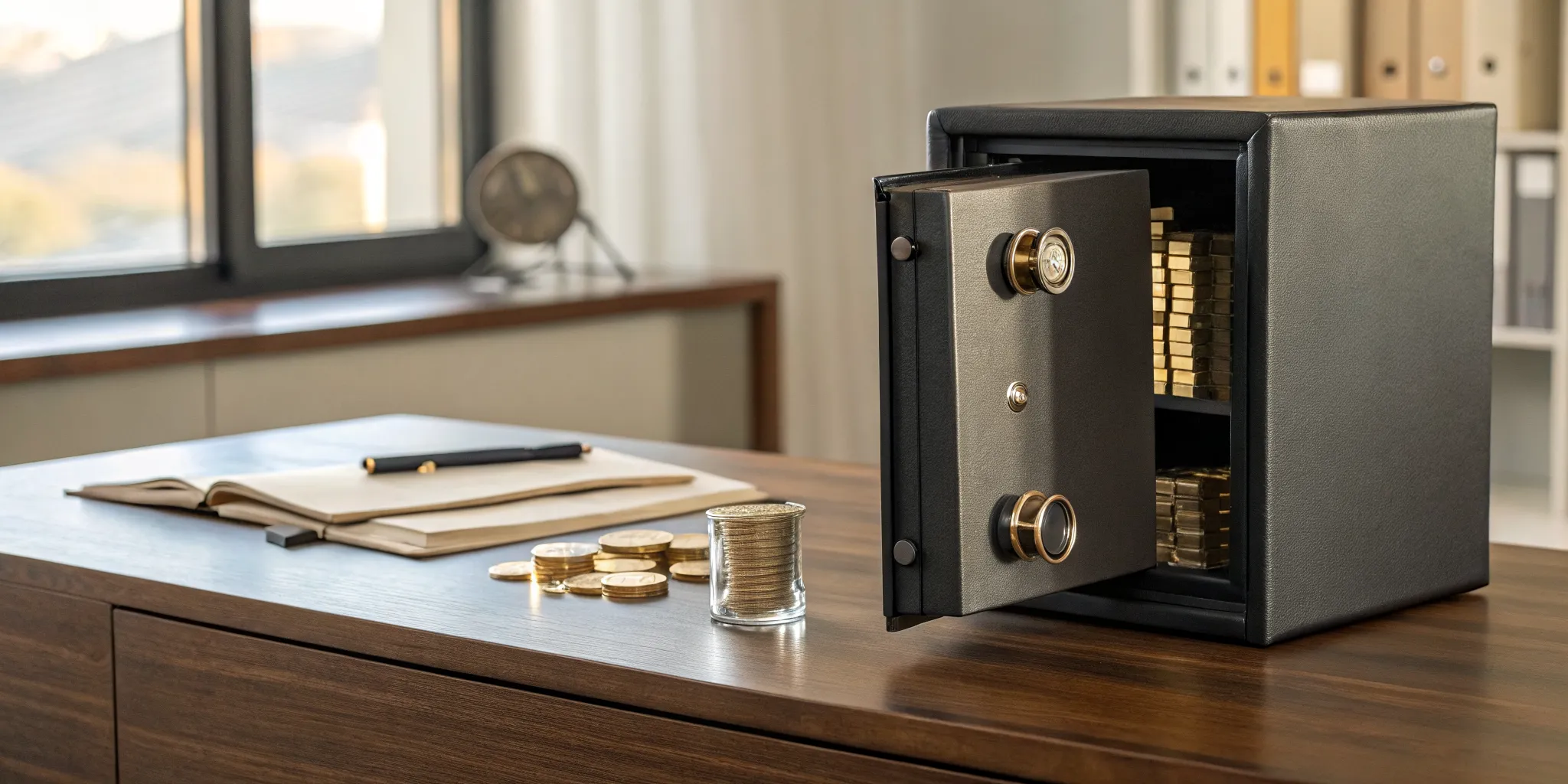
 You’ve likely seen the ads online. The idea of keeping your retirement gold in a safe at home sounds secure, and the companies promoting the precious metals IRA home storage model make it seem simple and safe. However, this approach is filled with serious financial risks that the promoters rarely mention. Failing to follow strict IRS regulations doesn't just create a paperwork headache; it can trigger immediate taxes, steep penalties, and disqualify your entire retirement account. This guide cuts through the marketing noise to explain the official rules, the dangers of non-compliance, and how to correctly add physical metals to your portfolio without putting your life’s savings in jeopardy.
Key Takeaways
- Avoid "Home Storage" IRA Schemes: Storing your IRA's precious metals at home is against IRS rules and can result in immediate taxes, early withdrawal penalties, and even the disqualification of your entire account.
- Follow the Proper IRA Structure: A compliant Precious Metals IRA requires you to work with two independent parties: an IRS-approved custodian to manage the account and a secure depository to physically store the metals.
- Choose the Right Ownership for Your Goals: A Precious Metals IRA offers tax advantages for retirement but requires third-party storage. For direct control and immediate access, purchasing metals outside of an IRA is the correct and compliant way to store them at home.
What Is a Precious Metals IRA?
Think of a Precious Metals IRA as a special retirement account that lets you own physical precious metals. It’s a type of self-directed IRA (SDIRA), which simply means you have more control over your investment choices. Instead of being limited to the usual menu of stocks, bonds, and mutual funds, a self-directed IRA allows you to invest in alternative assets, including tangible metals like gold, silver, platinum, and palladium.
This is a powerful way to diversify your retirement savings beyond the traditional stock market. By adding physical metals, you're incorporating assets that have held value for centuries, giving your portfolio a foundation of tangible worth. This isn't about replacing your entire retirement strategy, but rather strengthening it with a layer of protection that isn't tied directly to Wall Street's daily fluctuations. The process involves working with a specialized custodian who handles the account and an approved dealer, like us, to purchase the metals. If you're curious about the specifics of setting one up, our free Gold IRA Starter Kit is a great resource that walks you through the process step by step. It helps you understand how to protect and grow your retirement savings with physical assets.
What Metals Can You Hold in an IRA?
The IRS has specific rules here, so you can't just put any gold coin or silver bar into your IRA. The metals must meet strict purity standards to qualify. For gold, the requirement is 99.5% purity. For silver, it's 99.9%, and for both platinum and palladium, it's 99.95%. This means that many older or foreign coins don't make the cut. However, popular options like American Gold Eagles, Canadian Maple Leafs, and various approved bars and rounds are eligible. When you purchase gold bullion for your IRA, you need to ensure it meets these exacting requirements to remain compliant and receive the tax benefits.
The Advantages of a Precious Metals IRA
So, why go through the process of setting up a Precious Metals IRA? The benefits are centered on security and diversification. First, you get the same tax advantages as a regular IRA, meaning your investments can grow tax-deferred or tax-free, depending on the type of IRA you choose. More importantly, precious metals can act as a "safe haven" for your wealth. Their prices often move independently of the stock market, providing a buffer during economic downturns and acting as a hedge against inflation. This diversification helps protect your purchasing power over the long term. With over 35 years of experience, we've helped countless clients diversify their portfolios with these tangible assets, giving them peace of mind for their financial future.
What Are the IRS Rules for Storing IRA Metals?
When you decide to add precious metals to your Individual Retirement Account (IRA), you’re not just buying gold or silver; you’re following a specific investment path governed by the IRS. These rules aren't suggestions, they are firm requirements designed to maintain the tax-advantaged status of your retirement funds. Think of them as the guardrails that keep your investment on track and fully compliant.
The most important rule to understand is that you cannot simply buy some gold bullion and stick it in your safe at home as part of your IRA. The IRS is very clear on this point. Taking physical possession of your IRA metals is considered a distribution, which can trigger immediate taxes and penalties, defeating the purpose of the IRA in the first place. To do it right, you need to work with two key third parties: a custodian and a depository. This structure ensures that your metals are properly accounted for, securely stored, and in full compliance with federal regulations. Understanding this framework is the first step to successfully and legally holding precious metals in your retirement account.
Why You Need a Custodian
Think of a custodian as the official administrator of your Precious Metals IRA. The IRS requires that every IRA, including one that holds precious metals, be managed by an approved financial institution. This isn't just a bureaucratic step; it's a critical part of keeping your investment legitimate. Your custodian is responsible for executing transactions on your behalf, maintaining all the necessary records, and handling the required reporting to the IRS. They ensure that every purchase and sale is documented correctly and that your account remains in good standing. A good custodian acts as your partner in compliance, taking the administrative burden off your shoulders so you can focus on your investment strategy.
Storing Metals in an Approved Depository
Once you’ve purchased your IRA-approved metals, they can't be shipped to your house. Instead, the IRS mandates they be held in a secure, third-party storage facility known as an approved depository. These are highly secure, insured vaults that specialize in storing precious metals. The reason for this is simple: it prevents you from taking personal possession of the assets, which the IRS would view as a taxable distribution. By holding the metals in a separate, approved facility, the custodian can verify their existence and ensure they remain within the protective wrapper of your IRA. This step is non-negotiable for anyone looking to build a compliant Gold IRA.
Handling the Paperwork: Reporting and Records
One of the biggest benefits of working with a custodian is that they manage all the necessary paperwork and reporting for your Precious Metals IRA. This includes tracking your contributions, processing distributions, and filing annual reports with the IRS, such as Form 5498. This form details the fair market value of your account and the types of assets held within it. By having a professional institution handle these details, you can be confident that your records are accurate and that you are meeting all your tax obligations. This professional oversight is essential for maintaining the integrity and tax-deferred status of your retirement account, giving you peace of mind.
Is a "Home Storage" Gold IRA Legal?
You may have seen advertisements for "Home Storage Gold IRAs," a setup that suggests you can keep the precious metals from your retirement account right in your own house. The idea of having direct physical control over your assets is certainly appealing. However, the companies promoting these arrangements often present a simplified picture, leaving out the complex and costly realities of staying compliant with strict IRS rules. Before you consider this path, it's critical to understand the difference between the promise and the reality.
The Promise vs. The Reality of Home Storage
The pitch for a home storage IRA is simple: create a special account, buy your metals, and store them wherever you like. Promoters make it sound easy and secure, giving you total control over your investment. The reality, however, is that this approach is filled with complications and significant financial risk. The IRS has very specific and rigid requirements for how and where IRA-held precious metals must be stored. Failing to meet these strict guidelines isn't just a minor paperwork error; it can lead to severe tax consequences and put your entire retirement savings in jeopardy. The convenience promised by home storage often comes at a price that isn't disclosed upfront.
The Official IRS Stance on Storing IRA Metals at Home
Let's be clear: the IRS does not permit you to personally store precious metals that are part of your IRA. This includes keeping them in a safe at home or in a standard bank safe-deposit box. The tax code mandates that all IRA assets, including gold bullion and other metals, must be held in the physical possession of an approved third-party custodian. These metals must then be stored in a secure, IRS-approved depository. If you take physical possession of your IRA metals, the IRS will likely treat it as a distribution. This means you’ll owe income taxes on the full value and, if you're under age 59½, an additional 10% early withdrawal penalty.
The Risky "LLC" Workaround
Some companies try to get around these rules by promoting a complex strategy involving a Limited Liability Company, or LLC. The idea is that you create a special LLC, fund it with your IRA, and then as the manager of the LLC, you can purchase and store the metals yourself. While a legal gray area exists, this is an extremely risky path that the IRS has challenged. To even attempt this, you must meet a long list of strict conditions that are nearly impossible for the average investor to satisfy. More importantly, setting up a home storage IRA this way is a major red flag that greatly increases your chances of a stressful and costly IRS audit. A compliant IRA is always the safer path, which is why we offer a Gold IRA Starter Kit to help you get started correctly.
The Real Dangers of Storing IRA Metals at Home
The idea of keeping your IRA’s precious metals in a safe at home is tempting. It feels secure to have your assets within reach, giving you a sense of total control. However, this approach comes with serious financial and legal risks that can completely undermine the benefits of holding metals in a retirement account. Companies promoting "home storage gold IRAs" often gloss over the fine print, leaving investors exposed to devastating consequences.
These aren't minor technicalities; they are fundamental rules that protect the integrity of the IRA system. Failing to follow them doesn't just lead to a slap on the wrist. It can trigger immediate tax bills, hefty penalties, and the complete loss of your account's tax-advantaged status. Before you consider any arrangement that involves storing your IRA’s gold bullion or other metals at home, it’s critical to understand the dangers involved. The IRS has made its position clear, and ignoring its guidance can put your entire retirement strategy in jeopardy. The convenience of having your metals nearby is simply not worth the potential for financial ruin. The rules are in place for a reason: to ensure that retirement funds are truly set aside for retirement and not used for personal benefit before then.
Facing Immediate Taxes and Penalties
The most immediate danger of storing IRA metals at home is the financial fallout. If the IRS determines you have taken physical possession of your IRA’s assets, it treats the action as a distribution. This means the entire value of your metals is suddenly considered taxable income for that year. Imagine having to pay income tax on tens or even hundreds of thousands of dollars you never intended to withdraw.
On top of that, if you are under the age of 59½, you will also face a 10% early withdrawal penalty. This one-two punch of taxes and penalties can erase a significant portion of your investment overnight. It’s a costly mistake that directly contradicts the primary goal of an IRA, which is to allow your investments to grow on a tax-deferred basis.
Losing Your IRA's Tax-Advantaged Status
Beyond the immediate tax hit, improper storage can cause your entire IRA to lose its special tax-advantaged status. When you fail to follow the strict IRS rules for custodianship and storage, you risk disqualifying the account. This is a catastrophic outcome. If your IRA is disqualified, all the assets held within it become immediately taxable.
This means the tax-deferred growth you’ve been building for years is gone. The complex workarounds some companies propose, like creating a special LLC to hold the metals, are not IRS-approved and are viewed with extreme skepticism. Sticking to a compliant process is the only way to protect your retirement savings. You can learn the correct steps by requesting a Gold IRA Starter Kit from a trusted dealer.
Triggering an IRS Audit
Opting for a home storage IRA is like waving a red flag at the IRS. These arrangements are well-known for being high-risk and are often scrutinized by tax authorities. The IRS considers taking personal possession of IRA assets a form of "self-dealing," which is a prohibited transaction. Because you are acting as your own custodian and have direct control over the assets, you blur the line between your personal property and your retirement funds.
This ambiguity greatly increases your chances of being selected for an audit. An IRS audit is a stressful, time-consuming, and often expensive process. You’ll have to produce extensive documentation to defend your position, with no guarantee of a favorable outcome. The risk of inviting such intense scrutiny simply isn't worth the perceived convenience of home storage.
Dealing with Theft, Loss, and Insurance Gaps
Let’s set aside the IRS for a moment and talk about physical security. Storing a large value of precious metals in your home makes you a target for theft. Even with a high-quality safe, you are far more vulnerable than you would be with a professional storage solution. More importantly, your standard homeowner's insurance policy is not designed to cover this kind of risk. Most policies have strict limits on coverage for assets like gold and silver, often capping it at just a few thousand dollars.
If your metals were stolen or destroyed in a fire or natural disaster, you would likely be unable to recover their full value. In contrast, IRS-approved depositories provide state-of-the-art security and carry comprehensive insurance policies, often through providers like Lloyd’s of London, that cover your assets for their full market value.
How to Store Your IRA Metals the Right Way
After seeing the risks of home storage, you might be wondering what the correct process looks like. Storing your IRA metals the right way isn't complicated, but it does require following specific IRS rules. It all comes down to working with the right partners and understanding your storage options to ensure your investment is secure, compliant, and protected for the long term. Let's walk through the key steps to properly storing your precious metals.
What Is an IRS-Approved Depository?
You can’t store your IRA’s precious metals in a safe deposit box or a safe in your basement. The IRS is very clear on this point. To comply with regulations, your metals must be held in an IRS-approved depository. Think of these depositories as highly specialized, ultra-secure vaults designed specifically for storing investment-grade precious metals. They are privately owned and managed but must meet strict IRS requirements for security, accounting, and insurance. When you purchase gold bullion or other metals for your IRA, your custodian will arrange for the metals to be transported directly to one of these secure facilities, ensuring your investment is both safe and fully compliant from day one.
Segregated vs. Commingled Storage: What's the Difference?
When you set up storage at a depository, you’ll typically have two options: segregated or commingled. With segregated storage, your specific coins and bars are cataloged and stored separately under your name. When you decide to sell or take a distribution, you get back the exact same items. In commingled storage, your metals are pooled with identical metals from other investors. You own a specific amount of the metal by weight and type, not the individual bars or coins. Commingled storage is often less expensive, but many investors prefer the peace of mind that comes with segregated storage, knowing their exact assets are kept apart.
How to Choose the Right Custodian
The first step in this entire process is selecting an IRS-approved custodian. A custodian is a financial institution that manages your IRA account, handles all the paperwork, and ensures IRS rules are followed. They are the essential link between you, your precious metals dealer, and the depository. When choosing a custodian, look for a company with a long track record, transparent fee structures, and excellent customer service. A good custodian will make the process feel seamless. As you partner with an expert in the precious metals field, they can often help you connect with trusted custodians they have worked with for years, simplifying your search.
Evaluating Security, Insurance, and Fees
Properly storing your IRA metals involves costs, but these fees pay for critical protections. When evaluating a depository, ask about its security measures. Top-tier facilities have advanced surveillance, round-the-clock monitoring, and are often insured by reputable firms like Lloyd’s of London. This insurance should cover theft, damage, and loss, giving you confidence that your investment is protected. You should also expect to pay fees for account administration, storage, and insurance. While it’s tempting to look for the lowest price, remember that these fees are for the security and compliance of your retirement assets. A clear understanding of the process and its costs is the foundation of a successful precious metals IRA.
IRA vs. Physical Ownership: Which Is Right for You?
Deciding between a precious metals IRA and direct physical ownership comes down to your personal financial goals. An IRA is a fantastic tool for tax-deferred retirement savings, but it comes with strict IRS rules about storage. Physical ownership, on the other hand, offers you direct control and liquidity, but without the tax advantages of an IRA. Neither path is inherently better; the right choice depends entirely on what you want to achieve with your investment in precious metals. Let's look at what it means to own metals outside of a retirement account.
Holding Physical Metals Outside an IRA
If you want to store precious metals at home, the simplest and only compliant way is to purchase them outside of an IRA. When you buy gold bullion or other metals with your own cash, you own them directly. This means you are free from the IRS rules that govern retirement accounts. You can store your metals wherever you choose, whether in a home safe or a private vault, without worrying about triggering taxes or penalties. This approach separates your tangible assets from your retirement portfolio, giving you a straightforward way to hold physical precious metals without any complex paperwork or third-party custodians dictating storage.
When Keeping Precious Metals at Home Makes Sense
Choosing to keep precious metals at home makes sense for investors who prioritize immediate access and complete control over their assets. This strategy is ideal if you want a tangible hedge that you can physically hold, independent of financial institutions. Having direct possession can provide peace of mind, knowing your assets are within reach. This method is also perfect for those who want to diversify their holdings with rare coins for sale or bullion as a separate part of their wealth strategy, completely apart from their retirement savings. It’s a decision that favors liquidity and personal oversight above the tax benefits offered by an IRA.
Start Your Compliant Precious Metals IRA
Setting up a Precious Metals IRA correctly from the start is the best way to protect your investment and your retirement savings. While the idea of a "home storage IRA" sounds appealing, the risks of steep penalties and legal trouble are far too high. The good news is that creating a fully compliant, secure IRA is a straightforward process when you have the right partner guiding you. It’s about following a few key steps to ensure your assets are properly managed and stored according to IRS regulations.
This approach gives you all the benefits of holding precious metals in a tax-advantaged account without any of the dangers that come with unapproved storage methods. By working with established experts, you can confidently build a diversified retirement portfolio that includes the tangible security of physical gold, silver, platinum, or palladium. Let’s walk through the simple, actionable steps to get your Precious Metals IRA started the right way.
Choose Your IRA-Approved Metals
A Precious Metals IRA allows you to hold physical metals, but the IRS has strict purity and form requirements for them to be eligible. This ensures that the assets in your retirement account are investment-grade. The metals must meet these minimum fineness levels:
- Gold: 99.5% pure (.995)
- Silver: 99.9% pure (.999)
- Platinum: 99.95% pure (.9995)
- Palladium: 99.95% pure (.9995)
You can select from a variety of IRA-approved products, including American Gold Eagles, Canadian Maple Leafs, and various bars and rounds from accredited refiners. We can help you select the right gold bullion or silver bullion that meets these standards and aligns with your investment goals.
Partner with an Expert for Full Compliance
You cannot set up a Precious Metals IRA on your own; the IRS requires you to work with an approved custodian and depository. A custodian is a financial institution that manages your IRA, handles the paperwork, and ensures all transactions follow regulations. The depository is a secure, third-party facility where your physical metals are stored and insured. This structure is non-negotiable and is designed to protect your assets. Partnering with a trusted dealer like Park Avenue Numismatics ensures you are connected with reputable custodians and depositories, making the entire process seamless and fully compliant from day one.
Get Your Free Gold IRA Starter Kit
Feeling ready to take the next step but want more information? The best way to begin is by getting clear, expert guidance tailored to your situation. To help you make an informed decision, we offer a Gold IRA Starter Kit at no cost. This kit walks you through the benefits of a Precious Metals IRA, explains the setup process in detail, and answers common questions about custodians, fees, and eligible metals. It’s the perfect resource for learning how to diversify your retirement savings with physical assets while avoiding the costly mistakes that come from misinformation. Requesting your kit is a simple, no-obligation first step toward securing your financial future.
Frequently Asked Questions
Can I really not keep my IRA’s precious metals at home? That’s correct, you cannot legally store your IRA’s metals at home. The IRS requires these assets to be held by an approved third-party custodian and stored in a secure depository. Taking physical possession yourself is treated as a taxable distribution, which means you would owe income tax on the value of the metals and could face an additional 10% penalty if you're under age 59½. This rule is in place to ensure the assets remain within the protective structure of your retirement account.
What’s the difference between buying gold for an IRA and just buying it myself? The main difference comes down to the source of the funds and the rules you have to follow. When you buy metals for an IRA, you are using pre-tax or post-tax retirement funds to make a tax-advantaged investment, but you must follow strict IRS regulations for storage and access. When you buy gold with your personal, non-retirement funds, you own it directly. This gives you the freedom to store it wherever you like, but you don't receive the tax benefits associated with an IRA.
Is setting up a Precious Metals IRA a complicated process? It might sound complex, but it's actually a very manageable process when you work with the right partners. You don't have to figure it all out on your own. Your precious metals dealer will help you select the right IRA-approved metals, and they will connect you with a custodian. The custodian is a financial institution that handles all the account administration and paperwork, making sure everything is compliant and runs smoothly.
What happens to my metals after I buy them for my IRA? Once you purchase your metals, they are securely and directly transported to an IRS-approved depository for safekeeping. These are high-security, insured vaults that specialize in storing precious metals. At the depository, you can typically choose between segregated storage, where your specific coins and bars are kept by themselves, or commingled storage, where your metals are held with identical items from other investors.
What kind of gold or silver can I actually put in an IRA? The IRS has specific purity standards for any metal held in an IRA to ensure it is investment-grade. For example, gold must be 99.5% pure and silver must be 99.9% pure. This means that many collectible or older foreign coins are not eligible. However, many popular bullion products, such as American Gold Eagles and Canadian Silver Maple Leafs, meet these requirements and are excellent choices for an IRA.





