
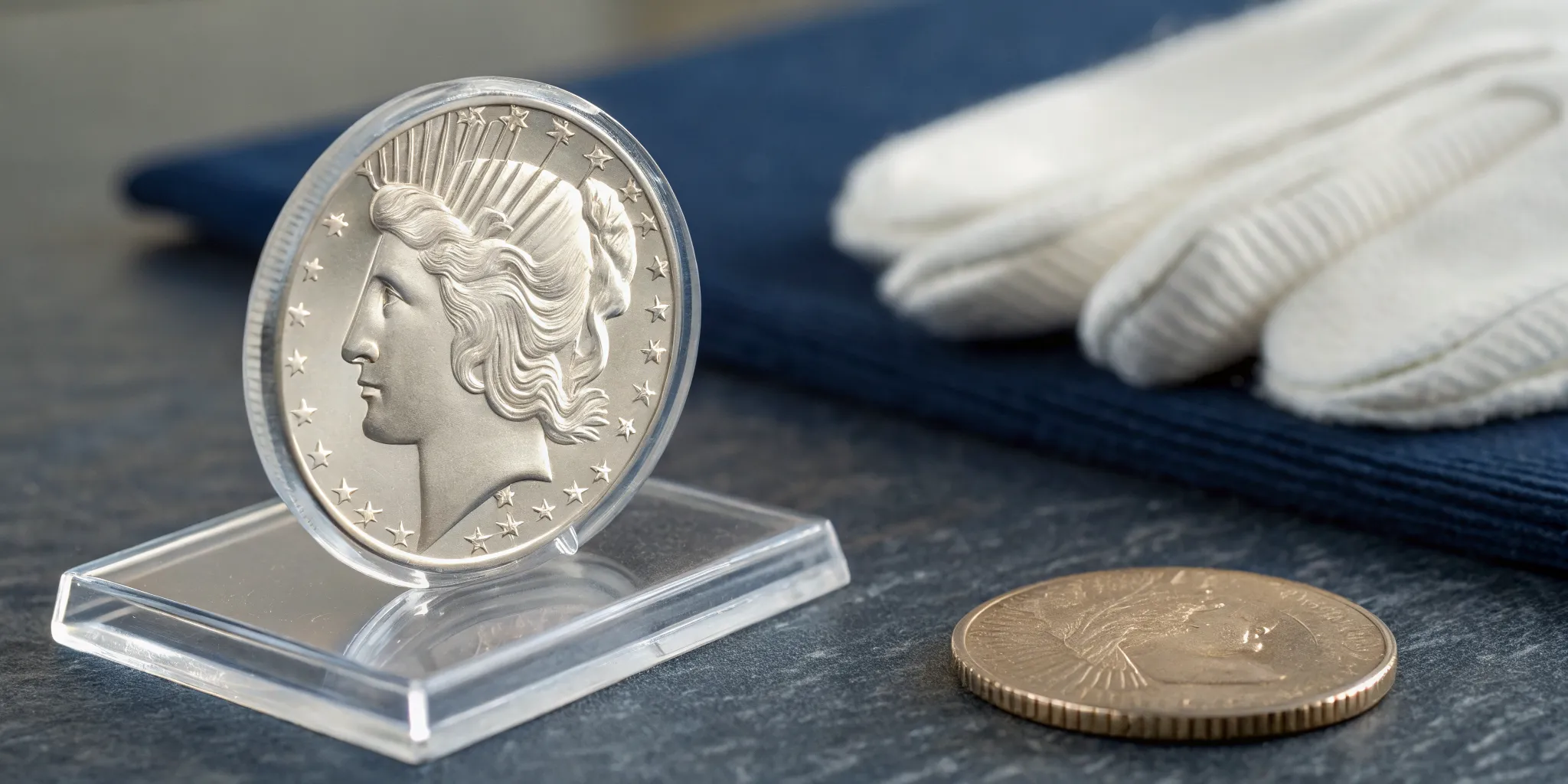
 Some coins are more than just currency; they are miniature works of art, and the Peace Silver Dollar is widely considered one of America’s most beautiful designs. Breaking from the traditional, stoic portraits of the past, its depiction of Lady Liberty is fresh, youthful, and forward-looking. On the reverse, a bald eagle rests peacefully, its warrior days behind it. Every element was carefully chosen to tell a story of a nation ready for a new era. This guide will walk you through the stunning artistic details and symbolism that make the Peace Silver Dollar a masterpiece you can hold in your hand.
Key Takeaways
- Look beyond the silver content: While every Peace Dollar has a foundational value from its 90% silver composition, its collector value comes from its condition and rarity. A coin's grade and scarcity are what create significant price differences.
- Identify the most valuable coins: Certain Peace Dollars are far more scarce than others, making them the cornerstones of a great collection. Pay close attention to the 1921 high-relief coin, the low-mintage 1928-P, and high-grade examples of the 1934-S.
- Protect your investment with certification: When buying valuable coins, prioritize pieces certified by a professional grading service. This guarantees the coin's authenticity and condition, giving you confidence in its long-term worth and making it easier to sell later.
The History of the Peace Silver Dollar
From War to Peace: The Coin's Origins
Every great coin tells a story, and the Peace Silver Dollar’s tale begins at the end of a global conflict. First struck in 1921, this coin was created to commemorate the restoration of peace following World War I. It was a powerful symbol of hope and stability for a nation ready to move forward. Beyond its beautiful message, the Peace Dollar holds a special place in numismatic history as the last U.S. dollar coin minted for circulation containing 90% silver. This composition makes it a tangible piece of American heritage and a popular choice among those who collect rare coins for sale for their historical and intrinsic value.
The Pittman Act: The Law Behind the Coin
The creation of the Peace Dollar wasn't just a symbolic gesture; it was a legal requirement. The story starts with the Pittman Act of 1918, a law that mandated the melting of up to 350 million existing silver dollars, primarily Morgan Dollars. This silver was then sold to Great Britain to help stabilize its economy during the war. A key part of the act required the U.S. Mint to purchase domestic silver bullion to replace every coin that was melted. This set the stage for a new silver dollar design, creating the perfect opportunity to introduce a coin that would represent America's new era of peace.
Meet Anthony de Francisci, the Designer
The artist behind the Peace Dollar’s iconic design was a young Italian-American sculptor named Anthony de Francisci. He won a competition among several accomplished artists to create the new coin. For his depiction of Lady Liberty, de Francisci drew inspiration from his own wife, Teresa. He aimed to capture a more modern and naturalistic image of Liberty, distinct from the classical Greek-style figures on earlier coins. The result was a portrait that felt both fresh and timeless. Our team of experts believes these personal stories are part of what makes a coin truly special, a sentiment we've carried for over 35 years. You can learn more about our passion for numismatics on our About Us page.
The Minting Years: 1921–1935
The Peace Silver Dollar was officially minted from 1921 to 1928 and then again for two final years in 1934 and 1935. The initial run was intense, as the Mint worked to fulfill the Pittman Act's replacement quota. Production paused after 1928 once the requirement was met. The coin made a brief comeback in 1934 and 1935, largely in response to new silver legislation, before production ceased for good. This intermittent minting schedule created several key dates and rarities that excite collectors today. Understanding this timeline is the first step in appreciating why certain Peace Dollars are more sought-after than others when building a collection of classic rare coins.
Decoding the Peace Dollar's Iconic Design
The Peace Dollar is more than just a piece of silver; it’s a work of art that tells a story of a nation ready for peace. Every line and symbol on this coin was carefully chosen to represent a new era for America after the Great War. Understanding these design elements is the first step to truly appreciating the coin, whether you're a seasoned collector or just starting your numismatic journey. Let's break down the iconic features that make the Peace Dollar one of the most beloved coins in U.S. history.
The Obverse: A Modern Lady Liberty
The front, or obverse, of the Peace Dollar presents a fresh and distinctly American vision of Lady Liberty. Unlike the more classical, stoic depictions on earlier coins, designer Anthony de Francisci created a profile that felt youthful and forward-looking. Modeled after his wife, Teresa, this Liberty wears a radiant crown, symbolizing the dawn of a new day. Her flowing hair suggests a sense of freedom and movement. This design broke from tradition, offering a beautiful and modern portrait that captured the hopeful spirit of the 1920s. It’s a face that looks toward the future, making it a powerful and enduring symbol on these classic rare coins for sale.
The Reverse: An Eagle at Rest
Flip the coin over, and you’ll find a powerful symbol of peace on the reverse. Instead of the aggressive, heraldic eagle seen on many other U.S. coins, the Peace Dollar features a bald eagle perched calmly on a mountaintop. The eagle, clutching an olive branch, appears to be watching the sunrise. This imagery is a direct nod to the coin's theme; the eagle is at rest, its role as a warrior complete. Below the eagle, the simple inscription "PEACE" leaves no doubt about the coin's message. This thoughtful design beautifully communicates the nation's collective sigh of relief and desire for lasting tranquility after years of global conflict.
High vs. Low Relief: A Design Change Explained
When you examine Peace Dollars, you might notice a difference in how much the design "pops" off the surface. The very first coins minted in 1921 were struck in high relief, giving the images a deep, sculptural quality. While visually stunning, this design was a challenge for the U.S. Mint. The immense pressure needed to create the high relief effect caused the coin dies to break frequently, slowing production to a crawl. To solve this, the Mint switched to a lower, more practical relief in 1922. This made the coins easier to mass-produce and more durable for circulation. Because of their limited run and distinct look, the 1921 high-relief coins are a prized variety for collectors.
Find the Mint Mark and What It Means
The mint mark on a coin tells you which U.S. Mint facility produced it, and its location is a key piece of information for any collector. On the Peace Dollar, you can find the mint mark on the reverse side. Look just below the eagle's tail feathers, right above the rim. If you see a small "S," the coin was made in San Francisco. A "D" indicates it was struck in Denver. If there is no mint mark at all, that means the coin was produced at the main U.S. Mint in Philadelphia. Knowing the mint mark is essential, as it often has a major impact on a coin's rarity and value. Our team has the expertise to help you identify these important details, backed by over 35 years of experience you can read about on our About Us page.
Composition: Why 90% Silver Matters
Beyond its historical and artistic value, every Peace Dollar has an intrinsic worth tied to its precious metal content. These coins were struck from a composition of 90% silver and 10% copper, a standard for U.S. silver dollars at the time. Each Peace Dollar contains approximately 0.7734 troy ounces of pure silver. This silver content provides a solid baseline for the coin's value, meaning it will always be worth at least its weight in silver. For investors and collectors alike, this dual value is a major part of the Peace Dollar's appeal. It’s both a piece of history and a tangible asset, much like the other silver bullion products sought by savvy investors.
Key Dates and Rare Varieties to Know
Not all Peace Dollars are created equal. While every coin in the series has its own story, certain dates, mint marks, and varieties are far more sought-after by collectors. Knowing which ones to look for is the first step in building a truly impressive collection. These key dates are often the difference between a standard silver coin and a significant numismatic treasure.
1921: The High-Relief Debut
The very first Peace Dollars, struck in 1921, are in a class of their own. These coins feature a stunning "high relief" design, where Lady Liberty and the eagle appear deeply sculpted and stand out dramatically from the coin's surface. While beautiful, this design proved difficult for the U.S. Mint to produce, causing dies to break frequently. As a result, the relief was lowered for all subsequent years, making the 1921 Peace Dollar a unique, one-year-only type. Its distinct appearance and short production run make it a favorite for collectors and a foundational piece for any serious Peace Dollar set.
1928-P: The Rarest Coin in the Series
If there is one king of the Peace Dollar series, it’s the 1928-P. With a mintage of just 360,649, it is the lowest-mintage, regular-issue coin in the entire series. Struck at the Philadelphia Mint (and thus bearing no mint mark), this coin was produced during a time when the need for silver dollars was low. Many were likely melted down over the years, making surviving examples incredibly scarce. Finding a high-grade 1928-P is a primary goal for many who collect rare coins for sale. Even in circulated condition, this coin commands a significant premium over all other dates in the series.
1934-S: A Key Date for Collectors
While the 1928-P has the lowest mintage, the 1934-S presents a different kind of challenge for collectors. Its mintage of just over one million coins isn't the lowest, but very few were saved by collectors at the time. Most went directly into circulation, meaning high-grade, uncirculated examples are exceptionally rare today. This coin is known as a "condition rarity" because its value is heavily dependent on its state of preservation. Finding a well-struck 1934-S without significant bag marks or wear is a true numismatic achievement and a highlight of an advanced collection.
Spotting Valuable Errors and Varieties
Beyond the main key dates, you can find extra value in small errors and design variations. These are known as "varieties," and they occur during the minting process. For Peace Dollars, collectors often look for "doubled die" errors, where elements of the design appear doubled, or prominent "die cracks" that create interesting lines on the coin's surface. Advanced specialists even hunt for specific VAM (Van Allen-Morgan) varieties, which are cataloged die pairings with unique characteristics. Paying close attention to the details on your coins can help you spot a hidden gem that other collectors might overlook.
What Is a Peace Silver Dollar Worth?
The value of a Peace Silver Dollar isn't a single, fixed number. It can range from the base value of its silver content to thousands of dollars for a rare, pristine example. Several key factors work together to determine a coin's final worth, including its condition, rarity, and even the quality of its original strike. Understanding these elements is the first step for any collector or investor looking to accurately price a Peace Dollar. Whether you've inherited a single coin or are looking to build a collection, learning what makes one coin more valuable than another is essential. Let's break down exactly what to look for.
How Condition and Grade Determine Value
A coin’s condition, or grade, is one of the most significant factors driving its value. Think of it as the coin's state of preservation. A Peace Dollar that has been heavily used in everyday transactions will show considerable wear, with smoothed-down details and scratches. These circulated coins are typically worth the least, often starting in the $35 to $50 range. On the other hand, a coin that was saved from the start and shows no signs of wear can be worth hundreds or even thousands. When you browse rare coins, you'll notice that the slightest differences in condition can lead to major jumps in price, especially for key-date coins.
What Is the Sheldon Grading Scale?
To standardize how condition is described, experts use the Sheldon Grading Scale. It’s a 70-point system that provides a universal language for a coin's quality. A coin graded "1" is considered Poor, meaning it's barely identifiable, while a "70" is a perfect, Mint State coin with no visible imperfections, even under magnification. Most uncirculated Peace Dollars fall between MS-60 and MS-65. This scale removes subjectivity from the grading process, allowing both buyers and sellers to have a clear and mutual understanding of a coin's condition. A professional grade from a reputable service gives you confidence in what you're buying or selling.
Circulated vs. Uncirculated: How Value Differs
The difference between a circulated and an uncirculated Peace Dollar is night and day when it comes to value. A circulated coin is one that has been used as money. It has passed from hand to hand, picking up scratches, dings, and general wear that softens its design details. Most common-date Peace Dollars in circulated condition are worth a small premium over their silver content. An uncirculated, or Mint State, coin has never been used in commerce. It retains its original mint luster and sharp details, looking much as it did the day it was struck. These are the coins that collectors prize most, and their value is based on rarity and grade rather than just their metal.
How Silver Content Influences Price
Every authentic Peace Silver Dollar contains 0.7734 troy ounces of pure silver, as they were minted with a composition of 90% silver and 10% copper. This silver content gives the coin an intrinsic value, often called its "melt value." This means that no matter its condition, a Peace Dollar will always be worth at least the current market price of the silver it contains. This provides a solid price floor for investors and collectors alike. While the numismatic value (its worth to a collector) can far exceed this, the value of its silver bullion content ensures it will always retain a tangible asset value tied directly to the precious metals market.
Price Ranges by Year and Grade
While condition is critical, the coin's date and mint mark create scarcity. The 1928 Peace Dollar, struck in Philadelphia (1928-P), is the undisputed king of the series in terms of rarity, with a mintage of just 360,649. Even in lower grades, this coin commands a high price. In contrast, a common-date coin like the 1922-P is abundant and carries a much lower premium. Prices can vary dramatically based on this combination of rarity and grade. For example, some key-date coins can start around $150 in circulated condition and soar past $3,000 for high-grade, uncirculated examples. This is why it's so important to identify not just the coin's condition but also its specific date and mint mark.
What Drives the Value of a Peace Dollar?
Understanding what makes one Peace Dollar more valuable than another is key to building a great collection. It’s not just about the age or the silver content. A coin’s worth is a blend of its history, scarcity, and physical condition. For collectors and investors, three main factors determine a Peace Dollar’s market price: its rarity based on mintage numbers, its visual appeal and strike quality, and whether it has been professionally certified. Getting familiar with these drivers will help you spot true treasures and make smarter decisions as you acquire new pieces for your collection.
Rarity and Mintage Numbers
In coin collecting, the simple rule of supply and demand is always in play. The fewer coins that were originally produced by a mint, the rarer they are today. This scarcity is a primary driver of value. The undisputed king of the Peace Dollar series is the 1928 Philadelphia (1928-P) issue. With a mintage of just 360,649, it is the rarest regular-issue coin in the entire series, making it a prized possession for any serious collector. Other low-mintage dates are also highly sought after, including the first-year 1921 coin and the 1934-S. When you search for rare coins for sale, you’ll notice these key dates often carry a significant premium.
Eye Appeal and Strike Quality
Beyond the numbers, a coin’s beauty plays a huge role in its value. "Eye appeal" refers to the overall visual attractiveness of a coin, including its luster, toning, and lack of distracting marks. Equally important is the strike quality. A well-struck coin shows sharp, clear details exactly as the artist intended. The first Peace Dollars from 1921 were minted in "high relief," giving Lady Liberty’s portrait a stunning, almost three-dimensional quality. This proved difficult to mint, so the design was changed to a "low relief" in 1922. Because of their unique look and short production run, high-relief 1921 Peace Dollars are especially desirable to collectors who appreciate fine detail.
Does Professional Certification Increase Value?
Yes, professional certification can significantly increase a coin's value and liquidity. When a coin is graded by a reputable third-party service like PCGS (Professional Coin Grading Service) or NGC (Numismatic Guaranty Corporation), its authenticity and condition are verified by experts. This removes subjectivity and gives buyers confidence in what they are purchasing. A Peace Dollar graded in a high Mint State (MS) condition, like MS-64 or MS-65, will fetch a much higher price than an ungraded, or "raw," coin that appears similar. The plastic holder, or "slab," also protects the coin and guarantees its grade, making it a trusted asset for both collectors and investors.
How to Start Your Peace Dollar Collection
Starting a coin collection is a rewarding experience, and the Peace Dollar series is a fantastic place to begin. With its beautiful design and rich history, it offers a perfect blend of art and investment. The key is to start with a clear plan, so let’s walk through the simple steps to get you started.
Set Your Budget and Collecting Goals
Before you buy your first coin, it’s helpful to decide what you want to achieve and how much you’re comfortable spending. The value of a Peace Dollar can range from its base silver price for a common, well-worn coin to thousands of dollars for a rare date in pristine condition. Your budget will naturally guide your collecting goals. Are you looking to acquire a few beautiful pieces of American history, or are you aiming to build a high-grade set as a long-term investment? Answering this will help you focus your search. Exploring a wide inventory of rare coins for sale can give you a real-world sense of the possibilities at different price points.
Build a Complete Date-and-Mint Set
One of the most popular ways to collect is by building a complete date-and-mint set. This means acquiring one Peace Dollar from every year they were minted and from each mint that produced them. This approach gives your collection a clear structure and turns the process into an exciting treasure hunt. For a more manageable start, you could aim for a "type set," which consists of just two coins: one high-relief 1921 coin and one standard-relief coin from any other year. As you build your set, you can always rely on the guidance of experienced numismatists. Our team has the expertise to help you on your collecting journey, which you can learn more about on our About Us page.
Store and Protect Your Coins
The condition, or grade, of a coin is one of the most critical factors in determining its value. A coin with sharp details and minimal wear will always be worth more than a damaged one. To preserve the quality and value of your Peace Dollars, proper storage is essential. Always handle your coins by their edges, ideally while wearing soft cotton gloves, to avoid transferring oils from your skin. Store them in archival-safe holders, such as individual flips or albums, which protect them from scratches and environmental exposure. Proper care ensures your investment in tangible assets, like coins or gold bullion, remains secure for the future.
Where to Buy Authentic Peace Silver Dollars
Finding an authentic Peace Silver Dollar is the most critical step in building your collection. These popular coins are a favorite of both collectors and investors, but their popularity also means you need to be careful about where you buy them. To get a genuine coin at a fair price, your best bet is always to work with a trusted source. This ensures you’re not just buying a piece of silver, but a piece of history with verified authenticity and value.
How to Choose a Reputable Dealer
Your relationship with a coin dealer should be built on trust. When you’re looking for a place to buy, seek out experts with a long history in the business and a solid public reputation. Check for credentials like an A+ rating from the Better Business Bureau or membership in professional organizations. A reputable dealer will have a team of numismatists who can answer your questions and guide your purchases. They should also offer a deep inventory of rare coins for sale, giving you plenty of options. Learning about us and our decades of experience is a great first step in finding a partner you can rely on for your collecting journey.
Certified vs. Raw Coins: Which Should You Buy?
You’ll find Peace Dollars sold in two main forms: certified and raw. Certified coins have been graded for their condition by a third-party service like PCGS or NGC and are sealed in a protective case, or "slab," with a label stating the grade. This provides a guarantee of authenticity and a professional opinion on its condition, which is crucial for determining value. Raw coins are simply loose coins without this certification. While raw coins can be less expensive, they carry more risk. For beginners, or for anyone purchasing a key-date or high-grade coin, a certified piece offers peace of mind. Raw coins are often fine for filling out a set with common dates, as long as you trust your dealer.
How to Verify a Coin's Authenticity
The easiest way to verify a coin is to buy one that's already certified. If you are considering a raw coin, however, there are a few things you can check. First, know the coin’s specifications: a Peace Dollar should weigh 26.73 grams and have a diameter of 38.1 mm. Compare the design details, like Liberty’s tiara and the eagle’s feathers, to a known genuine example. The value of a Peace Dollar depends heavily on its year, mint mark, and condition, so check these carefully. Since these coins are 90% silver, their specific weight and metallic properties are key indicators of authenticity, which is also why they are a popular form of silver bullion. Ultimately, developing an eye for authenticity takes time, and the best verification comes from an expert.
The 2021 Peace Dollar: A Modern Revival
To mark the 100th anniversary of the original, the U.S. Mint brought back the beloved Peace Dollar design in 2021. This modern revival gives collectors a chance to appreciate the historic artwork with a fresh perspective. While the new coins are a faithful tribute, they are distinct from their vintage counterparts and were created specifically for collectors, not for circulation. The primary difference lies in their composition, which is an important detail for anyone interested in adding them to their collection. Understanding this distinction helps you appreciate both the classic originals and the new commemorative issues for what they are.
Modern vs. Original: What’s Different?
The key difference between the classic and modern Peace Dollars is the silver content. The original coins, minted from 1921 to 1935, were struck from a composition of 90% silver and 10% copper, which was standard for circulating currency at the time. In contrast, the new Morgan and Peace Silver Dollar coins are crafted from .999 fine (99.9%) pure silver. This higher purity makes them distinct collectibles rather than currency. Think of them as a modern tribute to a classic piece of American history, allowing you to own a piece of the legacy in a purer silver format.
Should You Add the 2021 Peace Dollar to Your Collection?
Deciding whether to add the 2021 Peace Dollar to your holdings depends on your collecting goals. If you appreciate the historic design but want a flawless example, the modern version is an excellent choice. It allows you to own a piece of numismatic art in pristine, uncirculated condition. For those building a comprehensive set, it serves as a perfect bookend to a collection of vintage Peace Dollars. While an original coin's value is tied to its rarity and grade, the 2021 coin's value is linked to its silver content and modern collector demand. It’s a fantastic way to celebrate a classic design, and you can explore our collection of rare coins for sale to find both vintage and modern pieces.
The Peace Dollar in Your Investment Portfolio
The Peace Dollar is more than just a beautiful piece of American history; it's a tangible asset that can play a unique role in your investment strategy. Unlike stocks or bonds, it holds value in two distinct ways: as a precious metal and as a collectible numismatic item. Understanding how these two aspects work together is key to making smart decisions when adding these coins to your holdings. Whether you're just starting or looking to diversify an established portfolio, the Peace Dollar offers a compelling combination of intrinsic worth and historical significance that makes it an attractive option for savvy investors.
Silver Content as a Baseline Value
Every classic Peace Dollar is made of 90% silver, containing 0.7734 troy ounces of the precious metal. This silver content gives the coin a foundational, or "melt," value that is directly tied to the current market price of silver. Think of it as the coin's price floor; it will always be worth at least the value of the silver it contains. For investors, this provides a layer of security. You can easily track the spot price of silver to know the baseline worth of your holdings. This makes Peace Dollars a straightforward way to invest in physical silver bullion while also owning a piece of history.
Numismatic vs. Bullion Value: Know the Difference
While silver content provides a price floor, a Peace Dollar's true potential often lies in its numismatic value. This value is determined by factors beyond the metal, including the coin's rarity, date, mint mark, and physical condition or grade. A common, heavily circulated Peace Dollar might sell for just a bit more than its silver value, perhaps in the $35 to $50 range. However, a pristine, uncirculated example or a rare key date can be worth hundreds or even thousands of dollars. This premium that collectors and investors pay for desirable rare coins is what separates a simple bullion investment from a numismatic one.
Diversify Your Portfolio with Rare Coins
Adding key-date Peace Dollars to your collection is an excellent way to diversify your portfolio. Certain coins, like the 1928 Peace Dollar from the Philadelphia Mint, are exceptionally scarce, with a mintage of less than 400,000. Finding one in good condition can be a significant score for any investor. While the silver in the coin provides a stable base, the rarity is what drives its long-term appreciation potential. Incorporating high-value numismatic pieces like this alongside precious metals can create a more resilient and well-rounded investment strategy. It's a way to own hard assets that have both intrinsic value and the potential for substantial growth driven by collector demand.
Related Articles
- THE PEACE DOLLAR (1921-1935)
- LIBERTY SEATED DOLLARS WITH MOTTO (1866-73)
- BUST TYPE SILVER DOLLARS, HERALDIC REVERSE (1798-1804)
- THE FLOWING HAIR SILVER DOLLAR, 1794-1795
Frequently Asked Questions
I have a Peace Dollar. How can I tell if it's valuable? The value of your coin depends on three main things: its rarity, its condition, and its silver content. First, check the date and mint mark (a small "D" or "S" on the back, below the eagle). The 1928 coin from Philadelphia (no mint mark) is the rarest and most valuable. Second, look at the condition. A coin with sharp details and original shine is worth much more than one that is worn and scratched. Finally, every Peace Dollar has a base value from its silver content, so it will always be worth at least the market price of the silver it contains.
What's the difference between a high-relief and low-relief Peace Dollar? This refers to how much the design stands out from the coin's surface. The very first Peace Dollars from 1921 were made in "high relief," giving Lady Liberty's portrait a deep, sculptural look. While beautiful, this design was difficult to produce and wore out the minting equipment quickly. To fix this, the U.S. Mint switched to a flatter, "low relief" design from 1922 until the series ended. This makes the 1921 coin a unique, one-year-only design type that is highly prized by collectors.
Are Peace Dollars a good investment? Peace Dollars can be a great addition to a portfolio because they hold value in two ways. First, they have an intrinsic value based on the 0.7734 troy ounces of silver in each coin, which provides a solid price floor. Second, they have numismatic value, which is the extra worth collectors will pay for a coin based on its rarity and condition. This dual value makes them a tangible asset that has both a connection to the precious metals market and the potential for appreciation based on collector demand.
Should I get my Peace Dollar graded? Getting a coin professionally graded isn't always necessary, but it's a smart move for certain pieces. If you have a common-date coin in circulated condition, the cost of grading might be more than the value it adds. However, if you believe you have a rare date like a 1928-P, or any coin in excellent, uncirculated condition, certification is a very good idea. A grade from a trusted service like PCGS or NGC confirms the coin's authenticity and condition, which makes it much easier to sell and often increases its market value.
What's the easiest way to start a Peace Dollar collection? The best way to start is to set a simple, achievable goal. A great first step is to build a "type set," which only requires two coins: one high-relief 1921 Peace Dollar and one low-relief coin from any other year (1922-1935). This gives you a feel for the series and its key design change without a huge initial commitment. From there, you can decide if you want to expand your collection to include every date and mint mark.





