
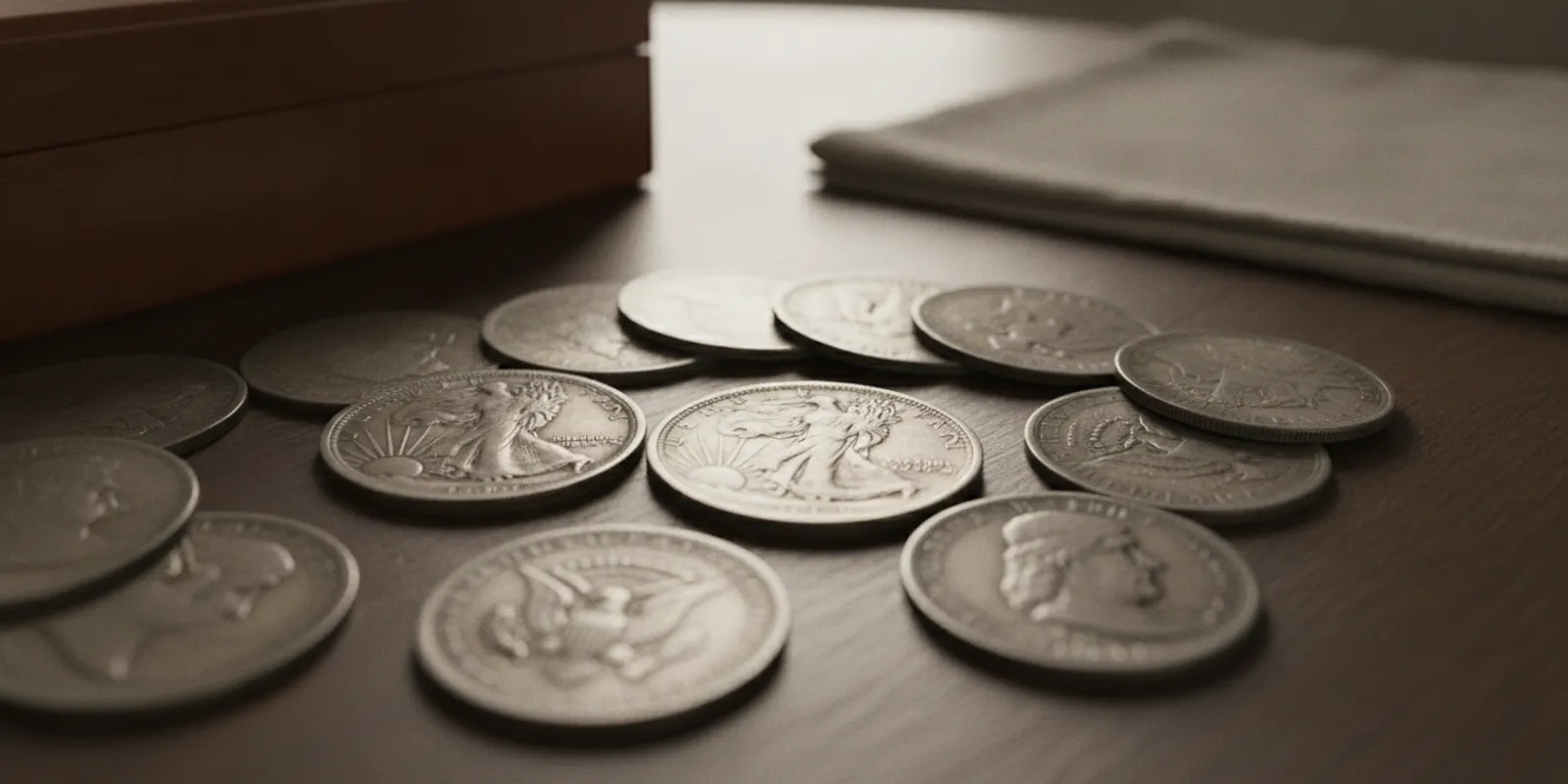
Silver half dollar value depends on more than the amount of silver in the coin. The date, mint mark, condition, rarity, authenticity, and current demand can all affect what a particular U.S. half dollar is worth. Start by identifying the coin and its silver era, then assess its condition before relying on a price estimate.
Call 1-888-419-7136 to discuss your half dollar
What determines silver half dollar value?
A half dollar can have a baseline metal value and a separate collector value. The metal component is tied to the coin’s silver content and the current silver market. Collector value may be higher when a coin has a sought-after date or mint mark, better preservation, a recognized variety, or a documented history. A common date in heavily circulated condition may be evaluated differently from a scarce coin with sharp detail.
These factors work together rather than in isolation. A coin with a lot of silver is not automatically rare, and a rare date does not guarantee a particular selling price. An estimate is specific to the coin and the market at the time it is reviewed. A table can help organize the first questions to ask:
| Factor | What to check | Why it matters |
|---|---|---|
| Silver content | Date and coin type; whether it is a silver or clad issue | Helps establish the metal component of an estimate |
| Date and mint mark | Year and any small mint letter on the coin | Some date-and-mint combinations are less available to collectors |
| Condition | Wear, marks, luster, and remaining design detail | Coins with stronger preservation may attract different collector interest |
| Authenticity and variety | Signs of alteration, unusual features, or a recognized variety | Attribution can change how collectors evaluate an example |
| Market demand | Current interest in the type and comparable transactions | Demand changes, so a past estimate may not reflect today’s market |
Which U.S. half dollars contain silver?
For a quick first pass, the date is a useful clue. Most regular-issue U.S. half dollars dated 1964 and earlier were made with 90% silver. Kennedy half dollars dated 1965 through 1970 have a 40% silver composition. The 1965–1970 coins are copper-silver clad, with a total weight of 11.5 grams; the composition is described in this reference on 1965–1970 Kennedy half dollar composition.
Regular Kennedy half dollars dated 1971 and later were generally made without silver for circulation. Special collector issues can be exceptions, so do not identify a coin by appearance alone. Confirm the date, type, and issue details before treating it as a silver coin. A coin’s color can be misleading, and a worn coin may not show every feature clearly.
Several classic U.S. designs commonly encountered in silver include:
- Barber half dollars: issued from 1892 through 1915.
- Walking Liberty half dollars: issued from 1916 through 1947.
- Franklin half dollars: issued from 1948 through 1963.
- Kennedy half dollars: introduced in 1964, with composition varying by issue and date.
The dates above help narrow the type, but they do not establish an exact value. For example, a 1947 half dollar and a 1947-D half dollar share a design and year, but their mint marks and condition still need to be considered. A catalog listing such as this 1947 half dollar example can help you see how a specific coin is identified; it is not a price guide for every coin of that date.
How can you identify which half dollar you have?
Begin with the portrait and reverse design, then read the date and mint mark. A Walking Liberty half dollar shows Liberty striding on the obverse and an eagle on the reverse. A Franklin half dollar features Benjamin Franklin on the obverse and the Liberty Bell on the reverse. The Kennedy half dollar has President Kennedy’s portrait. Earlier U.S. half dollars have different designs, so use the visible details to narrow the type before looking up a value.
Write down exactly what you can read rather than filling in a worn or missing digit from memory. A clear photo of each side can help you compare a coin with a reference, but angle, glare, and wear may obscure small details. Avoid relying on a single search result: confirm that the example matches the same design, date, mint, and any distinctive variety. This simple identification step prevents comparisons between coins that only look similar at first glance.
How does silver content affect a half dollar’s value?
Silver content provides one part of the evaluation. To estimate a coin’s metal component, a buyer considers its silver weight and the current market price of silver. A half dollar with a higher silver percentage generally contains more silver than a comparable lower-percentage issue, but metal value is not the same as a guaranteed selling price. Transaction terms, market conditions, and the coin’s individual characteristics matter.
For a common circulated coin, metal content may be a major part of the discussion. For a scarce date, a high-grade example, or a coin with an important variety, collector interest may matter more. It is also possible for two coins with the same silver content to have different collector appeal. That is why a quick calculation based only on silver weight can miss meaningful details.
Silver prices move over time. An older online listing or appraisal may therefore be out of date, and asking prices are not proof of what a buyer will pay. Treat any estimate as time-sensitive and specific to the coin being reviewed. Avoid assuming a particular price until the date, mint mark, composition, and condition have been confirmed.
How do date and mint mark affect value?
The date tells you when the coin was struck, while the mint mark can identify the mint that produced it. On many U.S. half dollars, the mint mark is small and can be easy to miss. Its location differs by design and period, so consult a reliable reference for the particular type rather than assuming that the mark appears in the same place on every half dollar.
Once you have the date and mint mark, compare like with like. A circulated coin should not be compared directly with a sharply preserved certified example, and a coin from one mint should not automatically be treated as equivalent to another. Check whether the comparison refers to the same date, mint, grade, and variety. A listing can show that an example exists, but an asking price is not necessarily a completed sale or a current offer.
Some dates are more available than others, but scarcity should be verified rather than inferred from an old family story or a single online result. A specialist can help determine whether the date-and-mint combination is genuinely scarce, whether the coin is correctly attributed, and whether condition changes its appeal.
How can you assess condition without damaging the coin?
Condition is one of the most important variables in a collector’s evaluation. Look at the high points of the design, the lettering, and the open fields for wear, scratches, cleaning, corrosion, and contact marks. On Walking Liberty half dollars, for example, details on Liberty’s figure and the surrounding design can help show how much wear is present. On a Franklin half dollar, inspect the portrait, bell, and smaller design details.
Use good light and handle the coin by its edge. Do not rub, polish, or chemically clean it. Cleaning can leave hairline scratches or change the surface, and a bright appearance does not prove that a coin is in better condition. Keep the coin in a holder if one is already protecting it. For a useful comparison, review individual U.S. half dollar examples, such as this 1945-S half dollar listing, while remembering that photographs cannot show every surface feature or establish the grade of your coin.
Professional grading is not necessary for every half dollar. It may be worth considering when a coin appears especially well preserved, has a potentially scarce date, or might be a variety that needs confirmation. Certification is an expert opinion about authenticity and grade, not a promise of a specific selling price. Consider the potential benefit, the time involved, and the fees before submitting a coin for grading.
What varieties and authenticity details should you check?
Some coins have recognized design or minting varieties, and those distinctions can matter to collectors. A doubled feature, repunched mint mark, or other unusual detail should not be assumed to be valuable just because it looks different. Damage, a later alteration, lighting, or a photograph can create a misleading appearance. Compare the coin with a trustworthy reference for its exact design and year, and seek a specialist’s opinion if the feature could affect its attribution.
Authenticity also matters. Look for signs that the coin may have been altered, repaired, or damaged, but do not try to test it with tools or chemicals. A magnet test alone cannot establish authenticity or silver content. If the coin is high value or its composition is uncertain, an in-person examination is more useful than a quick visual guess.
Provenance can add helpful context. Old receipts, collection notes, grading documents, or information about when the coin was acquired may assist an evaluation. These records do not replace examining the coin, but they can help clarify ownership history or prior attribution. Keep any paperwork together with the coin and share it during an assessment.
How should you research a half dollar before selling?
A careful first review can make a conversation with a dealer more productive. Follow these steps:
- Identify the design and date. Record the year and the type of half dollar. If a date is difficult to read, note that it is unclear rather than guessing.
- Find the mint mark. Use a reference for the specific design to locate it. Record what you see, including if there is no visible mark.
- Check the likely composition. Use the date and issue details as clues, then confirm whether the coin is a silver or clad issue. Be alert to special collector issues.
- Observe condition gently. Note wear, marks, unusual surfaces, and whether the coin is already certified. Do not clean it.
- Compare relevant examples. Seek comparisons that match the date, mint, condition, and variety. Distinguish completed sales from asking prices.
- Gather records and take clear photos. Photograph both sides in even light and include close-ups of the date and mint mark. Keep the coin secure and avoid unnecessary handling.
If you are reviewing an inherited group, keep coins together in their existing holders and note any labels or family records. Do not assume that every coin in a box has the same composition or collector interest. Sort only when you can do so without rubbing the coins together; individual holders or a soft, clean work surface can help prevent contact. Photograph both sides and make a simple inventory with date, mint mark, and any certification information you can read.
For a large group, start with the pieces that appear unusual, have clear dates and mint marks, or already have documentation. That does not mean setting aside the rest permanently; it is simply a practical way to organize questions for a review. Keep the inventory with the coins, and avoid mailing valuable pieces without first understanding the handling and insurance arrangements.
Online research can narrow the possibilities, but it cannot fully replace hands-on review. Photos may hide marks, distort color, or fail to show the coin’s surfaces. If you want to compare additional U.S. coin examples, the site’s Coin of the Day archive offers another place to explore identified coins. Keep in mind that a featured coin is not necessarily a direct comparison for your half dollar.
Why can online half dollar estimates differ?
Online estimates may describe different coins even when the headline uses the same year. One source may show a worn, common-date coin, while another highlights a certified example in a much higher grade. A third may focus on a variety or a coin sold during a different market period. Before using a figure as a comparison, read the description and confirm what the estimate includes.
Separate asking prices from completed sales whenever possible. A seller may list a coin at an amount that does not reflect a completed transaction. Even completed sales need context: auction fees, buyer premiums, sale date, certification, and the exact grade can affect what the result means for your coin. Do not treat a single listing or an old price chart as a current offer.
Also check whether an online calculator is estimating metal value or collector value. A melt-oriented estimate cannot account fully for a scarce date, a recognized variety, or condition. A collector price guide may rely on grade assumptions that do not match your coin. Use online tools to form questions and organize information, not as a promise of what a particular buyer will pay.
What should you expect from an in-person assessment?
An assessment typically begins with identifying the coin and checking its condition, composition, and any potentially significant attributes. Be ready to share the date, mint mark, and any records you gathered. If you have a group of coins, keep them organized by type when practical, but do not remove coins from protective holders just to sort them.
Ask what factors are driving the assessment. You can ask whether the coin is being considered mainly for silver content or collector interest, whether a date or mint mark changes the evaluation, and whether more research or certification is warranted. If you are comparing offers, make sure you are comparing the same coin details and terms. A clear explanation is more useful than a number without context.
Park Avenue Numismatics buys rare coins and precious metals from the public in Miami. Sellers can share photos and then bring items in for an assessment. The firm’s news archive provides background on its business; contact the team directly for details about discussing a particular coin. An assessment is not a guarantee that every item will receive a particular offer.
Call 1-888-419-7136 to ask about an assessment
Frequently asked questions about silver half dollar value
Are all half dollars dated before 1965 silver?
Most regular-issue U.S. half dollars dated 1964 and earlier contain 90% silver. Confirm the coin’s type and issue rather than relying on the date alone, especially if it is an unusual or special issue.
Are Kennedy half dollars silver?
Some are. Kennedy half dollars dated 1964 are 90% silver, while regular 1965–1970 issues have a 40% silver composition. Regular circulation issues dated 1971 and later generally do not contain silver, although special collector issues can differ.
Can I estimate value from the silver price alone?
Silver content and the current silver market help inform the metal component, but they do not determine a guaranteed selling price. Date, mint mark, condition, rarity, authenticity, and current collector demand can also affect an evaluation.
Should I clean a half dollar before having it evaluated?
No. Leave the coin as it is and handle it by the edge. Cleaning can damage its surfaces and may reduce collector interest. Store it safely and let an experienced reviewer examine it.
Do I need to have a half dollar graded?
Not necessarily. Grading may be worth considering for a coin that appears scarce, unusually well preserved, or difficult to attribute. Weigh the possible value of certification against the cost and time, and seek guidance before submitting it.
Key takeaway
To understand silver half dollar value, identify the coin first, confirm its composition, and then consider its date, mint mark, condition, authenticity, and current market demand together. Keep the coin uncleaned, gather any helpful records, and seek an informed assessment when the details could make a meaningful difference.





