
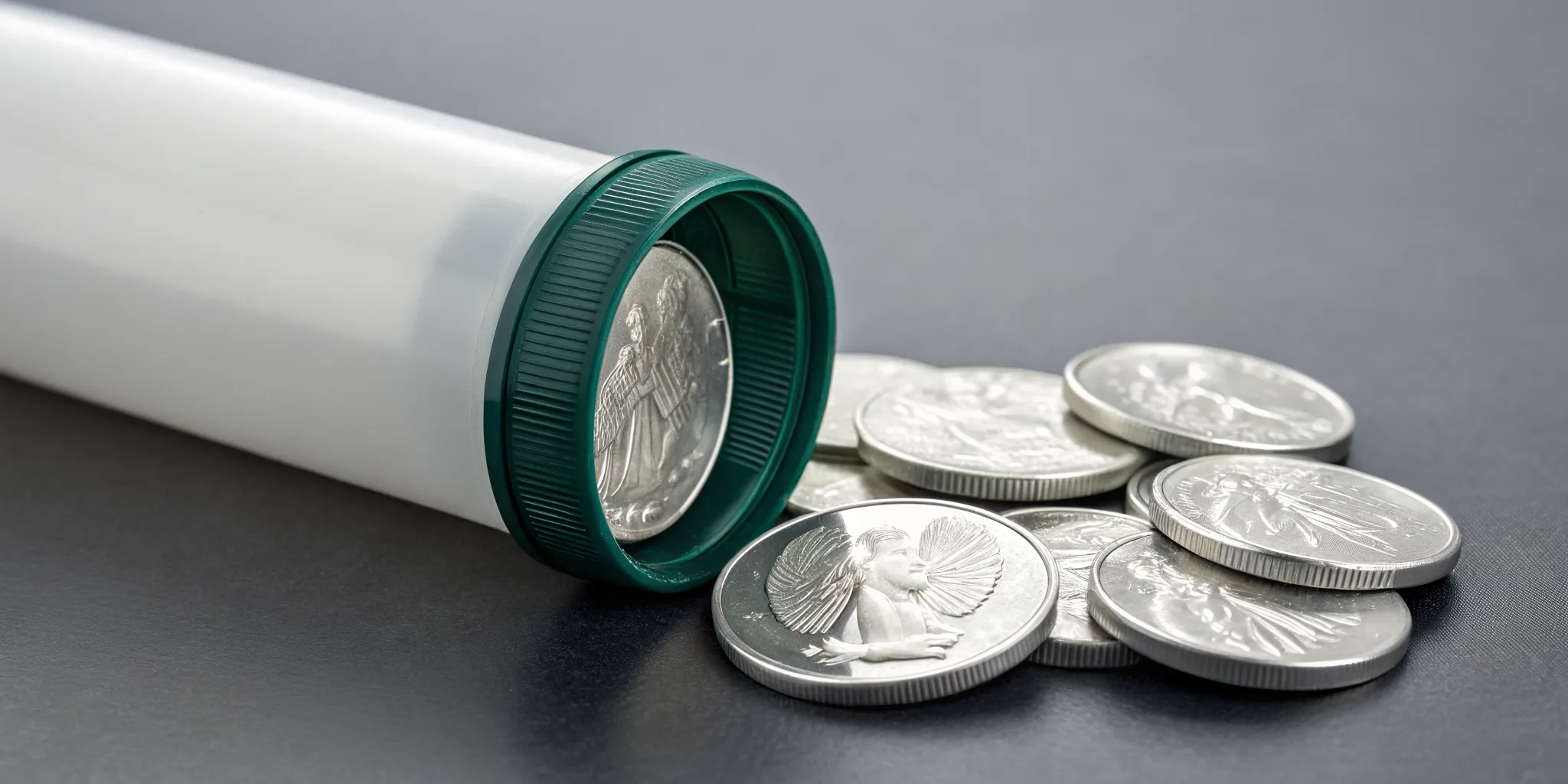
 For the serious investor, every purchase is a strategic decision. You don't just acquire assets; you do so with a clear purpose, considering cost, liquidity, and long-term value. When it comes to physical silver, graduating from single coins to a Silver Eagle roll is a prime example of this strategic mindset. Purchasing a full roll of 20 government-guaranteed coins is more than just an accumulation of silver; it’s an upgrade in your investment methodology. It streamlines your portfolio by simplifying storage, often reduces the premium you pay per ounce, and enhances the liquidity of your holdings, making it a cornerstone for any well-planned precious metals strategy.
Key Takeaways
- Think in Rolls, Not Singles: Buying a roll of 20 Silver Eagles is a strategic move that lowers your cost per coin. This method also simplifies storage with protective mint tubes and makes selling easier due to the coins' high liquidity.
- Know What You're Paying For: A roll's price is more than just its silver value; it includes a premium for minting costs and market demand. The mint year is also a major factor, as rare "key dates" are far more valuable to collectors than common years.
- Vet Your Source Carefully: Your most important step is choosing a reputable dealer to guarantee authenticity and fair pricing. Always look for original, sealed mint packaging and remember that these IRA-eligible coins are a highly liquid asset when purchased from a trusted source.
What Is a Silver Eagle Roll?
If you're exploring ways to invest in silver, you've likely heard of the American Silver Eagle. But what exactly is a Silver Eagle roll? Think of it as buying in bulk. A Silver Eagle roll is a standardized, tube-shaped container filled with these iconic coins. It’s a practical and efficient method for acquiring multiple coins at once, which is why it’s so popular with both seasoned investors and dedicated collectors. Instead of handling individual coins, you get a compact, secure package that simplifies storage and accounting.
These rolls are typically packaged at the U.S. Mint and distributed to authorized purchasers, but you'll also find them assembled by trusted dealers. For anyone serious about adding physical silver to their portfolio, buying by the roll is often the most logical starting point. It strikes a great balance between a significant investment and manageable size. This approach makes it easier to build a substantial holding of government-guaranteed silver bullion. Understanding what you're getting in a roll is key to making a smart purchase. Before you buy, it’s important to understand the specifics: how many coins are included, the quality of the silver, and the different coin finishes available. Let's get into the details so you can feel confident in your investment.
How Many Coins Come in a Roll?
This is a straightforward but crucial question. A standard, mint-issued roll of American Silver Eagles contains 20 coins. This number is consistent whether you're buying a roll of newly minted coins or one from a previous year. The coins are stacked neatly inside a durable plastic tube, which protects them from scratches, environmental damage, and contact with other metals. For those looking to make an even larger investment, the U.S. Mint also packages these rolls into "Monster Boxes." A Monster Box holds 25 rolls, giving you a total of 500 Silver Eagle coins. Knowing these standard quantities helps you plan your purchases and easily calculate your total silver holdings.
Understanding Silver Eagle Specs
Each coin inside a Silver Eagle roll has impressive and reliable specifications. An American Silver Eagle contains exactly one troy ounce of .999 pure silver, and its weight, content, and purity are guaranteed by the United States government. This official backing is what sets it apart from many other silver products and provides a level of trust that investors value. First released in 1986, they are the official silver bullion coins of the U.S. The obverse features Adolph A. Weinman’s classic "Walking Liberty" design, while the reverse has an eagle design. This combination of guaranteed purity and iconic artistry makes Silver Eagles one of the most recognized and respected silver coins in the world.
Brilliant Uncirculated vs. Proof: What's the Difference?
When you buy a Silver Eagle roll, you are almost always getting Brilliant Uncirculated (BU) coins. BU coins are the standard version produced for investors. They are struck once and, while they are in new, uncirculated condition, they don't have the special finishes of a collector's coin. They are handled in a standard production process, so minor imperfections from minting or transport are possible.
Proof coins, on the other hand, are made specifically for collectors. They are struck multiple times with specially polished dies to create a stunning, mirror-like background with frosted, detailed designs. Proofs are handled with extreme care and sold individually in protective capsules with a certificate of authenticity. Because of their superior finish and lower mintage, they carry a much higher premium than BU coins and are not sold in rolls.
Why Buy Silver Eagle Rolls?
Buying American Silver Eagles one by one is a great way to start, but purchasing them in rolls offers distinct advantages for both seasoned collectors and serious investors. When you buy in bulk, you’re not just adding silver to your portfolio; you’re making a strategic move that can save you money, simplify logistics, and improve your position when it’s time to sell. Let’s look at the three key benefits of acquiring Silver Eagle rolls.
Save Money on Each Coin
One of the most compelling reasons to buy Silver Eagles in rolls is the potential for cost savings. Just like buying anything else in bulk, purchasing larger quantities of silver coins typically lowers the price you pay for each individual coin. Dealers can offer a better price per ounce on rolls because it streamlines their process, reducing handling and administrative overhead. This lower premium means more of your money goes directly toward the silver itself. For investors looking to maximize their holdings, these savings add up significantly over time, making rolls a financially savvy choice for building your silver bullion stack.
Simplify Storage and Transport
A roll of 20 Silver Eagles comes neatly packaged in a durable, plastic tube straight from the U.S. Mint. This isn't just for show; these tubes are designed to protect your coins from scratches, environmental damage, and handling. They make storage incredibly simple and organized. Instead of dealing with 20 individual coin flips, you have one compact unit that is easy to stack in a safe or transport securely. For those investing on a larger scale, these rolls fit perfectly into "Monster Boxes," which are sealed containers from the Mint holding 500 coins. This standardized packaging makes managing your physical assets clean, efficient, and secure.
Gain Liquidity and Resale Advantages
When it's time to sell, liquidity is key. The American Silver Eagle is the most recognized and traded silver bullion coin in the world, with a reputation backed by the U.S. government. This global recognition creates a highly liquid market, meaning you can sell your coins quickly and with confidence. Because they are so trusted, Silver Eagles often command better resale values compared to generic silver rounds. Dealers and collectors know exactly what they are getting, which removes uncertainty and facilitates a smooth transaction. Buying sealed mint rolls of these rare coins for sale further adds to this trust, assuring potential buyers that the coins are authentic and uncirculated.
How Is a Silver Eagle Roll Priced?
Figuring out the price of a Silver Eagle roll isn't as simple as checking the price of silver and multiplying by 20. While that's the starting point, the final cost is a blend of the raw metal's value, production costs, market demand, and the coin's collectible status. Each of these elements plays a crucial role in determining what you'll pay for a full roll of these iconic American coins.
The American Silver Eagle is the official silver bullion coin of the United States, which gives it a level of trust and recognizability that generic silver rounds just don't have. This official status contributes to its price. Think of the total price as having two main parts: the intrinsic value of the silver itself, known as the spot price, and an additional amount called a premium. This premium covers everything from the U.S. Mint's manufacturing costs to dealer profits and can fluctuate based on what's happening in the market. Understanding how these components work together is key to making a smart purchase and knowing you're paying a fair price. Let's break down exactly how these factors come together to form the final price tag on a Silver Eagle roll.
How Spot Price Affects Cost
The foundation of any Silver Eagle's price is the spot price of silver. This is the current market price for one troy ounce of raw silver, and it changes constantly throughout the day based on global trading. While a Silver Eagle has a legal tender face value of one dollar, its real value is tied directly to this fluctuating market price. Since a standard roll contains 20 coins, each weighing one troy ounce, the baseline value of the roll is 20 times the current spot price of silver.
Think of the spot price as the bare-minimum value of the metal in your roll. If the spot price of silver is $30, then a roll of 20 Silver Eagles contains $600 worth of pure silver. However, you will never pay just the spot price; this figure is simply the starting point before other costs are added.
Understanding Premiums and What Drives Them
The "premium" is the amount you pay over the silver spot price for each coin. This additional cost covers everything it takes to get that finished coin from the mine into your hands. Premiums are dynamic and influenced by several factors, including the U.S. Mint's production and fabrication costs, distribution fees for dealers, and overall investor demand. When demand for Silver Eagles is high and supply is tight, you can expect premiums to rise.
During periods of intense market activity, these premiums can add several dollars to the cost of each coin. This is because Silver Eagles are not just lumps of metal; they are official, government-backed coins prized by collectors and investors worldwide. This recognizability and trust command a higher premium than you would find on generic silver bars or rounds. As an established dealer, we work to provide transparent pricing that fairly reflects these market dynamics. You can learn more about our commitment to value by getting to know our history on our About Us page.
What's a Typical Price Range?
Because the spot price of silver is always moving and premiums can change with market sentiment, there is no single "typical" price for a Silver Eagle roll. However, you can get a good idea of the general range. Based on historical data and market conditions, it's common to see rolls of 20 current-year Silver Eagles priced anywhere from around $1,200 to over $1,900. This price reflects the combined value of 20 ounces of silver plus the associated premiums.
Keep in mind that this range is for standard, current-year bullion rolls. The price can be significantly higher for rolls containing older coins, key-date issues, or coins with a special finish like Proof or Burnished. To get the most accurate, up-to-the-minute pricing, it's always best to check current inventory from a trusted dealer. You can explore our collection of rare coins for sale to see how different factors impact real-time prices.
Does the Mint Year Matter?
Yes, the mint year absolutely matters when it comes to American Silver Eagles. While a standard roll of Silver Eagles is primarily valued for its silver content, certain years carry a much higher numismatic, or collector, value. Think of it this way: every Silver Eagle contains one troy ounce of .999 fine silver, giving it a baseline value tied to the spot price of silver. This is its intrinsic, or metal, value.
However, some years are significantly rarer than others due to lower mintage numbers, production issues, or special releases. These coins are known as "key dates" or "semi-key dates" and are highly sought after by collectors. For these coins, the value is driven by scarcity and demand, not just their silver content. A roll containing a key date year will command a much higher premium than a roll from a common year. Understanding the difference between a common bullion coin and a numismatic treasure is essential, as it can mean the difference between an investment worth hundreds and one worth thousands. Exploring the world of rare coins for sale shows just how much a coin's history and rarity can influence its price.
Identifying Key Dates and Rarities
In the world of coin collecting, a "key date" refers to a specific year and mint mark combination that had a significantly lower mintage than other years in the series, making it the rarest and often most valuable. For the American Silver Eagle bullion series, the undisputed key date is 1996. Due to unique production circumstances, the 1996 Silver Eagle is known for being one of the most challenging to find. Other years, like 1994, also have lower mintages and are considered semi-key dates. Identifying these coins is the first step to realizing their full numismatic potential, as a single rare coin can make an entire roll exceptionally valuable.
How the Year Impacts Value
The simple laws of supply and demand dictate how a mint year impacts a Silver Eagle's value. A low-mintage year like 1996 is scarce, and with thousands of collectors trying to complete their sets, the demand far outstrips the supply. This drives the coin's premium well above its base metal value. Even common-date Silver Eagles can see their premiums fluctuate. At times, supply constraints and surging investor demand can cause premiums on all Silver Eagles to rise. A roll of a common date will always be a solid silver bullion investment, but a roll of a key date is a different class of asset with significant collector appeal.
Comparing Finishes: Burnished, Proof, and Bullion
The U.S. Mint produces Silver Eagles in three primary finishes, and knowing the difference is crucial for collectors.
- Bullion: These are the standard investment-grade coins. They have a brilliant, shiny finish and are mass-produced for investors. Most Silver Eagle rolls you encounter will contain bullion coins.
- Proof: Made for collectors, Proof coins are struck multiple times with specially polished dies. This process creates a stunning, mirror-like background with frosted, detailed designs.
- Burnished: These are also collector coins, but they have a unique matte-like finish and bear a "W" mintmark for the West Point Mint. Burnished Silver Eagles are often produced in smaller quantities than Proofs, making them some of the most sought-after rare coins for sale.
What to Look for When Buying a Silver Eagle Roll
When you're ready to add a Silver Eagle roll to your portfolio, knowing what to look for is essential. It's not just about buying silver; it's about making a smart investment. Paying attention to a few key details can help ensure you get authentic, high-quality coins that will hold their value. Here’s a straightforward checklist to guide you through the buying process.
Check the Coin Condition and Grade
The first thing to inspect is the condition of the coins. Each American Silver Eagle contains one troy ounce of 99.9% pure silver and has a face value of one dollar, though its intrinsic metal value is much higher. The coins should be in Brilliant Uncirculated (BU) condition, meaning they show no signs of wear from circulation. Look closely at the iconic designs: the obverse features Adolph A. Weinman’s “Walking Liberty,” and the reverse shows either the classic heraldic eagle (pre-2021) or the newer landing eagle design. Even minor scratches or blemishes can impact long-term value, so ensuring the coins are pristine is key to a sound investment in silver bullion.
Verify Seals and Packaging
The packaging of your Silver Eagle roll is your first clue to its authenticity and condition. Rolls of 20 coins typically come in durable plastic tubes from the U.S. Mint, often with a green or gray lid. If you’re buying in larger quantities, these tubes are packaged inside a “Monster Box” of 500 coins, which should be sealed with the U.S. Mint’s original straps. An unbroken seal is a strong indicator that the coins inside are untouched and have not been searched or handled since leaving the mint. This verification step is crucial because it helps guarantee the coins retain their original BU quality, protecting your investment from the moment you receive it. Always inspect the packaging for any signs of tampering before you finalize a purchase.
Choose Between Certified and Raw Coins
You’ll generally find Silver Eagles in two forms: raw or certified. The rolls you buy will almost always contain raw, or ungraded, coins. These are standard BU coins valued primarily for their silver content and pristine condition. Certified coins, on the other hand, have been graded and encapsulated by a third-party service like PCGS or NGC. Some certified coins receive special designations like “First Day of Issue,” indicating they were among the very first shipped from the mint. While rolls of certified coins are uncommon, these labels can add significant numismatic value, making them highly sought after by collectors of rare coins for sale. For most investors buying rolls, raw BU coins are the perfect fit.
Original Mint vs. Aftermarket Rolls
It’s important to know if you are buying an original U.S. Mint roll or an aftermarket one. Original rolls are packaged at the mint in sealed plastic tubes and have not been opened. This is the most reliable way to purchase uncirculated Silver Eagles. Aftermarket rolls, sometimes called “dealer rolls,” are assembled by a third party. These rolls might contain coins that have been handled, coins from different years, or a mix of conditions. While they may be sold at a slightly lower price, they don’t offer the same guarantee of quality as a sealed, original mint roll. For peace of mind and to ensure you’re getting what you paid for, always aim to purchase original, unopened rolls from a trusted source.
Vet the Seller's Reputation and Authenticity
Your most important step is choosing a trustworthy seller. The precious metals market can attract fraudulent activity, and a reputable dealer is your best defense against counterfeits and unfair pricing. Before buying, do your homework. Look for a dealer with a long history in the industry, positive customer reviews, and professional accreditations like a high rating from the Better Business Bureau. A credible seller will be transparent about their pricing and provide clear information about the products they sell. Learning more about a company and its history is a great way to build confidence in your purchase and ensure you’re working with an expert who values your investment as much as you do.
Where to Buy Silver Eagle Rolls
Once you’ve decided to add Silver Eagle rolls to your portfolio, the next big question is where to find them. The source you choose is just as important as the coins themselves, as it directly impacts the price, authenticity, and security of your investment. You can’t purchase these coins directly from the U.S. Mint; they are distributed exclusively through a network of authorized dealers. This system creates a primary market of trusted sellers and a vast secondary market that includes everything from local coin shops to online auction sites.
Navigating these options requires a bit of know-how. Choosing a reputable dealer is crucial to avoid counterfeits and ensure you're paying a fair price. While the secondary market can sometimes offer lower prices, it also carries higher risks. Understanding the landscape and knowing what to look for will help you make a confident purchase. Your goal is to find a seller who not only offers genuine products but also provides transparency and expert guidance, ensuring your investment is sound from day one.
Why Choose Park Avenue Numismatics
Choosing a reputable dealer is the single most important step to protect your investment. With over 35 years of experience and an A+ rating from the Better Business Bureau, we at Park Avenue Numismatics have built a reputation for integrity and expertise. We provide a direct and secure way to acquire silver bullion, giving you peace of mind that you are purchasing authentic American Silver Eagles at a fair price. Our team is committed to helping you build a strong portfolio, offering the guidance you need to make informed decisions. When you work with us, you’re not just buying coins; you’re gaining a trusted partner in your investment journey.
Authorized Dealers vs. The Secondary Market
The U.S. Mint does not sell bullion coins like Silver Eagles directly to the public. Instead, it distributes them through a network of authorized purchasers, who then sell to other dealers and the public. Buying from an established dealer like Park Avenue Numismatics ensures you are getting authentic coins that have come through this official channel. The secondary market, which includes online platforms, auction sites, and private sellers, is another option. While you might find tempting prices, the risk of encountering counterfeits or over-graded coins is significantly higher. For most investors, especially those just starting, sticking with trusted dealers is the most reliable path.
Spotting Red Flags Before You Buy
Being a savvy buyer means knowing how to spot potential problems. The most common red flag is a price that seems too good to be true. If a roll is priced significantly below the current spot price plus a reasonable premium, be very cautious. Warning signs of counterfeits also include incorrect weight, inaccurate dimensions, and poor strike quality with blurry details. Always vet the seller’s reputation by checking reviews and their return policy. A trustworthy seller will have a long history of positive feedback and transparent business practices. When you browse rare coins for sale, pay close attention to the quality of the listings and the clarity of the information provided.
How to Store Your Silver Eagle Rolls
Once you’ve invested in Silver Eagle rolls, your next priority is protecting their value. Proper storage is essential for preserving the coins' condition and ensuring their long-term worth. Storing your silver correctly prevents tarnish, scratches, and other environmental damage that can diminish their appeal to future buyers. It’s a critical step that safeguards the beauty and numismatic premium of your collection. Think of it as the final, crucial part of your investment strategy. After all the research and care you put into acquiring your coins, you want to make sure they remain in pristine condition for years to come. Fortunately, there are several straightforward and effective methods for keeping your collection safe, whether you have a single roll or a substantial holding. From specialized tubes to large-scale solutions and environmental controls, taking the right precautions will give you peace of mind and help your investment retain its maximum value over time. Let's walk through the best practices for keeping your Silver Eagles as brilliant as the day they were minted, so you can feel confident in the security and longevity of your assets.
Use Protective Tubes and Containers
The first line of defense for your Silver Eagles is a quality container. To maintain their Brilliant Uncirculated condition, you must shield them from air and moisture, which cause tarnishing over time. The hard plastic tubes that Silver Eagles often arrive in from the mint are a great start. For an extra layer of protection, you can place individual coins in airtight plastic capsules before putting them in a roll. These containers are specifically designed to fit silver bullion coins, preventing them from rattling around and getting scratched. This simple step is one of the easiest ways to preserve the finish and fine details of your coins for years to come.
Storing in Bulk with Monster Boxes
If you are a serious investor purchasing Silver Eagles in large quantities, Monster Boxes are the industry standard for storage. These durable, green plastic boxes are issued directly by the U.S. Mint and are designed to hold 500 American Silver Eagles, neatly organized in 25 rolls of 20 coins each. Monster Boxes make storing, counting, and transporting your holdings incredibly efficient. They are also sealed by the Mint, which provides an extra layer of verification when it comes time to sell. Using these boxes keeps your collection organized and secure, making them a practical choice for anyone managing a significant portfolio of rare coins for sale.
Consider Climate, Security, and Insurance
Beyond the immediate container, the broader environment plays a huge role in preservation. Always store your Silver Eagle rolls in a location with low humidity and a stable temperature. Avoid places like basements, attics, or garages where temperature and moisture levels can fluctuate dramatically. A climate-controlled safe is an excellent choice. For security, consider a high-quality home safe bolted to the floor or a bank’s safe deposit box. Finally, don’t forget about insurance. Review your homeowner's policy, as many have limits on precious metals coverage. You may need a separate rider to fully protect your investment against theft or damage, a crucial step when you diversify your precious metals.
5 Common Myths About Silver Eagle Rolls
When you’re investing in precious metals, it’s easy to run into misinformation. American Silver Eagles are incredibly popular, but that popularity has created a few persistent myths. Let’s clear up some of the most common misconceptions so you can make your next purchase with confidence.
Myth #1: All Rolls Are Worth the Same
It’s a common assumption that one roll of Silver Eagles is just like any other, but that couldn’t be further from the truth. The value of a roll is determined by more than just its silver content. Factors like the mint year, the condition of the coins, and whether they are from a key-date or low-mintage year can significantly change their worth. For example, a roll of perfectly graded MS-70 coins will command a much higher price than a standard Brilliant Uncirculated roll. Even among standard rolls, certain years are more sought-after by collectors, which adds numismatic value on top of the bullion price. Exploring rare coins for sale can give you a better sense of how these factors influence price.
Myth #2: High Premiums Are Never Justified
Seeing a price well above the silver spot price can be jarring, leading some to believe the premiums are just inflated costs. In reality, these premiums are driven by real-world market forces. The premium on a Silver Eagle covers the U.S. Mint’s costs for design and production, distribution, and the dealer’s overhead. More importantly, it reflects supply and demand. During times of high investor interest or when the Mint experiences production slowdowns, demand can far outpace supply. This scarcity can cause premiums to rise, as we’ve seen in recent years. A higher premium is often a sign of a highly liquid and trusted asset, which is exactly what you get with silver bullion coins like the American Eagle.
Myth #3: Silver Eagles Are Just Another Silver Round
While both are made of silver, lumping Silver Eagles in with generic silver rounds is a mistake. A Silver Eagle is a coin with a face value of one dollar, and its weight and purity are guaranteed by the U.S. government. This official backing makes it one of the most recognized and trusted silver bullion products in the world. Generic silver rounds are produced by private mints and lack this guarantee. The value of a Silver Eagle comes from a powerful combination of its silver content, high investor demand, and its collectibility. This unique mix is why Silver Eagles are not only highly liquid but also eligible for inclusion in a precious metals IRA, an option not available for most generic rounds.
Myth #4: The U.S. Mint Can Always Keep Up with Demand
Many assume that because the U.S. Mint is a government entity, it can produce an unlimited number of coins on demand. However, the Mint operates like any other manufacturer. It faces supply chain logistics, including sourcing the silver planchets (the blank coins) from a limited number of approved vendors. If there’s a sudden surge in demand for silver, these vendors may not be able to keep up, creating a bottleneck in the Mint’s production line. The Mint also tries to avoid carrying excess inventory. This means that during unexpected spikes in demand, shortages are almost inevitable, which in turn affects availability and premiums. Working with an experienced dealer who understands these market dynamics is key, and our team has been helping clients through these cycles for over 35 years.
Myth #5: Counterfeits Aren't a Big Risk
Thinking you’re safe from counterfeits is a dangerous assumption, especially when buying from unvetted sources online. Sophisticated fakes are a genuine risk in the precious metals market. Counterfeit Silver Eagles often have subtle flaws, such as incorrect weight or dimensions, a lack of fine detail in the design, or a magnetic pull. While buying sealed mint tubes provides some security, it’s not foolproof. The single most effective way to protect yourself is to purchase from a trusted and established dealer. A reputable seller guarantees the authenticity of their products, removing the guesswork and risk from your investment. Our long-standing reputation and A+ BBB rating reflect our commitment to providing only genuine, high-quality coins and bullion. You can learn more about our dedication to integrity on our About Us page.
How Silver Eagles Fit in Your Portfolio
Beyond their beauty and collectibility, American Silver Eagles are a powerful tool for building a resilient investment portfolio. Whether you're looking to protect your wealth, ensure you can sell your assets easily, or plan for retirement, these coins offer unique advantages. Integrating them into your strategy can provide stability and diversification that traditional assets like stocks and bonds might not offer on their own.
Hedging Against Inflation and Economic Shifts
During times of economic uncertainty, tangible assets often become a safe harbor for investors. Silver Eagles serve as a reliable store of value, helping to maintain your purchasing power when inflation rises and the dollar weakens. Because they are physical assets with intrinsic worth, their value isn't tied directly to the fluctuations of the stock market or the policies of a single government. Adding silver bullion to your portfolio can act as a form of financial insurance, providing a stabilizing force when other investments may be volatile. This defensive quality makes them a cornerstone for many long-term wealth preservation strategies.
Silver Eagles vs. Other Silver Bullion
While there are many ways to own silver, the American Silver Eagle stands out. As the world's most recognizable and traded silver bullion coin, it offers unmatched liquidity. This global recognition means you can sell your coins almost anywhere with confidence, a key advantage over generic silver rounds or bars. In fact, Silver Eagles tend to outperform other silver products in resale value, thanks to the high level of trust associated with a government-minted coin. When you need to convert your assets to cash, that immediate recognizability and trust factor can make all the difference in getting a fair and timely price for your rare coins for sale.
Using Silver Eagles for Your IRA
One of the most compelling benefits of Silver Eagles is their eligibility for inclusion in a self-directed Individual Retirement Account (IRA). Because they meet the strict purity requirements set by the IRS, you can hold these physical coins within a tax-advantaged retirement plan. This allows you to diversify your retirement savings beyond traditional paper assets and into the stability of precious metals. Setting up a Precious Metals IRA is a straightforward process that can add a powerful layer of security to your long-term financial goals. You can learn more about this process with our Gold IRA Starter Kit, which provides essential information for getting started.
Smart Tips for Buying Silver Eagles
Buying American Silver Eagles is an exciting step, whether you're a seasoned collector or just starting your investment journey. But moving forward with confidence means having a clear strategy. With a little planning, you can make sure every purchase aligns with your financial goals and helps you build a collection you’re proud of. These tips will help you approach buying with a smart, disciplined mindset.
Set Your Budget and Timeline
Before you buy your first roll, it’s important to decide what you’re comfortable spending. Creating a budget is a foundational step for any investment. You don’t need a massive lump sum to get started; consistency is often more effective. Many successful investors begin by allocating a set amount each month, like $100, toward purchasing silver bullion. This approach, known as dollar-cost averaging, allows you to build your holdings over time without straining your finances. It turns a large goal into manageable monthly steps, helping you grow your stack at a steady pace.
Time Your Purchase with the Spot Price
The price of a Silver Eagle is made of two parts: the silver spot price and the dealer’s premium. The spot price is the current market value of one ounce of silver, while the premium covers minting, distribution, and dealer costs. Silver Eagles carry a premium because they are highly recognizable and easy to sell, offering excellent liquidity. To get the most for your money, pay attention to the market. While you can’t control premiums, you can watch the spot price. Timing your purchase when the spot price is in a dip can help you acquire more silver for your investment dollars.
Diversify Your Precious Metals
While focusing on Silver Eagles is a great strategy, a well-rounded portfolio often includes a mix of assets. Many investors follow a simple rule for diversification within their precious metals holdings. They allocate about 80% of their investment to bullion coins like the American Silver Eagle for direct exposure to the silver market. The remaining 20% is reserved for proof or key-date numismatic coins. These rare coins for sale have the potential for appreciation based on their scarcity and collector demand, adding another layer to your investment strategy.
Related Articles
- Blog | Rare Coins, Gold & Silver for Discerning Collectors
- 2022 American Silver Eagle MS70 PCGS FDI Flag Label
- 2022 American Silver Eagle FDI MS70 NGC Red
- 2022 American Silver Eagle MS69 PCGS FDI Flag Label
Frequently Asked Questions
Why does a Silver Eagle roll cost more than just the value of the silver inside? The final price of a roll is a combination of two things: the silver's market value, known as the spot price, and an additional amount called a premium. Think of the premium as covering everything else, from the U.S. Mint's production costs to the dealer's handling and business expenses. This premium is also what you pay for the coin's official U.S. government guarantee and its worldwide recognition, which makes it a trusted and easily sold asset.
Is it better to buy a full roll or just a few coins at a time? This really depends on your budget and goals. Buying a full roll often lowers the price you pay for each individual coin, much like buying anything else in bulk. It also simplifies storage, since the 20 coins come in a single, durable tube. However, buying a few coins at a time is a perfectly good way to build your holdings steadily. The most important thing is to start in a way that feels comfortable for you.
What's the most important thing to watch out for when buying my first roll? The single most important factor is who you buy from. The precious metals market is built on trust, and your best protection against counterfeits or unfair pricing is to work with a dealer who has a long, public history of integrity. A price that seems unusually low is often a red flag. Choosing an established seller ensures you are getting authentic coins and removes the guesswork from your investment.
I found a roll from the 1990s. Is it automatically worth more than a brand-new one? Not necessarily. While some older years are very rare and carry a high collector value, many are quite common and are valued primarily for their silver content, just like a new roll. A coin's value is determined by both its metal content and its scarcity. A roll from a "key date" year with low production numbers, like 1996, will be worth much more to a collector than a roll from a common year.
Once I have my Silver Eagle roll, what's the best way to keep it safe? Proper storage is key to protecting your investment. The plastic tubes the coins arrive in are your first line of defense against scratches and air exposure. You should keep the roll in a place with stable temperature and low humidity, so avoid basements or attics. For security, a high-quality home safe or a safe deposit box at a bank are both excellent choices. It's also a good idea to make sure your investment is properly insured.





