
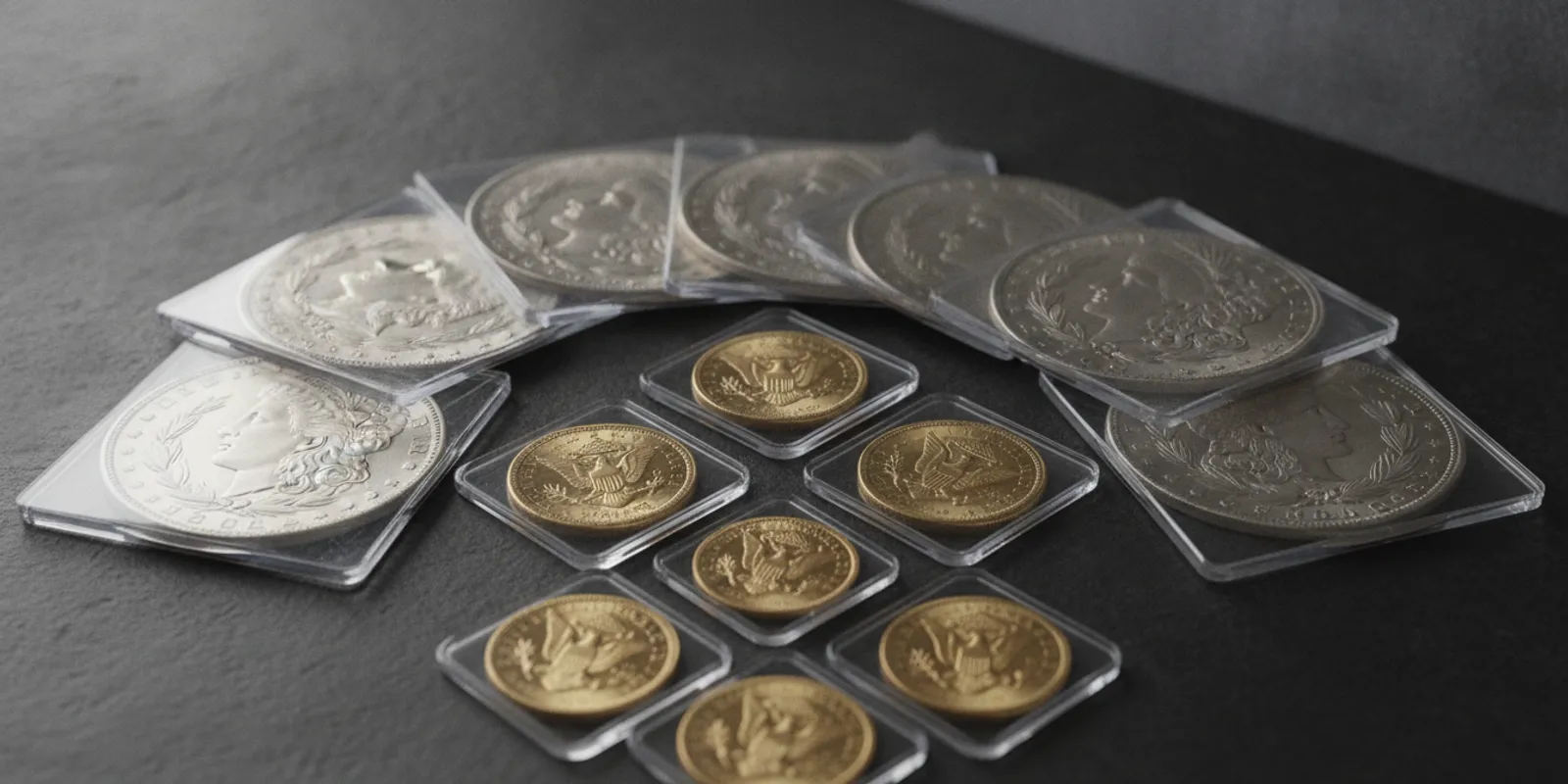
If you are ready to sell my coin collection, a little preparation can make the process easier to understand and manage. Start by keeping the coins safe, making a basic inventory, and learning what information a prospective buyer will need before you decide how to proceed.
Contact Park Avenue Numismatics about your coins
A collection may include coins assembled over many years, inherited from a relative, or stored away with other valuables. You do not need to become an expert before requesting an evaluation. Your goal is to preserve what you have, share accurate details, and understand the steps behind an offer. This guide focuses on practical preparation and questions to ask, not a promised price for any particular coin.
What should you do before you sell a coin collection?
Begin with a calm, orderly review. Choose a clean, dry, well-lit surface and work with a small group at a time. Keep coins in their existing holders, albums, flips, or envelopes unless there is a clear reason to move them. Original packaging and labels can carry useful details, and handling coins less reduces the chance of accidental marks.
Do not clean, polish, or apply chemicals to coins. A bright surface is not necessarily a better surface to a collector. Cleaning can change the original finish and may affect how a coin is evaluated. If a coin is dusty or tarnished, leave it as it is and ask for professional guidance instead of trying to improve its appearance.
Separate the collection only enough to make it easier to review. You might group coins by denomination, date range, album, or the way they were already stored. Avoid putting loose coins together in a container where they can rub against one another. For coins in a set or a labeled holder, keep the pieces and paperwork together.
Make a simple working area with a soft cloth or clean tray, a notebook or spreadsheet, and a camera or phone for photographs. Wash and dry your hands before handling coins by their edges. If you use gloves, make sure they do not catch on the coin or holder. Most importantly, keep the work manageable: a few rows or one box per session is better than spreading the entire collection out where it could be mixed up.
How can you organize coins without disturbing them?
Use the collection's existing organization as your first guide. An album may already be arranged by denomination and date. A group of certified coins may have labels that record the coin type, grade, and certification number. A family envelope may identify the source or give a relative's notes. Record those details before moving anything.
For loose coins, assign each coin or small, clearly defined group an inventory number. Put the number in your notes, not on the coin or its holder. A simple code such as Box A, Row 1, Coin 1 can help you connect a photograph to a specific item. If you use a spreadsheet, include a separate row for each coin when you can identify it, and mark uncertain details as unknown rather than guessing.
Keep potentially significant coins separate from everyday change, but do not assume that age alone proves rarity or value. A coin's date is only one piece of information. Mint mark, variety, condition, authenticity, certification, provenance, and current market demand may all matter. If you are not sure whether two coins are the same type, keep them in separate entries until a knowledgeable buyer reviews them.
- Keep holders and labels: Store each coin with any capsule, certified holder, album page, or original envelope it came with.
- Preserve groupings: Keep complete sets, matched pairs, and coins from the same box together until they are documented.
- Record location: Note the box, album, page, or envelope where each item was found.
- Use neutral descriptions: Write what you can observe, such as denomination and date, without labeling a coin rare or assigning a grade.
- Secure the collection: Return coins to a stable, private storage place between sessions.
Some collectors use a magnifier or reference book to read a date or mint mark. That can be useful, but avoid repeatedly taking a coin out of its holder. If you cannot read a detail comfortably, record it as unclear. An evaluator can inspect the coin under suitable conditions.
What information should you record for each coin?
A useful inventory is accurate and easy to update; it does not need to be elaborate. For each coin, record the denomination, date, visible mint mark if you can identify it, and any design name you recognize. Add the holder or album information, including a certification service and grade when those details are printed on an intact certified holder.
Also note whether a coin is loose, in an album, in a protective holder, or part of a set. Include a brief condition description in plain language, such as “worn,” “bright,” or “has visible marks.” These are observations, not professional grades. Do not assign a grade based on an online photograph or a quick glance, because small differences in wear, contact marks, surface quality, and strike can matter.
Write down how many coins you have in each group and whether the group appears complete. If you have old receipts, auction records, certificates, insurance schedules, correspondence, or notes from a previous appraisal, list them alongside the relevant item. A record of where a coin came from may be helpful context, but do not treat an undocumented family story as verified provenance. State what you know and where that information came from.
Photographs can help a dealer understand what you have before an appointment. Take clear images of the front and back of representative coins, and include the holder label when applicable. Use neutral lighting, avoid filters, and make sure the date and mint mark are legible. For a large collection, photograph groups and the outside of albums first, then close-ups of items you think warrant closer attention. Never mail or send an original coin just because someone requests a photograph.
Keep a copy of your inventory and images in a secure place. Avoid putting full addresses, travel plans, or detailed storage information in a public post. If you send photographs to a prospective buyer, share only what is needed for an initial discussion and use a contact channel you trust.
How do you identify a coin before an appraisal?
Identification usually begins with the denomination, date, mint mark, and design. Look at both sides of the coin. The date is often on the front, while a mint mark may appear elsewhere depending on the design and year. Compare the coin with a reputable reference or a clearly labeled example, but treat an online match as a starting point rather than a final authentication.
For a broad sense of the range of U.S. coin types, you can review the Barber dime series as an example of how a design spans multiple dates. A listed coin such as this 1899 U.S. gold coin also illustrates how date, denomination, and a certification label can be presented together. These pages are examples for familiarizing yourself with descriptions, not a substitute for having your own coin examined.
Coin identification can become complicated when a date is difficult to read, a mint mark is small, or several varieties look similar. Do not force a conclusion from a blurry photo or a single search result. Record the likely identification and add a question mark if you are unsure. Keep the coin in its holder and let the evaluator verify it in person.
Certification labels deserve special care. If a coin is in a sealed holder from a grading service, copy the label exactly and note any certification number that is visible. Do not open the holder to inspect the coin yourself. If the holder is damaged or the label does not seem to match the coin, note the concern rather than trying to fix it.
What documents and history should you bring?
Bring records that relate to ownership, purchase, prior evaluation, and storage. Useful items may include receipts, old sales invoices, certificates, estate or trust inventory excerpts, insurance documents, and written notes that accompanied the coins. Organize papers by box, album, or inventory number so an evaluator can see which record belongs to which group.
You do not need to have a complete paper trail to ask for an appraisal. Many collections have been assembled over time and have incomplete records. Be straightforward about what you know, what you were told, and what remains uncertain. When a collection came from an estate or is shared among family members, confirm that the appropriate owner or representative is involved before making a sale decision.
If you have received a prior appraisal, note its date and the scope of the review. A past estimate is not automatically a current selling offer. Coin markets change, and different appraisals may use different assumptions, examine different items, or address insurance replacement rather than an immediate purchase. Keeping the original document helps a new evaluator understand the context without treating an old figure as a guarantee.
How should you prepare for an in-person appraisal?
Before scheduling, explain in general terms what you have: for example, a group of U.S. silver dollars, a set of certified coins, or several albums that need review. If you do not know the types, say that. A few overview photographs and an approximate count can help the dealer plan for the visit, but avoid making a value claim based only on images.
Ask what to bring, whether the appointment is needed, and how the review will work. Keep the coins in their current storage containers and bring the inventory and relevant papers. For a large collection, agree on a practical way to review it in groups. Take your own notes, and make sure you can tell which coins have been examined and which still need attention.
Park Avenue Numismatics is a Miami-based rare coin and precious metals dealer that purchases from the public. The customer process may include an initial discussion and photographs, followed by an in-store assessment. For information about local silver transactions, see the page on buying silver in Miami; contact the team directly to discuss the coins you want evaluated. An appraisal conversation does not obligate you to sell.
For a visit, protect the collection discreetly. Keep it with you rather than leaving it visible in a parked car, and bring only the items you intend to discuss. If you have a large or especially valuable collection, ask the dealer how to handle transportation and whether you should arrange the review in stages. These are practical handling questions, not assumptions about what your coins are worth.
How do selling routes compare?
The right route depends on the kind of collection, how quickly you want to complete a sale, how much work you want to manage, and whether you prefer a local in-person discussion or a remote process. The American Numismatic Association's Coin Collecting FAQs notes that selling venues can include a dealer, the internet, or contracting coins for sale. Each route involves different tasks, timing, and questions to resolve.
| Selling route | What you handle | Questions to clarify | Best suited to |
|---|---|---|---|
| Local coin dealer | Organize the coins, arrange a discussion or visit, and review an offer in person. | Which coins were examined? Is the offer for individual pieces or the group? What are the payment and completion steps? | Sellers who value direct conversation and an in-person assessment. |
| Online direct sale | Create accurate listings, photograph items, answer buyers, manage payment, packing, and delivery. | What protections and fees apply? How will shipping and returns be handled? How will a buyer verify the item? | Sellers prepared to manage individual listings and fulfillment. |
| Consignment or auction arrangement | Agree on items, terms, timing, and the process for offering coins to prospective buyers. | What fees or deductions apply? When is payment due? What happens if an item does not sell? | Sellers willing to follow an agreed sale process and wait for its outcome. |
| Private sale | Find a buyer, describe the coins, agree on terms, and manage the exchange. | How will identity, payment, delivery, and a written record be handled? | Sellers who already have a suitable buyer and can manage the transaction details. |
This comparison is a starting point, not a ranking. A single coin and a multi-box collection may call for different approaches. You can ask a local dealer for an assessment even if you are still comparing routes. If you decide to seek more than one opinion, keep the same inventory and records so each discussion begins with a consistent account of the collection.
What questions should you ask a coin dealer?
A clear explanation helps you understand how the dealer arrived at an offer. You can ask direct questions without needing technical knowledge. If an answer includes unfamiliar terms, ask for a plain-language explanation or a written summary.
- What did you identify? Ask the dealer to confirm the date, denomination, mint mark, and any variety or certification details that affect the evaluation.
- Which factors mattered most? Ask whether condition, rarity, provenance, certification, or current market demand influenced the assessment.
- Is this an offer for each coin or the whole group? Find out whether the offer is itemized, applies to a specific group, or depends on accepting the collection together.
- Can you explain any major differences? If two coins of the same denomination receive different assessments, ask which features account for that difference.
- What is included in the amount offered? Clarify whether the offer covers every item presented, only selected coins, or any packaging and related materials.
- How long is the offer available? Ask whether it is time-limited or subject to a change in market conditions before completion.
- What happens if I want time to decide? Confirm that you may take your inventory and notes and return later, and ask whether the dealer needs to retain or handle any item.
- How and when is payment made? Make sure you understand the payment method, timing, required identification, and any paperwork before agreeing.
- What is the next step if I accept? Ask how ownership transfers, whether you will receive a written record, and whether all terms are clear before signing.
It is reasonable to pause if you do not understand an explanation or want to compare another option. Take notes while the coins are being reviewed. If an offer covers a large group, ask whether an itemized discussion is possible, especially when some coins are certified or have separate documentation.
Why can the value of coins vary?
There is no single reliable figure for every coin based only on its date or metal content. The condition of an individual piece, its rarity, provenance, certification, and current market demand can all affect how it is evaluated. Two coins that appear similar to a new collector may differ in ways that matter to a buyer, while a coin with an impressive-looking date may not be especially scarce in its actual condition.
Different types of estimates also serve different purposes. An insurance estimate, a retail asking price, an auction result, and a dealer's purchase offer are not interchangeable. They can reflect different costs, timing, risks, and expectations. When you compare figures, ask what each one represents and whether it applies to the same coin, condition, and date of review.
Silver and gold content may be relevant for some coins, but it does not tell the whole story for a collectible. A buyer may consider both the metal and numismatic characteristics. Avoid relying on a generic online price, a social-media post, or a calculation based on a coin's appearance as a final valuation. An in-person examination can add information that a photograph cannot show.
For reference, Park Avenue Numismatics also provides information about silver bullion. Bullion and collectible coins can be evaluated differently, so ask how the buyer is treating each part of your group. Any discussion should remain specific to the actual items presented and the market at that time.
How can you compare offers fairly?
Compare like with like. Use the same inventory, coin descriptions, and records when discussing the collection with different buyers. Write down which items were included in each offer, the date, whether the amount was individual or combined, and any conditions that apply. An offer for only selected coins should not be compared directly with an offer that covers every item in a group.
Ask whether an offer is final, conditional on closer inspection, or subject to verification of certification or ownership records. Clarify the payment process and the date you would receive funds. If you are considering an auction or consignment route, compare the stated terms and potential deductions rather than focusing only on an estimated sale amount. The timing and final result may differ from a direct purchase.
Give yourself time to read any paperwork. The written terms should match what you understood in the conversation: the coins being sold, the amount or calculation, the payment method, and the date of the transaction. Keep a copy of any agreement or receipt. If you have questions, ask before transferring ownership.
How can you build an inventory that helps compare offers?
A useful inventory does not need to estimate a coin's price. It should help you and a buyer refer to the same item, especially when a collection contains multiple boxes or many coins with similar designs. Use consistent labels for each container, album, page, and coin entry. For example, “Album 2, page 4, position 6” is more precise than “one of the silver dollars.” Do not attach a paper tag or adhesive directly to a coin; put the reference in your notes or on the outside of its storage container.
For each entry, consider recording:
- An inventory number and the coin's current location.
- The readable denomination, date, mint mark, and design, with uncertain details noted as uncertain.
- Whether the coin is loose, in an album, in an original holder, or in a certified holder.
- Any label text, certification service, and visible certification number.
- Related documents, photographs, or family notes, and the source of any historical information.
- The date you reviewed the entry and any question that still needs an expert's attention.
It is fine to begin with a short list and add detail after a dealer identifies the coins. A spreadsheet can make it easier to sort by box or type, while a paper notebook works well if you prefer to keep records offline. Use the same inventory numbers in file names for your photographs. Keep an unedited copy of the original images so you can refer back to what the coin looked like in its holder when you first documented it.
Do not treat an inventory as a substitute for a receipt or sale agreement. It is your reference for what you own and what was discussed. When a buyer makes an offer, write down which inventory numbers are included, which were not reviewed, and whether the amount applies to individual coins or a group. This makes it easier to compare discussions without relying on memory or confusing a similar-looking coin with another piece.
What common preparation mistakes should you avoid?
Several avoidable missteps can make an evaluation harder. Cleaning coins is one; another is mixing coins from labeled groups or removing certified pieces from their holders. Guessing at grades or values can also create confusion. A careful inventory that says “date unclear” is more useful than a confident but incorrect identification.
Other things to avoid include:
- Discarding envelopes, albums, certificates, receipts, or packaging before the coins are reviewed.
- Combining loose coins in a bag or container where surfaces may rub together.
- Assuming a coin is valuable or common just because of its age, metal, or a quick online search.
- Sharing detailed photos and personal information publicly when a private conversation would do.
- Agreeing to a sale before you understand which items are included and how payment will be completed.
- Comparing a past estimate with a current offer without checking what each figure covers.
You can keep the process straightforward: document what you know, preserve the collection as found, and ask questions until you understand the options. A professional evaluation is there to help establish what the coins are and what a buyer is offering, not to require you to make an immediate decision.
Ask Park Avenue Numismatics about an in-person coin assessment
Frequently asked questions about selling a coin collection
Do I need to identify every coin before contacting a dealer?
No. Record the details you can read, organize the coins, and mark uncertain information clearly. A dealer can help confirm identification during an assessment. Clear photographs and an approximate count can make an initial conversation more useful, but they do not replace examination of the coins.
Should I clean my coins before selling them?
No. Leave coins in their current condition and keep them in their existing holders when possible. Cleaning or polishing can alter surfaces and affect an evaluation. If you are concerned about dirt or tarnish, ask for guidance rather than attempting to remove it.
Will a dealer's estimate match an auction or insurance figure?
Not necessarily. The figures may describe different things and may use different assumptions, costs, timing, and market conditions. Ask what each estimate represents and whether it applies to the exact coins being discussed.
Can I ask questions and decide later?
You can ask how long an offer remains available and what happens if you want time to consider it. Before agreeing to a sale, make sure you understand the items included, payment, and transfer terms. You are not required to proceed just because you requested an assessment.
What is the best way to start if the collection is large?
Begin with one album, box, or labeled group. Note how many pieces it contains, photograph its overall organization, and retain related records. Then contact a local dealer to ask how to arrange a practical review of the collection.
Key takeaway
To sell a coin collection with confidence, protect it, organize it without making changes, and document what you can verify. Compare selling routes and offers by their terms and the specific coins included, while remembering that any coin's evaluation can vary with condition, rarity, provenance, certification, and current market demand. When you are ready, contact Park Avenue Numismatics to discuss an assessment in Miami.





