
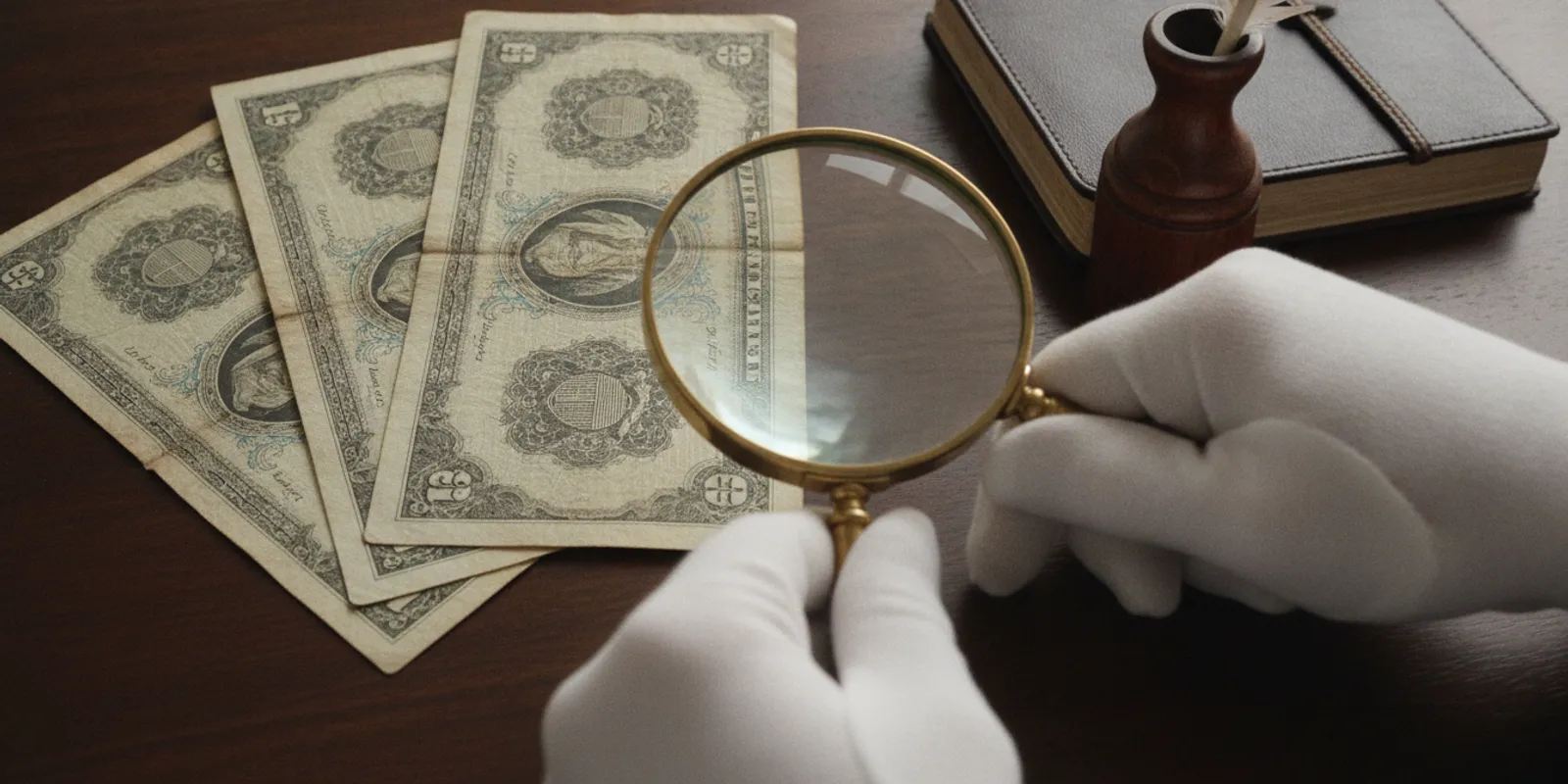
Choosing among rare currency dealers can feel difficult when a note has been passed down, stored for years, or found in an old collection. A careful dealer should explain what can be established about the note, how condition and rarity affect interest, and what the next steps involve—without promising a fixed value before examination.
Call 1-888-419-7136 to discuss your item and a sensible next step
What should you expect from a rare currency dealer?
A specialist in paper money should be able to explain the details that make one U.S. note different from another. Those details may include the series date, signature combination, district or other identifying marks, printing variety, denomination, and the note's physical state. The specialist should also distinguish what is visible on the note from what requires outside verification.
Expect questions about how you acquired the note and whether you have records, an old collection inventory, or an earlier appraisal. A responsible conversation is not a promise that every note is rare or valuable. Many notes are common, while seemingly small differences can matter for particular issues. The point of a knowledgeable review is to identify those differences and explain their significance.
Ask what the dealer does with the information. If you are selling, is the offer for an outright purchase, or is the dealer proposing another arrangement? If you are buying, what exactly is included in the description, and what is the return policy? Clear answers help you compare options instead of relying on a headline price or a confident-sounding label.
How can you identify the note before approaching dealers?
Start with a simple record, not an attempt to clean, flatten, or repair the note. Lay it on a clean surface and note its denomination, series year, visible signatures, serial numbers, seal color, and any apparent printing differences. Record whether it has a fold, tear, stain, pinhole, writing, missing corner, or other mark. Do not write on the note or attach labels to it.
Use a phone camera to take a clear image of the front and back in even light. Keep the image files private when they show serial numbers or other information you do not want shared publicly. Photographs can help a dealer decide whether an in-person inspection makes sense, but they cannot always show paper texture, repairs, subtle folds, or color changes reliably.
Keep the description factual. For example, write “$10 note, series date visible as 1928, one horizontal fold, small mark at the right edge” rather than “rare mint-condition note.” A neutral description gives the dealer useful details and reduces the chance that assumptions become part of the conversation.
How do condition and rarity affect a note?
Condition is more than whether a note looks old or clean. Collectors may consider the number and sharpness of folds, corner wear, paper firmness, stains, tears, pinholes, fading, writing, trimming, and evidence of pressing or repair. A note that appears crisp at a glance may still have a faint fold or a repaired edge. Conversely, a note with visible wear can remain collectible if its issue or variety is scarce and desirable.
Rarity also needs context. A low serial number or an unusual-looking feature can catch the eye, but neither establishes rarity by itself. Specialists compare the note with known examples and consider how many were issued, how many are believed to survive, and whether collectors seek that specific variety. The date alone is not enough to determine scarcity.
Any estimate should be treated as conditional. Potential value can vary with condition, rarity, provenance, certification, and current market demand. Similar notes can receive different assessments when their preservation or identifying details differ. Ask what evidence supports the conclusion and what factors could change it. Avoid treating a verbal range or an online result as a guaranteed price.
How should you store and transport a paper note?
Good handling protects both the note and the information a specialist may need to examine. Hold it by the edges with clean, dry hands, and avoid bending it to fit a pocket or envelope. If you use a protective sleeve, choose one intended for collectible paper and avoid materials that may stick to, stain, or otherwise affect the note. Do not force a note into a holder that is too small. When a note is already encapsulated, do not open the holder simply to get a closer look.
Store paper money away from direct sunlight, dampness, heat, and sudden environmental changes. Keep it flat and protected from spills or pressure from other objects. Avoid stacking heavy items on top of a note or leaving it loose in a drawer where it can snag. If you have inherited a group, keep each piece associated with its own notes and supporting paperwork, but do not use adhesive labels on the currency itself.
For a dealer visit, make a simple checklist before leaving home. Confirm the appointment or assessment process, bring the notes in their existing protective holders when possible, and keep your inventory separate from the items. For valuable or sensitive material, ask the dealer in advance about the safest way to transport it. If you are sending a note by mail, follow written packing and shipping instructions, retain tracking details, and understand insurance conditions before handing over the package. The carrier's terms and a dealer's receipt serve different purposes, so clarify both.
When is a second opinion useful?
A second opinion may help when you do not understand the identification, when two assessments differ materially, or when you are deciding between an outright offer and a longer sale process. It is also reasonable to pause if the proposed terms are unclear or you feel rushed. You can ask each specialist to identify the same features and explain whether their number represents an estimate, purchase offer, or expected proceeds after fees. This makes the comparison more useful than collecting several headline numbers without knowing what each includes.
Share the same factual description and photographs with each person so that the basis for the responses is consistent. If an assessment depends on a grading submission, auction result, or additional research, ask who pays for that work and what happens if it does not support the initial expectation. A second opinion does not guarantee a higher offer; it provides another perspective and may clarify the range of possible outcomes. You remain free to keep the note while you consider your choices.
What does grading or certification tell you?
Third-party grading is an independent service in which a specialist examines a collectible and may assign a condition grade, authenticate it, and encapsulate it in a protective holder. A holder can make a note easier to identify and handle, but it does not eliminate the need to read the label, check the service's records, and understand exactly what was evaluated.
Certification is not the same as provenance. A grading label may report an attribution and grade, while provenance concerns the documented history of ownership or prior sales. Nor does a grade guarantee what a future buyer will pay. If a note is already certified, ask whether the holder and label match the note and whether the certification can be confirmed through the grading service's own records. If it is raw, ask why grading is or is not appropriate before paying for that step.
Do not assume that every note benefits from submission. Fees, shipping, and handling take time and can outweigh the usefulness of certification for a modestly collectible item. Discuss the likely purpose of grading—authentication, easier resale, or clearer condition communication—and compare that purpose with the cost and uncertainty involved.
How can you check authenticity without damaging a note?
Begin with a visual review, but do not mistake a quick look for authentication. Compare the note's overall design, printing sharpness, paper appearance, alignment, and features with reliable references for that specific issue. Be cautious of notes that appear altered, have suspiciously added marks, or combine details that do not belong together. A magnifier and even lighting can help you inspect features without touching the surface more than necessary.
Do not use water, chemicals, erasers, tape, heat, or home pressing methods to test or improve a note. Do not cut, scratch, or otherwise alter it. Such actions can damage collectible material and make later examination harder. If you are unsure, preserve the note as found and ask a qualified paper-money specialist to inspect it.
For official background on U.S. currency design and security features, consult the U.S. Bureau of Engraving and Printing. That information can help you understand how U.S. notes are produced and what features to study. It is not a substitute for a numismatic examination of a historic note, particularly when condition, an unusual variety, or possible alteration is at issue.
What records and provenance should you gather?
Provenance is the documented history of an item's ownership or custody. It can help explain where a note came from and connect it with an earlier collection, but a story without records is not the same as verified provenance. Gather what you already have, such as purchase receipts, collection notes, auction paperwork, appraisal documents, old envelopes, or correspondence. Do not add unsupported claims to make the history sound more impressive.
For an inherited group, keep the notes together while making an inventory. Record each item's visible identifiers and condition separately. If a family member left a list or an old dealer's envelope, preserve it alongside the note rather than discarding it. Tell a prospective dealer which details are documented and which come from family recollection.
Share copies or photographs first when possible, and keep originals in your possession until you understand the proposed process. Before leaving notes for review, ask for a written receipt listing the items and their identifying details. For shipping, get written instructions about packaging, insurance, tracking, responsibility for loss, and when the items will be returned or paid for. Do not mail an item based only on an informal message.
How should you compare buying and selling options?
Different routes serve different priorities. A direct dealer purchase may be straightforward, while an auction or consignment may expose an item to a broader group of interested buyers but involve time, terms, and fees. A private sale offers control over the conversation but requires you to handle screening, payment, and transfer. Compare the net amount, timing, responsibilities, and uncertainty—not just a quoted gross figure.
| Option | What to clarify | Possible advantage | Trade-off to consider |
|---|---|---|---|
| Direct dealer purchase | Is the offer an outright purchase? How long is it valid, and when is payment made? | A direct process may be simpler and faster. | The offer reflects the dealer's assessment and business costs; compare it with other appropriate options. |
| Auction or consignment | What are seller fees, reserves, timing, insurance terms, and payment schedule? | An item may be presented to collectors who seek that specific issue. | Sale timing and final proceeds are uncertain, and fees affect the net result. |
| Private sale | How will you verify payment, describe condition, and arrange delivery? | You control the terms and can speak directly with a potential buyer. | You take on more work in finding, screening, and safely completing the transaction. |
| Keep or insure the note | How will it be stored, documented, and reviewed for insurance purposes? | You retain ownership and can take time before deciding. | Safe storage and any professional documentation require attention; no future value is assured. |
When comparing offers, make sure each person has evaluated the same note and understands its condition. Ask whether a number is a firm offer or an estimate, whether fees or other deductions apply, and what happens if the examination changes the initial view. Request a written breakdown when the transaction includes multiple notes. For a group, compare both the total and any item-by-item explanation so that one attractive figure does not obscure how the rest were treated.
What questions should you ask rare currency dealers?
Good questions make the process easier to follow. You do not need to be an expert before contacting a dealer. You do need enough information to understand the dealer's role, the basis of an assessment, and your choices.
- Do you regularly handle U.S. paper money of this type, and who will examine it?
- Which visible details support your identification and condition opinion?
- Is this a purchase offer, an auction estimate, a consignment proposal, or an informal opinion?
- Are there fees, commissions, grading costs, or shipping costs? How are they calculated?
- Can I review the written terms and take time to compare options before deciding?
- If I leave the note for review, what receipt and security arrangements will I receive?
- How and when will payment be made if I accept an offer?
- What facts could change your assessment after an in-person examination?
Notice whether the answers are specific and understandable. A specialist should be willing to explain uncertainty, distinguish opinion from verified facts, and give you room to decide. Be cautious if you are pressured to make an immediate decision, discouraged from seeking another opinion, or asked to surrender a note without a clear written record.
Where can you discuss collectible items in Miami?
Local expertise can make an in-person examination and conversation more convenient, especially when you have several items or want to keep track of them personally. Park Avenue Numismatics is an established Miami dealer that purchases rare coins and precious metals from the public. Its listed services focus on those categories, so contact the business before visiting to confirm whether a paper-money item is within its current scope. The company's contact page is a starting point for asking about next steps.
When speaking with any Miami-area buyer, describe the note accurately and ask what kind of review is available. Do not assume that a dealer who handles rare coins also buys every kind of paper currency. If you are also sorting coins or silver, you can review Park Avenue's information on selling silver in Miami and its examples of U.S. numismatic material, such as Barber dimes. These are separate categories from historic paper money, and their evaluation criteria differ.
Call 1-888-419-7136 to ask about your U.S. paper currency and local next steps
Frequently asked questions about rare currency dealers
Should I clean or flatten a note before showing it?
No. Leave it as found. Cleaning, pressing, taping, or applying chemicals can damage paper and affect an examination. Store it carefully and ask a specialist how to handle it if you are unsure.
Can a photo tell me exactly what a note is worth?
A clear photo may help a specialist identify visible details, but it may not show folds, paper texture, repairs, or subtle condition issues. Any assessment can change after in-person inspection, and value depends on condition, rarity, provenance, certification, and current market demand.
Does a certification label guarantee a selling price?
No. Certification can report an attribution or grade, but it does not promise a buyer or a future price. Confirm that the label matches the note, understand the grading service's stated information, and compare transaction terms.
What should I do before leaving a note with a dealer?
Ask for written terms and a receipt identifying the note, including visible details such as denomination and serial number where appropriate. Clarify how it will be secured, when it will be returned or paid for, and who is responsible while it is in the dealer's possession.
Key takeaway
Choose a rare currency dealer who can identify the specific U.S. note, explain condition and uncertainty in plain language, document any transfer, and give you time to compare realistic options. Handle the note gently, keep its history and records together, and treat every estimate as conditional rather than guaranteed.





