
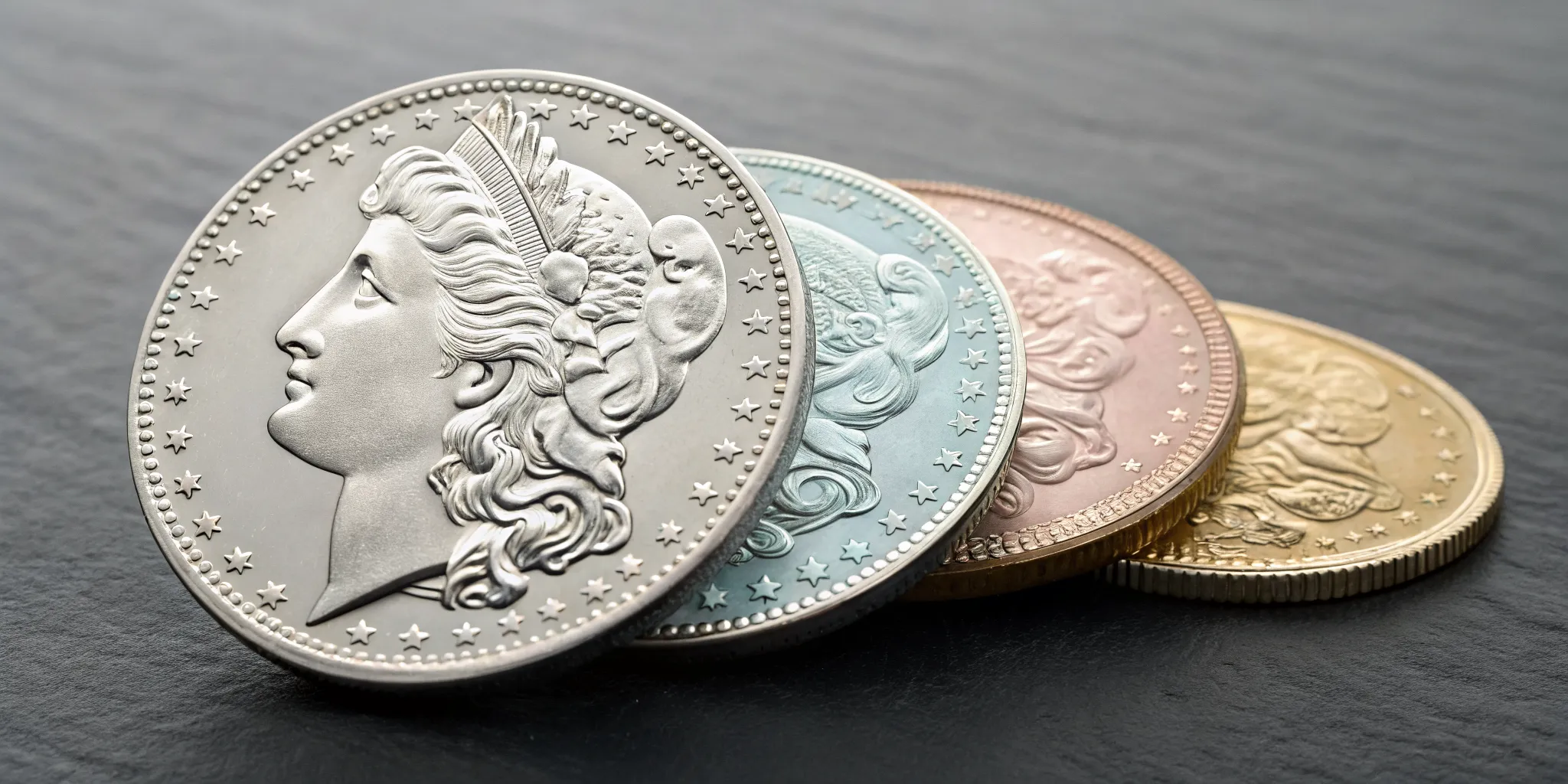
 The thrill of collecting Morgan Dollars lies in the hunt. While every coin has value, certain dates, mint marks, and conditions can transform a piece of silver into a rare treasure worth thousands. The real excitement begins when you realize that completing a Morgan Silver Dollar collection 1878 to 1921 is a true treasure hunt, filled with key dates, coveted "CC" mint marks, and hidden gems. This guide will equip you with the knowledge to spot these valuable coins, understand what makes them rare, and navigate the market like a seasoned numismatist on the trail of a great find.
Key Takeaways
- Know What Drives Value: A Morgan's worth comes from two places: its silver content and its numismatic appeal. Collector value is determined by a coin's condition, mint mark, and overall rarity, which often far exceeds its metal price.
- Build Your Collection with a Strategy: Start by learning with common-date coins before hunting for rare ones. Having a clear focus, like a specific mint or a complete date set, and a realistic budget will make your collecting journey more rewarding.
- Prioritize Authenticity and Preservation: The best way to protect your investment is to buy certified coins from trusted dealers and learn the basics of spotting fakes. Just as important, never clean your coins and always use proper storage to maintain their condition and value.
What's the Story Behind the Morgan Silver Dollar?
Every great collectible has a story, and the Morgan Silver Dollar’s is one of America’s best. This isn't just a piece of silver; it's a tangible piece of history that tells a story of innovation, westward expansion, and political drama. Holding one feels like holding a relic from a transformative era. Understanding its background is the first step to appreciating why these coins are so sought after by collectors and investors alike. Let's look at the key elements that make the Morgan Dollar so special.
The Iconic Design by George T. Morgan
The Morgan Dollar gets its name from its designer, George T. Morgan, an English engraver who joined the U.S. Mint. His design was a fresh take on American coinage. For the obverse, he chose a profile of Lady Liberty that felt more American and less Greek than previous versions. The model was a Philadelphia schoolteacher named Anna Willess Williams, whose classic profile became the face of this iconic coin. The reverse features a proud eagle with its wings spread, clutching arrows and an olive branch. This powerful imagery captured the nation's spirit and quickly made the Morgan one of the most recognizable rare coins for sale in the world.
A Coin of the Wild West
Often called the 'King of America’s Coins,' the Morgan Dollar is deeply tied to the lore of the American West. These were the heavy silver coins clinking in the pockets of cowboys, miners, and railroad barons. They were stacked on saloon tables for poker games and stored in the vaults of frontier banks. The Morgan Dollar was the workhorse currency during a period of incredible growth and change across the country. Its circulation coincided with the final chapters of the Wild West, making it a true symbol of American grit and ambition. Each coin carries the weight of that history, connecting us directly to the nation's adventurous past.
Why the 1878–1921 Minting Period Is Key
The Morgan Dollar was minted from 1878 to 1904, with a final appearance in 1921. This specific timeframe wasn't arbitrary; it was driven by politics. The Bland-Allison Act of 1878 required the U.S. Treasury to purchase millions of dollars' worth of silver each month and convert it into coins. This was a result of the heated 'Free Silver' debate, where powerful interests pushed for more silver in the nation's currency. Production stopped in 1904 when silver reserves ran out, but the coin made a brief comeback in 1921. This rich political and economic backstory is part of what makes collecting these pieces of silver bullion so fascinating.
Why Collect Morgan Silver Dollars?
Morgan Silver Dollars are more than just old coins; they are a cornerstone of American numismatics. Collectors and investors are drawn to them for a compelling mix of reasons: their rich history, stunning design, and tangible value. Whether you're captivated by the story of the Old West, looking to own a piece of silver, or seeking to diversify your investment portfolio, the Morgan Dollar offers something for everyone. It’s a classic coin that serves as both a fascinating collectible and a solid asset. Understanding what makes these silver dollars so special is the first step in appreciating their dual role as historical artifacts and smart investments.
Understanding Their Silver Content and Value
At its core, every Morgan Dollar has an intrinsic value based on its precious metal content. Minted from 1878 to 1904 and again in 1921, these coins are composed of 90% silver and 10% copper, weighing a substantial 26.73 grams. This high silver content means that each coin has a base "melt value" tied directly to the current spot price of silver. This provides a reliable price floor, ensuring your coin will always be worth at least its weight in silver. For investors who appreciate tangible assets, this makes Morgans an attractive way to hold silver bullion in a historic and easily recognizable form.
Collector Value vs. Silver Value
While the silver content provides a safety net, the real excitement with Morgan Dollars comes from their numismatic value. A coin's worth to a collector can far exceed its melt value. Factors like rarity, condition, and mint mark are what separate a common coin from a prized treasure. For example, a heavily circulated Morgan from a high-mintage year might trade for a small premium over its silver price. However, a pristine, uncirculated coin from a rare date can be worth thousands of dollars. This is why you'll see such a wide price range for these rare coins for sale, as each one's story and condition create a unique value proposition.
How Morgans Diversify a Precious Metals Portfolio
Morgan Dollars are a fantastic tool for diversifying an investment portfolio. They occupy a unique space between pure bullion and collectibles, offering the benefits of both. Unlike a generic silver bar, a Morgan Dollar's value is driven by two factors: the underlying price of silver and the demand from collectors. This dual nature can provide a buffer during market fluctuations. If silver prices dip, strong collector demand for a rare date can keep the coin's value stable or even help it appreciate. Adding rare coins like Morgans to a portfolio of bullion introduces this numismatic component, creating a more resilient and potentially rewarding investment strategy over the long term.
Which Morgan Dollars Are the Most Valuable?
Not all Morgan Dollars are created equal. While every Morgan has intrinsic silver value, certain dates, mint marks, and conditions can make a coin exponentially more valuable to collectors. The difference in price between a common Morgan and a rare one can be staggering. If you're looking to find the crown jewels of the series, or simply understand what makes certain coins stand out, you need to know which factors drive rarity and demand. Understanding these key identifiers is the first step in building a truly impressive collection.
Key Dates Every Collector Wants
Certain years and mint marks are the holy grails of Morgan Dollar collecting due to their extreme rarity. The most famous of these is the 1893-S Morgan Dollar, often called the "King of Morgan Dollars." With a tiny mintage of just 100,000, it's the rarest circulation strike in the entire series. Other highly prized dates include the 1892-CC and 1893-CC, whose Carson City origins add to their appeal. Then there's the legendary 1895 Morgan, a coin shrouded in mystery. No circulation strikes are known to exist, meaning it was only produced in a very limited proof format. Finding one of these rare coins for sale is a major event for any numismatist.
The Coveted Carson City (CC) Mint Mark
For many collectors, the "CC" mint mark is the most exciting part of the Morgan Dollar story. These coins were struck at the Carson City Mint in Nevada, right in the heart of the Wild West. The mint's connection to the famous Comstock Lode silver strike gives these coins a historical romance no other mint can match. More importantly, Carson City coins are genuinely scarce. They account for only about 2% of the total Morgan Dollar production. This low supply, combined with incredible demand from collectors who love their story, makes nearly any "CC" Morgan a valuable addition to a portfolio.
Other Important Mints: San Francisco (S) and New Orleans (O)
While Carson City gets much of the glory, you shouldn't overlook the other branch mints. The San Francisco Mint, marked with an "S," is famous for producing coins with exceptionally sharp, high-quality strikes. Collectors often seek out S-mint Morgans for their beautiful appearance and fine details. The New Orleans Mint, which used an "O" mint mark, is also a collector favorite. These coins are often known for having deep, rich strikes that give them a unique and attractive character. Both mints produced their own key and semi-key dates, adding wonderful diversity and new hunting grounds for the dedicated collector.
Semi-Key Dates to Watch For
Beyond the ultra-rare "key dates" that cost a fortune, there is a tier of coins known as "semi-key dates." These coins are still quite rare and have low mintage numbers, but they are generally more accessible and affordable than the absolute scarcest issues. Dates like the 1889-CC, 1894-P, and 1901-S fall into this category. They represent a significant challenge to find in high grades and command premium values in the market. Focusing on semi-key dates is a fantastic strategy for building a high-quality collection without necessarily starting with the "King of Morgans." They are excellent additions that can significantly increase the value of your holdings.
What Determines a Morgan Dollar's Value?
Figuring out what a Morgan Dollar is worth is a bit like being a detective. It’s not just one single clue, but a combination of four key factors that tell the full story of a coin’s value. A Morgan might be made of silver, but its true market price often goes far beyond its metal content. For collectors and investors, understanding these elements is the first step to building a quality collection. By looking at a coin’s condition, where it was made, its original mintage, and its overall visual appeal, you can accurately assess its place in the numismatic world and make smarter purchasing decisions.
Coin Condition and Grade
The physical condition of a Morgan Dollar is one of the most significant factors in determining its value. Because most of these coins are well over a century old, many saw circulation, leading to wear and tear. A coin that has been preserved in nearly its original state will always command a higher price than one that is heavily worn. Professional grading services evaluate coins on a numeric scale, and even a single point difference can mean a substantial change in value. When you browse rare coins for sale, you’ll see that higher-grade Morgans are not just collectibles; they are pieces of history captured in time.
Mint Mark and Location
During their production run, Morgan Dollars were struck at five different U.S. Mint facilities. Each location left a small identifying mark on the reverse side of the coin, just above the letters "D" and "O" in the word "DOLLAR." The mint marks are: O for New Orleans, S for San Francisco, CC for Carson City, and D for Denver. Coins minted in Philadelphia have no mint mark at all. The mint mark is crucial because some mints produced far fewer coins than others in certain years, making those specific issues much scarcer. The Carson City (CC) mint, in particular, is famous among collectors for its connection to the Wild West and its often-limited production numbers.
Rarity and Mintage Numbers
Rarity is a simple case of supply and demand. Some Morgan Dollars are exceptionally valuable because very few were made in the first place. A perfect example is the 1893-S, often called the "King of Morgan Dollars," which had an original mintage of only 100,000 coins. Beyond initial production numbers, historical events also play a role. The Pittman Act of 1918 resulted in the melting of over 270 million silver dollars, making many previously common dates suddenly rare. Our team of experts at Park Avenue Numismatics has over 35 years of experience tracking these nuances, and you can learn more about our history and expertise.
Luster and Eye Appeal
Beyond the technical grade, a coin’s visual attractiveness, or "eye appeal," plays a huge role in its desirability. Luster refers to the original satiny or frosty finish of a freshly minted coin and how it reflects light. A coin can have minimal wear but still be dull or poorly struck, which lowers its value. Conversely, a Morgan with brilliant, cartwheeling luster and a sharp, detailed strike is highly sought after. Toning, the natural coloration that develops on a silver coin over time, can also add to its eye appeal if it’s attractive (think rainbow or deep blue hues) rather than blotchy and dark.
How to Grade a Morgan Dollar: A Beginner's Guide
Learning to grade a Morgan Dollar is one of the most valuable skills you can develop as a collector. Grading is the process of determining a coin's physical condition, which directly impacts its market value. While it takes years to become a true expert, understanding the basics will help you make smarter purchasing decisions and appreciate the nuances of the coins in your collection. It’s about more than just a number; it’s about seeing the history and journey of each individual coin.
This guide will walk you through the fundamentals, from the official grading scale to the specific details to look for on a Morgan Dollar. By learning what makes a coin stand out, you can build a collection that is not only beautiful but also a sound investment.
Understanding the 1-70 Grading Scale
The coin grading system used today is known as the Sheldon scale, which rates coins from 1 (Poor) to 70 (Mint State Perfect). A higher number indicates a better-preserved coin. As one expert notes, "Understanding coin grades isn't just about identifying a coin's condition; it's about protecting your investment, ensuring fair value, and building a truly meaningful collection."
For circulated coins, grades range from Poor (PO-1) and Fair (FR-2) up to About Uncirculated (AU-58). Uncirculated coins, also called Mint State (MS), are graded from MS-60 to the flawless MS-70. Each grade represents a specific level of wear and preservation. Familiarizing yourself with these grades is the first step to accurately assessing the rare coins for sale you encounter.
Circulated vs. Uncirculated: What's the Difference?
The most fundamental distinction in coin grading is between circulated and uncirculated coins. A circulated coin has been used as money and will show signs of wear, however slight. An uncirculated, or Mint State, coin has never been in public circulation and retains its original mint luster.
However, "uncirculated" doesn't always mean "perfect." These coins were often stored in large canvas bags and transported, resulting in small nicks and scratches known as "bag marks." The key difference is wear; circulated coins lose metal from friction, while uncirculated coins only have contact marks. This is why proper storage is so critical. As a guide on the topic states, "Even an authentic and valuable coin can lose its integrity and worth if not properly preserved."
Key Areas to Check for Wear
When you're examining a Morgan Dollar, you need to know where to look for the first signs of circulation. "Genuine coins should have sharp details, and areas of wear can often be found on the high points of the design." For Morgans, these key areas are consistent.
On the obverse (the front), check Lady Liberty’s cheek, the hair above her ear, and the edges of the cotton leaves in her cap. These spots are the most raised and will show smoothing or a loss of detail first. On the reverse, focus on the eagle’s breast, the top of its legs, and the tips of its wings. Wear in these areas indicates the coin has spent time in circulation, which helps determine its grade and value within your silver bullion collection.
Why Professional Certification Matters
While learning to self-grade is a fantastic skill, professional certification provides the ultimate peace of mind. Third-party grading services (TPGs) like PCGS and NGC offer an unbiased, expert opinion on a coin's authenticity and grade. They then encapsulate the coin in a secure, sonically sealed holder that protects it from damage and tampering.
This certification is the industry standard for a reason. It removes guesswork, ensures you are paying a fair price, and makes your coins much easier to sell later. When buying, especially high-value pieces, it’s wise to stick to certified coins from a reputable source. Always work with dealers who have a proven track record and high ratings, like our A+ rating from the Better Business Bureau, which reflects our commitment to quality and trust. You can learn more about our dedication to expertise on our About Us page.
How to Build Your Morgan Dollar Collection
Building a collection of Morgan Silver Dollars is a rewarding experience that connects you to a rich piece of American history. Like any great pursuit, it’s best to start with a clear plan. A thoughtful approach will help you build a collection you’re proud of, whether you’re just starting or you’re a seasoned numismatist looking to focus your efforts. By setting a strategy, establishing a budget, and prioritizing the care of your coins, you can create a valuable and personally meaningful collection that will stand the test of time. These steps will guide you in making smart decisions from your very first purchase.
Start Smart with Common Dates
It’s tempting to jump right into hunting for rare and valuable coins, but the smartest way to begin a Morgan Dollar collection is with common dates. These are the years and mints that were produced in large quantities and are more readily available. Starting here allows you to learn the ropes without a significant financial risk. A common date Morgan in a lower grade might be worth its silver value, but the same coin in pristine, uncirculated condition is worth much more. By studying these more accessible coins, you can train your eye to recognize subtle differences in grade and quality. This hands-on experience is invaluable and prepares you to make confident decisions when you eventually decide to acquire a key-date coin. You can browse our inventory to see examples of Morgans in various grades.
Choose a Collecting Strategy
There’s no single right way to collect Morgan Dollars, which is part of their appeal. The best approach is the one that excites you the most. Some collectors try to acquire one coin from every year the Morgan was minted, which is known as a date set. Others focus on collecting coins from a specific mint, like the highly sought-after Carson City (CC) Morgans. You could also build a collection based on specific VAM varieties, which are minor die variations that create a treasure hunt for detail-oriented collectors. Whether you decide to build a complete set or simply acquire beautiful examples that catch your eye, having a clear collecting strategy will make your journey more focused and enjoyable.
Set a Realistic Budget for Your Collection
Morgan Dollar prices can range from around $50 for a common, circulated coin to thousands of dollars for a rare, high-grade specimen. With such a wide range, setting a budget is essential for making the hobby sustainable and enjoyable. Decide what you are comfortable spending per coin or per month, and stick to it. A budget helps you prioritize your purchases and make deliberate choices. For instance, you might decide to buy one high-quality coin every quarter instead of several lower-grade coins each month. Working with a trusted dealer can also help you find the best coins within your price range, ensuring every dollar you spend adds real value to your collection.
Properly Store and Protect Your Coins
How you store your coins is just as important as which coins you buy. Even an authentic and valuable Morgan Dollar can lose its worth if it’s not preserved correctly. Improper storage is a common and costly mistake that can expose coins to humidity, air, and physical damage, leading to scratches, corrosion, or unattractive toning. To protect your investment, store your coins in a stable, climate-controlled environment. Use inert, acid-free materials designed for archival purposes, such as 2x2 flips, coin albums, or the certified slabs that professionally graded coins come in. Proper storage and protection will maintain your coins’ condition and value for years to come.
Where to Buy Morgan Silver Dollars
Once you’re ready to add a Morgan Silver Dollar to your collection, the next step is finding the right place to buy it. The source of your coin is just as important as the coin itself. You want to be confident that you’re getting an authentic, fairly priced coin from a knowledgeable seller. Whether you prefer browsing online from the comfort of your home, meeting dealers face-to-face at a bustling coin show, or the thrill of an auction, you have several great options. Each path offers its own unique advantages. The key is to know what to look for and how to protect yourself as a buyer. Let’s walk through the best ways to find and purchase your next Morgan Dollar.
How to Find a Trusted Coin Dealer
Finding a dealer you can trust is the most important step in your buying journey. A reputable dealer not only provides authentic coins but also offers expertise and guidance. Start by looking for dealers who are members of respected professional organizations, like the American Numismatic Association (ANA) or the Professional Numismatists Guild (PNG). Membership in these groups shows a commitment to ethical standards. A great dealer will have a long-standing reputation for integrity and customer satisfaction. For over 35 years, Park Avenue Numismatics has been a trusted industry leader, helping collectors and investors build their portfolios with confidence. A good relationship with a dealer is an invaluable asset for any collector.
Tips for Buying Safely Online
The internet gives you access to a massive selection of Morgan Dollars, but it’s important to shop smart. When buying online, stick to dealers with a proven track record and positive customer feedback. Look for high ratings from the Better Business Bureau (BBB) and check for guarantees on the authenticity of their coins. Before you buy, read the dealer’s shipping and return policies carefully. A trustworthy online seller will be transparent about their procedures and provide secure, insured shipping. Exploring a vast inventory of rare US coins from a reputable online dealer is a fantastic way to find the exact Morgan Dollar you’re looking for without leaving home.
What to Expect at Coin Shows and Auctions
Coin shows and auctions are exciting, hands-on environments for any collector. These events are a fantastic opportunity to see a wide variety of Morgan Dollars in person. You can examine coins up close, checking for luster and eye appeal in a way that photos can’t always capture. It’s also a great chance to meet dealers face-to-face and build personal connections. These relationships can lead to great deals and give you access to insider knowledge about new acquisitions. Don’t be shy about asking questions and learning from the experts around you. Attending a show or auction can be an incredibly rewarding part of the collecting experience, often helping you find unique pieces for your collection.
How to Avoid Fakes and Costly Mistakes
Building a collection of Morgan Silver Dollars is an incredibly rewarding experience, but it’s wise to proceed with a bit of caution. Like any valuable collectible, the market has its share of counterfeits and pitfalls that can trip up even seasoned buyers. Protecting your investment comes down to knowing what to look for and understanding a few core principles of coin collecting. By learning how to spot fakes, handle your coins correctly, and avoid common beginner errors, you can build your collection with confidence.
Red Flags That Signal a Counterfeit
To avoid counterfeit Morgan Dollars, you need to become a careful inspector. Start by getting familiar with the features of genuine coins. Authentic Morgans have sharp, clear details, so any signs of blurriness, softness, or a lack of definition should make you suspicious. Pay close attention to the lettering, the date, and the fine details in Lady Liberty’s hair. Beyond visual cues, check the coin’s physical properties. A genuine Morgan Dollar should weigh 26.73 grams and have a diameter of 38.1 mm. Fakes are often off-weight or the wrong size. Finally, since silver is not magnetic, a real Morgan won't stick to a magnet. Studying authentic, high-grade rare coins for sale is a great way to train your eye.
Why You Should Never Clean Your Coins
It can be tempting to polish an old, toned coin to make it shine like new, but please resist the urge. Cleaning a coin is one of the most damaging things you can do to its value. Any abrasive cleaning, even gentle rubbing with a cloth, creates microscopic scratches and strips away the coin’s original surface and patina. This natural toning is developed over decades and is highly prized by collectors as a sign of originality. A cleaned coin is considered damaged goods in the numismatic world and will always be worth significantly less than an untouched equivalent. Proper preservation is key; storing your coins correctly in holders or albums is a far better way to protect their condition and value for the long term.
Common Mistakes New Collectors Make
One of the most frequent mistakes beginners make is buying "raw" coins that haven't been professionally certified. While you might think you’re getting a deal, you open yourself up to the risk of buying a counterfeit, a misidentified variety, or simply overpaying for a lower-quality coin. For peace of mind, it’s best to start your collection with coins that have been graded and encapsulated by a reputable third-party service. Another common pitfall is not investing in your own education. Take the time to read books and online guides about Morgan Dollars. Understanding their history, key characteristics, and grading systems will empower you to make smarter purchasing decisions and appreciate your collection on a deeper level as you grow as a collector of silver bullion and numismatic treasures.
Your Morgan Dollar Collector's Toolkit
Every great collector has a set of go-to resources. As you build your Morgan Dollar collection, having the right books, tools, and communities at your fingertips will help you make smarter decisions and protect your investment. Think of this as your personal toolkit for becoming a more confident and knowledgeable collector. These resources will guide you through everything from grading a new find to connecting with fellow enthusiasts who share your passion.
Essential Books and Price Guides
Knowledge is your most valuable asset in coin collecting. Before you spend a single dollar, invest some time in learning. A solid foundation starts with understanding coin grades, which is essential for protecting your investment and ensuring you pay a fair price. Books and guides written by experts can quickly get you up to speed on the history and nuances of Morgan Dollars. Look for a guide that offers comprehensive information on the series, including details on grading, smart buying strategies, and best practices for storage. A good price guide is also a must-have to stay current with market values.
Tools for Grading and Storing Your Coins
Once you start acquiring coins, you'll need the right tools to examine and protect them. A quality magnifying glass (a 5x to 10x loupe is perfect) is essential for inspecting details and spotting signs of wear. While you can learn to grade coins yourself, beginners should stick with coins graded by trusted third-party services like PCGS or NGC. It’s always a good idea to verify certification online to confirm authenticity. Equally important is proper storage, because neglecting it can damage your coins and reduce their value. Use inert, acid-free holders, albums, or slabs to keep your collection safe from environmental damage for years to come.
Helpful Online Communities and Resources
You don’t have to go it alone on your collecting journey. One of the best ways to deepen your knowledge is by engaging with online communities and building relationships with experienced dealers. Online forums and social media groups dedicated to numismatics are fantastic places to ask questions, share your latest finds, and learn from the experiences of others. By connecting with other collectors, you’ll gain valuable insights into market trends and discover new opportunities. A trusted dealer can also become an invaluable mentor, offering expert advice and helping you find specific coins for your collection.
Related Articles
- Buy & Sell Rare Morgan Silver Dollars - Park Avenue Numismatics
- Buy & Sell Rare Silver Dollars Online - Park Avenue Numismatics
- Glossary of Terms | Precious Metals & Rare Coins Dealer
- 1899-S Morgan Dollar MS65 NGC
- 1895-S Morgan Dollar MS63 PCGS
Frequently Asked Questions
I have a Morgan Dollar. How do I know if it's valuable? A Morgan's value goes far beyond its silver content. The most important factors are its condition, its mint mark, and its date. A coin that looks brand new will be worth more than one that is heavily worn. Check the reverse side for a small letter like "CC," "S," or "O," as coins from certain mints, especially Carson City (CC), are often rarer. Some dates had very low production numbers, making them scarce today. A combination of great condition and a rare date or mint mark is what creates significant numismatic value.
What's the best way to start collecting Morgan Dollars without spending a fortune? The smartest approach is to begin with common-date coins in high-grade, uncirculated condition. These coins are affordable and widely available, so you can learn what a quality coin looks like without a huge financial risk. This allows you to study the coin's original luster and sharp details firsthand. Building this foundational knowledge is excellent practice and will give you the confidence you need when you eventually decide to purchase a rarer, more expensive coin for your collection.
Why are Morgan Dollars with the 'CC' mint mark so special? The "CC" mint mark, for Carson City, holds a special place in the hearts of collectors. These coins were struck in Nevada during the height of the Wild West, using silver from the famous Comstock Lode. This history gives them a romance and story that no other mint can match. More importantly, the Carson City mint produced far fewer coins than other locations, so "CC" Morgans are genuinely scarce. This combination of a great story and true rarity makes them highly sought after.
My Morgan Dollar looks a little dark. Should I clean it to make it shine? Absolutely not. Cleaning a coin is one of the most damaging things you can do to its value. Any polishing or rubbing, no matter how gentle, creates tiny scratches and strips away the coin's original surface. That natural toning or patina that develops over time is actually prized by experienced collectors as a sign of originality. A cleaned coin is considered damaged in the numismatic world and will always be worth much less than an untouched coin in the same condition.
How can I be sure the Morgan Dollar I'm buying is authentic? The safest way to guarantee authenticity is to buy coins that have been professionally graded and sealed in a protective holder by a top-tier service like PCGS or NGC. These experts verify the coin is genuine and assign it a grade. If you are considering a non-certified coin, your best defense is to purchase it from a well-established dealer with a strong public reputation and a clear return policy. A trustworthy expert will always stand behind the authenticity of the coins they sell.





