
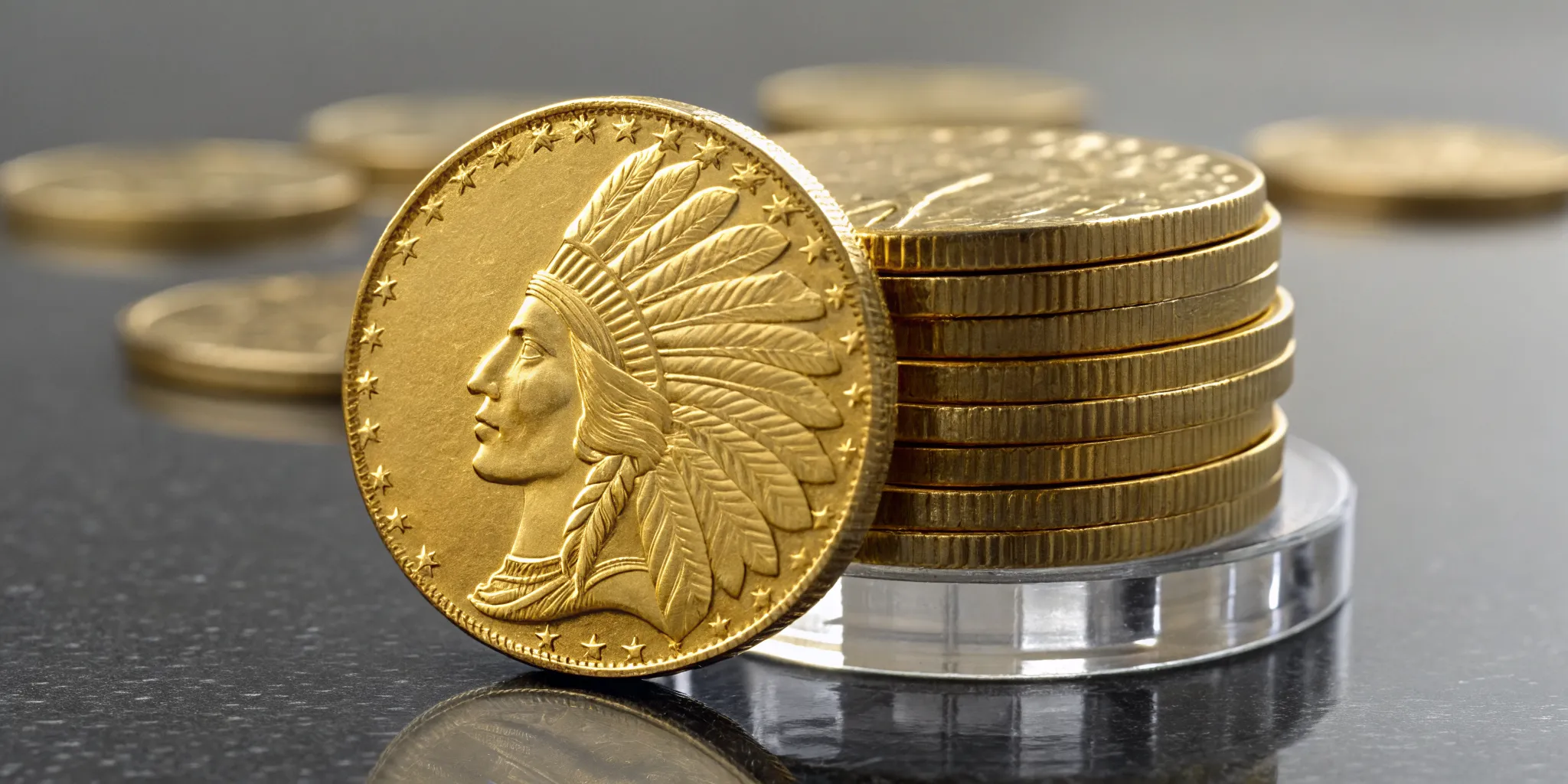
 Not all gold coins are created equal, and this is especially true for the $5 Indian Head series. Its production was bookended by major historical events, from its creation during an artistic renaissance to its end just before the Great Depression. The 1933 government recall led to the melting of countless coins, drastically reducing the surviving population and creating incredible rarity for certain dates. This is why a 1909-O is a numismatic superstar, while a more common year is an accessible piece of history. For collectors, the thrill is in understanding this scarcity and hunting for those key dates that make the indian head gold coin $5 a true treasure.
Key Takeaways
- A Piece of History, Not Just Gold: The coin's value comes from its unique story and revolutionary incuse (sunken) design, making it a historical artifact. This numismatic appeal means its worth often exceeds its base gold value.
- Condition and Rarity Drive Price: A coin's grade, year, and mint mark are the key factors that determine its price above its gold content. Key dates, like the 1909-O, and high-grade uncirculated coins command the highest premiums.
- Buy Certified from a Trusted Source: Protect your investment by purchasing coins certified by top grading services like PCGS or NGC. Partnering with a reputable dealer guarantees authenticity and helps you pay a fair market price.
The Story Behind the $5 Indian Head Gold Coin
The $5 Indian Head gold coin, often called the Half Eagle, is more than just a piece of precious metal. It’s a tangible piece of American history, born from an era of artistic innovation and cut short by economic turmoil. Minted during the "Renaissance of American Coinage," this coin broke with tradition and introduced a design that was both celebrated and criticized. Its story is one of artistic vision, public debate, and historical events that cemented its place as a favorite among collectors. Understanding its journey from the U.S. Mint to the melting pots of the Great Depression reveals why it remains one of the most compelling rare coins for sale on the market.
The Half Eagle's Origins
The story begins in 1908, when the U.S. Mint released the Indian Head $2.50 Quarter Eagle and $5 Half Eagle. Produced until 1929, these coins were revolutionary for one key reason: their incuse design. Unlike traditional coins where the images are raised from the surface, the designs on the Indian Head series are sunken into the coin's field. This was a first for any circulating U.S. coin and remains a unique feature in American numismatics. This bold choice was part of a larger movement, encouraged by President Theodore Roosevelt, to beautify the nation's currency with more artistic and meaningful designs.
Bela Lyon Pratt's Groundbreaking Design
The visionary behind this unique coin was Boston sculptor Bela Lyon Pratt. A student of the renowned Augustus Saint-Gaudens, Pratt was commissioned to create a design that was authentically American. He moved away from the classic Greco-Roman figures and instead featured a realistic portrait of a Native American chief on the obverse. This design is celebrated as one of the most innovative creations from the Renaissance of American Coinage in the early 1900s. Pratt’s work captured a powerful and distinctly American spirit, a quality that our team of experts at Park Avenue Numismatics continues to appreciate and share with collectors.
The Controversy of the Incuse Design
Pratt’s incuse design was not met with universal praise. In fact, it sparked considerable debate. Prominent numismatist Samuel Chapman publicly criticized the coin, arguing that the sunken design would trap dirt and germs, making it unhygienic. Others worried that the recessed features would wear down quickly and that the coins would not stack properly. While these concerns were largely unfounded, the controversy made headlines and created a stir among the public and collecting community. This debate adds a fascinating layer to the coin's history, making it a conversation piece as well as a valuable piece of gold bullion.
From WWI to the 1933 Gold Recall
The production of the $5 Indian Head was directly impacted by major world events. Mintage paused in 1916 due to the economic disruptions of World War I and did not resume until 1929, just before the stock market crash. The coin’s story took another dramatic turn with President Franklin D. Roosevelt's Executive Order 6102 in 1933. This order recalled gold from public hands to combat the Great Depression, leading to the melting of countless gold coins, including many Indian Head Half Eagles. This government action drastically reduced the number of surviving coins, creating the rarity and value we see today and underscoring the importance of holding physical assets, a principle behind our Gold IRA Starter Kit.
What Makes the $5 Indian Head Unique?
The $5 Indian Head Gold Coin isn't just another piece of pre-1933 gold; it's a revolutionary piece of American history captured in metal. When it was first released, its design was unlike anything the public had ever seen from the U.S. Mint. From its striking imagery to its groundbreaking minting technique, several key features make this coin a standout for both collectors and investors. Understanding these details is the first step to appreciating its true value and significance. It’s a coin that tells a story of artistic innovation and a changing American identity, making it one of the most fascinating pieces in all of numismatics.
Obverse: The Native American Chief
The front, or obverse, of the coin is what truly sets it apart. Designed by sculptor Bela Lyon Pratt, it features a stunningly realistic portrait of a Native American chief in a full feathered headdress. This was a radical departure from the traditional Greco-Roman-inspired depictions of Lady Liberty that had graced U.S. coinage for over a century. The design is not of a specific individual but is a composite portrait meant to represent all Native peoples. This powerful and dignified image was the first of its kind on a circulating U.S. coin, marking a significant moment in numismatic art. It’s a design that feels both historic and deeply American, which is why so many collectors seek out these beautiful rare coins for sale.
Reverse: The Perched Eagle
On the reverse, you'll find an equally compelling design: a proud bald eagle. Unlike the flying eagles seen on other coins of the era, this eagle is perched majestically on a bundle of arrows, symbolizing military readiness, and an olive branch, representing peace. This stoic and powerful image complements the obverse perfectly. The inscriptions "UNITED STATES OF AMERICA," "E PLURIBUS UNUM," and "IN GOD WE TRUST" encircle the eagle, with the "FIVE DOLLARS" denomination at the bottom. The composition is balanced and strong, reinforcing the coin's status as a symbol of American strength and sovereignty at the turn of the 20th century.
The Incuse Relief: A First for U.S. Coins
Perhaps the most talked-about feature of the $5 Indian Head is its incuse design. Along with its smaller counterpart, the $2.50 Indian Head, this coin is the only U.S. issue ever minted with a sunken relief. Instead of the images and letters being raised from the coin's surface, they are pressed into it. This technique was highly controversial at the time. Critics worried that the recessed areas would trap dirt and germs, and some even claimed the design lacked artistic merit. However, this unique feature is precisely what makes the coin so intriguing to modern collectors. It gives the coin a distinct feel and appearance that you won't find anywhere else in American numismatics.
Key Specs: Weight, Size, and Gold Content
Beyond its artistry, the $5 Indian Head has tangible specifications that define its intrinsic value. Each coin was struck from 90% gold and 10% copper, a standard alloy used to give the gold durability for circulation. It contains .24187 troy ounces of pure gold and has a diameter of 21.6 mm. These precise measurements are crucial for authentication and provide a solid baseline value tied to the spot price of gold bullion. For investors and collectors, this means the coin holds value both as a precious metal asset and as a rare numismatic item, offering a unique two-in-one appeal for any portfolio.
What Determines a $5 Indian Head's Value?
Figuring out the value of a $5 Indian Head gold coin is more than just checking the price of gold. While its gold content provides a solid baseline, the true value is a blend of several key factors. A coin’s history, condition, and rarity all play a major role in its final price. For collectors and investors, understanding these elements is crucial for making smart decisions. It’s the difference between owning a piece of gold and owning a piece of history. Let's break down what you need to look for.
Gold Spot Price
Every $5 Indian Head contains nearly a quarter-ounce (0.24187 troy ounces) of pure gold. This gives the coin an intrinsic, or melt, value that is directly tied to the daily spot price of gold. Think of this as the coin's price floor; it will always be worth at least its weight in gold. However, because these are historic, pre-1933 coins, their value is rarely limited to just their gold bullion content. The spot price is simply the starting point from which the coin's numismatic, or collectible, value is added. This dual nature makes them a fascinating asset for any portfolio.
Coin Grade and Condition
The physical condition of a coin is one of the most significant factors in its value. Coins are professionally graded on a 70-point scale, with top-tier services like the Professional Coin Grading Service (PCGS) and Numismatic Guaranty Company (NGC) setting the standard. A coin in "Mint State" (MS) condition, meaning it never circulated, will command a much higher price than a worn, circulated one. Graders look at everything from the coin's original luster and the sharpness of its strike to any scratches or marks. The unique incuse design of the Indian Head makes grading especially nuanced, as wear patterns differ from traditionally raised designs.
Rarity by Year and Mint Mark
Not all $5 Indian Heads were created equal. Some years and mint mark combinations are far rarer than others, creating premium values for collectors. The mint mark, a small letter on the reverse, indicates where the coin was made (D for Denver, S for San Francisco, O for New Orleans). Philadelphia-minted coins have no mint mark. The 1909-O, for example, is the only Indian Head Half Eagle from the New Orleans Mint and is a celebrated key date in the series. Other dates, like the 1911-D, are known for being particularly scarce in high grades, making them highly sought after in our inventory of rare coins for sale.
Collector Demand and Market Trends
Like any collectible, the value of a $5 Indian Head is influenced by market demand. These coins are consistently popular with both numismatists who appreciate their history and beauty, and investors who see them as a tangible asset. Their unique incuse design and connection to a pivotal era in American history give them a story that modern bullion lacks. This steady demand from two different types of buyers helps create a stable and active market. As experts with over 35 years of experience, we have a deep understanding of these trends and can help you find the right coin at the right time.
How Much Is a $5 Indian Head Worth?
The value of a $5 Indian Head gold coin can range from just over its gold melt value to tens of thousands of dollars. It all comes down to a combination of its condition, rarity, and collector demand. While the intrinsic gold bullion value provides a solid price floor, the coin's grade and specific mint date are what create its numismatic premium. Whether you're looking to sell a family heirloom or add a key date to your collection, understanding these factors is essential. Let's break down the typical price points you'll encounter.
What to Expect from Circulated Coins
For common-date $5 Indian Heads that show signs of wear from circulation, the value is closely tied to the spot price of gold. Think of this as the baseline value. Most circulated coins from this series typically trade for their intrinsic gold melt value, which generally falls between $1,050 and $1,200, depending on the day's market. While they don't carry a significant numismatic premium, these coins are a fantastic way to own a piece of American history and pre-1933 gold without the high cost of a mint-condition specimen. They are an accessible entry point for new collectors and a solid asset for investors focused on gold content.
Uncirculated and High-Grade Coins
Once you move into uncirculated grades, the value starts to climb significantly. A coin that has never been in circulation retains its original mint luster and sharp details, making it far more desirable to collectors. For common-date coins in certified uncirculated grades like MS-62 to MS-64, prices often range from $1,250 to $3,500. The final price depends on the specific grade assigned by a reputable service like PCGS or NGC, as well as the coin's overall eye appeal. These high-grade examples are where you begin to see a coin's numismatic value truly outpace its melt value, making them a prime target for serious collectors looking for quality rare coins for sale.
Key Dates and Their Premium Values
Beyond condition, the single biggest factor driving a coin's price is its rarity, which is determined by the year and mint mark. These are known as "key dates." While a common-date coin might be worth around $1,200, a rare one in the same condition could be worth thousands more. For example, the 1911-D (minted in Denver) is a well-known semi-key date that carries a substantial premium over more common issues. In high grades, certain key-date $5 Indian Heads can easily sell for tens of thousands of dollars. Identifying these dates is crucial for any serious collector, as they represent the pinnacle of the series and offer the greatest potential for long-term appreciation.
The Most Sought-After Dates: 1909-O and 1929
The undisputed star of the series is the 1909-O. Struck at the New Orleans Mint in its final year of operation, it has a tiny mintage that makes it one of the most desirable U.S. gold coins ever produced. Another top key date is the 1929 Half Eagle. Although 668,000 were minted, the vast majority were melted down following the 1933 Gold Recall, leaving very few for collectors today. Both the 1909-O and 1929 coins are exceptionally rare in any condition and command extremely high prices at auction. Acquiring one is a major achievement, and it's vital to work with a dealer who has the expertise to source and authenticate such treasures, which is a commitment we stand by in our company history.
How to Authenticate a $5 Indian Head Gold Coin
The unique incuse design of the $5 Indian Head can make authentication a little tricky, even for experienced collectors. Because the details are pressed into the coin rather than raised, wear patterns and counterfeit indicators can present differently than on other coins. While the final word on authenticity and grade should always come from a professional, you can perform several initial checks yourself.
Knowing what to look for is the first step in protecting your investment and ensuring you’re adding a genuine piece of history to your collection. From its physical measurements to the subtle signs of a fake, a careful eye can spot many potential issues. These steps will help you assess any $5 Indian Head you're considering, giving you confidence in your purchase. When you work with a trusted dealer, you gain a partner who performs these checks meticulously on every coin they handle.
Check the Physical Specs
The first and most straightforward test for any coin is to check its vital statistics. A genuine $5 Indian Head Gold Coin has very specific measurements. It should weigh 8.36 grams and have a diameter of 21.6 mm. You’ll need a precise digital scale (one that measures to at least two decimal places) and a set of calipers to verify these specs accurately. These are essential tools for any serious collector. If a coin is significantly over or under these measurements, it’s an immediate red flag. Counterfeits, especially those made from base metals and plated with gold, rarely match the correct weight and density of a genuine gold bullion coin.
The Gold Standard in Grading: PCGS and NGC
For ultimate peace of mind, nothing beats professional certification. The two most respected names in the industry are the Professional Coin Grading Service (PCGS) and the Numismatic Guaranty Corporation (NGC). These organizations employ teams of experts who authenticate and grade coins, then seal them in tamper-evident holders, often called "slabs." Each slab includes the coin’s grade, key details, and a unique serial number for verification. Buying a coin that has already been graded by PCGS or NGC is the safest way to guarantee its authenticity and condition. When you browse collections of rare coins for sale, you'll find that the most valuable pieces are nearly always certified by one of these top-tier services.
Look for Common Signs of Wear and Damage
Even genuine coins show their age differently. It’s important to distinguish between honest circulation wear and damage that could lower a coin's value. On the $5 Indian Head, wear typically appears first on the highest points of the design, such as the Native American’s cheekbone and the eagle’s shoulder and wing tips. A heavily circulated coin might be graded as "Good," showing significant wear, scratches, and even rim dings. Also, be on the lookout for signs of cleaning. A coin that has been harshly cleaned will often have an unnatural luster and may show fine, parallel scratches across its surface. Cleaning can severely diminish a coin's numismatic value, so this is a critical detail to check.
Watch for These Red Flags When Buying
Counterfeiters have gotten better over the years, but they often make small mistakes that you can catch. One common red flag is inconsistent wear. For example, if the coin’s face looks soft and worn but the reeded edge is sharp and perfectly defined, it could be a cast fake. The details on fakes can also appear "mushy" or less distinct than on a genuine, struck coin. Pay close attention to the lettering and date; the font should be crisp and match known genuine examples. An off-color or unusually shiny surface can also indicate a forgery or plating. When in doubt, it’s always best to work with an expert who has handled thousands of these coins and can spot inconsistencies immediately.
Common Myths About the $5 Indian Head Gold Coin
When a coin has as much history as the $5 Indian Head, myths and misconceptions are bound to follow. For collectors and investors, separating fact from fiction is key to making smart decisions. Let's clear up a few of the most common misunderstandings about this iconic piece of American gold.
Myth: "All Years Are Created Equal"
It’s easy to assume that one $5 Indian Head is just like another, but that couldn’t be further from the truth. These coins were minted from 1908 to 1929, and their rarity varies dramatically by year and mint mark. For example, some dates had much lower mintages than others, making them harder to find today. The 1909-O, minted in New Orleans, is a perfect example. It's often called the "star of the series and one of the most desirable U.S. gold coins." This single key date highlights why you should always check the year and mint mark before assessing a coin's value.
Myth: "It's Only Worth Its Gold Content"
While the coin’s intrinsic gold value provides a solid price floor, its true worth often goes far beyond that. These coins are not just pieces of gold bullion; they are historical artifacts. As one source notes, "these coins are very popular with collectors and investors because they are rare and have a lot of history." This numismatic premium, driven by collector demand, historical significance, and rarity, can make the coin’s market price significantly higher than its melt value. It’s the story and scarcity that create the additional value that collectors prize.
Myth: "High-Grade Coins Are Easy to Find"
If you’re just starting your collection, you might think that finding a pristine $5 Indian Head is a simple task. In reality, locating high-grade examples is a real challenge. Many of these coins saw heavy circulation, which means they show signs of wear and tear. The rarest coins in the series, like the 1909-O, are exceptionally difficult to find in top condition. In fact, "the 1909-O Indian Head Half Eagle is the rarest of the series and a standout among pre-1933 gold coins." This scarcity is precisely why high-grade specimens command such a premium among serious collectors.
Myth: "The Incuse Design Makes Grading Easy"
The coin's incuse, or sunken, design is one of its most defining features, but it also complicates the grading process. Unlike traditional coins with raised designs, the highest points of the Indian Head are the flat fields, while the design elements are recessed. This means it wears differently, and assessing its condition requires a trained eye. It's crucial to "get coins graded by experts like NGC and PCGS to know their true condition." Relying on professional grading services ensures you have an accurate understanding of a coin's quality and, ultimately, its value.
Is the $5 Indian Head Gold Coin a Good Investment?
When you’re considering the $5 Indian Head, it’s helpful to see it as more than just a piece of gold. Its investment potential is a unique blend of its intrinsic metal value and its status as a historical artifact. This combination is what makes pre-1933 gold coins a distinct asset class, offering a different kind of opportunity compared to modern bullion. For investors and collectors alike, understanding these dual qualities is the key to appreciating the coin’s true worth and its place in a diversified portfolio. Let's break down what makes this coin a compelling choice.
Numismatic Value vs. Bullion Value
When you're looking at a $5 Indian Head, you're really looking at two different sources of value rolled into one. First, there's its bullion value, which is the base value of the gold it contains. Like any piece of gold bullion, its worth will fluctuate with the daily spot price of gold. This gives the coin a solid floor value.
But what makes these coins truly interesting for investors is their numismatic value. Because these are historical, pre-1933 coins, their value goes far beyond their weight in gold. Factors like the coin's condition, its specific year, and the mint where it was produced all contribute to its collectibility. A common date in average condition will be closer to its gold value, while a rare date in pristine shape can be worth many times more.
The $5 Indian Head as a Dual-Purpose Asset
The $5 Indian Head is a fantastic dual-purpose asset, making it a smart addition for both collectors and precious metals investors. On one hand, it acts as a reliable store of value, anchored by nearly a quarter-ounce of pure gold. This provides the same security against inflation and economic uncertainty that you get from standard gold bars or modern bullion coins.
On the other hand, it offers significant upside potential as a collectible. Unlike a simple gold bar, the coin’s rarity and historical importance make it highly sought after. This demand can drive its value up independently of the gold market. For anyone looking to add variety to their gold holdings, these rare coins for sale offer a compelling blend of tangible wealth and historical artistry that modern bullion just can't match.
How It Compares to Other Pre-1933 Gold Coins
Within the world of pre-1933 U.S. gold, the $5 Indian Head holds a special place. While all historical gold coins offer a mix of bullion and numismatic value, the Indian Head series stands out for its revolutionary incuse design. This unique feature, where the design is sunken into the coin's surface, sets it apart from contemporaries like the Liberty Head series.
Pre-1933 gold coins generally provide an ideal mix of stability and growth potential for those looking beyond modern bullion. The $5 Indian Head is a prime example. Certain dates, like the 1909-O, are true numismatic stars and command significant premiums due to their low mintage and high demand. This makes the series not just a piece of history, but a dynamic asset with varying levels of rarity and investment potential.
Add Pre-1933 Gold to Your Portfolio
If you appreciate history and artistry as much as you value a strong portfolio, adding pre-1933 gold like the $5 Indian Head is a natural fit. These coins are for investors who want to diversify their precious metals holdings with assets that have a story to tell. They are tangible pieces of American history that offer a unique combination of beauty, rarity, and intrinsic worth.
Whether you are just starting or are a seasoned collector, incorporating these coins can strengthen your portfolio with rare items that have lasting appeal. For those looking to secure their retirement with tangible assets, some pre-1933 coins may even be eligible for a self-directed IRA. Exploring a Gold IRA starter kit can provide valuable insights into how these historical assets can fit into your long-term financial strategy.
Where to Buy $5 Indian Head Gold Coins
Once you decide to add a $5 Indian Head to your collection, the next step is finding the right place to buy it. These classic coins are available through major online precious metal dealers and specialized rare coin auction houses. The key is to find a source you can trust to provide authentic, accurately graded coins at a fair price. Your experience will be much better if you work with a seller who is transparent and knowledgeable. Let's look at a few of the best options for acquiring these beautiful pieces of American history.
Park Avenue Numismatics
As specialists in high-quality rare coins, we offer a curated selection of $5 Indian Head gold pieces. With over 35 years of experience, our team helps collectors and investors find the exact coin that fits their portfolio goals. We pride ourselves on our extensive inventory of rare coins for sale, each one vetted for authenticity and quality. When you work with us, you get more than just a coin; you get the guidance of seasoned experts dedicated to helping you make a confident purchase. Our A+ rating with the Better Business Bureau reflects our long-standing commitment to client satisfaction and trust.
Reputable Online Dealers
Beyond our own inventory, the market includes numerous online dealers. The best ones provide a wide selection of coins from different years, such as 1908 through 1916 and beyond. You'll find that they offer coins in various conditions, or "grades," like MS-65 (Mint State 65), MS-64, and AU (Almost Uncirculated). A trustworthy dealer will always offer high-resolution images and detailed descriptions for each coin. Before buying, take a moment to research the dealer’s reputation, read customer reviews, and understand their return policies. This due diligence is essential when purchasing valuable coins online.
Auction Houses and Marketplaces
Auction houses and online marketplaces can be exciting places to hunt for $5 Indian Head coins, especially if you're searching for a specific date or a high-grade specimen. You can sometimes find unique opportunities, but this route requires a bit more homework. Before placing a bid, it’s wise to research recent sales prices for similar coins. You can view live pricing and rarity data using resources like the PCGS Price Guide to get a sense of a coin's market value. Be mindful of buyer's premiums at auctions, which can add a significant percentage to the final hammer price.
Buy Safely and with Confidence
No matter where you decide to buy, your top priority should be authenticity. The best way to ensure you're getting a genuine coin is to purchase one that has been certified by a leading third-party grading service like PCGS or NGC. These services employ experts who carefully examine each coin, assessing its wear, luster, and any flaws to assign an official grade. This certification guarantees the coin's authenticity and condition. Working with an established dealer who has a deep understanding of numismatics is your best defense. Our long history is built on a foundation of trust and expertise, ensuring you can buy with complete confidence.
Get the Best Price on a $5 Indian Head
Finding a $5 Indian Head for your collection is exciting, but securing it at a fair price is what makes for a truly great acquisition. While the market determines the baseline value, a few smart strategies can help you get the most for your money. It’s not about finding a cheap coin, but about making a wise purchase. By understanding the market, considering your buying strategy, and choosing the right partner, you can add this historic piece to your collection with confidence.
Time Your Purchase with Gold Prices
The value of a $5 Indian Head is a tale of two parts: its numismatic value and its intrinsic gold value. Because these are historic, pre-1933 coins, their price is tied to both their rarity and condition as a collectible and the current market price of gold. While you can't control a coin's rarity, you can pay attention to the gold market. When the spot price of gold bullion is lower, it can soften the overall price of common-date Indian Heads. For investors and collectors alike, watching these trends can present opportunities to buy when the underlying metal value offers a more attractive entry point for these beautiful coins.
Explore Bulk Purchase Options
If you're looking to acquire more than one $5 Indian Head or are building a larger portfolio of pre-1933 gold, buying several coins at once can be a smart move. Many dealers are able to offer better pricing or lower premiums when you purchase in larger quantities. This is especially true for more common-date circulated coins where the price is closer to the gold melt value. When you're ready to buy, don't hesitate to inquire about pricing for multiple coins or even full rolls. You might find that you can build your collection of rare coins for sale more efficiently and cost-effectively this way.
Work With a Trusted Dealer
This is the most important step in getting a fair price. A reputable dealer provides more than just a coin; they offer expertise, a guarantee of authenticity, and transparent pricing. A trusted expert will have a deep understanding of grading, market trends, and the true value of the coin you're considering. They can guide you to a piece that fits your goals and budget, ensuring you don't overpay. With over 35 years of experience and an A+ BBB rating, our team is committed to building long-term relationships based on trust. When you work with us, you can be sure you're getting a genuine coin at a fair market value.
Related Articles
- $5 INDIAN Gold Half Eagle MS-65 PCGS/NGC
- $5 INDIAN Gold Half Eagle MS-62 PCGS/NGC
- $5 INDIAN Gold Half Eagle MS-63 PCGS/NGC
- $5 INDIAN Gold Half Eagle XF PCGS/NGC
- $2.50 Gold Indian Head Quarter Eagle
Frequently Asked Questions
Why is the design on the $5 Indian Head sunken in? That unique sunken design, called "incuse," was a revolutionary artistic choice at the time. The sculptor, Bela Lyon Pratt, wanted to create something different from the traditional raised designs on other coins. While some people worried it would trap dirt, the technique was part of a movement to make American currency more beautiful and artistic. Today, that incuse feature is exactly what makes the coin so distinct and sought after by collectors.
I found a $5 Indian Head coin. How do I know if it's valuable? That's a great find. Its value comes from two main things: its gold content and its collector (or numismatic) value. The gold gives it a solid base price that changes with the market. The real potential for higher value, however, comes from its condition and its rarity. A coin in pristine, uncirculated condition is worth more than a worn one, and certain years and mint marks are much rarer than others. The best way to know for sure is to have it evaluated by a professional.
Is it better to invest in a $5 Indian Head or just a regular gold bar? This depends on your goals. A gold bar's value is tied directly to the spot price of gold, making it a straightforward precious metal investment. The $5 Indian Head offers that same foundation since it contains nearly a quarter ounce of gold, but it also has the potential for growth as a collectible. Its value can increase due to rarity and collector demand, independent of the gold market. It's an asset that holds both intrinsic metal value and historical significance.
What's the difference between a common coin and a "key date"? A common coin is one from a year where millions were produced, making them relatively easy to find today. A "key date" refers to a specific year and mint mark combination that had a very low mintage or a low survival rate, often because many were melted down. For this series, the 1909-O is the most famous key date. These rare coins are much harder to find and are therefore more valuable to collectors building a complete set.
What's the safest way to buy one of these coins without getting a fake? The best way to ensure authenticity is to buy a coin that has been professionally graded and sealed in a protective holder by a top-tier service like PCGS or NGC. This guarantees the coin is genuine and its condition has been verified by experts. The other essential step is to purchase from a reputable dealer with a long history and deep expertise in rare coins. A trusted dealer will stand behind every coin they sell.





