
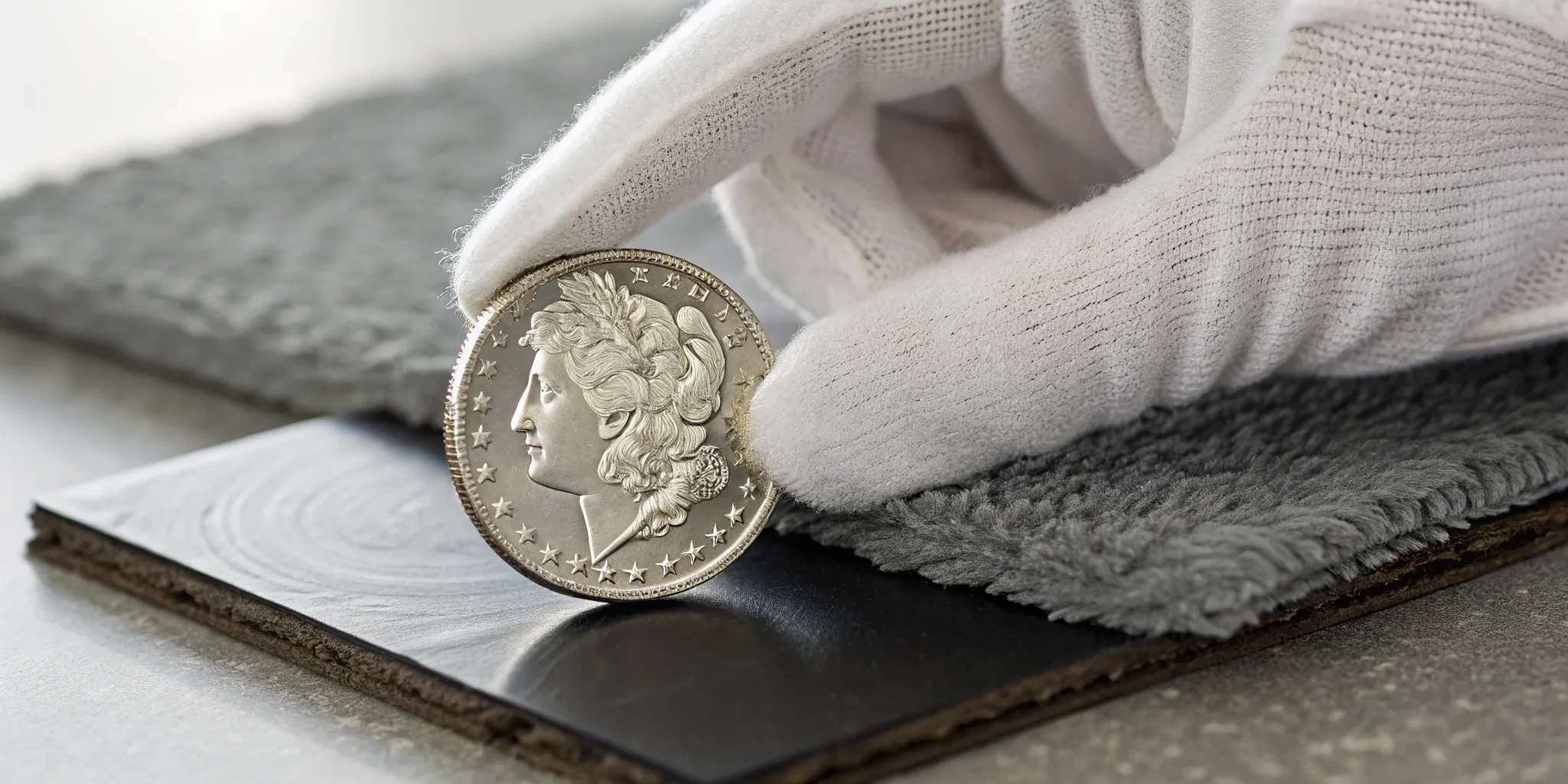
To spot a fake, it helps to understand how one is made. Counterfeiters rely on shortcuts, and every shortcut leaves a clue for the careful observer. They might get the weight right but fail on the metallic composition, or they might replicate the design but miss the subtle details in the strike. This guide teaches you how to think like a detective and find those clues. We’ll explore the common methods used to create forgeries and show you exactly what to look for. By understanding the counterfeiter’s process, you’ll gain a much deeper insight into how to tell if a Morgan Silver Dollar is real.
Key Takeaways
- Start with the Physicals: Before you even look at the design, check the coin's core specs. A genuine Morgan dollar has a specific weight (26.73g) and diameter (38.1mm), is not magnetic, and produces a clear, bell-like ring when tapped.
- Learn the Visual Red Flags: Many fakes fail a close visual inspection. Compare your coin to a known genuine example, looking for blurry details, a distorted portrait of Lady Liberty, or incorrect fonts on the date and mintmark.
- Protect Your Investment with Expert Verification: For high-value coins or any remaining doubt, don't guess. Using a professional grading service like PCGS or NGC provides definitive authentication, while building a relationship with a trusted dealer offers ongoing expert guidance and security.
How to Tell if a Morgan Silver Dollar is Real
When you're holding a potential Morgan Silver Dollar, you want to confirm it's the real deal. Counterfeits have become more sophisticated, but many fakes fail basic authentication tests. Before you even look at the finer details of the design, you can check a few key physical characteristics. These initial steps are your first line of defense and can often expose a fake right away. Let's walk through the three most fundamental checks you can perform on any rare coins for sale.
Check the Official Specs: Weight, Diameter, and Thickness
First, grab a precise digital scale and a set of calipers. A genuine Morgan Silver Dollar has very specific measurements. It should weigh exactly 26.73 grams and have a diameter of 38.1 millimeters. While a coin that has seen some circulation might lose a tiny bit of weight from wear, it shouldn't be more than half a gram off. Many counterfeit coins are significantly underweight, often falling in the 18 to 22-gram range. If the weight or diameter is off, you have a major red flag. The coin's thickness should also be a consistent 2.4 millimeters. Comparing these simple numbers is one of the fastest ways to spot a fake.
Verify the Metal Composition
Next, let's talk about what the coin is made of. Authentic Morgan dollars consist of 90% silver and 10% copper. Because of this composition, a real Morgan dollar is not magnetic. You can perform a simple test with a strong magnet. If the magnet sticks to your coin, it’s definitely a fake. However, be aware that this isn't a foolproof method on its own. Some counterfeiters use non-magnetic metals to try and fool this test. Still, it’s an essential check. Understanding the properties of silver bullion can give you a better feel for how a genuine coin should look and behave.
Inspect the Edge Reeding
Now, turn the coin on its side and look closely at the edge. A genuine Morgan dollar has a reeded edge, which means it has small, evenly spaced vertical grooves all the way around. On an authentic coin, these reeds are crisp and well-defined. Counterfeits often get this detail wrong. You might see edges that are smooth, have uneven or mushy-looking reeds, or show a seam where two halves of a fake coin were joined together. Using a simple 10x magnifying glass can help you get a much better view of the reeding and spot any inconsistencies that point to a forgery.
What Visual Clues Expose a Fake?
After you’ve confirmed a coin’s basic specifications, it’s time to train your eye on the finer points. Counterfeiters have gotten better over the years, but they often slip up on the small details that define a genuine Morgan Silver Dollar. Learning to spot these inconsistencies is one of the most valuable skills you can develop as a collector. A fake coin just doesn't feel right to a trained eye, and that intuition is built by knowing exactly what to look for.
Authentic Morgan Dollars were struck with immense pressure, creating a crisp, uniform look that’s difficult to replicate without original dies. Fakes, on the other hand, are often cast from a mold, which results in a loss of detail and other tell-tale flaws. By closely examining the coin's design clarity, key facial features, mintmark, surface texture, and date, you can often identify a counterfeit long before you need to bring out any special equipment. Let's walk through the five most common visual red flags.
Assess the Design's Clarity and Strike
One of the biggest giveaways of a fake Morgan is a soft, blurry, or indistinct design. Genuine coins are "struck," not "cast." This means a solid metal blank was pressed between two high-pressure dies, forcing the metal into every tiny crevice of the design. This process creates incredibly sharp, clear details.
Many counterfeits are made by casting, where molten metal is poured into a mold. This cheaper method can’t replicate the fine details of a struck coin. Look for a general lack of sharpness in the design elements, especially in complex areas like the eagle's feathers or the cotton bolls in the wreath. If the details look mushy or washed out, you have a major red flag.
Examine Liberty's Face and Hair Details
Lady Liberty’s portrait is the star of the show, and it’s a place where counterfeiters frequently stumble. The specific contours of her eye, nose, lips, and chin are very precise on a real Morgan dollar. Fakes often feature a face that looks slightly off, with a cartoonish or distorted expression.
I recommend keeping a high-resolution photo of a certified, authentic Morgan dollar on hand for comparison. Pay close attention to the delicate strands of hair above Liberty’s forehead and behind her ear. On a genuine coin, these details are fine and distinct. On a fake, the hair often appears as a muddled, indistinct mass. If Liberty’s features don’t match up exactly with a known genuine example, it’s best to be suspicious.
Check the Mintmark's Placement and Font
The mintmark, a small letter indicating where the coin was made (like "S" for San Francisco or "CC" for Carson City), is another critical checkpoint. On authentic Morgans, these mintmarks were punched into the die by hand, but they still followed a consistent style.
Real mintmarks typically use a "serif-style" font, meaning the letters have small "feet" at the ends of the strokes. Many fakes use a simple, blocky font that looks out of place. The strike quality is also important. A genuine mintmark should be clear and well-struck, though its appearance can vary. A fake mintmark might be blurry, weakly struck, or look like it was glued on. Its placement should also be precise; compare it to photos of genuine coins to be sure.
Look for Surface and Casting Red Flags
The overall surface of the coin can tell you a lot about its origin. As we covered, authentic coins were struck under extreme pressure, which results in flawlessly smooth, almost mirror-like surfaces in the open areas, known as the fields. Even on a worn coin, these fields should remain smooth.
A cast counterfeit, however, will often have a different texture. As the molten metal cools in the mold, tiny bubbles can form, leaving behind small pits, pores, or a sandy-looking grain on the coin's surface. Run your finger over the field; if it feels rough or gritty, you are likely holding a cast fake. Another red flag is a seam or line around the edge of the coin, which can indicate it was made from two halves fused together.
Confirm the Date and Watch for Problem Years
This is one of the simplest yet most effective checks. Morgan Silver Dollars were only minted during specific years: 1878 to 1904, and again for a single year in 1921. If you see a Morgan with a date like "1865" or "1915," you can dismiss it as a fake immediately (the only exception being the special 2021 commemorative issue).
Also, be aware that some dates are much rarer than others, making them popular targets for counterfeiters. For example, an 1893-S Morgan is a major rarity. If you find one for a price that seems too good to be true, it almost certainly is. When evaluating these key-date rare coins for sale, an extra layer of scrutiny is always a wise decision.
Easy Authenticity Tests You Can Do at Home
While nothing replaces a professional appraisal, you can perform a few simple checks at home to quickly identify potential counterfeits. These tests are great for an initial assessment and can help you spot the most obvious fakes before you invest further time or money. Think of them as your first line of defense in building a genuine collection. Combining two or more of these methods will give you a more reliable result, as counterfeiters can sometimes create fakes that pass a single test but fail when scrutinized more closely.
The Weight and Caliper Test
One of the most reliable initial checks involves measuring the coin’s specifications. A genuine Morgan silver dollar should weigh exactly 26.73 grams and measure 38.1 mm in diameter. Use a precise digital scale and a set of calipers for this test. While a heavily circulated coin might weigh slightly less, down to around 26.33 grams, any piece that is significantly lighter or heavier is a major red flag. Fakes are often made from cheaper base metals that don't match silver's density, forcing counterfeiters to alter the coin's thickness or diameter to achieve the correct weight. You can browse our collection of rare coins for sale to see authenticated examples.
The Magnet Test
This is a straightforward test that requires a strong magnet, preferably a rare-earth magnet. Real silver is not magnetic, so if your Morgan dollar sticks to the magnet, you can be almost certain it’s a fake. Simply slide the magnet over the coin's surface; a genuine silver coin will show no reaction. However, keep in mind that this test isn't foolproof. Some counterfeiters use non-magnetic metals like aluminum or copper, which will also pass the magnet test. That’s why it’s essential to use this method in combination with other checks. The properties of authentic silver bullion are consistent, and magnetism is not one of them.
The "Ring" Test
An authentic silver coin produces a distinct and beautiful sound. To perform the ring test, carefully balance the Morgan dollar on the tip of your finger and gently tap its edge with another coin. A genuine silver coin will emit a high-pitched, bell-like ring that sustains for a couple of seconds. In contrast, a counterfeit made from base metals will produce a dull, short thud with no resonance. For those who are more tech-inclined, you can even use an app to analyze the sound frequency. This auditory clue is a classic method used by collectors for generations to verify authenticity.
The Ice Test
Silver has excellent thermal conductivity, a property you can use for a quick and surprising test. Place an ice cube directly on the surface of the Morgan dollar and observe. If the coin is genuine silver, the ice will begin to melt almost immediately, as if it were placed on a warm surface. The silver rapidly pulls heat from the ice, causing it to melt much faster than it would on a counterfeit coin made from less conductive metals like steel or zinc. This simple comparison can give you a strong indication of the coin's metallic composition and is easy for anyone to try.
How Counterfeiters Create Fakes
To spot a fake, it helps to think like a counterfeiter. Understanding their common methods and shortcuts is one of the best ways to protect your collection. They rely on a few key techniques to create convincing copies, but each method leaves behind telltale signs for the careful observer. From the way the coin is made to the colors on its surface, knowing what to look for can make all the difference.
Distinguish Between Cast and Plated Fakes
Many counterfeit Morgan Dollars are created using a casting process, which is very different from how the U.S. Mint strikes genuine coins. A real coin is struck with immense pressure between two dies, resulting in sharp, crisp details. Cast fakes, on the other hand, are made by pouring molten metal into a mold. This process often leaves behind small imperfections like a grainy or pockmarked surface, soft or blurry lettering, and a lack of fine detail in Liberty’s hair or the eagle’s feathers. You might also see a seam around the edge where the two halves of the mold met. When you examine our inventory of rare coins for sale, you'll notice the sharp, defined features that are a hallmark of authenticity.
Spot Altered Dates and Mintmarks
A more deceptive tactic is altering a common Morgan Dollar to make it look like a rare, key-date issue. For example, a counterfeiter might try to change an "1889" to an "1893" or add a "CC" mintmark to a coin minted in Philadelphia (which has no mintmark). These alterations are often detectable under magnification. Look for inconsistencies in the font or size of the numbers in the date. An altered mintmark might look "pasted on" or have a different level of toning or wear than the surrounding area. Always have a reliable reference guide handy to confirm that the mintmark on your coin is correct for its year of issue.
Beware of Artificial Toning and "Too Perfect" Surfaces
Toning, the natural coloration a silver coin acquires over time, can be beautiful and even add value. Counterfeiters know this, so they often try to fake it. Artificial toning usually looks wrong to a trained eye. It might appear as splotchy, unnatural colors like deep purple or electric blue that don't blend smoothly. A big red flag is when the toning sits on top of the coin's highest points but is absent from the protected crevices, which is the opposite of how natural toning typically develops. When you look at genuine silver bullion, you see its natural, untoned state, which provides a good baseline for understanding how silver should look before it ages.
Understand the Risks of Buying Online
The internet has made coin collecting more accessible, but it also presents new risks. It's easy for a seller to use misleading photos, edit out flaws, or even show you a picture of a completely different coin. The coin that arrives in the mail might not be the one you thought you were buying. This is why your choice of dealer is so important. Always buy from a reputable source with a long track record of integrity and expertise. Learning more about us and our decades of experience can give you the confidence that you're working with a trusted partner in the numismatic community, ensuring you get exactly what you paid for.
Advanced Authentication for the Serious Collector
When your collection grows in value, you need more than a hunch to feel confident in a coin's authenticity. The simple at-home tests are excellent for a first pass, but for high-value Morgan Dollars, it’s wise to adopt the methods used by professionals. These advanced techniques provide a much higher degree of certainty and can help you definitively identify fakes without causing any harm to your coins.
Investing in specialized tools might seem like a big step, but for a serious collector, it’s a practical way to protect your portfolio. Think of it as upgrading your toolkit to match the quality of your collection. These methods move beyond simple observation and into scientific analysis, giving you concrete data to confirm you’re holding the real deal. By learning these techniques, you can evaluate potential purchases with the same critical eye as an expert dealer.
Use a Precious Metal Verifier
If you’re serious about collecting, a precious metal verifier is one of the best tools you can own. Professional dealers often use a device like a Sigma Metalytics verifier, which sends an electromagnetic current through the coin. This allows the machine to read the metal’s composition all the way to the core, confirming if it matches the signature of genuine silver. The best part is that this process is completely non-destructive and won’t leave a single mark on your coin. It’s a fast, reliable way to get a definitive answer, especially when you’re considering adding high-value rare coins for sale to your collection.
Perform the Specific Gravity Test
Another highly accurate method is the specific gravity test, which is a fancy way of saying you’re measuring the coin’s density. Every metal has a unique density, and pure silver’s is 10.49 g/cm³. If a coin is made of a different metal, its density will be different. This test involves weighing the coin in the air and then weighing it again while it's submerged in water. Using a simple formula with those two numbers, you can calculate its specific gravity. If the result isn't extremely close to 10.49, you know you’re not dealing with authentic silver bullion. It’s a bit more involved, but it’s a classic, time-tested way to expose fakes.
Get a Closer Look with Digital Microscopy
A jeweler's loupe is a great start, but a digital microscope takes your inspection to a whole new level. By connecting a microscope to your computer screen, you can magnify the coin’s tiniest details and spot imperfections the naked eye would miss. Under high magnification, the mushy, weak details of a cast fake become glaringly obvious. Pay close attention to the reeding on the coin’s edge; fakes often have uneven reeds or a faint seam left over from a mold. This level of scrutiny requires a trained eye, which is a skill our team has developed over decades of experience you can read about on our About Us page.
Why Weight Isn't the Only Factor
While checking a coin's weight and dimensions is a fundamental step, you should never rely on it alone. Modern counterfeiters are sophisticated. They often use base metal alloys that are specifically designed to mimic the weight and size of a genuine silver coin. A fake might hit the exact weight on your scale but still be made of worthless metal. That’s why weight is just one data point in a larger investigation. A comprehensive evaluation combines weight, measurements, visual inspection, and metal verification. This principle applies whether you're examining a Morgan Dollar or a piece of gold bullion; a single test is never enough to be certain.
How Does Grading Affect Your Coin's Value?
Once you've confirmed your Morgan Silver Dollar is authentic, the next question is always, "What's it worth?" The answer hinges almost entirely on its grade. Coin grading is simply a way to describe a coin's physical condition. Experts use a standardized system called the Sheldon Scale, which runs from 1 (Poor) to 70 (Mint State Perfect). A higher number means the coin has fewer imperfections, like scratches or wear, and retains more of its original mint luster. This grade provides a universal language for determining a coin's quality.
The difference in value between grades can be staggering. For example, a common-date Morgan Dollar in a respectable MS-65 (Mint State) grade might be worth a few hundred dollars. That same coin in a near-perfect MS-69 grade could be worth thousands. But grade isn't the only factor. Rarity and collector demand are just as important. A Morgan from a rare year or mint, like the 1893-S, is incredibly valuable even in lower grades, while a common date needs a very high grade to command a premium price. You can see this interplay between grade and rarity across our collection of rare coins for sale.
This is why professional grading is so critical. Having your coin authenticated and graded by a top-tier service like the Professional Coin Grading Service (PCGS) or Numismatic Guaranty Company (NGC) provides a universally accepted assessment of its quality and authenticity. This certification makes the coin much easier to sell and often increases its value. Conversely, anything that harms the coin's surface will drastically lower its grade and price. Harshly cleaning a coin, for instance, can strip its natural patina and leave microscopic scratches, potentially cutting its value by 90% or more. It’s a key reason why working with a trusted dealer who understands these nuances is so important for both new and seasoned collectors.
Still Not Sure? Here's Where to Get an Expert Opinion
You’ve weighed your Morgan Dollar, checked it with a magnet, and scrutinized every detail under a magnifying glass. But if you’re still feeling uncertain, that’s completely normal. Distinguishing a high-quality counterfeit from a genuine coin can be incredibly difficult, and sometimes you just need a professional opinion to be sure. When your own tests aren't enough, turning to an expert is the smartest move you can make to protect your investment and give yourself peace of mind. Here are the two best avenues for getting a definitive answer on your coin's authenticity.
Turn to Professional Grading Services (PCGS & NGC)
For the highest level of assurance, submitting your coin to a third-party grading service like the Professional Coin Grading Service (PCGS) or the Numismatic Guaranty Corporation (NGC) is the industry standard. These organizations provide an unbiased, expert opinion on your coin's authenticity and condition. If your coin is genuine, they will encapsulate it in a secure, sonically sealed holder with a label detailing its grade and unique certification number. This process not only confirms authenticity but also makes the coin easier to trade or sell in the future. Before sending it off, you might also consider visiting a local coin shop. Many professional dealers use a Sigma Metalytics machine, which can verify the metal's core composition without causing any damage.
Partner with a Trusted Dealer Like Park Avenue Numismatics
Building a relationship with a reputable coin dealer is one of the best strategies for any serious collector. A trustworthy expert can be an invaluable resource for authenticating coins and offering advice as you build your collection. The simplest way to avoid fakes is to buy from a coin dealer you trust, one with deep knowledge and a solid reputation. With over 35 years of experience, our team at Park Avenue Numismatics has the expertise to identify even the most deceptive counterfeits. We are committed to helping collectors and investors make confident decisions. When you partner with us, you gain access to a team dedicated to ensuring the authenticity and quality of every coin.
Related Articles
- Buy & Sell Rare Morgan Silver Dollars - Park Avenue Numismatics
- 1885-O Morgan Dollar MS67 NGC CAC Bressett Signed
- 1887 Morgan Dollar MS63 NGC
- 1897 Morgan Dollar MS63 NGC
- 1885-S Morgan Dollar MS63 PCGS
Frequently Asked Questions
What if my coin passes the weight test but still looks suspicious? This is a common scenario, as modern counterfeiters have become very good at creating fakes with the correct weight and dimensions. If the numbers check out but your gut tells you something is off, trust that instinct. Your next step should be a close visual inspection. Look for a soft or blurry appearance in the design, especially in Liberty’s hair or the eagle’s feathers. A genuine coin will have sharp, clear details from being struck under high pressure, while many fakes have a slightly grainy or pitted surface from being cast in a mold.
Is it worth the cost to have a common-date Morgan dollar professionally graded? That really depends on its condition. For a common-date Morgan that shows obvious signs of wear from circulation, the cost of professional grading will likely be more than the value it adds. However, if you have a common-date coin that appears to be in pristine, uncirculated condition with great eye appeal, getting it graded could be a very smart move. A high mint state grade can turn a common coin into a valuable asset. If you're unsure, a trusted dealer can give you an initial opinion on whether grading is a worthwhile investment.
My coin looks old and dirty. Can I clean it to get a better look at the details? Please don't. This is one of the most common and costly mistakes a new collector can make. Cleaning a coin, no matter how gently, will permanently damage its surface. It strips away the natural toning (patina) that develops over time and leaves behind tiny, hairline scratches. Experienced collectors prize original surfaces, and a cleaned coin is almost always worth significantly less than an untouched one, sometimes losing up to 90% of its value. It's always better to leave the coin as it is.
Why can't I just rely on the magnet test to check for silver? The magnet test is a great first step, but it isn't foolproof. It’s true that a genuine silver coin is not magnetic, so if a magnet sticks, you know you have a fake. The problem is that many counterfeiters use other non-magnetic metals, like copper or aluminum, to create their fakes. A coin made of these materials will pass the magnet test but is still worthless. This is why it's so important to use a combination of tests, including checking the weight, dimensions, and sound, to get a more complete picture of the coin's authenticity.
I'm new to collecting. What's the safest way to buy my first Morgan dollar? The single best way to ensure you are buying an authentic coin is to work with a reputable and established coin dealer. While it can be tempting to hunt for bargains on auction sites or from private sellers, the risk of encountering a counterfeit is much higher. A professional dealer guarantees the authenticity of their inventory and has the expertise to answer your questions. Building a relationship with a trusted expert gives you peace of mind and provides an invaluable resource as you grow your collection.





