
Understanding how to invest in gold starts with deciding what kind of exposure you want and what practical responsibilities come with owning physical metal. Bullion coins and bars are common choices, but their premiums, resale options, storage needs, and authentication questions are not identical. This guide explains the trade-offs so you can research carefully before making a decision.
Call 1-888-419-7136 to discuss gold items
What does investing in physical gold involve?
Physical gold ownership means buying metal in a tangible form, such as a bullion coin or bar, and arranging for its safekeeping. It differs from owning shares in a fund or a company that works with gold. With physical metal, the owner must consider the item itself: its weight, purity, condition, packaging, documentation, and the process for selling it later.
Gold may be used by some people as one part of a broader financial plan, but it does not produce interest or dividends simply because it is held. Its market price can rise or fall. The amount someone might receive upon a future sale can also differ from a quoted spot price because buyers consider product type, current demand, transaction costs, and other factors.
There is no single option that suits every buyer. Before comparing products, consider your time horizon, budget, need for access to cash, comfort with secure storage, and willingness to verify a seller and the item. This is general educational information, not personalized financial advice. Consider speaking with an appropriately qualified financial professional about decisions specific to your circumstances.
Which forms of physical gold can you consider?
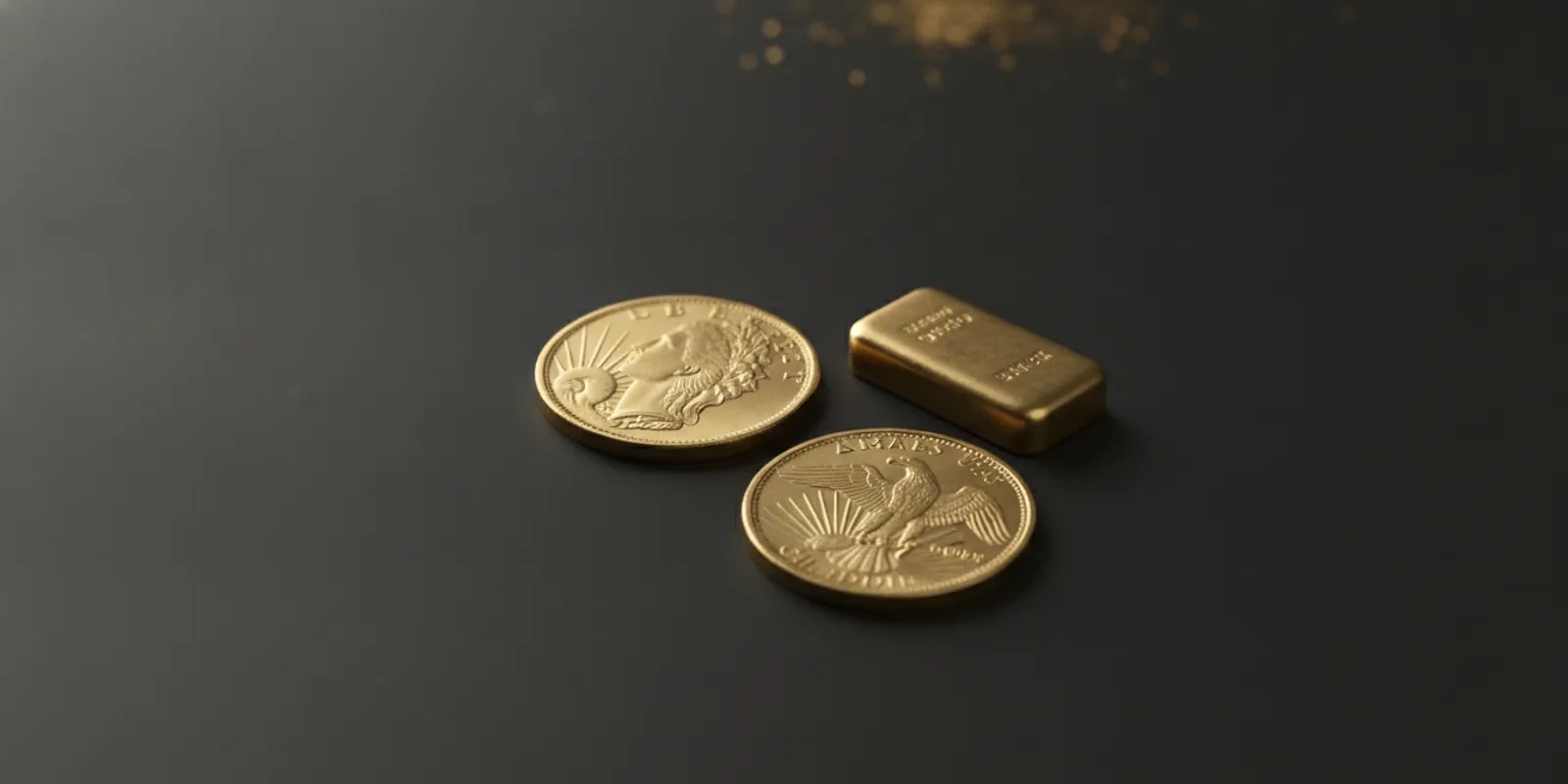
For many individual buyers, the first comparison is between bullion coins and bars. Bullion coins are produced as recognized coin issues, often in standard weights. U.S. examples include American Gold Eagles. Bars come in a range of weights and may be produced by different refiners or mints. Both can contain investment-grade gold, but the form, maker, product recognition, and resale process matter.
Not every gold coin is bullion. Some U.S. coins are collected for their date, mint, scarcity, condition, design, or history as well as their gold content. A collectible or numismatic coin may be evaluated differently from a standard bullion product. For example, a coin’s individual attributes can matter beyond its metal content. Park Avenue Numismatics lists examples such as this 1899 $20 gold coin and this 1904 $20 Liberty coin. Those examples illustrate collectible categories, not a promise about price or future performance.
When reviewing any gold product, identify whether the seller is describing it as bullion, a collectible coin, or both. Ask what the stated weight and purity refer to, whether the weight is gross or actual gold content, and what documentation comes with the item. If the product is certified, confirm the grading service and certification details. Certification can provide information about an item; it does not remove market risk or guarantee a future resale price.
How do coins and bars compare in practice?
There is no universal winner. The right comparison depends on the specific product, the seller’s terms, the likely resale channel, and your practical preferences. A coin’s familiar design or broad recognition may help a buyer identify it, while a bar’s form and weight may suit someone who prefers a compact, standardized piece. Recognition and ease of resale can vary by product and by market.
| Factor | Bullion coins | Gold bars |
|---|---|---|
| What to verify | Coin type, stated weight, purity, condition, and whether it is bullion or collectible. | Weight, purity, producer or refiner, packaging, and any serial or assay details. |
| Purchase premium | May include fabrication, distribution, and product-recognition costs beyond the gold value. | May include production and distribution costs; the amount can vary by size and product. |
| Resale considerations | Recognition, condition, certification, collectible interest, and current buyer demand may matter. | Producer recognition, verification, packaging, size, and current buyer demand may matter. |
| Storage | Protect from loss, damage, and unauthorized access; keep records with the item. | Protect from loss, damage, and unauthorized access; retain identifying details and records. |
| Questions to ask | Is this priced as bullion or as a collectible, and what supports that distinction? | How is the bar’s weight and purity established, and what verification is available? |
The table is a starting point, not a fixed rule. A small bar may have a different premium structure from a larger bar, and an ordinary bullion coin is not the same as a scarce collectible coin. Compare specific items on the same day, using the same unit of gold content and including all stated charges. Review the seller’s written buyback or return terms rather than assuming that a product’s format ensures a particular resale outcome.
What is a premium, and why can it change?
A premium is the amount paid above the underlying value of the gold content. A product’s total purchase price can reflect more than the metal itself. Fabrication, packaging, distribution, product availability, and demand can all affect the amount. Premiums can change over time and can differ between sellers and products.
To make a useful comparison, first find the gold content and the price being quoted. Then calculate the difference between the quoted price and the value attributed to that gold content at the relevant market reference. Ask whether the quote includes taxes, shipping, payment charges, or other fees. Be clear about the unit used: a price per coin cannot be compared directly with a price per ounce unless you account for the actual gold content.
Also ask what happens if you sell. A dealer’s purchase offer may be based on current market conditions and the specific item presented. The amount paid when you bought it is not necessarily the amount another buyer will offer later. A higher purchase premium can make it harder to recover the initial outlay if the resale price does not move enough to cover that difference and any other costs.
For instance, compare two products by first converting each quote to a cost per unit of actual gold content. Then note the premium, any fixed charges, and the likely cost of selling or storing each one. This does not predict which item will perform better. It simply makes the starting costs visible and prevents comparing unlike units, such as the price of a one-ounce product with a fractional-weight coin. Save the quotes and the date they were given, since prices and premiums can change.
How should you think about liquidity?
Liquidity is the ease of turning an asset into money at a price you consider acceptable. Gold is traded in many forms, but that does not mean every coin or bar can be sold immediately at a particular price. The potential resale path depends on recognition, condition, size, documentation, the buyer’s verification process, market demand, and the seller’s location.
Commonly recognized bullion products may be easier for a potential buyer to identify than an unfamiliar item, but recognition alone does not set a purchase offer. Collectible coins can require additional knowledge about date, mint, grade, authenticity, and market interest. A buyer may need time to examine the item. Larger pieces may also have a smaller pool of buyers able or willing to purchase the full amount at once.
Before buying, ask the seller how a future sale would be assessed, what forms of identification or documentation would help, whether the seller publishes terms, and whether any fees apply. Treat a stated buyback policy as one input, not a guarantee of future liquidity or price. If you may need the funds on short notice, consider whether physical gold’s selling process and possible price variation fit that need.
Think through the practical steps as well: locating the item and its records, arranging a secure way to bring or ship it, allowing time for examination, and reviewing the offer before accepting. The process may be different for a certified collectible coin than for a standard bullion product. Asking about these steps in advance can help you understand the time and documentation involved without assuming a sale will occur on a specific schedule.
What should you plan for when storing gold?
Physical ownership means taking responsibility for security and records. Some owners use a secure home storage arrangement; others consider a bank deposit box or a professional storage provider. Each approach has different access, cost, and insurance considerations. Compare the provider’s written terms and confirm what is and is not insured. Do not assume that a storage arrangement includes coverage for loss or theft.
Keep a record of the item’s description, purchase date, seller, invoice, stated weight and purity, and any certification or assay information. Store records separately from the metal, while ensuring that authorized people can locate them if needed. If the item has packaging or a certificate, follow the seller’s guidance about retaining it. Avoid handling coins unnecessarily, and do not clean them: cleaning can alter a coin’s surface and may affect collector interest.
Consider how your storage plan fits the size and number of items you own. A recordkeeping system can help an owner identify what is held without repeatedly opening storage. If you use a third-party facility, ask who can access the holdings, how withdrawals work, what fees apply, and how the provider documents the specific items. These practical details are part of the cost and effort of holding metal.
How can you check a seller and an item?
Start by researching the seller’s background and asking clear questions before sending payment. A Nebraska Department of Banking and Finance consumer guide advises buyers to check a precious-metals salesperson’s background and be alert to claims such as “low risk.” Read its considerations before buying precious metals for additional consumer pointers. Ask for the full written terms, including the exact product, price, fees, delivery or pickup details, and any return policy.
Then establish what you are buying. For a coin, compare the date, mint mark where relevant, denomination, weight, dimensions, design details, and certification information with reliable references. For a bar, check the producer, stated weight and purity, markings, packaging, and any assay card or serial number. A hallmark, certificate, or attractive package is not, on its own, proof that every detail is correct.
When an item’s authenticity or collectible status is uncertain, avoid testing methods that can damage it. Ask a qualified professional to examine it using appropriate methods. Do not rely on a photograph alone for a final evaluation; photographs can help begin a conversation, but physical examination may be needed to assess condition and authenticity. Keep the seller’s written description and transaction records.
For a general overview of different ways to invest in gold, the World Gold Council discusses products such as bars and coins alongside other forms of gold ownership in its guide to gold assets. Product availability and rules differ by market, so use the material as a starting point and verify the details that apply to your purchase.
What market risks should you consider?
Gold prices fluctuate. A price can move because of changing supply and demand, currency movements, interest-rate expectations, investor sentiment, and broader economic or political developments. Those influences are not predictable, and a past price move does not establish what will happen next. Physical gold can lose value as well as gain value.
There are also costs that can affect the result of a transaction. The purchase premium, a later resale discount, storage expenses, insurance, shipping, and other fees can reduce the amount ultimately retained. For collectible coins, condition, rarity, provenance, certification, and current market demand can affect an assessment. Two pieces with similar metal content may not receive the same offer.
Concentration is another consideration. Putting a large share of available funds into one asset or product can leave less flexibility elsewhere. Think carefully about your own financial situation, time horizon, ability to tolerate price changes, and need for ready access to funds. A qualified financial professional can help evaluate how any investment fits your circumstances; a dealer can discuss product characteristics but does not replace personalized financial advice.
What questions should you ask before buying?
- What exactly is the product, and is it being sold as bullion, a collectible, or both?
- What is the stated weight and purity, and how is the gold content documented?
- What is the full purchase price, including premiums, taxes, delivery, and other charges?
- How does the premium compare with similar products and other written quotes?
- What factors could affect a future resale offer, and what fees or conditions apply?
- What return, cancellation, delivery, and payment terms are set out in writing?
- How will the item be verified, and what records or certification accompany it?
- Where will you store it, what will that cost, and what insurance coverage applies?
Take time to compare written information from more than one source. A clear seller should be able to describe the item and explain the terms without pressuring you to decide immediately. Keep your own notes so that quotes for different products, weights, and conditions are not confused.
Where can Miami sellers discuss gold coins?
Park Avenue Numismatics is a Miami rare-coin and precious-metals dealer established in 1988. The business purchases rare coins and precious metals from the public. Someone with a U.S. gold coin or other gold item can ask what information would be useful for an initial discussion and whether an in-person assessment is appropriate. An assessment is specific to the item and market conditions; it is not a guarantee of a particular value.
For a sense of the range of U.S. gold coin products, see this listed 1988 American Gold Eagle. A listing is an individual example, not a complete guide to prices or a forecast. If you are considering selling, gather any receipts, certification details, and other relevant records, and avoid cleaning or altering the coin before it is reviewed.
Contact Park Avenue Numismatics about a gold item
Frequently asked questions about investing in gold
Are gold coins always easier to sell than bars?
No. Recognition and demand may help a buyer assess a product, but liquidity depends on the specific coin or bar, its condition and documentation, the buyer, and market conditions. Ask about the resale process for the exact item you are considering.
Does a certified coin have a guaranteed value?
No. Certification can document an assessment by a grading service, but it does not guarantee what a buyer will pay in the future. Market demand, condition, rarity, provenance, and other factors may affect an offer.
Can I use a spot price to know what I will receive when I sell?
Not by itself. A spot reference reflects a market price for metal, while an actual offer can account for the item’s form, premium, condition, verification, demand, and transaction terms. Ask for an explanation of how a specific offer is determined.
Should I buy gold with money I may need soon?
Physical gold prices can change, and selling takes place under the conditions available at that time. Consider your need for access to cash, your time horizon, and the potential costs before deciding. For personal financial guidance, speak with a qualified professional.
Key takeaway
When considering how to invest in gold, compare the specific product, full purchase cost, potential resale route, verification, and storage plan rather than relying on a headline price alone. Gold ownership involves market and practical risks, so research the terms carefully and make decisions that fit your own circumstances.





