
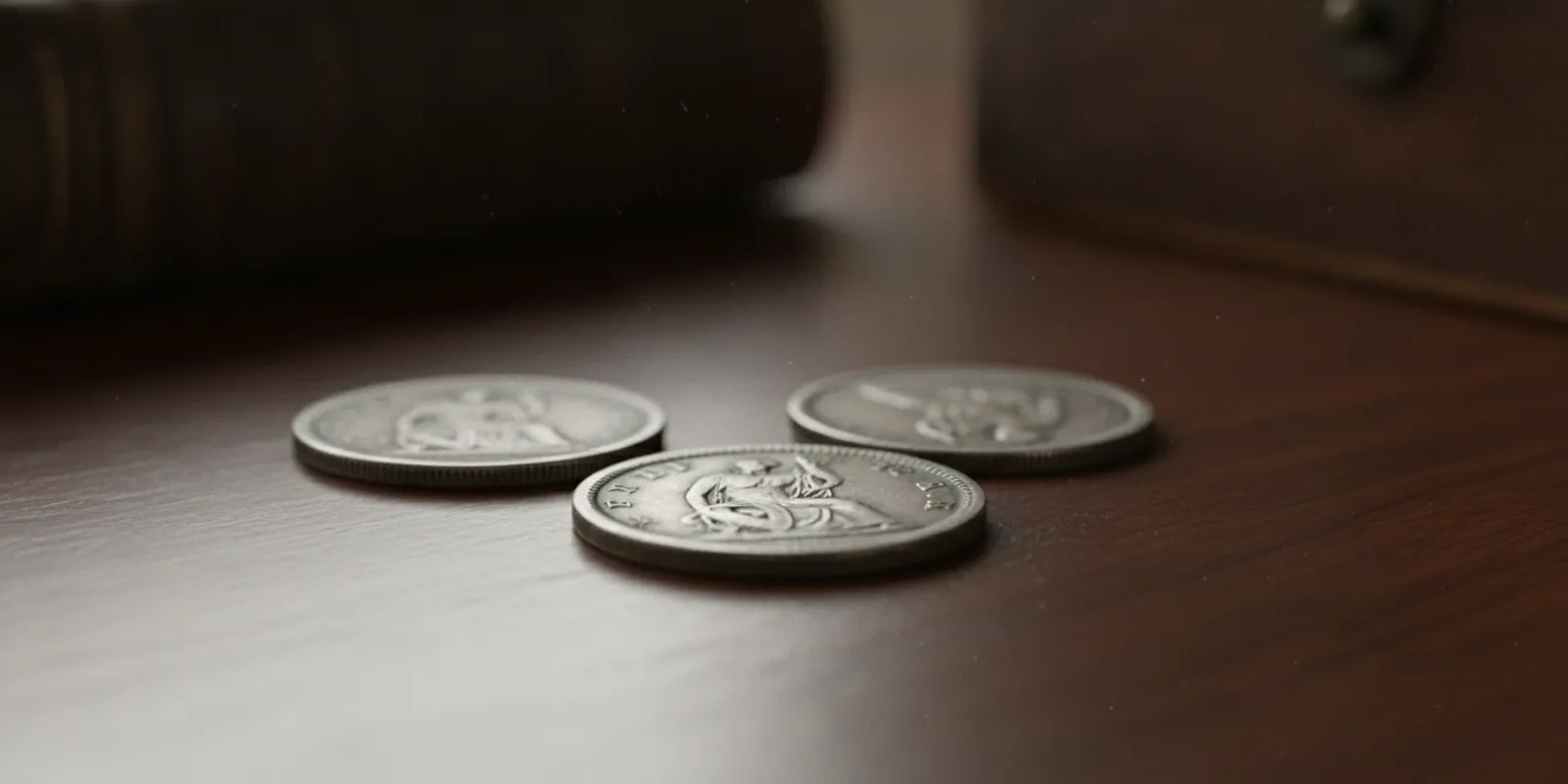
Collectors looking at half dimes for sale will find a compact series with several distinct designs and a long history in early U.S. coinage. A half dime is a five-cent silver coin, but the type, date, mint mark, condition, and authenticity all matter when comparing examples. This guide explains the main designs and offers a practical checklist for evaluating a coin before you buy.
Call 1-888-419-7136 to discuss a half dime
What are half dimes for sale?
The half dime was an early U.S. five-cent denomination made of silver. Its small size can make details hard to see, especially on circulated examples, so collectors often begin by identifying the design type and date rather than trying to judge a coin from a quick glance. The series includes several designs that reflect changing styles in American coinage, from early bust portraits to Liberty Seated designs.
Half dimes are not the same as modern copper-nickel five-cent pieces, which are commonly called nickels. Nor are they the same as half dollars. The word “half” refers to half of a dime, not half of a dollar. When you browse half dimes for sale, confirm the denomination and type in the listing, then look closely at the coin images and any grading or certification details.
For background on early half-dime collecting, the Newman Numismatic Portal preserves material such as an archival record for a 1968 Merkin sale featuring early and Seated half dimes. See the historical sale record as one example of numismatic reference material.
It also helps to set a collecting purpose before browsing. A collector building a type set may want one representative coin from each major design family. Someone focused on dates may instead track individual issues and mint marks. Those approaches call for different levels of detail and different comparisons, even though both collectors are looking at the same denomination. A clear goal helps keep the search manageable and makes it easier to decide which questions to ask about a particular coin.
What are the major half dime designs?
Knowing the design family helps narrow down what you are looking at. Dates and design transitions are important, but a coin should be compared with reliable references before assigning a variety. These are the broad types collectors are likely to encounter:
- Flowing Hair, 1794–1795: The first half dimes have a small, early federal design with a portrait of Liberty on the front and an eagle on the reverse. Surviving pieces are historic, and details can be worn or incomplete.
- Draped Bust, 1796–1805: This early design has a different portrait and reverse arrangement. Some dates have design details that collectors use to distinguish subtypes, so check a date-specific reference when attribution matters.
- Capped Bust, 1829–1837: After a gap in production, the denomination returned with a capped Liberty portrait. The 1830s examples are often a practical entry point for someone learning to identify the series, though availability and condition vary.
- Liberty Seated, 1837–1873: The longest-running design family shows Liberty seated on the obverse. Details changed over time, including stars and legends, so not every Liberty Seated half dime looks identical.
Dates in a type range are a starting point, not a substitute for checking the individual coin. A design may change within the series, and a particular issue may have more than one recognized variety. Do not assume a coin is rare or especially desirable just because its date looks old. Confirm its identity and compare like with like.
A good first-pass identification can be done in a few deliberate steps:
- Start with the date. Record it if it is readable, and note the broad portrait style.
- Study the reverse. The arrangement of the eagle, stars, wreath, and lettering can help separate types or subtypes.
- Compare the full design. Consult an illustrated reference instead of relying on one feature.
- Record uncertainty. Wear can blur small distinctions, so do not force a precise attribution from an unclear photograph.
Collectors exploring other early U.S. denominations can also read about the half cents of 1793 and the Liberty Cap cents of 1793–1796. These are different denominations, but their early designs offer useful context for how federal coinage changed across the period.
How do the main types compare?
The table below provides a high-level orientation. It is not a price guide, and it cannot identify a variety or grade from a date alone. Condition, authenticity, and the specific issue still need individual review.
| Type | General date range | What to look for | Useful buyer check |
|---|---|---|---|
| Flowing Hair | 1794–1795 | Early Liberty portrait and eagle design; small, often worn details | Confirm date and authenticity; inspect the highest design points and surfaces |
| Draped Bust | 1796–1805 | Draped Liberty portrait and early reverse designs | Compare the date and design with a reliable attribution reference |
| Capped Bust | 1829–1837 | Liberty wearing a cap; later early-series style | Check the date, visible detail, and any certification information |
| Liberty Seated | 1837–1873 | Seated Liberty; stars and legends vary by issue | Verify the design subtype, mint mark, and condition |
Use the table as a sorting tool, not a final attribution. For example, an 1830s coin with a capped portrait points you toward the Capped Bust family, but the date, design details, and coin’s condition still need to agree with the listing. A worn piece might hide a small feature, while a sharply photographed coin may reveal it. If the date is uncertain, ask for a close, evenly lit image before drawing conclusions.
When comparing two coins, keep the questions consistent. For each one, record the stated type, date, mint mark if applicable, grade or condition description, certification status, and any noted surface issue. Then compare the actual photographs side by side at similar scale. This makes it less likely that a striking image or a prominent grade number will outweigh important differences in detail and preservation.
Why do date and mint mark matter?
The date identifies the year of issue, while a mint mark, when present, can identify where the coin was struck. On a small coin, a mint mark may be tiny, worn, or obscured by a holder or photograph. Use a clear image of the relevant area and compare it with a dependable reference for that specific design. Do not infer a mint mark from a blurry listing photo.
Collectors may pursue a complete date set, a design type, or selected examples with particular attributes. Those goals lead to different comparisons. A date-set collector may focus on filling a specific slot, while a type collector may prioritize a representative example with clear design detail. Decide what you want to collect before comparing listings; it keeps attention on the features that matter to you.
Park Avenue Numismatics has offered individual half dime listings, including an example of a 1795 Flowing Hair half dime, an 1833 Capped Bust half dime, and an 1855 half dime. Listings can change; treat them as examples of the range of types and grades, not a promise that a particular coin is currently available. To browse the dealer’s current site inventory, use the coin and product search, and confirm the details of any particular listing directly.
A mint mark matters most when it contributes to identifying the issue you are collecting. Its absence does not automatically mean anything is wrong; the correct location and whether a mark is expected depend on the date and design. The mark may sit near the date, on the reverse, or in another specific area depending on the coin. Use a reference image for that exact type instead of assuming the position from another denomination.
Keep attribution language precise. “Date uncertain” or “mint mark not visible in the supplied photo” is a useful note; guessing from a partial image is not. If a seller attributes a coin to a scarce variety, ask which diagnostic feature supports that attribution and request an image that shows it. This approach is especially helpful when wear, toning, scratches, or a holder edge makes a small detail difficult to see.
How does condition affect a half dime?
Condition is about more than whether a coin looks shiny. Wear, remaining design detail, marks, surface texture, and any damage all affect how an example is described. On a small half dime, examine Liberty’s hair or cap, the lettering, the date, and the reverse details. Look at the whole coin under good light rather than relying on a single enlarged crop.
Compare coins of the same date and type when possible. A circulated coin can be an appealing example when its design is legible and its surfaces are acceptable to you. A higher numerical grade is not automatically the right choice for every collector; budget, collecting goals, eye appeal, and confidence in the description all play a role.
Be cautious about photos that hide important areas, use heavy glare, or show only one side. Ask for clear images of both sides and the edge when appropriate. If the listing uses a third-party grade, confirm that the holder information matches the coin shown and that the grading service’s online record, when available, corresponds to the certification number.
It can help to review a coin in a repeatable order:
- Check the obverse and reverse. Look for wear on the most exposed design points.
- Scan the open fields. Note marks, scratches, or uneven texture.
- Inspect the rim and lettering. Look for dents, bends, or other signs of damage.
- Return to the date and mint mark. Make sure the identification remains readable.
This sequence separates ordinary circulation wear from issues that may affect a coin’s overall description.
Lighting changes what a photograph reveals. A direct flash can create glare and conceal shallow marks; a very dark image can make surfaces appear flat. Ask for neutral, well-focused photos of both sides, ideally with the coin filling enough of the frame to inspect details while still showing the full rim. Images are helpful but cannot replace handling and examination when that is available. Treat online photos as a screening step, not as proof of every surface characteristic.
Two coins with the same assigned grade may still look different to a collector. One may have more even wear, while another may have a sharper strike but distracting marks. A numerical grade offers a standardized shorthand, yet it does not express every preference about appearance. Decide what visual qualities matter to you and compare examples directly instead of assuming the largest number will be the most satisfying choice.
Should a half dime be cleaned?
Do not clean a collectible coin to make it look brighter. Polishing, rubbing, dipping, or using household chemicals can alter the surfaces and leave hairlines or other evidence that may be difficult to undo. A coin with natural toning or age-related surface changes should not be treated like ordinary silverware.
If you are unsure whether a coin has been cleaned, inspect it without rubbing it. Look for fine parallel lines, unusually bright patches, uneven color, or a surface that appears different from the protected areas around lettering and devices. These clues do not prove a coin’s history by themselves, especially in a photograph. Ask the seller for an accurate description or have the coin evaluated by a knowledgeable numismatic professional.
Do not test a suspected spot with a cloth, brush, or cleaning solution. Handling should be limited to what is necessary, and the coin should be held by its edges if it must be moved. If the coin is already in a holder, avoid opening it simply to inspect the surface. Keep any packaging or documentation together, since it may help explain how the coin has been stored or previously described.
When an older coin has an unusual color or a patch that looks different from the rest of the surface, describe what you see rather than trying to correct it. A photograph can exaggerate color shifts, and toning alone does not tell the full story of a coin’s preservation. For a buying decision, ask whether the listing notes cleaning or other surface problems and make sure the return terms allow you to assess the item if its condition is important to your choice.
How can you check authenticity and certification?
Older U.S. coins can be copied, altered, or misdescribed. When considering a valuable or scarce-looking issue, use multiple checks rather than relying on a single detail. Compare weight and dimensions with a trusted reference, examine the design and edge, and look for signs of tooling or alteration. Measurements can support an assessment, but they are not a guarantee of authenticity.
A third-party grading holder can provide an opinion on authenticity and grade, but buyers should still check the holder and the coin. Read the label carefully, compare the certification number against the grading service’s lookup tool if one is available, and confirm that the images match the item being offered. A holder is not a reason to ignore visible problems or unclear seller information.
For raw, or ungraded, coins, ask what the seller knows about the coin’s history and whether there are any problems not visible in the listing. A reputable seller should be willing to answer reasonable questions about the date, mint mark, condition, and return terms. Avoid making a decision based only on a dramatic claim in a listing title.
For an online certification check, compare the coin type, date, grade, and any variety wording shown in the lookup record with the physical label and listing photos. If the record includes images, inspect identifying marks and surface features rather than relying only on the matching number. A certification lookup can catch a mismatch, but it does not guarantee that the coin has not been switched after photography or that every detail is right for your collecting purpose.
For an uncertified example, consider how much confidence you can reasonably gain from the information offered. Clear photos, a consistent description, a seller who answers questions, and transparent transaction terms all help. If an issue is outside your experience, getting an independent opinion before committing can be prudent. The more scarce or costly the coin appears to be, the more important it is to verify details rather than rushing on the strength of a listing headline.
What should you compare before buying?
Before choosing among half dimes for sale, write down the details that matter to you and compare each candidate on the same basis. A short checklist can prevent a rare date or a high grade from distracting you from the coin’s actual condition and documentation.
- Identify the type and date. Match the design and date to a reliable reference. If a listing identifies a variety, check the diagnostic details rather than taking the label on faith.
- Check the mint mark. Make sure it is visible and consistent with the listing. Request another photo if the area is obscured.
- Study both sides. Review the portrait, lettering, date, reverse, and surfaces. Look for damage, cleaning, or details that seem inconsistent.
- Read the grade description. Understand whether a coin is graded by a service or described by the seller. Note details or problem designations instead of focusing on a number alone.
- Confirm the transaction terms. Review the seller’s return policy, shipping and insurance arrangements, and the exact coin you will receive. Keep the listing and correspondence for your records.
- Compare similar examples. Use coins of the same type, date, and comparable condition. Prices and demand can change, and a single listing is not a dependable measure of value.
Make a simple comparison note for each candidate. Record what the seller claims, what you can verify from the images, and what remains unclear. For example: “Capped Bust, date appears to be 1833, reverse detail visible, certification number matches label, close-up of date requested.” This separates observed facts from assumptions and gives you a short list of questions to resolve before buying.
Then compare the full transaction, not just the coin description. Check whether shipping and insurance are included, how the seller handles returns, and whether the coin pictured is the exact piece that will be sent. For a coin in a holder, note whether the holder has visible cracks or damage that may affect handling. Save the listing details and communication until the purchase is complete and you are satisfied that the item matches its description.
There is no fixed value for every half dime of a given date. Any assessment can depend on condition, rarity, provenance, certification, and current market demand. Treat estimates as specific to the coin and the time of evaluation, not as a guarantee of what another example will sell for later.
Where can you discuss half dimes for sale in Miami?
Collectors in Miami who want an in-person conversation can contact Park Avenue Numismatics, a Miami rare coin and precious metals dealer. The company is located at 5084 Biscayne Blvd, Suite 105, Miami, FL 33137. Bring the coin or clear photographs and any paperwork or prior grading information you have. An evaluation begins with identifying the coin and considering its condition and other relevant attributes; it is not a promise of a particular value or outcome.
For a collection, organize coins by type or date if that is easy to do, but do not clean or rearrange them in a way that risks damage. Keep holders, envelopes, and old notes with the coins. Provenance and earlier documentation can help provide context, although records do not replace an examination of the coin itself.
If you are bringing more than one coin, a brief written inventory can make the conversation more orderly. Note which pieces are in holders, which are loose, and which have labels or prior paperwork. Do not remove coins from their holders just to prepare them. If you are unsure how to transport a small group safely, keep each coin secured in its existing holder or container and avoid placing loose pieces together where they can rub against one another.
It is also useful to separate what you want to learn from what you are prepared to decide. You might want an identification, a discussion of condition, or information about a potential sale. State your goal and share any previous attribution or certification details. A review can consider the specific piece, but the result will depend on its individual characteristics and the market at the time; no general date list can establish a guaranteed value for every coin.
Call 1-888-419-7136 to ask about an in-person coin discussion
Frequently asked questions about half dimes
Are half dimes the same as five-cent nickels?
No. Half dimes are early U.S. silver five-cent coins. Modern five-cent pieces are generally called nickels and have a different design and composition.
What is the best half dime for a new collector?
There is no single best choice for everyone. Start with a design or date range that interests you, then choose an example whose condition, documentation, and cost fit your collecting plan. Compare several coins before deciding.
Can I tell a half dime’s value from its date?
No. Date alone is not enough. Condition, rarity, provenance, certification, and current market demand can all affect an assessment. Have the specific coin reviewed if you need an informed evaluation.
Is a certified coin always problem-free?
No. Certification may provide useful information about authenticity and grade, but read the label, check the holder details, and inspect the coin. Make sure the certification information matches the piece being offered.
What should I do if I cannot read the date clearly?
Ask for a sharper image with even lighting and the entire coin in view. Compare the visible numerals with a reference for the relevant design, but avoid guessing if wear or a mark obscures a digit. A date-specific attribution should be treated as uncertain until the coin can be examined more clearly.
Key takeaway
Half dimes bring together early U.S. history, several distinct designs, and the challenge of evaluating a small, often well-circulated silver coin. Identify the type and date, examine condition and surfaces, verify any certification, and compare similar examples before buying. A careful, coin-specific review is more useful than assumptions based on age or a date alone.





