
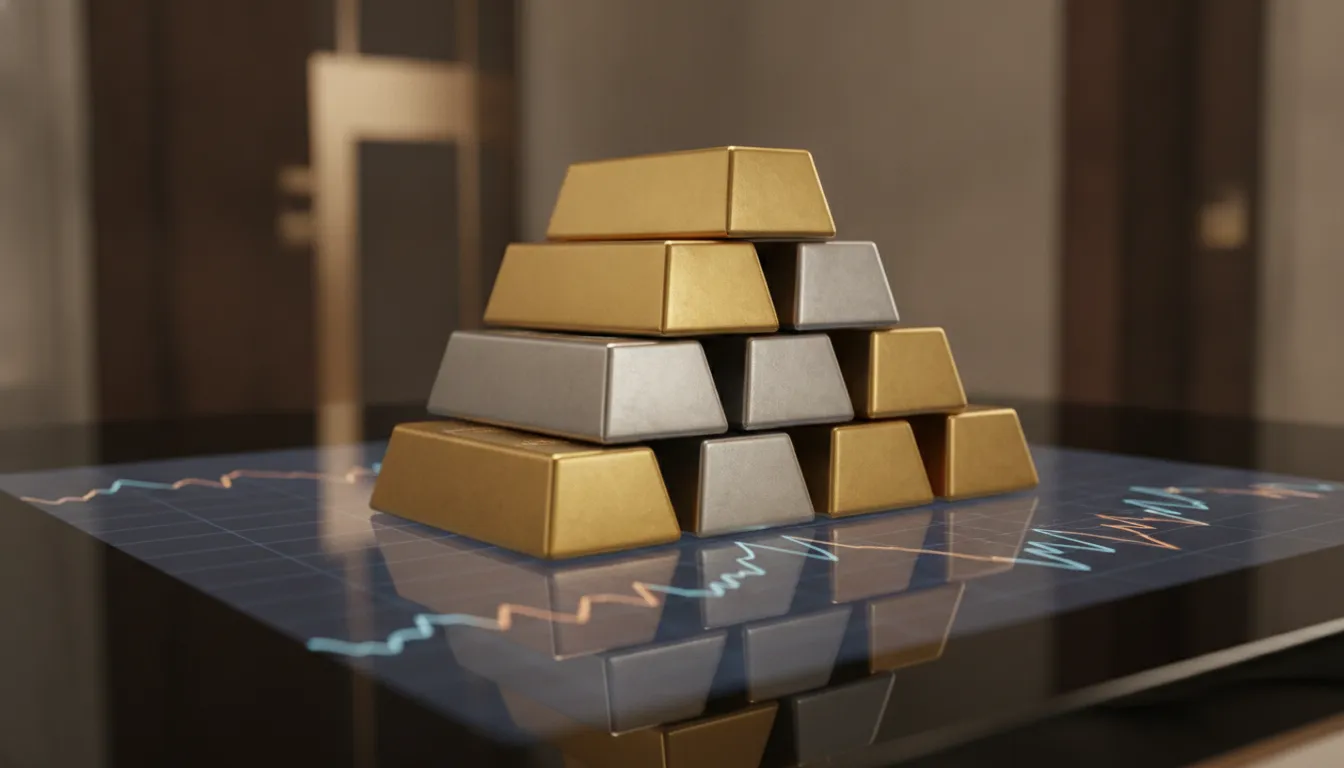
Every number tells a story, and the price of precious metals is no exception. When you look up the gold silver prices today per ounce, you're seeing more than just a dollar figure; you're seeing a snapshot of global economics, investor sentiment, and political stability. Itâs a reflection of inflation fears, the strength of the U.S. dollar, and decisions being made in central banks around the world. To make truly informed decisions for your portfolio, you need to understand this story. This article will walk you through the fundamental factors that shape the value of gold and silver, giving you a deeper perspective on your investments.
Key Takeaways
- Understand What Moves the Market: Gold and silver prices are directly tied to economic health; they tend to rise during periods of inflation, geopolitical uncertainty, or when the U.S. dollar weakens, making them a reliable indicator of investor confidence.
- Select the Right Investment Path for You: You can invest by holding physical coins and bars for direct control, using ETFs and mining stocks for market liquidity, or securing your retirement with a tax-advantaged Precious Metals IRA.
- Use Metals to Build a Stronger Portfolio: Because gold and silver often move independently of the stock market, allocating a portion of your assets to them provides a powerful hedge against volatility and helps preserve your wealth over the long term.
What Are Today's Gold and Silver Prices?
Keeping a close watch on the daily spot prices of gold and silver is fundamental for any serious collector or investor. These numbers are the pulse of the market, reflecting a constant interplay of economic forces, geopolitical events, and investor sentiment. While the prices fluctuate throughout the day, understanding the current benchmark is the first step in making informed decisions, whether you're looking to buy, sell, or simply assess the value of your portfolio. Let's look at what drives these numbers and, more importantly, where you can find reliable, up-to-the-minute data to guide your strategy.
Gold's Current Price
The price of gold is in constant motion, reflecting its enduring appeal as a store of value. Factors like inflation concerns, market volatility, and global economic stability often lead investors to seek refuge in assets like gold bullion. Because gold is seen as a safe-haven asset, its price can be a telling indicator of broader economic confidence. Even slight upticks can signal a steady demand from those looking to preserve wealth amidst uncertainty, making it a critical metric for any portfolio manager to watch.
Silver's Current Price
Silver's price is equally dynamic, often influenced by a unique set of factors. Its value is tied not only to investor demand but also to its critical role as an industrial component in technology, solar panels, and electronics. This dual identity means the price of silver bullion can be affected by both investment trends and industrial output. Watching its movements offers a fascinating look into both financial markets and the health of the global manufacturing sector, making it a valuable asset for diversification.
Where to Find Real-Time Prices
Since spot prices change by the second, you canât rely on a static number from yesterday when making a move today. Having a go-to source for live data is essential for any active investor. For those who need to track these fluctuations, several excellent online resources provide real-time information. Websites like APMEX offer live gold and silver price charts that are updated continuously. Another comprehensive source is MetalsDaily.com, which provides live pricing for gold, silver, platinum, and palladium, giving you a complete picture of the market at any given moment.
What Makes Gold and Silver Prices Move?
The prices of gold and silver are constantly in motion, influenced by a complex web of economic and political factors. Unlike stocks, which represent ownership in a company, precious metals are tangible assets whose value is determined by global market forces. For investors and collectors, understanding these key drivers is essential for making informed decisions. From central bank policies to global crises, several major factors work together to shape the daily value of gold bullion and other precious metals. By watching these indicators, you can better anticipate market shifts and position your portfolio to align with your long-term financial goals. Let's look at the five primary forces that cause gold and silver prices to fluctuate.
The Fed's Influence and Interest Rates
The actions of the U.S. Federal Reserve, particularly its decisions on interest rates, have a significant impact on precious metals. When the Fed raises interest rates, investments that pay interest, like bonds and savings accounts, become more attractive. This can draw money away from non-yielding assets like gold and silver, causing their prices to dip. Conversely, when interest rates are low, the opportunity cost of holding metals decreases, making them a more appealing choice for storing wealth. Fed announcements often create market volatility, as investors quickly adjust their strategies based on the central bank's outlook for the economy.
Inflation and Your Dollar's Value
Gold and silver have long been trusted as a hedge against inflation. When the purchasing power of the U.S. dollar declines, it takes more dollars to buy the same amount of a tangible asset. As a result, the price of precious metals tends to rise during inflationary periods. This historical relationship was on full display in the 1970s when high inflation in the United States sent gold prices soaring from about $35 per ounce to around $850 by 1980. Investors often turn to physical assets like silver bullion to protect their wealth when they anticipate that the value of their cash is at risk of eroding.
Global Events and the Rush to Safety
During times of global uncertainty, investors often seek "safe-haven" assets, and gold and silver are at the top of the list. Geopolitical tensions, such as international conflicts, trade disputes, or political instability, create an environment of risk that can rattle stock markets. In response, many investors sell off riskier assets and move their capital into precious metals, which are perceived as a more stable store of value. This "flight to safety" increases demand and can drive prices higher. Because of this, precious metals often perform well when other parts of the market are struggling, making them a key component of a diversified investment portfolio.
The Simple Rules of Supply and Demand
At its core, the price of gold and silver is governed by the fundamental economic principles of supply and demand. The global supply is determined by new mining production, the amount of recycled metal re-entering the market, and sales from central bank reserves. On the other side, demand comes from various sources, including jewelry manufacturing, industrial applications (especially for silver in electronics and solar panels), and investment from individuals and institutions. The market for rare coins adds another layer, where numismatic value and collector interest create demand separate from the spot price of the metal itself.
The Strength of the U.S. Dollar
Because gold and silver are priced in U.S. dollars on the global market, their value has an inverse relationship with the dollar's strength. When the U.S. dollar strengthens against other major currencies, it takes fewer dollars to buy an ounce of gold or silver. This makes the metals more expensive for buyers holding foreign currencies, which can reduce overall demand and put downward pressure on prices. Conversely, when the dollar weakens, precious metals become cheaper for international investors, often leading to increased demand and higher prices in dollar terms. Watching the U.S. Dollar Index (DXY) can provide valuable insight into potential price movements.
A Look Back: How Today's Prices Compare to History
To understand where gold and silver prices might be headed, it helps to look at where theyâve been. Market movements don't happen in a vacuum; they're part of a larger story shaped by decades of economic shifts, global events, and changing investor behavior. By examining key moments in history, you can gain a much clearer perspective on the value of precious metals today and their timeless role in a well-rounded portfolio. These historical trends show us why gold and silver have remained essential assets for wealth preservation through all kinds of economic weather.
Gold's Journey Since the 1970s
The 1970s marked a pivotal decade for gold. After the U.S. officially ended the dollar's direct convertibility to gold in 1971, the metal was free to trade on the open market. What followed was a spectacular run. Plagued by high inflation and economic uncertainty, people flocked to gold as a reliable store of value. The price soared from around $35 per ounce to a peak of roughly $850 by 1980. This period cemented gold's reputation as a hedge against inflation and a safe haven during turbulent times. Itâs a powerful reminder that when confidence in paper currency wavers, investors consistently turn to the enduring value of physical gold bullion.
Silver's Cycles of Volatility and Demand
Silverâs story is a bit more complex, as it wears two hats: one as a precious metal and another as a critical industrial material. This dual identity makes its price subject to a wider range of influences. Over the years, silver has seen cycles of volatility driven by everything from monetary policy changes to speculative trading. Its price is also heavily tied to industrial demand for use in electronics, solar panels, and medical devices. Because of this, silverâs price movements can sometimes be more dramatic than gold's. For investors, understanding these dynamics is key to appreciating the unique opportunities presented by silver bullion and its distinct market drivers.
How the 2008 Crisis Shaped Metals
If the 1970s taught us about inflation, the 2008 financial crisis provided a masterclass in systemic risk. As major financial institutions crumbled and stock markets plunged, investors scrambled for safety. This triggered a massive surge in demand for gold and silver, driving their prices to new heights. The crisis reminded a new generation of investors that tangible assets are essential for true diversification. It underscored the risk of keeping all your wealth in paper assets and reinforced the role of precious metals as a critical form of financial insurance. This event is a key reason why many people now use a Precious Metals IRA to secure their retirement savings.
What Is the Gold-to-Silver Ratio?
The gold-to-silver ratio is a handy tool for getting a quick read on the relative value of these two metals. It simply tells you how many ounces of silver it takes to buy one ounce of gold. This ratio has fluctuated throughout history, reflecting economic conditions and investor sentiment. When the ratio is high, it suggests that silver is undervalued compared to gold, which some investors see as a buying opportunity for silver. Conversely, a low ratio may indicate that gold is a better value. While not a crystal ball, tracking this ratio provides valuable historical context and helps you make more informed decisions when browsing rare coins for sale.
Which Economic Indicators Should You Watch?
To make smart decisions with your precious metals, you need to look beyond the daily price charts. Broader economic trends are the real drivers behind major price movements, and by watching a few key reports, you can better understand these forces and anticipate potential market shifts. Keeping an eye on these indicators will give you a clearer picture of why prices are moving and where they might be headed next.
Interest Rate Announcements
Pay close attention when the Federal Reserve discusses interest rates. Precious metals typically have an inverse relationship with ratesâwhen rates rise, income-generating assets like bonds become more attractive, potentially pulling investment away from non-yielding gold bullion. Conversely, low or falling rates make holding gold more appealing. As one analyst noted, gold and silver are particularly sensitive to rate uncertainty, which often leads to volatility. Following the Fedâs announcements can help you prepare for these swings in the market.
Inflation Reports (CPI)
Inflation is a key reason many investors turn to precious metals. When reports like the Consumer Price Index (CPI) show that the cost of living is rising, it means your dollars buy less. Gold and silver have historically served as a reliable hedge against this loss of purchasing power. During the high-inflation 1970s, for example, goldâs value soared from about $35 to around $850 per ounce. When you see reports of rising inflation, it often signals that investors will seek tangible assets to protect their wealth, which can drive up demand and prices.
The U.S. Dollar's Performance
The global strength of the U.S. dollar directly impacts precious metals. Because gold and silver are priced in U.S. dollars, their value is linked to the dollar's performance on the world stage. When the dollar strengthens, it takes fewer dollars to buy an ounce of metal, which can push prices down. A strong dollar also makes metals more expensive for international buyers, which can dampen demand. As the Economic Times explains, a stronger dollar makes "silver ... more expensive for people in other countries to buy."
Central Bank Actions
Keep an eye on what the world's central banks are doing. These institutions hold vast reserves, and their buying and selling decisions can significantly move the market. When central banks increase their gold holdings, itâs often seen as a move to diversify away from fiat currencies and a signal of confidence in gold as a long-term store of value. According to the World Bank, strong demand from central banks has been a key factor supporting gold prices, as their large-scale purchases reduce the available supply on the market.
How Geopolitics Impact Gold and Silver
When you watch the news, it can feel disconnected from your investment portfolio. But global events, political shifts, and international relations have a direct and often immediate effect on the value of precious metals. Geopolitical instability creates uncertainty, and in times of uncertainty, investors have historically turned to the tangible security of gold and silver. These metals act as a safe haven, preserving wealth when traditional assets like stocks and currencies feel volatile. Understanding this relationship is key to making informed decisions about your holdings.
International Conflicts
International conflicts create profound uncertainty, rattling stock markets and raising questions about currency stability. During these times, investors often move away from paper assets and toward tangible ones like gold and silver. These metals are a classic safe haven because their value is recognized globally and isn't dependent on the political fortunes of any single country. This flight to safety increases demand, which in turn can drive up the price of precious metals as people look to protect their wealth from the chaos of global events.
Political Instability and Uncertainty
You donât need a full-blown war to see an impact on precious metals. Significant political instability within a major countryâlike contentious elections or widespread protestsâcan be enough to spook markets. This unrest creates doubt about a country's economic future and currency stability. When investors lose confidence in a government's ability to manage its affairs, they often turn to the enduring security of gold bullion. It acts as a hedge against a decline in a currency's purchasing power, providing stability when the political ground is shifting.
Trade Tensions and Sanctions
Economic conflict can be just as impactful as military conflict. When countries impose tariffs, engage in trade wars, or levy sanctions, it disrupts global commerce and can weaken currencies. These actions create uncertainty and mistrust in the financial systems that support them. In response, investors and central banks may increase their holdings of gold and silver. These metals operate outside of traditional trade agreements and can't be devalued by a single government's decree, making them an attractive alternative when international economic relationships become strained.
Key Historical Events That Moved Markets
History offers clear examples of this principle. During the stagflation of the 1970s, a period of high inflation and political unease, goldâs price soared from about $35 to over $800 per ounce. More recently, events like the 2008 financial crisis saw investors flock to precious metals to safeguard their assets. These moments underscore the timeless role of gold and silver as portfolio anchors during turbulent times. Our long history at Park Avenue Numismatics gives us a unique perspective on how these events shape the market.
How to Invest in Gold and Silver
Understanding how gold and silver prices move is one thing; knowing how to act on that information is another. When youâre ready to add precious metals to your portfolio, you have several solid options. Each path offers different benefits, whether you prefer the security of a tangible asset or the flexibility of a stock. The right choice depends entirely on your personal financial goals and investment style. Let's walk through the most common ways to invest in gold and silver.
Owning Physical Gold and Silver
For many investors, nothing beats the assurance of holding a tangible asset. Owning physical precious metals means you have direct possession of your investment in the form of coins or bars. This approach eliminates counterparty riskâyou aren't relying on a financial institution to hold up its end of a deal. You can purchase gold and silver to store at home, in a safe deposit box, or in a secure third-party vault. This direct ownership provides a unique sense of security and control that paper assets simply can't match. Itâs a straightforward way to own a piece of real, enduring value.
Exploring ETFs and Mining Stocks
If you prefer a more hands-off approach without the need for physical storage, Exchange-Traded Funds (ETFs) are a popular alternative. Gold and silver ETFs trade on the stock market just like any other stock. When you buy a share, youâre essentially purchasing a claim on a larger pool of metal held by the fund. This makes it incredibly easy to buy and sell your holdings. Another option is investing in the stocks of mining companies. The value of these stocks is closely tied to the price of the metals they extract, often providing leveraged exposure to price movements.
Securing Your Retirement with a Precious Metals IRA
You can also incorporate the stability of precious metals into your long-term retirement strategy. A Precious Metals IRA, or Gold IRA, is a self-directed individual retirement account that allows you to hold physical assets like approved gold and silver bullion coins and bars. This is a powerful way to diversify your retirement savings beyond traditional stocks and bonds. Including precious metals can serve as a hedge against inflation and market volatility, helping to protect your nest egg during periods of economic uncertainty. It combines the tax advantages of an IRA with the lasting value of physical gold and silver.
Protecting Your Wealth Through Diversification
Ultimately, the core reason to invest in gold and silver is to protect and grow your wealth over the long term. Precious metals often move independently of the stock market, making them an excellent tool for diversification. When stocks or bonds are down, gold and silver can act as a stabilizing force in your portfolio. Many financial advisors suggest that allocating a portion of your portfolio to precious metals can help mitigate risk and provide a buffer against inflation. By adding gold and silver, youâre not just buying a commodity; youâre building a more resilient financial foundation for the future.
Related Articles
- Blog | Precious Metals & Rare Coins Dealer | Antique Coins - Park Ave Numismatics
- Blog | Rare Coins, Gold & Silver for Discerning Collectors
- News Archive | Precious Metals & Rare Coins Dealer | Antique Coins - Park Ave Numismatics
- Precious Metals Glossary | Precious Metals & Rare Coins Dealer | Antique Coins - Park Ave Numismatics
Frequently Asked Questions
Why is the price I pay for a gold coin different from the spot price? Think of the spot price as the wholesale cost of the raw metal itself. The price you pay for a finished coin or bar includes other costs associated with turning that raw metal into a final product. This includes the costs of fabrication, minting, distribution, and the dealer's service to acquire and guarantee the authenticity of the item. This difference is often called the "premium," and it's a standard part of buying any physical precious metal.
Is gold or silver the better investment for me? This really depends on your personal investment goals. Gold is traditionally seen as the ultimate safe-haven asset, prized for its stability and its historical role in preserving wealth during economic downturns. Silver also serves as a store of value, but its price is also heavily influenced by industrial demand. Because it's a critical component in everything from solar panels to electronics, its value can be more volatile, which some investors see as an opportunity for greater returns.
How much of my portfolio should I put into precious metals? There's no single answer that fits everyone, as the right allocation depends on your individual financial situation and risk tolerance. However, many financial advisors suggest that dedicating a portion of your portfolio, often in the range of 5% to 10%, to precious metals can be an effective strategy for diversification. The main goal is to have an asset that often performs well when other investments, like stocks, are struggling.
Why should I consider owning physical metals instead of an ETF? While ETFs offer a convenient way to get exposure to metal prices, owning the physical asset provides a unique level of security. When you hold a gold coin or a silver bar, you have direct possession of your wealth. This completely removes counterparty risk, which is the risk that the financial institution behind the ETF could fail. For many, the peace of mind that comes with holding a tangible asset is the primary reason for choosing physical metal.
Does the value of a rare coin just depend on its metal content? Not at all. A rare coin's value comes from two distinct sources: its intrinsic metal value (what the gold or silver in it is worth) and its numismatic value. Numismatic value is determined by factors like the coin's rarity, historical significance, condition, and collector demand. While the metal price provides a baseline, the numismatic value can make a coin worth many times its weight in gold or silver, and it moves according to the collector market, not just the daily spot price.





