
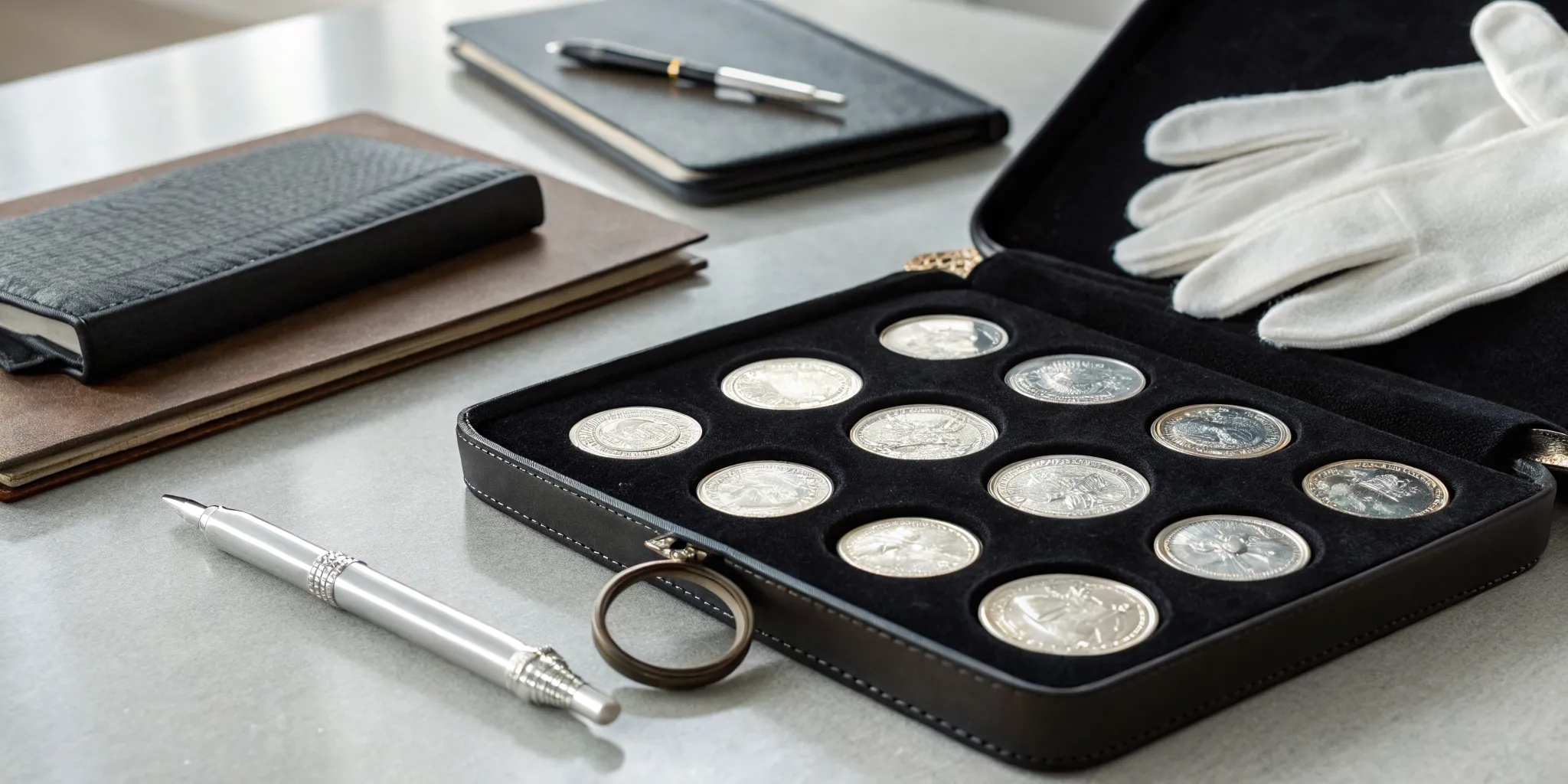
For the dedicated numismatist, few challenges are as thrilling as assembling a complete set of Morgan Silver Dollars. This isn't a casual pursuit; it's a hunt for treasure. It means tracking down the elusive 1893-S, securing coins from the legendary Carson City mint, and understanding the subtle differences that make a coin a true rarity. Each new addition is a victory, bringing you one step closer to a monumental achievement. The goal is to one day possess a complete morgan silver dollar collection for sale that would be the envy of any collector. This pursuit requires patience, knowledge, and a passion for the story behind each coin. Here, we’ll cover the key pieces and strategies you need to succeed in this ultimate numismatic quest.
Key Takeaways
- Condition is king: While a "complete" set often means one of every date and mint mark, a coin's grade (its physical condition) is the single most important factor driving its price. A pristine, uncirculated Morgan will always be more valuable than a worn one.
- Invest in both history and silver: Morgan Dollars offer a unique dual value. You get the security of owning a physical precious metal combined with the growth potential of a rare collectible, making them a powerful tool for diversifying your portfolio.
- Verify before you buy: Protect your investment by learning basic authenticity checks and prioritizing coins certified by top grading services like PCGS or NGC. Partnering with a reputable dealer provides the ultimate peace of mind and access to quality coins.
What Makes a Morgan Silver Dollar Collection "Complete"?
Ask ten different collectors what a "complete" Morgan Silver Dollar collection looks like, and you might get ten different answers. For some, it’s about owning a piece of history from each year the coin was minted. For others, it’s a deep dive into specific varieties and errors. There’s no single right way to build your collection. However, most numismatists agree on a foundational framework that defines a comprehensive set. This framework centers on acquiring a coin from every year of issue and from each of the five U.S. Mints that produced them. Understanding these core components is the first step in mapping out your collecting journey and turning a scattered assortment of coins into a truly impressive and valuable collection.
Defining "Complete": Key Dates and Mint Marks
The most widely accepted definition of a complete Morgan set includes one coin for every date and mint mark combination. This classic approach covers 96 coins, spanning from 1878 to 1904, and again in 1921. Each coin’s mint mark, a small letter (or lack thereof) on the reverse side, tells you where it was made and is crucial to its identity and rarity. Within this set, you’ll encounter "key dates," which are the scarcest and most sought-after coins in the series. These are the challenging pieces that often command higher prices but are essential for finishing a truly complete collection. As you begin, familiarizing yourself with these rare coins for sale will help you recognize what makes certain Morgans stand out.
What to Expect from All Five Mints
Morgan Dollars were struck at five different U.S. Mint facilities, and a representative collection includes examples from each. The Philadelphia Mint, the nation's primary facility, produced coins with no mint mark. Coins from San Francisco ('S') are often prized for their sharp, beautiful strikes. The New Orleans ('O') mint produced Morgans with their own unique character, though sometimes with softer details. The Denver ('D') mint only struck Morgans for a single year in 1921. Of course, the most legendary is the Carson City ('CC') mint. These coins, born from the Comstock Lode silver boom, carry the lore of the Old West and are a cornerstone for any serious collector. Our team's 35 years of experience means we're adept at sourcing high-quality examples from all five mints.
Identifying Rare Coins and Unique Features
Beyond the standard date and mint mark run, certain coins are legendary. The undisputed "King of the Morgan Dollars" is the 1895 Proof. With no business strikes known to exist for this date, the few hundred proofs that were minted are the only way to fill the spot, making it the ultimate prize for collectors. Similarly, many Carson City issues, like the 1889-CC, are famously rare and difficult to find in good condition. For those who enjoy even greater detail, the world of VAMs (Van Allen-Morrow varieties) offers a lifetime of study, focusing on minute die variations. Identifying these unique features is part of the thrill of collecting and a key factor in a coin's long-term value.
How Much Does a Complete Morgan Silver Dollar Collection Cost?
Pinpointing the exact cost of a complete Morgan Silver Dollar collection is a bit like asking the price of a house; it depends entirely on the location and condition. The price can range from a few thousand dollars for a basic set of circulated, common-date coins to well over a million for a world-class collection of high-grade rarities. The term "complete" itself can be misleading. A "common date" set, which excludes the notoriously rare and expensive years, is an achievable goal for many collectors. However, a truly complete set that includes every date and mint mark is a monumental undertaking.
The final price tag is determined by three main factors: the condition of the coins (their grade), the professional service that graded them, and the rarity of specific dates and mint marks within the set. A collection of coins that have been used in commerce will be far more affordable than one filled with pristine, uncirculated examples. Understanding these key value drivers is the first step in setting a realistic budget for your collecting goals. As you begin your search, you’ll see how a single grade point or a rare mint mark can change a coin’s value dramatically.
Circulated vs. Uncirculated: How Condition Affects Price
The most significant factor in a Morgan Dollar’s price is its condition. A coin’s journey determines its state. Circulated coins are those that were actually used as money. They show signs of wear, from minor friction on the highest points of the design to significant smoothing from years of changing hands. Most common-date circulated Morgans are valued between $25 and $50. In contrast, uncirculated or "Mint State" coins were preserved from the moment they were struck. They retain their original luster and sharp details, appearing as they did the day they left the mint. These pristine examples are what serious collectors seek, and their prices reflect their quality and scarcity.
How Coin Grading Impacts Value
Condition is formally measured by a process called grading, which assigns a numeric value to a coin, typically on a scale from 1 to 70. For uncirculated Morgan Dollars, the grades range from Mint State 60 (MS-60) to a perfect MS-70. Even a small difference in this range can lead to a massive price jump. For example, an 1881-S Morgan might be worth around $100 in MS-65 condition, but that value could triple in MS-67. This is why professional grading by trusted third-party services like PCGS and NGC is so important. Their expert assessment provides a standardized, objective measure of quality that the entire market trusts, ensuring you know the precise value of the rare coins for sale you are considering.
Common vs. Rare Dates: What Drives the Price?
While condition is critical, the date and mint mark on a Morgan Dollar can make it exceptionally valuable. Most Morgans were produced in the millions and are considered "common dates." However, a few key issues were struck in much smaller numbers or had low survival rates, making them the superstars of the series. Coins like the 1893-S, 1895, and 1889-CC are legendary rarities that command prices from thousands to hundreds of thousands of dollars. The "CC" mint mark, for coins made in Carson City, is especially popular with collectors and carries a premium. A complete collection that includes these key dates is where the cost can climb into the stratosphere, as you are competing for a tiny supply of historic treasures.
How to Choose a Reputable Coin Dealer
Finding the right coin dealer is just as important as finding the right coins. Think of your dealer as a long-term partner in your collecting journey. They should be a source of expertise, trust, and high-quality coins. A great dealer doesn’t just sell you a product; they provide the assurance and guidance you need to build a valuable collection with confidence. When you’re investing in something as significant as a complete Morgan Silver Dollar set, the person on the other side of the transaction matters. You want someone with a proven history, transparent policies, and a genuine passion for numismatics. This partnership ensures you're not only acquiring authentic coins but also gaining a valuable resource for years to come.
Vet Their Credentials and Track Record
Your first step is to investigate the dealer's reputation. How long have they been in business? A long history, like our 35+ years of experience, often points to a business that has consistently satisfied its clients. Look for affiliations with respected industry organizations and check their rating with the Better Business Bureau. A dealer’s credibility is built on trust and a history of selling authentic, accurately graded coins. You can learn a lot about a company’s philosophy and history by reviewing their About Us page. A reputable dealer will be proud of their story and transparent about their expertise, giving you the confidence that you're working with a true professional.
Review Their Policies and Buyer Protections
A dealer's policies speak volumes about their confidence in the coins they sell. Before you make a purchase, look for clear and fair buyer protections. Do they offer a satisfaction guarantee or a return policy? A dealer who stands by their inventory will give you a reasonable window to review your purchase and return it if it doesn't meet your expectations. Also, pay close attention to their shipping procedures. For high-value items like rare coins, fully insured and discreet shipping is essential. These policies are your safety net, ensuring your investment is protected from the moment you click "buy" until it's safely in your hands.
Key Questions to Ask Before You Buy
Don't be shy about asking questions. A knowledgeable dealer will welcome your curiosity and be happy to provide detailed answers. This is your chance to confirm the quality and authenticity of the coins you're considering.
Start with these questions:
- What third-party grading services (like PCGS or NGC) do you rely on for your coins?
- Can you provide the certification number for this coin so I can verify it?
- What is your return policy if the coin isn't what I expected?
- How do you ensure shipments are secure and insured?
An informed collector is a dealer's best customer. When you browse a selection of rare coins for sale, having these questions ready will help you make a purchase with total peace of mind.
How to Verify a Morgan Dollar's Authenticity
Before you add any Morgan Dollar to your collection, especially a high-value one, you need to be confident it’s genuine. Counterfeits are a real concern in the market, but learning a few verification techniques can protect your investment and give you peace of mind. These methods range from simple at-home tests to relying on the expertise of trusted professionals. Developing this skill is one of the most important parts of building a quality collection. It’s not just about avoiding fakes; it’s about truly understanding the coins you own and appreciating the craftsmanship of an authentic piece. When you can confidently assess a coin, you move from being a casual buyer to a knowledgeable collector.
This section will walk you through the essential checks, from basic physical tests you can do yourself to understanding the role of professional grading services. Think of it as your toolkit for making smart, secure purchases. The goal is to build a collection you're proud of, and that starts with ensuring every coin is the real deal. We'll cover how to perform simple physical checks, why third-party grading is the gold standard for serious collectors, and how to train your eye to spot the subtle red flags that give away a counterfeit. By mastering these three areas, you can approach any potential purchase with the assurance that you know what to look for, protecting both your financial investment and the integrity of your collection.
Perform Simple Physical Checks
You can perform several key checks with no special equipment. First, use a small magnet. A genuine Morgan Dollar is 90% silver and will not be magnetic. If the coin sticks to the magnet, it’s a counterfeit. Next, check the coin’s specifications. A real Morgan should weigh 26.73 grams and have a diameter of 38.1 millimeters. While slight variations can occur due to wear, a significant difference is a major red flag. You can also inspect the edge of the coin. The reeds, or ridges, should be distinct and evenly spaced, not mushy or irregular. These simple physical authenticity tests are your first line of defense.
Understand Third-Party Grading (PCGS & NGC)
The most reliable way to ensure authenticity is to buy coins that have been certified by a reputable third-party grading service. The two leaders in the industry are the Professional Coin Grading Service (PCGS) and the Numismatic Guaranty Corporation (NGC). These companies authenticate, grade, and encapsulate coins in tamper-evident holders, often called "slabs." Each slab includes a serial number and a description of the coin, which you can verify online. While you’ll pay a premium for a graded coin, you are buying certainty. For any significant purchase, especially rare dates or high-grade coins, relying on professional grading is the standard for serious collectors and investors.
Learn to Spot Counterfeiting Red Flags
Over time, you can train your eye to spot the subtle details that give away a fake. Counterfeit coins often have a "mushy" or soft appearance, lacking the sharp, fine details of a genuine Morgan. Pay close attention to the lettering, date, and Liberty’s hair. On fakes, these features may look slightly off or less defined. Another giveaway is the coin's luster. Authentic uncirculated Morgans have a unique cartwheel luster that seems to rotate as you tilt the coin under a light source; this effect is very difficult to replicate. Comparing a potential purchase to a known-genuine example is one of the best ways to learn and build confidence in your ability to spot inconsistencies.
Where to Buy a Complete Morgan Silver Dollar Collection
Finding a complete set of Morgan Silver Dollars is an exciting milestone for any collector. The source you choose is just as important as the coins themselves, as it impacts the quality, authenticity, and value of your collection. Your three main avenues are a specialized dealer, online marketplaces, and local coin shops. Each has its own set of benefits and drawbacks, so let's walk through what you can expect from each one. Making the right choice from the start ensures your purchasing experience is smooth and your investment is sound.
Park Avenue Numismatics
For a purchase as significant as a complete Morgan Dollar set, working with a premier dealer is often the most secure and rewarding path. At Park Avenue Numismatics, we specialize in helping collectors acquire high-quality, complete collections. With over 35 years of experience, our team has the expertise to source every coin you need, including the elusive key dates and high-grade specimens that are rarely found elsewhere. We stand behind the authenticity and grading of every coin we sell, giving you complete confidence in your purchase. Our vast inventory of rare coins is expertly curated, ensuring you build a collection with true historical significance and long-term value.
Online Marketplaces and Auction Houses
Websites like eBay and large-scale auction houses offer a massive selection of coins from sellers all over the world. You can often find listings for "complete" Morgan sets, sometimes with attractive terms like free shipping. The main advantage here is the sheer volume of options. However, this route comes with significant risks. The quality and grading can be inconsistent, and the danger of encountering counterfeits is much higher. Many sets advertised online are "common date" collections, meaning they lack the rare and valuable key dates needed for a truly complete set. You'll need to be an expert yourself to vet each coin and seller, which can be a daunting task.
Local Coin Shops and Shows
There's a certain charm to visiting a local coin shop or attending a coin show. You get to hold the coins in your hand, inspect them up close, and build a face-to-face relationship with a dealer. Many local dealers are passionate about numismatics and are happy to share their knowledge or offer appraisals. This can be a great way to find individual coins to fill gaps in your collection. The primary limitation, however, is inventory. A local shop simply won't have the network or resources to assemble a complete, high-grade Morgan Dollar set on demand. Their selection is limited to what they have on hand or can easily acquire.
Are Morgan Dollars a Good Investment?
Morgan Silver Dollars have long held a special place in the hearts of collectors and investors alike, and for good reason. Their value is twofold: they contain a significant amount of silver, giving them a solid intrinsic worth, and they are historic artifacts with a rich story. Minted from 1878 to 1904, and again in 1921, these coins represent a pivotal era of American expansion and industrial growth. This dual appeal makes them a fascinating asset. Many people turn to tangible assets like Morgans during times of economic uncertainty, as precious metals can act as a reliable store of value when other markets are volatile.
The popularity of these coins isn't just a recent trend. For decades, they have been one of the most collected series of U.S. coins, ensuring a consistently active market. This enduring demand, combined with their 90% silver content and historical importance, creates a strong foundation for their long-term investment potential. While no investment is guaranteed, the historical performance and unwavering appeal of Morgan Dollars make them a compelling choice for anyone looking to add a piece of American history to their portfolio. They are more than just metal; they are a tangible connection to the past that you can hold in your hand.
Factors That Drive Long-Term Value
Not all Morgan Dollars are created equal, and understanding what drives their value is key to making a smart investment. The three most important factors are rarity, condition, and mint mark. A coin's rarity is often determined by its "key date," meaning a year when very few coins were minted, like the 1893-S. The mint mark (a small letter on the back) tells you where it was made, which also affects scarcity.
Condition, or grade, is just as critical. An uncirculated coin that looks as fresh as the day it was struck will always command a higher price than one that is heavily worn. Finally, collector demand can cause prices for specific dates to climb. You can see these principles in action by exploring the different rare coins for sale and noticing how prices vary based on these exact factors.
Protect Your Investment with Proper Storage and Care
Once you acquire a Morgan Dollar, your top priority should be preserving its condition. How you handle and store your coins has a direct impact on their future value. A single scratch or improper cleaning can significantly reduce a coin's grade and, consequently, its price. The best practice is to keep your coins in a stable, controlled environment, away from humidity and extreme temperature changes.
For protection, use inert, acid-free holders or professionally graded slabs from services like PCGS or NGC. These cases prevent environmental damage, tarnishing, and accidental scratches. Proper coin storage and care is not just about maintenance; it's a fundamental part of protecting the financial and historical worth of your collection for years to come.
How Morgans Fit into a Diversified Portfolio
Adding Morgan Dollars to your investment portfolio is a classic strategy for diversification. While stocks and bonds are essential, tangible assets provide a different kind of security. Precious metals, including silver, have historically served as a hedge against inflation and market volatility. When financial markets are unpredictable, physical assets often hold their value or even appreciate.
Morgan Dollars offer a unique advantage over simple bullion. You get the security of owning physical silver bullion, plus the potential for numismatic appreciation. As a collectible, a rare or high-grade Morgan's value can grow independently of the spot price of silver, driven by collector demand. This makes them a powerful tool for building a resilient and well-rounded portfolio that balances stability with growth potential.
Related Articles
- Buy & Sell Rare Morgan Silver Dollars - Park Avenue Numismatics
- Buy & Sell Rare Silver Dollars Online - Park Avenue Numismatics
- 1885-S Morgan Dollar MS63 PCGS
- 1899-S Morgan Dollar MS65 NGC
- 1884-S Morgan Dollar AU55 NGC
Frequently Asked Questions
What's the best way to start my collection if I'm not ready to buy a complete set? You absolutely do not need to buy a complete set all at once. A great way to begin is by focusing on a smaller, more manageable goal. For example, you could start by acquiring one high-quality coin from each of the five mints that produced them. Another popular approach is to build a "year set," which includes one Morgan from each year of issue, regardless of the mint mark. This allows you to learn about the series and enjoy the process without feeling overwhelmed.
Is there a difference between PCGS and NGC graded coins? Both PCGS and NGC are the most trusted and respected grading services in the numismatic world. While some experienced collectors might develop a slight personal preference for one over the other, the market as a whole views their grading standards as equally reliable and authoritative. The most important factor is that a significant coin is certified by one of these two industry leaders, as this provides the strongest guarantee of its authenticity and condition.
Should I buy the rare key-date Morgans first or save them for last? There are two popular strategies for this, and the best one really depends on your personal style and budget. Some collectors prefer to acquire the most expensive key dates first, tackling the biggest challenge from the start. Others find it more rewarding to build a strong foundation of the more common dates first, which gives them a great sense of progress before they hunt for the rarer pieces. There is no right or wrong answer; the key is to choose the path that keeps you most engaged in your collecting journey.
How difficult is it to sell a Morgan Dollar collection in the future? Because Morgan Dollars are one of the most actively collected coin series in the world, there is a consistently strong market for them. The ease of selling your collection will depend on its quality. A set of high-grade, professionally certified coins will always be in demand and will be much easier to sell at a strong price than a collection of ungraded, circulated coins. Building a relationship with a reputable dealer also ensures you have a trusted partner to help you when you decide to sell.
My coin looks perfect to me, but it received a low Mint State grade. Why? This is a fantastic question that gets to the heart of coin grading. A coin can be uncirculated (meaning it never entered public use) but still have marks that lower its grade. When they were first minted, Morgans were transported in large canvas bags. The coins would jostle and hit against one another, creating small nicks and scuffs known as "bag marks." A coin with many distracting marks will receive a lower Mint State grade, like MS-61, while a coin with very few, light marks will earn a higher grade, like MS-66.





