
You may have two coins from the same year that look similar at first glance but deserve very different evaluations. Condition matters, but so do the date, mint mark, strike, rarity, originality and certification. Learning how these factors work together gives you a clearer starting point when you buy, inherit or sell a coin.
Call 1-888-419-7136 to speak with a Park Avenue Account Specialist about your coin.
What determines the value of a coin?
Coin value usually reflects a combination of identity, condition, scarcity, demand, authenticity and market timing. A professional evaluation starts by identifying the exact issue, then examines preservation and eye appeal before considering how many examples are available and what collectors currently want. No single grade or label determines a guaranteed selling price.
The most useful habit is to separate facts from assumptions. A coin that is old is not automatically rare. A shiny coin is not automatically uncirculated. A certification holder is not a substitute for understanding the coin inside it. Use the following factors as a checklist rather than treating any one of them as a promise of value.
| Factor. | What to examine. | Why it matters. |
|---|---|---|
| Date and mint mark. | The year and facility mark that identify the issue. | Some issues were produced in much smaller quantities or are more sought after. |
| Condition. | Wear, marks, scratches, luster and remaining detail. | Better preservation can separate otherwise similar coins. |
| Strike. | How sharply the design was impressed when the coin was made. | A strong strike can improve detail and eye appeal. |
| Rarity. | Surviving population, availability and collector demand. | Scarcity matters most when collectors actively seek the issue. |
| Certification. | Authentication, grade and holder from an independent service. | A recognized assessment can make comparison and resale easier. |
How does coin condition affect value?
Condition describes how well a coin has been preserved from the time it was struck. Graders look for circulation wear, contact marks, hairlines, scratches, discoloration, cleaning and loss of detail. Two examples of the same issue can fall into different grades because one retained more original surface quality and design sharpness.
For circulated coins, the highest points of the design often show wear first. On an old United States coin, inspect the hair, cheek, eagle, wreath or lettering depending on the design. Wear should be distinguished from a weak strike, because a coin that was poorly struck may lack detail even when it has seen little circulation.
Uncirculated coins are generally described with Mint State grades. They may have no circulation wear but still show marks from contact with other coins, storage or handling. An MS-60 coin and an MS-65 coin are both uncirculated, yet the difference in surface marks, luster and eye appeal can be significant. Proof coins are made as presentation pieces and are evaluated with their own proof designations.
What should you look for before calling a coin high grade?
- Wear: Look at the highest design points for smoothness or missing detail.
- Marks: Note scratches, contact marks and abrasions in prominent fields.
- Luster: Observe whether the original mint bloom moves naturally under light.
- Color and surfaces: Watch for unusual brightness, hairlines or signs of cleaning.
- Eye appeal: Consider how the coin looks as a whole, not just one isolated feature.
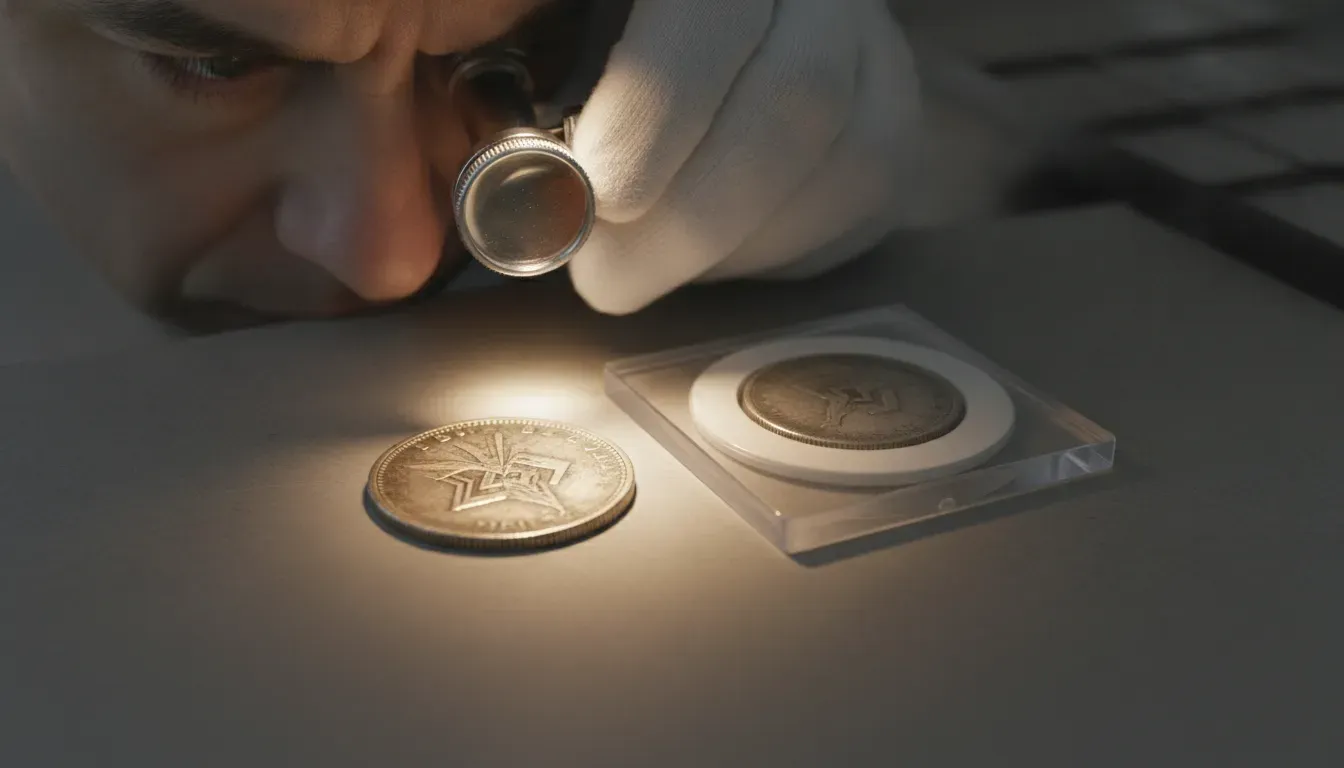
Lighting, magnification and handling can change what you see. Hold a coin by its edge, avoid rubbing it and do not clean it to make it look brighter. Cleaning can leave permanent hairlines and may reduce collector interest even when the coin appears more reflective.
Why do date and mint mark matter?
The date and mint mark identify the specific issue you are examining. They can reveal where a coin was produced and help distinguish a widely available issue from a lower-mintage or harder-to-find variety. The same design type can contain many dates and mint marks with very different levels of collector demand.
Look for the date first, then locate the mint mark using a reliable reference for that series. A missing mint mark is not automatically an error, because some mints did not use one for particular issues. Avoid assuming that an unusual-looking date or mark proves a rare variety. Authentication and attribution require close comparison and, in some cases, specialist review.
For example, a Morgan dollar date and mint mark can change the issue being evaluated, while a gold coin's date can distinguish a common production year from a scarcer one. The same principle applies to cents, nickels, half dollars, commemoratives and world coins. Identification comes before grading because you cannot evaluate scarcity accurately until you know what the coin is.
How do strike and preservation differ?
Strike and preservation describe different parts of a coin's story. Strike refers to the sharpness imparted during minting. Preservation describes what happened afterward. A coin can have a strong strike but acquire marks in storage, or have excellent surfaces while showing soft details because the dies or striking pressure produced a weaker design.
Compare the design's central and peripheral details with known examples of the issue. On some series, collectors pay close attention to the hair, feathers, stars, lettering or wreath. A weak area does not automatically mean wear, especially when surrounding fields retain luster and there are no corresponding signs of circulation.
Preservation also includes whether the surfaces remain original. Dipping, polishing, abrasive cleaning and harsh chemicals can alter a coin's appearance. A professional grader may identify a problem coin rather than assign it a normal numeric grade. That distinction matters because a bright appearance alone does not prove that a coin was well preserved.
What does rarity really mean for a coin?
Rarity is the relationship between how many examples survive, how often they appear for sale and how many collectors want them. A coin can have a low original mintage but be relatively available today, while a coin with a larger mintage can become scarce in a particular grade. Rarity should be evaluated by date, mint mark, variety and condition together.
Collectors often distinguish several kinds of scarcity:
- Low-mintage rarity: Relatively few examples were struck for the issue.
- Survival rarity: Many were made, but few remain in collectible condition.
- Grade rarity: The issue is available in lower grades but difficult to find in an exceptional grade.
- Variety rarity: A recognized die variety or attribution is less common than the normal issue.
- Demand-driven rarity: Collectors compete for an issue because of history, design, series importance or a popular set.
Population reports from grading services can provide useful context, but they are not a complete census. Coins may be submitted more than once, some owners do not submit coins at all and population data can change. Treat a population figure as one piece of research, not as a guarantee of a particular outcome.
Why does PCGS or NGC certification matter?
PCGS and NGC are independent third-party grading services that authenticate eligible coins, assign a grade and encapsulate them in protective holders. Certification gives buyers and sellers a shared reference point for the coin's identity and condition. It can support easier comparisons, but the service name and grade do not remove market risk or replace careful research.
A certified coin's label may identify the denomination, date, mint mark, grade and additional attribution. Review the label against the coin itself, and use the certification number or service resources when appropriate. PCGS explains its grading process and standards through its coin grading overview. NGC publishes its coin grading scale and explains its grading process.
Certification can help with liquidity because the buyer is not starting with an entirely unverified condition claim. It does not mean every certified coin is equally desirable or that a particular grade guarantees a sale price. Compare the exact issue, grade, holder, attribution, eye appeal and current demand before making a decision.
Call 1-888-419-7136 to discuss a PCGS, NGC or raw coin with a Park Avenue Account Specialist.
How should you compare two similar coins?
When two coins appear to be the same, compare them in a consistent order: identify the issue, assess the surfaces, check the strike, consider rarity, then review certification and demand. This approach prevents a familiar label, attractive shine or dramatic story from overshadowing the evidence visible on the coin.
- Confirm the identity: Record the denomination, date, mint mark, variety and metal.
- Check authenticity: Look for signs that require an experienced dealer or independent service.
- Assess condition: Examine wear, marks, luster, color, surfaces and eye appeal.
- Compare strike quality: Separate weak minting detail from later wear.
- Research rarity: Check surviving availability and demand for the exact issue and grade.
- Review certification: Confirm the service, label, grade and attribution when certified.
- Consider the market: Use recent, relevant comparisons rather than a single advertised price.
A raw coin can be worth investigating, but do not assign it a professional grade from a photograph alone. A photo may hide hairlines, altered surfaces, rim damage or an incorrect color balance. In-person examination gives a specialist more information and allows the coin to be handled safely.
Where can you have a coin evaluated in Miami?
Park Avenue Numismatics helps collectors, families and sellers understand what they have before deciding what to do next. The Park Avenue Account Specialists can discuss identification, condition, certification and market context at the company's Miami location on Biscayne Blvd. You can also review rare coins and expert appraisal information or browse certified U.S. gold coins to see how issue details and certification are presented.
Bring any documentation, previous appraisal, grading-service paperwork or family notes you have. Keep coins in their existing holders when possible, and do not clean or polish them before an evaluation. If you are arranging a visit, use the Park Avenue Numismatics contact page or call the team directly.
Call 1-888-419-7136 before you buy or sell a coin and speak with a Park Avenue Account Specialist.
Frequently asked questions about coin grading and value
Does an older coin automatically have more value?
No. Age is only one detail. The date, mint mark, condition, rarity, authenticity and collector demand all matter. A common old coin may be less desirable than a newer issue with greater scarcity or stronger demand.
Is a certified coin always worth more than a raw coin?
Not always. Certification can make a coin easier to compare and may give buyers more confidence, but the exact issue, grade, service, eye appeal and market demand still determine how it is received. Certification fees and the coin's potential also need to be considered.
Can I grade my coin from a photograph?
A photograph can help with an initial discussion, but it cannot reliably show every surface mark, hairline, color change or sign of cleaning. Use photos to organize questions, then seek an in-person evaluation or independent grading when the coin warrants it.
Should I clean a coin before having it evaluated?
No. Cleaning, polishing or abrasive handling can leave permanent damage and may reduce collector interest. Hold a coin by its edge, store it safely and show it in its existing condition to a qualified specialist.
Does a higher grade guarantee a specific selling price?
No. A higher grade can be an important part of an evaluation, but prices depend on the exact issue, authenticity, eye appeal, availability, timing and buyer demand. Past performance is no guarantee of future results, and rare coins remain subject to market risk.
Key takeaway
Coin grading is most useful when it is part of a complete evaluation. Start with the exact date and mint mark, examine strike and preservation, research rarity, and then consider PCGS or NGC certification. If you are unsure what you have, a Miami-based Park Avenue Account Specialist can help you make a more informed next step.





