
Most precious metals portfolios lean heavily on gold and silver. Yet platinum is over 20 times rarer than gold, and palladium drives critical demand from the automotive industry. If you already own gold bullion, adding platinum group metals gives your portfolio a distinct layer of industrial-backed growth potential.
Call 1-888-419-7136 to speak with a Park Avenue Account Specialist about available platinum and palladium bullion products and current pricing.
To buy platinum bullion is to secure a physical asset that is more than twenty times rarer than gold. This extreme scarcity combines with heavy industrial demand to offer you a distinct form of wealth protection. Academic research on precious metals shows that diversifying your holdings into both platinum and palladium helps hedge your portfolio against global market risks. Unlike gold, which acts mainly as a safe haven, these metals gain value from factories and clean energy technology. Their prices rise and fall with factory output, making them highly reactive to economic growth. Adding these rare physical assets to your collection allows you to balance your holdings between industrial growth and wealth preservation. This dual role helps protect your purchasing power.
Buy Platinum Bullion: Why Platinum and Palladium Deserve a Place in Your Portfolio
Platinum and palladium offer portfolio diversification benefits that gold alone cannot match. Their prices respond to industrial cycles and supply constraints, giving you exposure to a different set of market forces. This can help stabilize your overall holdings when one asset class underperforms.
Many gold and silver buyers want to grow their wealth. It is a smart goal. When you look beyond gold, a certified bullion investment can protect your assets. Adding platinum and palladium to your holdings gives you unique benefits. These metals have different price drivers than gold or silver. They can help protect you in times of high market stress. By spreading your risk, you make your holdings much stronger.
The role of physical scarcity
When you buy platinum bullion, you get an asset that is hard to find. Platinum is over 20 times rarer than gold. Global platinum production is concentrated among just a few nations, according to the United States Geological Survey, making the metal highly scarce.
Industrial demand vs investment hedging
Many buyers know that gold acts as a safe haven when markets crash. It is a proven shield. But other precious metals also play a key role in protecting your wealth. Peer-reviewed research shows that gold, silver, platinum, and palladium can all help reduce your risk during global crises.
These assets do not all move in the same way. Platinum and palladium have strong industrial uses in automotive catalytic converters, hydrogen fuel cells, and electronics manufacturing. While gold sits in vaults, these metals are actively consumed by factories every day.
Supply limits and global risks
Even with its high value, platinum is not a common currency. Over 70% of the world's platinum supply comes from South Africa, with Russia as another major producer. These same two nations also dominate palladium production. Trade wars, labor strikes, or political tension can disrupt mining output fast, causing supply shocks that drive prices higher.
Platinum vs. Gold: Key Differences Every Investor Should Know
Platinum and gold serve different roles in a portfolio. Gold is a monetary safe haven with a vast global market. Platinum is an industrial metal with tighter supply and higher price volatility. Understanding these differences helps you decide how much of each to hold.
Many people start their precious metals journey with gold. But as you look to build your wealth, you may want to buy platinum bullion as well. Both metals offer a strong hedge, but they behave very differently in the market.
Industrial demand and rarity
The main gap between these two metals lies in how the world uses them. Gold serves mostly as a store of value, a safe haven, and a form of jewelry. In contrast, platinum is a highly industrial metal. Its price is closely tied to factory needs.
- Rarity factor: Platinum is over 20 times rarer than gold on an annual mining basis, which makes its supply much tighter.
- Industrial use: Most platinum goes into automotive catalytic converters, so its demand rises and falls with global vehicle production.
- Monetary history: Gold has a long history as money. Political unrest in the primary platinum mining regions has kept it from becoming a common currency.
Gold mining is distributed across many countries, which helps stabilize its supply. Platinum production, by contrast, is highly concentrated in southern Africa. According to the United States Geological Survey Mineral Commodity Summaries, just two countries account for the vast majority of global platinum output. This concentration makes the metal sensitive to regional events.
Price swings and liquidity
Because industry drives platinum, its price can swing significantly. When vehicle production is high, platinum can outperform. But when the economy slows, platinum often drops more than gold. This creates both risk and opportunity for investors.
Liquidity is another key difference. Gold is the easiest precious metal to buy and sell worldwide. Platinum is also traded daily by bullion dealers, though bid-ask spreads may be wider during periods of low market volume. This makes platinum a strong candidate for long-term holding rather than frequent trading.
Before you make a move, read our gold bullion buying guide to see how to balance these assets alongside gold and silver.
| Precious Metal | Primary Demand Driver | Market Volatility | Relative Rarity | Global Liquidity | Currency Status |
|---|---|---|---|---|---|
| Physical Gold | Monetary store of value and safe haven assets. | Lower price swings and steady long-term growth. | More abundant compared to platinum. | Very high liquidity with instant trade options. | Universally accepted as a form of money. |
| Physical Platinum | Industrial uses and automotive catalytic converters. | Higher price swings driven by industrial cycles. | Extremely scarce , over 20 times rarer than gold. | Moderate liquidity that may take longer to sell. | Not used as common currency due to supply region concentration. |
Understanding Palladium as an Investment Vehicle
Palladium is a sister metal to platinum with an even tighter supply profile. Over 80 percent of global palladium production comes from just Russia and South Africa. Its primary use in catalytic converters for gasoline engines creates cyclical demand tied to global auto production.
Automotive demand and catalytic converters
When you look to expand your holdings, you might decide to buy palladium bullion. This metal is a sister to platinum. It offers a unique mix of industrial use and investor interest. Academic research shows that palladium helps with portfolio diversification during times of stress, making it a key option to help protect your wealth.
The biggest use for palladium is in the automotive industry. It is the key metal in catalytic converters for gasoline-powered vehicles. Because of this, demand moves in cycles with global car production. When vehicle manufacturing grows, palladium demand can surge. But when production slows, the price may decline.
Geopolitical supply risks and volatility
Most of the world's palladium comes from just two countries: Russia and South Africa. Any political unrest or trade restrictions in these regions can quickly tighten the market. This concentrated supply often leads to sharp price movements. Research on precious metals shows that palladium exhibits different risk transmission patterns than gold during global shocks. Past performance is no guarantee of future results, but these traits mean palladium tends to be more volatile than gold or platinum.
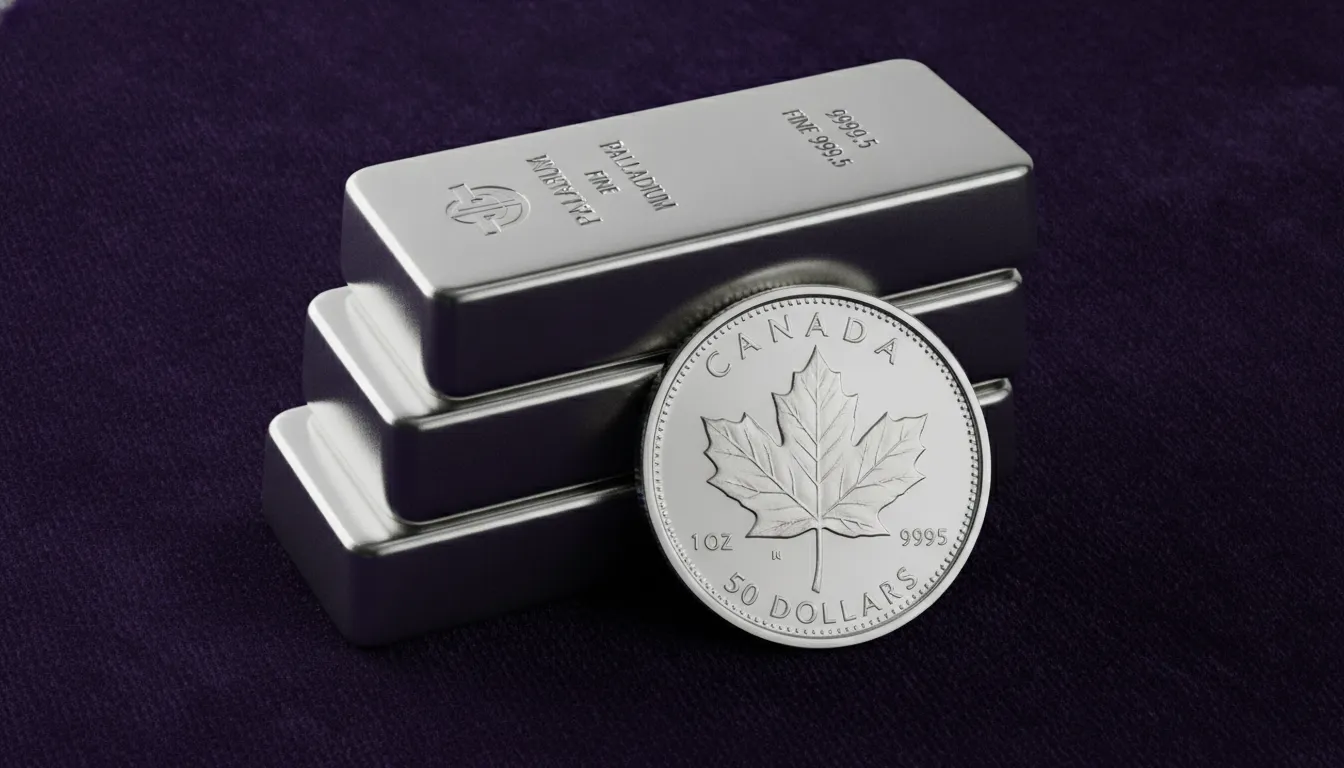
Palladium coins and bars for investors
If you want to buy palladium bullion, you have several high-quality choices:
- American Palladium Eagle: Struck by the United States Mint. Contains one troy ounce of pure palladium with a face value of one hundred dollars.
- Canadian Palladium Maple Leaf: Struck by the Royal Canadian Mint. Known for its high purity and the iconic maple leaf design.
- Palladium bars: Produced by trusted private refineries including Valcambi and PAMP Suisse. Offer lower premiums than government-minted coins.
Always verify the stamp on your bullion before purchasing. Look for a clear weight mark and a minimum purity of .9995.
Platinum Bullion Products for Your Portfolio
You have two main options when buying platinum bullion: government-minted coins from sovereign mints and private refinery bars. Coins carry higher premiums and legal tender status. Bars offer more ounces per dollar but require a trusted refiner's stamp for easy resale.
If you want to buy platinum bullion, you have many choices. Physical metal gives you direct ownership of your wealth.
Sovereign Mint Coins
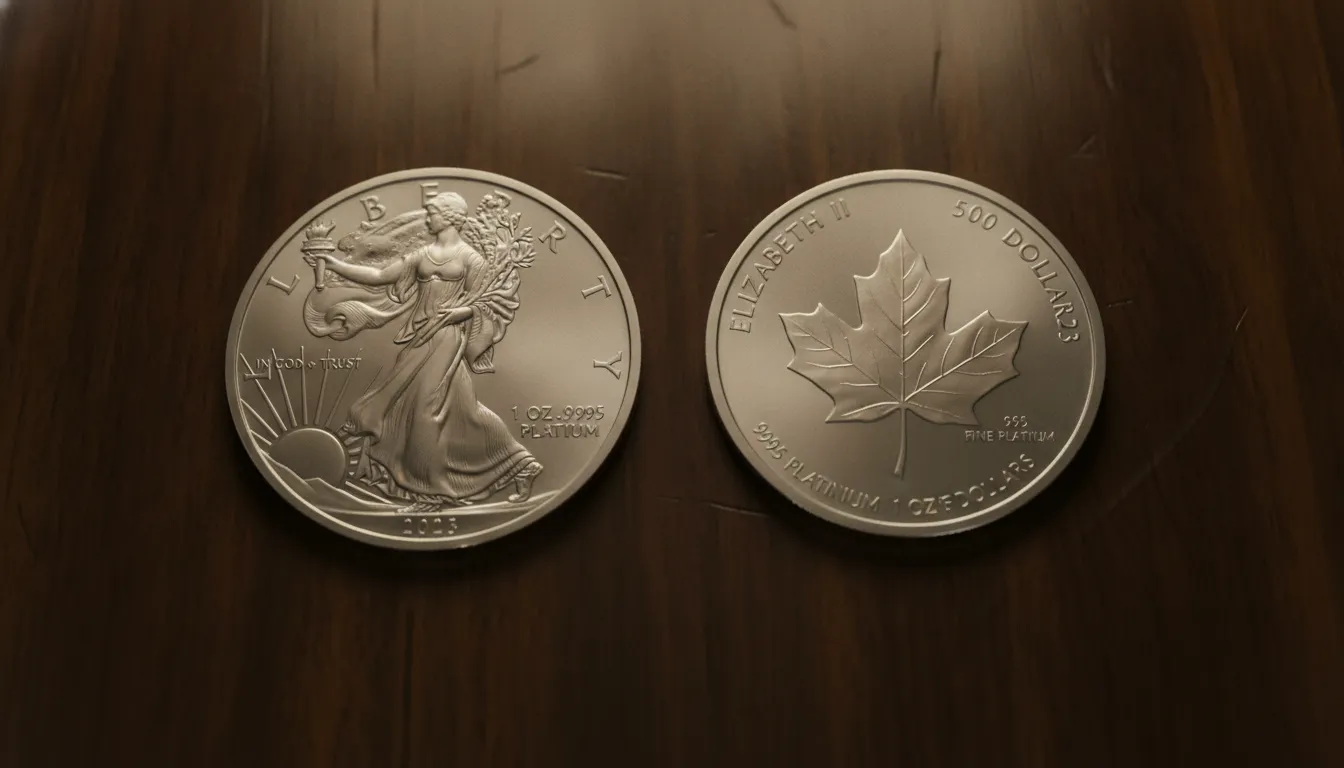
Sovereign mint coins are a trusted way to hold platinum. These coins carry legal tender values backed by the issuing governments. The American Platinum Eagle is a flagship option. Debuting in 1997 with a one-hundred-dollar face value, this coin features a design that honors the Statue of Liberty.
Another top choice is the Canadian Platinum Maple Leaf, first minted in 1988. You can also buy the Platinum Austrian Philharmonic to diversify across different mints. Each of these government coins is struck to a minimum purity of .9995, making them easy to trade internationally.
Private Refinery Bars
If you want to buy platinum bullion at a lower premium over spot, private bars are an excellent choice. Top refineries like Credit Suisse, Valcambi, and Johnson Matthey stamp their bars with a logo, weight, and purity mark. These products offer direct physical ownership without the collectible premiums associated with sovereign coins. They are a staple of any certified bullion investment strategy.
You can find these bars in sizes ranging from one gram to ten ounces. The one-ounce bar is the most commonly traded size.
Purity and Premium Choices
When you buy platinum bullion, understand how premiums are set. The total cost includes the spot price of platinum plus a premium for minting, shipping, and dealer margin. Government coins carry higher premiums than private bars because of their detailed design and sovereign backing.
Investment-grade platinum must be at least .9995 pure. Most major mints exceed this standard. Whether you choose a proof coin or a standard bar, buy from a trusted source that guarantees weight and purity.
What to Look for When Buying Platinum and Palladium Bullion
Follow these five steps to ensure a secure purchase: verify purity, choose a recognized mint or refiner. Compare premiums, work with a licensed dealer, and inspect the product markings before completing the transaction.
Steps for a secure purchase
If you want to buy platinum bullion to protect your wealth, follow a clear purchasing process. Checking the details of each item helps you avoid costly mistakes.
- Verify metal purity: Ensure your metal meets industry standards. High-grade platinum must be at least .9995 pure, while palladium requires .9995 or higher.
- Choose a known mint or refiner: Buy from trusted producers including the United States Mint, the Royal Canadian Mint, the Austrian Mint, Credit Suisse, Valcambi, PAMP Suisse, and Johnson Matthey.
- Compare product premiums: Every coin and bar carries a premium over the spot price. Bars from private refiners typically offer the lowest premiums. Sovereign coins cost more but provide legal tender status and global recognizability.
- Use a licensed dealer: Work with an established dealer who provides clear certificates of authenticity and transparent pricing. Park Avenue Numismatics has served clients since 1988 with an A+ BBB rating.
- Inspect markings and documentation: Before finalizing your purchase, verify that each bar or coin has a visible weight, purity mark, and mint or refiner stamp.
Purity and dealer trust
Beyond verifying the metal itself, you must plan for secure storage. Many investors use professional vaulting services to protect their platinum, palladium, gold, and silver from theft or damage. Keeping physical assets in an insured depository preserves their condition and ensures they remain ready for resale.
Home safes are a common alternative, but they carry higher risk of theft and lack professional insurance. Choose a storage method that matches the size of your holdings.
Storage, Liquidity, and Premiums for Platinum Group Metals
Platinum and palladium require specific planning for storage and resale. Their smaller market size means wider bid-ask spreads and potentially longer selling times compared to gold. Factor these costs into your purchase decision.
Secure storage options for physical bullion
Physical platinum is a dense form of high value. You have three main storage paths to keep your holdings safe:
- Home safe: Keeps your metal close and accessible. Requires a heavy, bolted safe with a high fire rating to protect your investment.
- Bank safe deposit box: Provides institutional-grade physical security. Access is limited to normal banking hours.
- Professional depository: Uses an insured, climate-controlled vault. This is the best option for larger holdings because it removes home theft risk and includes insurance coverage.
Resale liquidity and price swings
Platinum group metals do not trade the same way as gold. Platinum prices are more volatile due to the metal's heavy industrial use. Automotive and green energy cycles can cause rapid price shifts.
These swings also affect how quickly you can sell. Platinum and palladium are less liquid than gold, which means it may take more time to find a buyer at full market value. Bid-ask spreads at local coin shops can be wider. Plan your selling strategy before you buy.
Understanding premiums and exit planning
When you buy platinum bullion, you pay a markup over the spot price. These premiums vary by product type. Sovereign coins carry higher markups than bars. Market demand and product availability also influence premium levels.
A smart exit strategy accounts for both entry costs and market conditions. Monitor spot prices regularly so you know when dealer buyback offers are favorable. Our precious metals investing FAQs offer additional guidance on market dynamics.
Frequently Asked Questions
Is it worth buying platinum bullion?
Yes. Buying platinum bullion can protect your savings. Its price moves based on industrial demand rather than just investor sentiment. Peer-reviewed research shows that platinum serves as a strong hedge against market risks during crises. Since this metal is twenty times rarer than gold, it offers portfolio value that gold alone cannot provide.
What is the cheapest way to buy platinum?
The cheapest way to buy platinum is to purchase large bullion bars rather than sovereign coins. Bars from private refiners such as Valcambi, Credit Suisse, and Johnson Matthey carry lower premiums over the spot price because they cost less to produce. One-ounce and ten-ounce bars offer the best value per ounce of metal.
What is one pound of platinum worth?
Precious metals like platinum are weighed in troy ounces rather than standard pounds. One troy pound contains approximately 14.58 troy ounces. To find the current value of a pound of platinum, multiply the live spot price per troy ounce by 14.58. Spot prices fluctuate throughout each trading day based on global supply and demand.
Is platinum more liquid than gold?
No. Platinum is less liquid than gold. The gold market is significantly larger with more daily buyers and sellers. Platinum may take longer to sell at full market value, and bid-ask spreads can be wider. However, established bullion dealers actively buy back platinum and palladium every day, ensuring you can always convert your metal to cash when needed.
Ready to Buy Platinum Bullion for Your Precious Metals Portfolio?
Paper currencies and volatile stock markets face constant risks from inflation, which can quietly erode your purchasing power. Waiting to buy physical precious metals can mean paying higher premiums or facing supply constraints during sudden market shifts. Securing physical precious metals today helps protect your wealth.
Call 1-888-419-7136 to check current availability and pricing on platinum and palladium bullion. Our Park Avenue Account Specialists will guide you through every step of building your physical holdings.





