
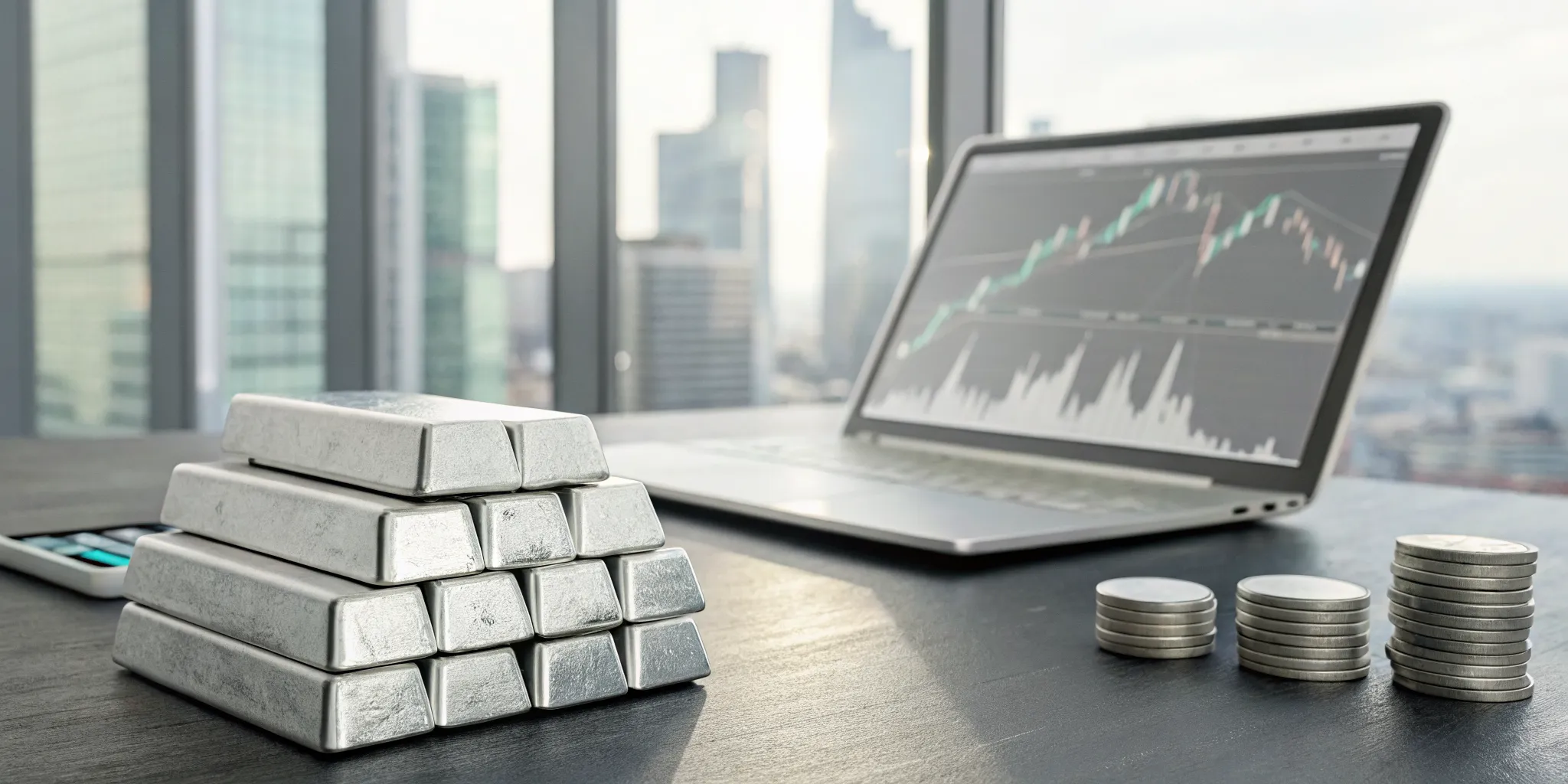
Palladium is a metal of contrasts. It’s a precious metal, rarer than platinum, yet it’s also an industrial workhorse. Over half of the world's supply is used in catalytic converters, making it essential for the global automotive industry. This direct link to manufacturing means its value is driven by real-world consumption, not just investor speculation. For a savvy investor, this creates a unique opportunity. Understanding these supply and demand dynamics is the key to unlocking palladium's potential. This guide will walk you through what makes this metal tick and provide the essential steps to buy palladium online from reputable sources.
Key Takeaways
- Use palladium for strategic diversification: Its price moves differently than gold's because of its industrial use, which can balance your portfolio, but be prepared for its inherent volatility.
- Choose the right palladium type for your goals: If you want the most metal for your money, choose bars. For a mix of investment and collectibility with high liquidity, go for government-minted coins. Rounds offer a balance between the two.
- Protect your investment from start to finish: Your security plan involves two key parts: first, vetting your dealer for a strong reputation and transparent policies, and second, choosing a secure storage method like a professional vault or a properly insured home safe.
What Is Palladium and Why Invest In It?
If you're looking to add another layer to your investment portfolio, palladium is worth a serious look. This shiny, silvery-white metal is one of the rarest precious metals, even more so than platinum. Discovered in 1803, it's a member of the platinum group metals and has gained significant traction in recent years. Investing in palladium bullion is a practical way to diversify your holdings, as its market performance often moves independently of other metals. Its growing popularity isn't just a trend; it's driven by unique supply and demand factors that set it apart from its more famous cousins, gold and silver.
How Palladium Compares to Gold, Silver, and Platinum
When building a precious metals portfolio, it's helpful to understand how each metal functions. While gold is the traditional safe-haven asset, palladium plays a different role. The factors that influence palladium's price are quite different from those affecting gold bullion, which means adding palladium can help balance your investments. Think of it this way: gold's value is tied to monetary policy and investor sentiment, while palladium's is heavily linked to industrial consumption. This distinction makes it a powerful tool for diversification, offering a hedge against fluctuations in other parts of your portfolio, including silver and platinum.
What Drives the Price of Palladium?
So, what exactly makes palladium so valuable? The answer lies in its industrial applications. Over half of the world's palladium supply is used to create catalytic converters in gasoline-powered cars, which are essential for reducing harmful emissions. This single application creates immense and consistent demand. Beyond the auto industry, palladium is also used in dentistry, electronics, and even jewelry. Because it's so rare and the supply is concentrated in just a few countries, any shifts in mining output or industrial demand can have a significant impact on its price. This unique combination of rarity and essential industrial use is what makes palladium a compelling, albeit sometimes volatile, investment.
Your Palladium Investment Options
Once you’ve decided to add palladium to your portfolio, the next step is choosing the right form for your investment. Palladium typically comes in three main formats: bars, coins, and rounds. Each has its own set of characteristics, and the best choice for you really depends on your personal investment strategy, budget, and goals. Are you focused purely on the weight of the metal, or are you also interested in collectibility and design? Thinking through these questions will help you find the perfect fit. Exploring the different types of palladium bullion is a great way to see what resonates with your collection or investment style. Let's walk through what makes each option unique.
Palladium Bars
If your primary goal is to acquire the most palladium for your money, bars are an excellent choice. Because their production is less intricate than coins, their value is tied almost exclusively to palladium's weight and purity. This results in lower premiums over the spot price, making them a cost-effective option. Bars are produced by various private and sovereign mints and come in a wide range of sizes, from a single gram to a kilogram or more. This flexibility makes them accessible for investors at all levels and simplifies storage for larger quantities. Whether you're making a small initial purchase or a substantial addition, you can find a bar that fits your budget.
Palladium Coins
Palladium coins offer a fascinating blend of intrinsic metal value and numismatic appeal. Unlike bars, these coins are produced by government mints and carry a legal tender face value, though this is largely symbolic since their metal value is far higher. Popular examples include the American Palladium Eagle and the Canadian Palladium Maple Leaf. These coins are sought after for their .9995 pure palladium content and their beautiful, recognizable designs and official backing. This government guarantee can make them easier to liquidate and adds a layer of collectibility that might lead to appreciation beyond the spot price, making them a favorite among those who invest in rare coins for sale.
Palladium Rounds
Palladium rounds are a great middle-ground option between bars and coins. These are coin-shaped pieces of palladium produced by reputable private mints, so they do not have a face value or legal tender status. Like bars, their price is closely tied to the spot price of palladium, and they generally have lower premiums than official government coins. For investors who appreciate the classic shape and intricate designs of coins but want to focus on acquiring the metal itself, rounds are an ideal solution. They offer more aesthetic appeal than a standard bar and come in a variety of creative designs, all while being easily tradable within the precious metals market.
Bars vs. Coins vs. Rounds: Which Is Right for You?
Once you decide to invest in palladium, the next question is what form to buy it in. You’ll generally find three options: bars, coins, and rounds. Each has its own set of advantages, and the right one for you really comes down to your personal investment strategy and goals. Think of it like this: are you focused purely on acquiring the most metal for your dollar, or do you also value recognizability, collectibility, and ease of trade? Making this choice upfront helps you focus your search and compare products more effectively.
Palladium bars are exactly what they sound like: rectangular slabs of .9995 pure palladium, stamped with their weight, purity, and the refiner’s mark. They are produced by private mints and are designed for straightforward investment. Coins, on the other hand, are produced by government mints and carry a legal tender face value. This government backing makes them instantly recognizable and trusted worldwide. Finally, rounds are privately minted, coin-shaped pieces of palladium. They often feature unique designs but don’t have a legal tender value, existing in a space between the utility of a bar and the artistry of a coin. Let’s break down how these differences play out in the real world when it comes to cost, liquidity, and storage.
Comparing Liquidity and Resale Value
When you invest, you always want to think about the exit strategy. How easily can you sell your asset? This is where liquidity comes in. Government-minted palladium coins, like the American Eagle or Canadian Maple Leaf, are typically the most liquid option. Their authenticity and weight are guaranteed by a sovereign government, making them trusted and easily resold to dealers and collectors around the globe.
Palladium bars from well-known refiners like PAMP Suisse or Valcambi also have excellent liquidity, especially in standard sizes like one and ten troy ounces. Because their main value is the metal itself, they are simple to price and trade. Privately minted rounds can be slightly less liquid than sovereign coins, but they are still a popular and widely accepted form of palladium bullion.
Factoring in Storage and Costs
Your budget and storage plan also play a big role in this decision. Palladium bars often carry the lowest premium over the spot price. Since their production is less intricate than that of coins, you get more metal for your money, making them a favorite for bulk investors. You can find bars in a wide range of sizes, from a single gram to a kilogram, giving you flexibility.
Coins command a higher premium due to their detailed designs, minting costs, and status as legal tender. This premium can sometimes be recovered upon resale, especially if the coin has any numismatic or collectible appeal. Rounds usually fall in the middle, with lower premiums than coins but slightly higher than bars. When considering storage, smaller items are easier to secure at home, while larger investments might require professional vaulting, a service often included when you establish a precious metals IRA.
Where to Buy Palladium Online
Finding a trustworthy online dealer is the most important step in buying palladium. You want a partner with a solid reputation, transparent pricing, and a quality selection. To help you get started, here are a few of the most reputable dealers in the precious metals market. Each offers a unique experience, so you can find the one that best fits your investment style.
Park Avenue Numismatics
With over 35 years of experience, Park Avenue Numismatics is a trusted leader for investors seeking high-value assets. We specialize in rare coins and precious metals, offering a curated selection of palladium bullion for discerning portfolios. Our team provides expert guidance to help you make informed decisions, whether you are a new or seasoned investor. We pride ourselves on our A+ BBB rating and our commitment to building long-term relationships with our clients. For those who value deep industry knowledge and personalized service, we offer a straightforward and secure way to acquire physical palladium.
APMEX
APMEX is known for its extensive inventory, making it a popular choice for many investors. They offer a wide selection of palladium products, with sizes ranging from small one-gram bars to larger kilogram options. This variety caters to different investment strategies and budgets, providing accessible entry points for new buyers while also serving experienced investors looking to make substantial additions to their holdings. Their website is organized to help you easily compare products and find exactly what you’re looking for when adding palladium to your portfolio.
JM Bullion
JM Bullion is another well-regarded online dealer that offers palladium in both bars and coins. Their website is known for being user-friendly, which simplifies the process of finding and purchasing the right investment for your goals. While their inventory can fluctuate and some popular items may be out of stock due to high demand, they provide a solid range of products from reputable mints. It’s a good idea to check their site regularly or sign up for in-stock alerts if you have a specific palladium product in mind.
Bullion Exchanges
For investors who like to keep a close eye on market movements, Bullion Exchanges is a compelling option. This company sells precious metals and distinguishes itself by providing live price charts for gold and silver directly on its website. While they don't have a live chart specifically for palladium, this feature demonstrates their commitment to price transparency. It’s a convenient tool for investors who want to track general market trends before making a purchase. They offer a variety of palladium products, making them a solid choice for the data-driven buyer.
How to Compare Prices Between Retailers
When you're ready to buy palladium, you'll notice that prices can vary from one dealer to another. Getting the best value isn't just about finding the lowest sticker price. You need to look at the complete picture, including premiums, shipping, and other potential costs. A few minutes of comparison shopping can make a real difference to your bottom line, ensuring more of your money goes into the metal itself. Let's walk through the key factors to compare so you can make your purchase with confidence.
Understanding Spot Price vs. Dealer Premiums
The first step in comparing prices is to know the difference between the spot price and the dealer's premium. The spot price is the current market value of palladium, which fluctuates throughout the day. The price you actually pay, however, includes a dealer premium. This is a percentage added on top of the spot price that covers the dealer's business costs, from fabrication to operations, and includes their profit margin.
This premium is where you'll see the biggest variation between retailers. It can also differ based on the product type; for example, a one-ounce bar might have a lower premium than a one-ounce government-minted coin. When you compare palladium products, always check how much the dealer's asking price is over the current spot price to understand the true cost.
Looking at Shipping Costs and Insurance
A low product price can be misleading if the shipping costs are high. Since precious metals are heavy and valuable, shipping can be a significant expense. Before you check out, always look at the dealer's shipping policy. Many reputable sellers offer free shipping on orders that meet a certain dollar amount, which can be a great way to save if you plan on making a larger purchase.
Just as important is shipping insurance. Your investment needs to be protected from the moment it leaves the dealer's vault until it's in your hands. Most trusted dealers include full insurance in their shipping service, but it's something you should always confirm. A dealer who prioritizes secure and insured delivery shows a commitment to protecting their clients' assets, which is a non-negotiable part of any online purchase.
Finding Discounts and Special Offers
Smart investors know that patience can pay off. Many online dealers run regular sales and special promotions that can help you acquire palladium for a lower premium. It’s a good idea to check for "on sale" sections or clearance items on a dealer's website. These deals can apply to a wide range of products, from bars to specific coins the dealer may have in high supply.
Another great strategy is to sign up for the email newsletters of dealers you trust. This is often the first place you'll hear about exclusive offers, new inventory, or flash sales. Taking advantage of these discounts allows you to stretch your investment dollars further and build your palladium holdings more efficiently over time.
How to Choose a Reputable Palladium Dealer
Finding the right dealer is just as important as choosing the right investment. A reputable partner ensures you get authentic products at fair prices, with the support you need to manage your assets. When you're ready to invest in palladium, you're not just buying a commodity; you're entering a relationship built on trust. This partnership can make all the difference in your experience as an investor, providing you with expert guidance and a secure place to conduct transactions. Vetting a dealer thoroughly protects your investment and gives you confidence in your purchase. Look for a company with a long track record, transparent practices, and a commitment to customer service. A dealer who has been in the business for years has likely seen it all, from market highs to lows, and has the expertise to guide you. They should be more than just a storefront; they should be a resource you can turn to with questions. The precious metals market can feel complex, but a great dealer simplifies it for you. They take the time to understand your goals and help you find the right products to meet them. Here are the key areas to investigate before you make a purchase.
Check Their Reputation and Customer Reviews
Your first step is to play detective and research the dealer's history and reputation. How long have they been in business? A company with decades of experience, like our team at Park Avenue Numismatics, has weathered market fluctuations and built a foundation of trust. Look for industry credentials, such as a high rating from the Better Business Bureau. Beyond official ratings, dig into customer reviews on independent platforms. A large number of positive reviews indicates a pattern of good service and quality products. Pay attention to how the dealer responds to any negative feedback, as this reveals their commitment to customer satisfaction.
Review Their Product Selection
A great dealer acts as your gateway to the market, and their inventory should reflect that. Look for a company that offers a diverse selection of palladium bullion, including both bars and coins from various reputable mints. This variety allows you to choose products that align with your specific investment strategy and budget, whether you're making a large purchase or starting small. Also, check for product availability. While some rare items may be periodically out of stock, a reliable dealer should maintain a healthy inventory of popular palladium products. This ensures you can acquire the assets you want when the time is right.
Ensure Pricing Is Transparent
Transparent pricing is non-negotiable. A trustworthy dealer will always be upfront about their costs, with no hidden fees waiting to surprise you. Prices for bullion products are typically based on the current spot price of the metal plus a dealer premium. This premium should be clearly stated or included in the final price you see. Be wary of any dealer who isn't clear about their pricing structure. Before committing, make sure you understand the total cost of your purchase. This clarity is essential for making informed financial decisions and is a hallmark of a dealer who values their customers, something we emphasize in our Gold IRA Starter Kit.
Examine Shipping and Return Policies
Once you’ve made a purchase, you want to know your investment is safe. A reputable dealer will have clear, secure shipping policies. Look for details on whether packages are insured, how they are tracked, and what the packaging looks like (it should always be discreet). Some dealers offer free shipping on orders over a certain amount, which can be a significant cost saving. It's also wise to review the return policy. While you hope you'll never need it, understanding the process for returns or order issues provides an extra layer of security and peace of mind, ensuring you're covered if anything goes wrong.
Confirm Payment and Buyback Options
A flexible dealer makes it easy to both buy and sell your precious metals. On the front end, check for a variety of secure payment options, such as bank wire, personal check, and credit card. This allows you to choose the method that works best for you. More importantly, consider your exit strategy. A top-tier dealer will have a straightforward buyback program, offering to repurchase the palladium you bought from them. This provides crucial liquidity, ensuring you can sell your assets when you need to. The dealer should be transparent about their buyback prices, giving you confidence in the full lifecycle of your investment.
Is Palladium a Good Fit for Your Portfolio?
This is the key question every investor should ask before adding a new asset. Palladium presents a unique case; it's a rare, precious metal that also plays a critical role in industry. This dual identity gives it a distinct market position, but it also means its price is influenced by factors that don't always affect gold or silver. Before you decide to buy palladium, it's important to think about how it fits into your personal financial strategy and your tolerance for risk. It’s not just about adding another metal to your safe, but about making a calculated move that supports your long-term objectives.
For many, palladium is an excellent tool for diversification, offering a hedge against fluctuations in other assets. Its price movements can be independent of gold, providing a valuable balancing effect within a portfolio. However, its heavy use in the automotive sector also ties its fate to global economic cycles and manufacturing output. This industrial connection can lead to significant price swings, which can be a source of opportunity for some and a point of caution for others. Ultimately, the decision comes down to you. By carefully weighing the benefits of diversification against the inherent risks, you can determine if palladium is the right strategic addition to your investment collection.
The Role of Diversification
One of the strongest arguments for adding palladium to your holdings is diversification. Because its price is driven by different economic forces than gold, it can act as a powerful counterbalance in your portfolio. While gold is primarily a safe-haven asset, palladium’s value is heavily tied to industrial demand. This means when one is down, the other may be up, helping to smooth out overall returns. With its high purity, typically .9995 fine, and growing interest from investors, palladium bullion has become a popular choice for those looking to spread their risk beyond the traditional precious metals. It offers a way to participate in industrial growth while still holding a tangible, rare asset.
Understanding the Risks
While palladium offers great potential, it’s crucial to be aware of the risks. The metal’s value is heavily dependent on the automotive industry, where over half of all palladium is used in catalytic converters to reduce emissions. This reliance means that a slowdown in car manufacturing or a shift toward electric vehicles (which don't use catalytic converters) could significantly impact its price. This industrial link makes palladium more volatile than gold. While you can hold palladium in a self-directed IRA for potential tax advantages, it's important to understand the specific rules and contribution limits. Exploring a precious metals IRA is a great step, but be sure you're comfortable with the volatility that comes with this particular metal.
How to Store Your Palladium Securely
Once you’ve made your investment, the next critical step is protecting it. Deciding how to store your physical palladium is just as important as choosing the right bars or coins. Your storage method needs to safeguard your assets from theft, damage, and environmental harm, ensuring your investment remains secure for years to come. It’s not just about preventing someone from walking away with your assets; it’s also about preserving the metal’s physical condition. Scratches, dings, or tarnishing can reduce the resale value of your investment, so proper handling and storage are essential.
The two primary options are storing it yourself at home or using a professional vault service. The right choice depends on your personal comfort level, the size of your investment, and your long-term goals. Someone with a small holding might feel comfortable with home storage, while an investor with a significant portfolio will likely lean toward a professional depository. Protecting your palladium bullion properly ensures its value and condition are preserved, giving you peace of mind.
Storing Palladium at Home
Keeping your palladium at home gives you direct control and immediate access, but it also puts the full responsibility for security on your shoulders. If you choose this route, don't cut corners. Start by investing in a high-quality, heavy-duty safe that is both fireproof and waterproof. For added security, have it professionally bolted to the floor in a discreet location. Next, review your insurance. A standard homeowner's policy often has very limited coverage for precious metals, so you will likely need a separate policy or a rider to fully insure your holdings. Finally, consider the environment. Store your palladium in a dry, climate-controlled area to prevent any potential tarnishing or damage over time.
Using Professional Vault Storage
For many investors, professional vault storage is the preferred method. These specialized facilities, also known as depositories, offer a level of security that is nearly impossible to replicate at home. Think of advanced surveillance systems, armed guards, and strict access protocols. It’s a hands-off solution that provides significant peace of mind. Most professional vaults also include comprehensive insurance coverage as part of their service, protecting your assets against theft, loss, or damage. While you won't have 24/7 access, these facilities are designed for investors and provide straightforward procedures for retrieving or selling your metals when you're ready. Choosing a dealer with a long-standing reputation, like our team of experts, can help you find a trusted storage partner.
Related Articles
- Buy & Sell Rare Palladium Bullion Online | Palladium Bullion for Sale | Precious Metals & Rare Coins Dealer | Antique Coins - Park Ave Numismatics
- Buy & Sell Rare Palladium Coins Online | Palladium Coins for Sale | Precious Metals & Rare Coins Dealer | Antique Coins - Park Ave Numismatics
- Buy & Sell Rare Palladium Bars Online | Palladium Bars for Sale | Precious Metals & Rare Coins Dealer | Antique Coins - Park Ave Numismatics
- Certified Palladium American Eagles | Precious Metals & Rare Coins Dealer | Antique Coins - Park Ave Numismatics
- Park Ave Numismatics | Rare Coins | Precious Metals | Collectible Coins | Precious Metals & Rare Coins Dealer | Antique Coins - Park Ave Numismatics
Frequently Asked Questions
Why is palladium often more expensive than platinum? That's a great question, as they are both part of the same family of metals. The price difference really comes down to industrial demand. Palladium is the primary metal used in catalytic converters for gasoline-powered cars, which make up the majority of the global market. Platinum is used more in diesel engines. Because the demand for gasoline vehicles has been stronger, the demand for palladium has followed suit, pushing its price up.
Can I include palladium in a retirement account like an IRA? Yes, you absolutely can, and it's a popular strategy for long-term diversification. Certain palladium bars and coins that meet IRS purity standards, like the American Palladium Eagle, are eligible for inclusion in a self-directed IRA. This allows you to hold a physical asset within your retirement portfolio, offering potential tax advantages. Working with a dealer who specializes in precious metals IRAs can make the process straightforward.
What's the simplest way to understand the price I'm paying? Think of the final price as two parts: the spot price and the premium. The spot price is the live market value of the metal itself, which changes throughout the day. The premium is the amount the dealer adds to cover the costs of minting, sourcing, and operating their business. Your goal is to find a reputable dealer who offers a fair and transparent premium on the product you want.
Are coins a better investment than bars because they are legal tender? Not necessarily, it just depends on your personal strategy. The legal tender value on a coin is mostly symbolic since its metal value is far greater. The real benefit of a government-minted coin is its universal recognizability, which can make it very easy to sell later. Bars, on the other hand, typically have lower premiums, so they are a cost-effective way to acquire more ounces of the metal itself.
With its price tied to the auto industry, is palladium too risky? This is an important point to consider. Palladium's connection to the auto industry does make it more volatile than gold, which is a risk you should be comfortable with. However, that same industrial link is what makes it such an effective diversification tool. Its price often moves independently from other assets in your portfolio, which can provide balance. The decision really comes down to your personal risk tolerance and whether its unique profile fits your financial goals.





