
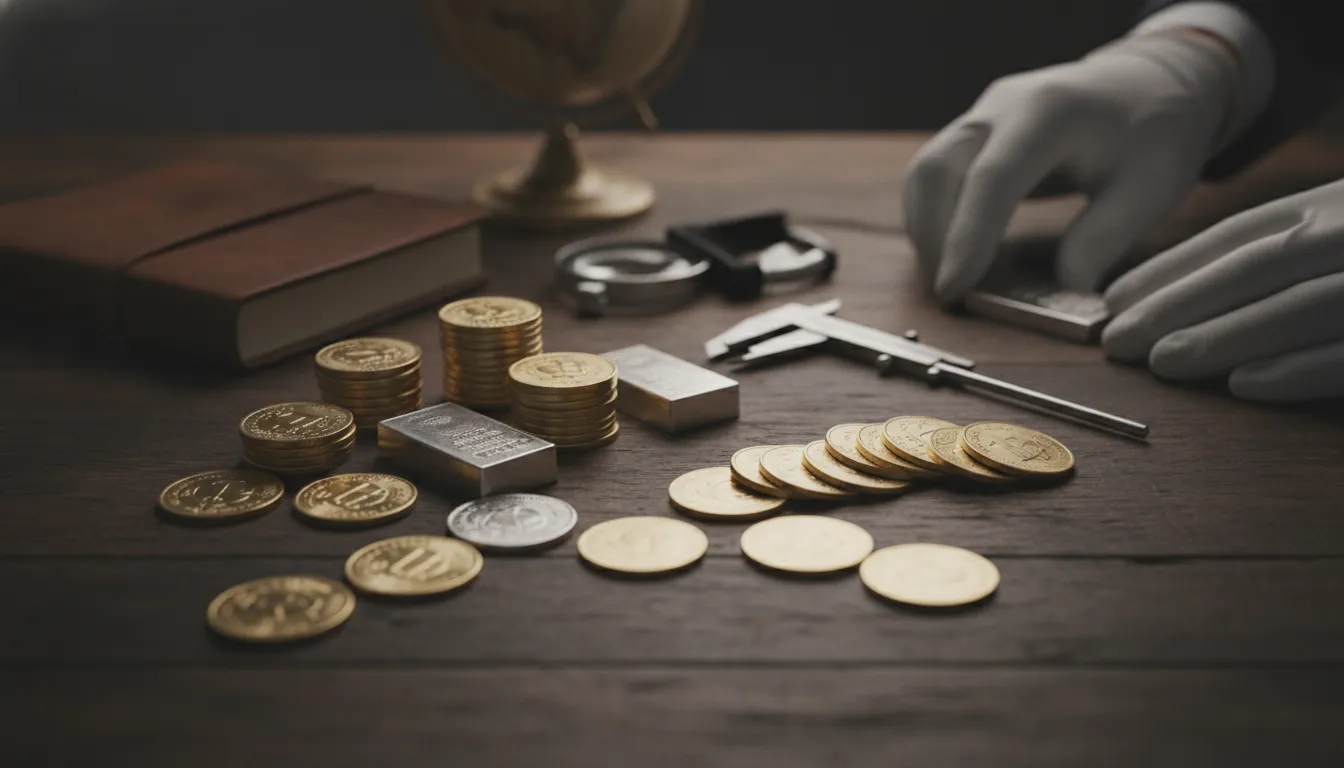
Two products can contain the same precious metal yet differ meaningfully in format, premium, documentation, resale process, and handling requirements. A careful comparison starts before you look at a price.
When comparing bullion, confirm the metal, weight, fineness, total cost, dealer reputation, records provided, buyback terms, and secure delivery or storage process. Precious-metals prices fluctuate, and no product is risk-free or guaranteed to produce a return.
The right first step is to define what you are buying and what a satisfactory outcome means for you. That gives you a practical standard for weighing product differences, dealer terms, and the level of documentation and service you should expect.
What Should You Check First When Comparing Bullion?
Before you compare brands, designs, or dealer quotes, define what you need the bullion to do. A clear first-pass checklist helps you separate a suitable physical precious-metals product from an attractive offer that does not fit your goals, budget, records, or risk tolerance.
- Goal: Decide whether you are seeking direct exposure to a precious metal, a tangible store of wealth, a gift, a collection addition, or a product you may later sell. Your purpose affects the metal, format, size, and documentation that make sense.
- Metal: Compare gold, silver, platinum, and palladium based on your objectives and ability to tolerate price movement. Do not assume that one metal or product is automatically safer. Precious-metals prices can fluctuate like other investments, and past performance is no guarantee of future results.
- Format: Identify whether you are comparing a coin, bar, or round. Ask what matters most to you: compact storage, recognizable design, ease of handling, or a format suited to your intended use. Bullion generally refers to highly refined precious metal in forms such as coins or bars, but products can differ meaningfully in their specifications.
- Weight and fineness: Confirm the stated weight and purity before looking at the total. Read the product description, inspect the markings, and make sure you understand whether the quoted weight describes the complete item or its precious-metal content.
- Total cost: Look beyond a headline spot reference or advertised premium. Request the full amount, including the product premium, payment-related charges, shipping, insurance, taxes where applicable, and any other dealer fees. A lower displayed price is not necessarily the lower completed cost.
- Records: Keep invoices, receipts, product descriptions, certificates or assay documentation when supplied, and notes about the seller and transaction. These records can make future insurance, appraisal, estate planning, or resale conversations more orderly. Documentation supports your records, but one document alone should not replace sensible verification.
- Dealer diligence: Check the dealer before you send payment. The CFTC explains that retail metal dealers are not federally regulated. It recommends verifying an online dealer's physical address and operating history, then consulting local consumer organizations, state regulators, or an attorney general's office for complaint history. Read the CFTC's precious-metals guidance before committing funds.
- Market risk: Treat bullion as a market-sensitive asset, not a guaranteed return or risk-free holding. Be cautious of sales language that promises safety, urgency, or certainty. Make an independent decision based on your objectives, the complete cost, and the dealer's written terms.
This checklist gives you a consistent baseline for comparing specific bullion products. Once those basics are clear, you can evaluate how metal, format, purity, premiums, resale procedures, and storage requirements differ from one option to another.
How Do Bullion Products Differ by Format and Metal?
Your choice of bullion format affects how you handle, verify, store, and eventually sell the metal. Coins, bars, and rounds can all provide exposure to gold, silver, platinum, or palladium, but they are not interchangeable in every situation.
Start by separating two decisions: metal content and product format. Gold, silver, platinum, and palladium each have different markets and applications. Then compare the weight, stated fineness, recognized mint or refiner, packaging, and expected buyer demand for the specific item. A knowledgeable dealer should explain those distinctions without presenting any precious metal as risk-free. Prices can fluctuate, and past performance is no guarantee of future results.
| Format | Typical strengths | Questions to ask | May fit when you value |
|---|---|---|---|
| Coins. | Recognizable designs, established mint standards, and convenient unit sizes. | Who minted it? What are its weight and fineness? Is the premium tied to bullion content or collectibility? | Portability, recognition, and flexibility when buying or selling individual units. |
| Bars. | Efficient access to a stated quantity of metal, often with refiner and assay details. | What refiner produced it? Is an assay card or serial number included? How will a buyer verify it later? | Compact storage and straightforward comparison of metal weight and fineness. |
| Rounds. | Round metal pieces that resemble coins but are generally not legal tender. | What is the exact metal content? Who produced it? How does the dealer handle resale? | Simple bullion exposure without assuming a coin's legal-tender or collectible status. |
Match the format to the metal
Gold bullion is often selected in coins or bars because its higher value per unit can make compact storage practical. You can compare gold bullion options by weight, fineness, mint or refiner, and format. A smaller coin may offer more flexibility for future transactions, while a larger bar may reduce the number of pieces you need to store. The right comparison depends on your objectives, not simply on the item's appearance.
Silver commonly appears as coins, bars, and rounds. Because silver products can be larger for the same monetary value than gold, storage space and handling deserve particular attention. When reviewing products, review silver bullion choices alongside their stated weight, fineness, packaging, and resale terms. Do not assume that a decorative design automatically gives a round or coin additional collectible value.
Platinum and palladium are also bullion metals, but product availability, market depth, and dealer policies may differ from gold and silver. Ask whether the dealer regularly buys the exact metal and format you are considering. Also ask how the total premium is calculated. Fabrication, distribution, product demand, and dealer operations can affect the amount above the underlying metal value. Shipping, payment, and other transaction terms may add to the total cost.
Before you commit, ask for the product's gross weight, precious-metal content, fineness, maker, documentation, and buyback process in writing. Confirm how the item will be packaged and what records you will receive. These practical details help you compare bullion on substance rather than on a persuasive design or a limited-time sales message.
How Do You Evaluate Purity, Authenticity, and Documentation?
Start by separating what the product claims from what you can independently verify. A professional description should identify the metal, stated weight, fineness, product type, and the mint or refiner associated with the piece. Those details help you compare one item with another, but no single mark, certificate, or package proves authenticity by itself.
Read the fineness and weight together
Fineness expresses the proportion of precious metal in the item. For example, a fineness of .999 indicates 999 parts precious metal per 1,000 parts of material. Weight tells you how much metal is present, but the unit matters. Confirm whether the description uses troy ounces, grams, or another unit, and compare like measurements before judging the product.
As a general reference, the cited bullion overview explains that the London Bullion Market Association, or LBMA, sets and promotes quality standards for gold and silver bullion bars. It lists minimum acceptable fineness for Good Delivery bars as 99.5% for gold and 99.9% for silver. Those figures describe a specific wholesale bar standard, not a universal guarantee for every piece of bullion you may encounter. Review the bullion reference for context on fineness and Good Delivery standards, then confirm the specifications for the exact product you are considering.
Inspect marks, packaging, and records
- Mint or refiner marks: Look for the named producer, metal type, fineness, weight, and other markings that are appropriate for the product. Compare them with the seller's written description and photographs.
- Assay or packaging: Some bars and other products may arrive with an assay card, sealed packaging, or identifying information. Treat those materials as supporting documentation, not conclusive proof. Packaging can be damaged, replaced, or separated from an item.
- Serial numbers: Where a product includes a serial number, record it with the purchase details and check that the number on the item matches the accompanying documentation. Not every bullion product has a serial number.
- Receipt and invoice: Keep the date, seller, item description, stated weight, fineness, quantity, and transaction terms. A complete record supports future insurance, tax, estate, and resale discussions, although it does not eliminate the need for verification.
Use more than visual confidence
Authenticity checks may include visual inspection, precise weight comparison, dimensions, and additional non-destructive testing when appropriate. The right method depends on the metal, format, condition, and value of the item. Ask what testing is available before you buy or sell, who performs it, and whether the process could mark or alter the piece. A reputable specialist should explain the limits of the evaluation instead of promising certainty from a photograph or document alone.
Finally, keep your evaluation proportional to the decision. Verify the product specifications, preserve the paperwork, ask clear questions, and seek an independent opinion when the item or transaction warrants one. Bullion prices can fluctuate, and documentation supports informed ownership, not a promise of safety, profit, or future resale results.
What Does a Bullion Premium Include?
A bullion premium is the amount added to the underlying value of the metal when you buy a coin, bar, or round. The underlying reference is commonly tied to the current spot market for the metal, while your total purchase cost reflects the finished product and the transaction surrounding it. The spot reference and the amount you pay are related, but they are not the same number.
That difference can reflect several real costs. Before you compare one bullion product with another, ask the dealer to explain each component clearly and confirm whether it is included in the quoted total.
- Fabrication: What does it cost to refine, cast, strike, mint, package, and inspect the product? A finished retail item requires more work than raw material, and the format can affect the premium.
- Distribution: How did the product move from a refinery or mint through wholesalers and into the dealer's inventory? Handling, inventory management, and fulfillment can be reflected in the final amount.
- Product demand: Is the item widely traded, newly issued, or unusually sought after? Demand for a particular design, size, or limited product can affect the difference between its metal value and its retail cost. Do not confuse a bullion premium with numismatic value based on rarity or historical importance.
- Shipping and insurance: Does the total include shipping, transit insurance, signature requirements, or other delivery charges? Ask whether those costs appear separately and when responsibility for the shipment changes.
- Payment method: Does the dealer quote different totals for a bank wire, check, card, or another payment method? Confirm the payment deadline, whether the price is locked, and what happens if payment is delayed.
- Dealer fees: Are there commissions, processing charges, storage fees, account fees, or other costs beyond the stated premium? Request the complete out-the-door amount in writing, including any taxes that may apply to your transaction.
There is no single premium that automatically makes a product fair or unfair. The useful comparison is the complete cost for the same metal content, product type, and delivery terms. A lower advertised premium may not be lower after payment, shipping, or other charges are added. You should also ask how the dealer determines its buyback price, because the purchase premium does not guarantee that you will recover the same amount when you sell.
The CFTC warns consumers about promotions that oversell safety, overinflate metal prices, or overcharge fees and commissions. That warning supports a careful, written review of every charge rather than a decision based on a headline offer or urgency. Precious-metals prices can fluctuate like other investments, and past performance is no guarantee of future results. Treat the premium as one part of your due diligence, not as evidence of a guaranteed return or risk-free purchase.
How Should You Compare Dealers and Buyback Policies?
A fair dealer comparison looks beyond a quoted number. You are evaluating whether the business can explain the product, document the transaction, and support you when you are ready to sell. Use the same checklist for every dealer so a polished website or urgent sales pitch does not make the decision for you.
- Address and operating history: Confirm a physical address, how long the business has operated, and whether you can reach a real representative. The CFTC recommends verifying these details, especially when you shop online. It also notes that retail metal dealers are not regulated at the federal level, so your own due diligence matters. Read the CFTC dealer guidance before committing funds.
- Complaints and regulators: Check local consumer organizations, your state attorney general, and the appropriate state regulator for a complaint history. A complaint is a reason to investigate the facts, not an automatic verdict, but refusing to answer reasonable questions is a warning sign.
- Written terms: Ask for the complete purchase and buyback terms before you pay. Look for how the dealer determines the buy price, whether products must meet particular specifications, what fees apply, and how shipping, cancellation, and returns are handled. Do not rely on a salesperson's verbal assurance.
- Two-way service: A dealer that sells bullion may not offer the same products or process when buying from you. Ask directly whether the business buys back the products it sells, other eligible bullion, and collectible coins. Confirm whether the quote is firm, how long it remains valid, and what can change it.
- Quote process: Compare how clearly each dealer explains the reference market, product condition, premiums, spreads, and deductions. The CFTC warns about promotions that overstate safety, inflate metal prices, or overcharge fees and commissions. Precious-metals prices can fluctuate, and past performance is no guarantee of future results.
- Documentation and settlement: Keep your invoice, product description, weight, fineness, mint or refiner information, and any assay or serial documentation supplied with the item. Ask how the dealer verifies what you bring in, when payment is released, and whether settlement is by check, wire, or another method. Never assume that one document alone proves authenticity.
- Privacy and service: Ask how personal information is stored, who can access transaction records, and how discreet shipping or in-person handling works. You should also know who answers questions after the sale. Park Avenue Account Specialists can discuss products and selling considerations at the company's Miami location on Biscayne Blvd.
You can browse bullion products and review the practical steps to buy or sell gold coins before speaking with a dealer. A written comparison of terms, documentation, settlement, and support will help you separate a transparent process from a high-pressure offer.
Call 1-888-419-7136 to speak with a Park Avenue Account Specialist.
How Can You Store and Handle Bullion Securely?
Secure handling begins before your bullion reaches its final storage location. Plan how you will transport it, document its condition, limit who knows about it, and decide whether home storage is appropriate for your situation.
Transport and inspection
Use discreet, nondescript packaging when shipping or carrying bullion. Avoid advertising the contents on labels, bags, or conversations in public. The Texas Bullion Depository's dealer shipping instructions describe nondescript packaging, receipt and verification, inventory, and photography as practical handling principles. These are general considerations, not Park Avenue Numismatics policy.
When you receive an order, inspect the outer packaging before opening it. Look for visible damage or signs of tampering, then compare the contents with your invoice. Check the product type, stated weight, markings, packaging, and any accompanying documentation. If something appears inconsistent, photograph the package and contents before altering them further, and contact the seller promptly.
Create a private inventory
Maintain an inventory that identifies each item without making the record itself unnecessarily revealing. Record the metal, product type, weight, fineness when stated, mint or refiner, serial number where applicable, purchase date, receipt number, and the location of the original documents. Keep receipts, assay cards, certificates, and packaging together when they are supplied, but do not treat one document as proof of authenticity by itself.
Take clear photographs of the item, markings, packaging, and paperwork. Store copies of the inventory and images in a secure location separate from the bullion. A password-protected digital copy and a protected physical copy can help you document ownership if you later move, sell, insure, or review the collection. Avoid posting identifiable images or details publicly.
Choose storage with privacy and insurance in mind
Home storage may provide direct access, but it also requires you to evaluate theft, fire, water, disclosure, and emergency-access risks. If you use a home safe, consider where it is installed, who can access it, and whether its protection matches the risks in your home. Do not announce your storage arrangement to unnecessary people.
Professional custody may offer specialized controls, but responsibilities and protections vary by provider. Ask whether holdings are allocated or pooled, how access works, how inventory is verified. What records you receive, and what happens if the provider closes or your circumstances change. Ask your insurer specifically whether bullion is covered, under what conditions, and whether photographs, appraisals, receipts, a safe, or separate coverage are required. Precious-metals prices can fluctuate, so insurance protection and market value are separate questions.
Frequently Asked Questions
What is the meaning of bullion?
Bullion is precious metal valued primarily for its metal content and purity rather than collectible rarity. It is commonly sold as coins, bars, or rounds made from gold, silver, platinum, or palladium. Your comparison should focus on weight, fineness, total cost, documentation, and the dealer's terms.
What is in a bullion product?
A bullion product contains a stated amount of precious metal, identified by its weight and fineness. Depending on the product, you may also receive mint or refiner details, packaging, an assay card, a serial number, and a purchase receipt. Keep these records with your inventory, but do not treat one document alone as proof of authenticity.
Is bullion just gold?
No. Bullion can contain gold, silver, platinum, or palladium. Coins, bars, and rounds can differ in premiums, availability, recognition, and resale procedures, so compare the specific product rather than assuming every metal offers the same experience. Precious-metals prices can fluctuate, and bullion is not risk-free.
Where can you buy bullion safely near Miami?
Choose a dealer with a verifiable physical address, clear operating history, written transaction terms, and a defined buyback process. The CFTC advises checking dealer information and consulting consumer organizations or state regulators for complaints because retail metal dealers are not federally regulated: CFTC consumer guidance. For local service, you can compare products and questions with Park Avenue Numismatics on Biscayne Blvd in Miami.
Ready to Compare Bullion With Confidence?
Choosing between products and dealers is easier when you can discuss premiums, documentation, buyback procedures, and handling questions with an experienced team. If you are in Miami, Park Avenue Numismatics can help you evaluate your options from its Biscayne Blvd location. Call 1-888-419-7136 to speak with a Park Avenue Account Specialist.





