
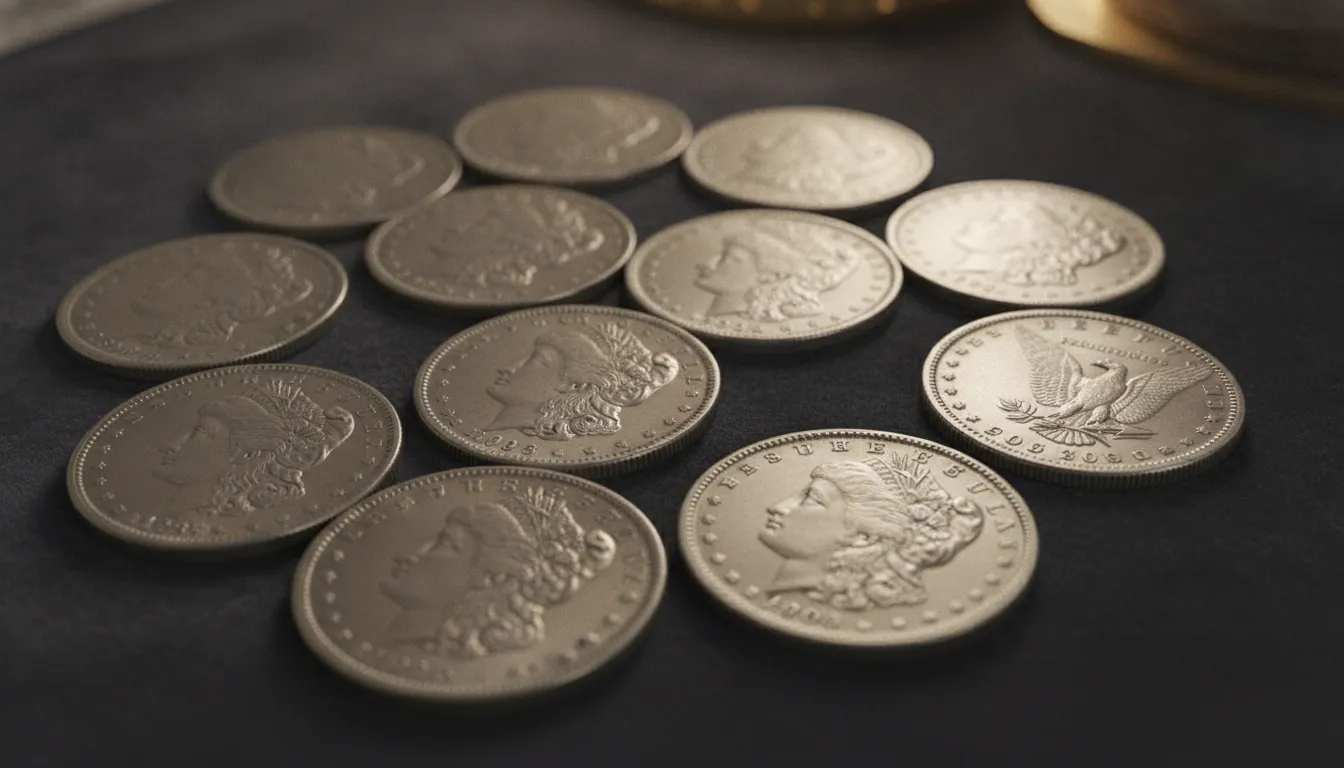
 Have you ever wondered why one Morgan Silver Dollar might be worth its weight in silver, while another that looks nearly identical can be worth thousands? The answer is in the details. True value is determined by a combination of factors: the specific mint where it was struck, its state of preservation, and tiny variations that make it a rare find. Learning to spot these differences is what separates a casual accumulator from a serious investor. This guide will teach you what to look for, explaining the importance of professional grading and key dates, showing you how to identify the **best morgan silver dollars to buy** for a valuable collection. ## Key Takeaways * **[Focus on Numismatic Value, Not Just Silver Content](https://www.parkavenumis.com/Morgan-Dollars)**: A Morgan Dollar's investment potential comes from its rarity, historical story, and collector demand. Target key dates like the 1893-S, coins from the Carson City mint, and unique varieties to find pieces that consistently outperform their base metal value. * **Insist on High Grades and Professional Certification**: A coin's physical condition is a primary driver of its price. For serious investments, concentrate on uncirculated coins graded MS-65 or higher and only buy pieces certified by PCGS or NGC to guarantee authenticity and ensure market liquidity. * **Build Your Collection with a Clear Strategy**: Start smart by acquiring high-quality, common-date coins to learn the market without a huge initial investment. Always research fair prices, set clear collecting goals, and partner with a reputable dealer to avoid costly mistakes and make informed decisions. ## What Makes [Morgan Silver Dollars](https://www.parkavenumis.com/Morgan-Dollars) a Great Investment? Morgan Silver Dollars are much more than just an ounce of silver. They represent a unique intersection of American history, classic design, and tangible wealth, making them a favorite for both seasoned collectors and savvy investors. Unlike simple bullion, their value isn't tied solely to the spot price of silver. Instead, it's driven by a powerful combination of historical significance, rarity, and consistent demand from a dedicated community of collectors. This creates a stable and often appreciating asset that can diversify any portfolio. The story behind these coins is a big part of their appeal. Minted from 1878 to 1904, and again in 1921, Morgan Dollars are directly tied to the silver rushes of the American West. Their creation was a result of political pressure from silver mining interests, and each coin carries a piece of that Gilded Age history. This rich backstory adds a layer of numismatic or collectible value that you won't find in a standard silver bar. Many investors find that owning a piece of history is a reward in itself. What really drives their investment potential is scarcity. Over the years, millions of Morgan Dollars were melted down, particularly after the Pittman Act of 1918. This means that many dates and mint marks are far rarer than their original mintage numbers suggest. This limited supply, coupled with a strong and steady demand from collectors, helps protect their value. When you invest in high-grade or key-date rare coins for sale, you're acquiring an asset that is difficult to replace. This dynamic makes them a reliable store of value with significant potential for long-term growth. ## Which Morgan Dollars Are the Most Valuable? When you start collecting Morgan Silver Dollars, you quickly learn that their value goes far beyond their silver content. While every Morgan contains more than three-quarters of an ounce of silver, some are worth thousands, or even hundreds of thousands, of dollars more than others. So, what separates a common coin from a true numismatic treasure? It comes down to a combination of rarity, historical context, and condition. The most valuable Morgans are typically those with low mintage numbers, meaning very few were originally produced. This is often tied to specific years and the mints where they were struck. Certain dates, known as "key dates," are notoriously difficult to find, making them the holy grail for many collectors. The story behind the coin, like those struck at the famous Carson City mint during the Wild West era, also adds a layer of appeal that drives demand. Finally, unique varieties and mint errors can turn an otherwise ordinary coin into a rare find. Understanding these factors is the first step to identifying the Morgans with the greatest potential for your portfolio. ### Hunt for Key Dates (1893-S, 1895, 1889-CC) Certain years in the Morgan Dollar series are legendary among collectors for their scarcity. These are the "key dates" you'll want to watch for. The 1893-S is the undisputed king of regular-issue Morgans due to its incredibly low mintage of just 100,000 coins. Another standout is the 1889-CC, a prized issue from the Carson City Mint that is always in high demand. Perhaps the most famous of all is the 1895 Morgan Dollar, often called the "King of the Morgans." No regular circulation coins were struck at the Philadelphia mint that year, only a small number of proof coins. This makes any 1895 proof one of the rarest and most valuable rare coins for sale in the entire series. For these key dates, condition is everything; focusing on certified coins in MS-65 or higher grades is essential for maximizing their investment potential. ### The Allure of the Carson City Mint There’s a special romance to Morgan Dollars bearing the "CC" mint mark. Struck in Carson City, Nevada, these coins are a direct link to the heart of the American Wild West and the famous Comstock Lode silver rush. The Carson City Mint operated for a relatively short period and produced far fewer coins than the mints in Philadelphia or San Francisco. This inherent scarcity, combined with their rich historical narrative, makes them exceptionally popular with collectors. Carson City Morgans are more than just coins; they are artifacts of a bygone era. Collectors love the story they tell, and this consistent demand helps support their value over time. Whether you're just starting or are an experienced collector, adding a "CC" Morgan to your portfolio is a classic move that connects you to a fascinating piece of American history. ### Discovering VAMs and Mint Errors Beyond key dates and mint marks, there's another exciting way to find value: VAMs. The term "VAM" refers to specific die varieties identified by Leroy Van Allen and A. George Mallis. These are small, unique characteristics created during the minting process, such as doubled letters, different die pairings, or slight design changes. Some VAMs are incredibly rare and can make a common-date Morgan significantly more valuable than its counterparts. Searching for VAMs adds a treasure-hunting element to collecting. It requires a keen eye and a bit of research, but the payoff can be substantial. Similarly, outright mint errors, though less common, can also create valuable coins. Our team has the expertise to identify these subtle differences, ensuring you understand the true nature and value of every coin you consider. Learning about these varieties is a great way to deepen your knowledge and potentially uncover a hidden gem. ## How Does a Coin's Condition Affect Its Value? When determining the value of a Morgan Silver Dollar, its physical condition is one of the most important factors. Think of it like this: a classic car that’s been kept in a climate-controlled garage its whole life will be worth far more than the same model that’s been driven daily for decades. The same principle applies to coins. An uncirculated coin, one that shows no signs of wear from being used as money, will almost always command a higher price than a circulated one. This is because collectors and investors place a huge premium on preservation and originality. A coin that retains its mint luster and has sharp, clear details is a rare survivor. Even the smallest imperfections, like tiny scratches from being in a bag with other coins or a slight dulling of its surface, can significantly impact the final value. For investors, understanding a coin's condition is essential. It’s the difference between owning a piece of history and owning a true investment-grade asset. The entire industry uses a standardized grading system to define a coin’s condition, which helps create a transparent and reliable market for rare coins for sale. Learning the basics of this system is the first step toward building a strong portfolio and making informed decisions about which coins will offer the best potential for appreciation over time. It's the language of the market, and knowing it gives you a distinct advantage. ### What Is the Coin Grading Scale? (MS-60 to MS-70) The industry standard for grading is the 70-point Sheldon Scale. For investors, the most important part of this scale is the "Mint State" (MS) range, which runs from MS-60 to a perfect MS-70. A coin graded as Mint State is uncirculated, meaning it was never used in daily commerce. It looks much like it did the day it left the mint. However, not all Mint State coins are equal. An MS-60 coin is uncirculated but may have noticeable scuffs or scratches, often called "bag marks," from contact with other coins. As you move up the scale, the imperfections become smaller and less frequent. An MS-70 coin is considered technically perfect, with no visible flaws even under magnification, a grade that is exceptionally rare for a vintage coin like a Morgan Dollar. ### Why MS-65+ Grades Command Premium Prices You’ll often hear coins graded MS-65 or higher referred to as "investment grade," and for good reason. Their high prices are a direct result of conditional rarity. While the mint may have produced millions of a specific Morgan Dollar, only a tiny fraction of those coins survived in near-perfect condition. This scarcity creates intense demand among serious collectors and investors who want the best examples available. The price difference between grades can be dramatic. A coin graded MS-64 might be valuable, but the very same coin graded MS-65 could be worth significantly more. This is because the pool of surviving coins shrinks exponentially at each higher grade level. Acquiring these top-tier coins means you are buying an asset with proven rarity and strong demand, which is a key strategy for long-term growth. ### Why Professional Grading Matters (PCGS & NGC) For any serious investment in Morgan Dollars, professional grading is non-negotiable. Two companies set the industry standard: the Professional Coin Grading Service (PCGS) and the Numismatic Guaranty Corporation (NGC). These third-party services provide an unbiased assessment of a coin's authenticity and condition. Their experts grade the coin, then seal it in a protective, tamper-evident holder, often called a "slab," with a label detailing its grade and certification number. This process gives you complete confidence in what you are buying. It eliminates guesswork and protects you from counterfeits or over-graded coins. Because PCGS and NGC are universally trusted, their certification also ensures liquidity. When it’s time to sell, a graded coin has an established market value, making the transaction straightforward. Our team relies on these standards, and our [decades of experience](https://www.parkavenumis.com/about-us) show that a commitment to certified quality is the best way to build a valuable collection. ## Which Morgan Dollars Are Best for an Investment Portfolio? Building a strong investment portfolio with Morgan Dollars isn't about grabbing just any old silver coin. It’s about making strategic choices that balance rarity, condition, and market demand. While every collector has their own strategy, certain Morgans consistently stand out as smart additions for long-term growth. The key is to focus on coins that are not only historically significant but also have a proven track record of value appreciation. These are the pieces that serious collectors seek out, creating a stable and often growing market for well-preserved examples. An ideal investment portfolio includes a mix of key-date rarities and high-grade common dates. This approach gives you both the potential for significant returns from rare coins and the stability and liquidity of more available issues. Think of it as diversifying within the Morgan Dollar series itself. For example, pairing a top-tier rarity with several gem-quality common dates creates a balanced collection that is both valuable and marketable. By focusing on certified, high-grade coins, you protect your investment and position yourself for the best possible future returns. Whether you're just starting or expanding a seasoned collection, targeting specific investment-grade Morgans is the most effective path forward. ### Top Investment-Grade Morgans by Year If you're looking for a solid starting point, certain years and mint marks offer excellent investment potential. The 1921 Morgan, while common, is a popular and affordable entry point in high grades. For classic 19th-century issues, the 1878 (especially the 7 Tailfeathers variety) and coins from 1880 to 1884 are always in demand. For those seeking higher returns, targeting key dates is essential. The 1893-S is one of the series' most famous rarities, with a low mintage and high demand from serious collectors. The 1889-CC and the legendary 1895 "King of the Morgan Dollars" are also top-tier investment pieces. When you [buy Morgan Silver Dollars](https://www.parkavenumis.com/Morgan-Dollars), always aim for coins graded MS-65 or higher, as this is where the greatest appreciation potential lies. ### How to Balance Rarity with Liquidity Rarity is a huge driver of a coin's value, but it's not the only factor to consider. The rarest coins, like the 1893-S, command incredible prices but have a smaller pool of potential buyers. On the other hand, more common coins in pristine condition are highly liquid, meaning they are easier to sell quickly because more collectors can afford them. Your goal is to find the right balance for your portfolio. Carson City (CC) Morgans are a perfect example of this balance. They are rarer than their Philadelphia or San Francisco counterparts, which makes them highly desirable. Yet, they are still accessible enough to have a broad, active market. A high-grade 1881-CC, for instance, offers a great blend of scarcity and liquidity, making it a cornerstone for many investment-focused collections. ### Identifying Morgans with High Growth Potential The single most important factor for a Morgan Dollar's growth potential is its condition. A common-date coin in a superb MS-66 grade will often outperform a rare-date coin in a lower, circulated grade. For investment purposes, you should focus almost exclusively on Mint State coins, specifically those graded MS-65 or better. These "Gem" quality coins are much scarcer and are what top collectors and investors compete for. To ensure you're getting what you pay for, always buy coins certified by leading third-party services like PCGS or NGC. A professionally graded coin removes guesswork and protects you from counterfeits or over-graded coins. When you browse a selection of rare coins for sale, prioritize certified Morgans in high grades to give your portfolio the strongest foundation for future growth. ## Where Is the Best Place to Buy Morgan Silver Dollars? Once you know which Morgan Dollars you want, the next big question is where to find them. The source of your purchase is just as critical as the coin itself. The right partner can help you acquire authentic, high-quality coins at fair market prices, while the wrong one can leave you with a costly mistake. Your main options will be established coin dealers, coin shows, and online marketplaces. Each has its own set of benefits and risks. The key is to prioritize trust and verification regardless of where you shop. A reputable source will always stand behind their products and offer transparent, expert guidance. ### [Find a Reputable Coin Dealer](https://www.parkavenumis.com/Morgan-Dollars) Working with a reputable coin dealer is the most reliable way to build a quality collection. A trustworthy dealer does more than just sell coins; they act as your guide in the numismatic world. Look for dealers with decades of experience, a solid industry reputation, and professional accreditations. A long history, like the one we've built over [35 years in the business](https://www.parkavenumis.com/about-us), is often a sign of reliability. An established dealer provides access to a large inventory of authenticated and graded rare coins for sale, offers fair pricing, and gives you confidence in every purchase. They should also have clear return policies and be willing to answer all your questions. ### Weighing the Pros and Cons: Coin Shows vs. Online Both coin shows and online dealers offer distinct advantages. Coin shows are fantastic for seeing a coin in person before you buy. You can hold it, examine its luster under a light, and appreciate its details up close. Shows also provide an opportunity to speak directly with dealers and potentially negotiate prices. On the other hand, buying online offers unparalleled convenience and selection. You can browse extensive inventories from dealers across the country from your home. This makes it easier to find specific dates or grades you’re looking for. Many collectors find a balance, using online platforms for research and purchases while attending shows for the hands-on experience. ### Buyer Beware: Red Flags to Watch For Protecting your investment starts with knowing how to spot potential problems. The most important rule is simple: if a deal seems too good to be true, it almost certainly is. Be cautious of anyone using high-pressure tactics to rush you into a decision. Other red flags include sellers who are vague about a coin’s history, lack professional certifications from services like PCGS or NGC, or have an unclear return policy. When buying online, be wary of blurry photos or sellers who use stock images instead of pictures of the actual coin. Always do your homework on the seller and trust your instincts. A credible dealer will encourage questions and provide clear, verifiable information. ## How Can You Be Sure Your Morgan Dollar Is Authentic? As the value and popularity of Morgan Silver Dollars have grown, so has the number of counterfeits in the market. Protecting your investment starts with knowing how to verify a coin's authenticity. While seasoned numismatists can often spot a fake with a quick glance, you don’t need decades of experience to learn the basics. Developing a keen eye for detail is the first step in building a collection you can be proud of. By focusing on a few key areas, you can confidently distinguish a genuine piece of history from a clever imitation and ensure you’re adding legitimate, valuable assets to your portfolio. ### How to Spot a Counterfeit Morgan A genuine Morgan Dollar has specific characteristics that are difficult for forgers to replicate perfectly. Start by examining the coin’s physical properties. An authentic Morgan should weigh exactly 26.73 grams and have sharp, well-defined details in the design. Pay close attention to the reeding, which are the small grooves around the coin's edge; they should be distinct and consistent. Counterfeits often feel lighter, have a greasy or overly shiny appearance, and display weak or mushy design elements. Be wary of any coin that looks "too perfect" for its age. And remember the most important rule in collecting: if a deal on a rare coin for sale seems too good to be true, it almost certainly is. ### Why Third-Party Certification Is Essential The single most effective way to guarantee a Morgan Dollar's authenticity and grade is to purchase coins certified by a reputable third-party grading service. Companies like the Professional Coin Grading Service (PCGS) and the Numismatic Guaranty Corporation (NGC) are the industry standard. They use a team of experts to authenticate and grade each coin before encapsulating it in a sonically sealed, tamper-evident holder, often called a "slab." This slab contains a label with the coin's grade, a unique serial number, and a guarantee of authenticity. Buying certified or "slabbed" coins removes the guesswork and provides peace of mind, ensuring your investment is genuine and making it much easier to sell in the future. ### The Value of Good Documentation and Provenance Beyond physical inspection and certification, maintaining thorough records is a crucial part of verifying authenticity. Always keep receipts, certificates, and any other paperwork that comes with your purchase. This documentation creates a paper trail that establishes the coin's history of ownership, known as its provenance. A well-documented provenance can confirm a coin's authenticity and even add to its value, especially for particularly rare or historically significant pieces. When you [work with a trusted dealer](https://www.parkavenumis.com/about-us), you can be confident that you are acquiring a genuine coin with the proper documentation to support its history and value for years to come. ## New to Collecting? Here's How to Start Your Morgan Dollar Set Starting a Morgan dollar collection is an exciting way to own a piece of American history. The journey can feel a bit overwhelming at first, with so many dates, mint marks, and grades to consider. But don't worry, every seasoned collector started exactly where you are now. The key is to begin with a clear plan and a solid foundation of knowledge. By focusing on a few core principles, you can build a beautiful and valuable collection you’ll be proud of for years to come. Let’s walk through the first steps to get you started on the right path. ### How to Build a Collection on Any Budget You don’t need a fortune to start collecting Morgan dollars. The secret is to begin with common-date coins that are more accessible. Look for dates like 1879-S, 1880-S, 1881-S, 1882-S, 1896, 1897, or 1898. These were minted in large quantities, making them affordable entry points into the series. As you browse rare coins for sale, focus on finding these dates in the best condition your budget allows. Acquiring a high-quality, common-date Morgan is a much smarter move than settling for a poor-quality rare coin. This approach helps you build your knowledge and confidence without a huge initial investment, setting a strong foundation for your growing collection. ### Essential Tools and Resources for Collectors Knowledge is your most valuable asset in coin collecting. Before you buy your first Morgan, take some time to learn about the series. A great first step is to get a copy of "A Guide Book of United States Coins," often called the "Red Book." This guide provides detailed information and market values, helping you understand what a fair price looks like. It’s an indispensable tool for avoiding common pitfalls, like overpaying a dealer. Another key resource is a relationship with a reputable expert. The team at [Park Avenue Numismatics](https://www.parkavenumis.com/about-us) has decades of experience and can offer guidance as you make informed decisions for your collection. ### Set Realistic Goals for Your Collection A collection without a goal is just an accumulation. To make your collecting journey more focused and enjoyable, decide what you want to achieve. You could aim to collect one Morgan from each year of issue, or perhaps one from each mint that produced them (Philadelphia, San Francisco, New Orleans, Carson City, and Denver). Another popular goal is to build a "type set" by acquiring one example of a specific design in a high grade. Whatever you choose, having a clear objective will guide your purchases and give you a sense of accomplishment. Use a coin album or a simple spreadsheet to track your progress and celebrate each new addition to your set. ## Common (and Costly) Mistakes to Avoid When Buying Morgans Building a collection of Morgan Silver Dollars is an exciting venture, but a few common missteps can turn a great investment into a costly lesson. With so much information out there, it’s easy to get sidetracked. The key is to approach each purchase with a clear strategy and a healthy dose of skepticism. By learning to spot overpriced coins, understanding the value of certification, and committing to proper care, you can protect your portfolio and ensure your collection grows in value for years to come. ### Don't Overpay for Low-Grade Common Coins It’s a surprising fact for many new collectors: uncirculated Morgan Dollars are not inherently rare. Over half a billion were minted, and a huge number of them were stored in Treasury vaults instead of entering circulation. This means that common-date Morgans in lower Mint State grades are quite plentiful. Unfortunately, some sellers exploit this by marking up these common coins to exorbitant prices. Always research the fair market value and work with a dealer who provides transparent pricing on their rare coins for sale. A little homework can save you from a significant overpayment. ### Think Twice Before Buying Uncertified High-Value Coins When you’re considering a high-value Morgan, especially one advertised as MS-65 or better, professional certification is non-negotiable. An uncertified coin, often called a "raw" coin, comes with significant risk. Its grade is just one person's opinion, and it could be cleaned, damaged, or even counterfeit. For serious investments, you should only purchase coins graded by trusted third-party services like PCGS or NGC. Their rigorous standards ensure the coin's authenticity and condition are accurately represented, giving you confidence in its long-term value. Relying on [expert guidance](https://www.parkavenumis.com/about-us) is crucial when dealing with high-grade coins. ### Pay Attention to Market Trends and Proper Storage Your work isn’t done after you’ve made a purchase. Like any other tangible asset, the value of Morgan Dollars can fluctuate with market trends. Staying informed helps you buy and sell at the right times. Equally important is how you protect your investment physically. Improper storage can quickly ruin a coin’s condition and value. Keep your Morgans in archival-quality albums, individual sleeves, or professional holders. Store them in a cool, dry environment away from direct sunlight and humidity to prevent toning or corrosion. Proper care is essential for preserving the beauty and value of your [silver bullion](https://www.parkavenumis.com/silver-bullion) and rare coins. ## How to Store and Protect Your Morgan Dollar Investment Once you’ve acquired a beautiful Morgan Silver Dollar, your job isn’t over. Protecting your investment is just as important as making a smart purchase. The way you handle and store your coins directly impacts their condition, which in turn determines their long-term value. A single fingerprint or a humid storage spot can cause irreversible damage, so it’s essential to get it right from the start. Think of proper storage not as a chore, but as the final, crucial step in securing your asset. Taking a few simple precautions will ensure your rare coins remain in pristine condition for years to come. ### Handle with Care The first rule of coin collecting is simple: never touch the face of the coin. Always hold your Morgan Dollars by their edges between your thumb and forefinger. The natural oils, dirt, and acids on your skin can leave fingerprints that etch into the coin's surface over time, leading to permanent spots and a lower grade. For best practice, wash your hands thoroughly before handling your coins, or better yet, wear a pair of clean, soft cotton gloves. This small habit is one of the easiest and most effective ways to preserve the delicate luster and intricate details that make these silver dollars so appealing to collectors. ### Choose the Right Storage Materials Where you keep your coins matters immensely. Avoid storing them in random containers or envelopes, which may contain chemicals that can damage the silver. Instead, use materials designed specifically for numismatics, such as individual inert plastic sleeves, professional holders (like the slabs from PCGS or NGC), or high-quality coin albums. Once your coins are properly housed, find a secure location that is cool, dry, and dark. Exposure to moisture, extreme temperature fluctuations, or direct sunlight can cause unsightly toning or discoloration, diminishing both the beauty and the value of your collection. A stable environment is key to long-term preservation. ### Secure Your Collection As an investor, you should always maintain personal control over your assets. This means you need to [take physical possession](https://www.vosslawfirm.com/library/before-you-invest-in-morgan-dollars-consider-these-points-the-voss-law-firm.cfm) of the Morgan Dollars you buy; never let a dealer hold them for you. Once they are in your hands, secure storage is paramount. A fireproof home vault or a safety deposit box at a bank are excellent options for protecting your collection from theft, fire, or other disasters. Knowing exactly what you have, including any rare [VAM varieties](https://www.lccoins.com/default/dollars/morgan-silver-dollars.html?srsltid=AfmBOor-S9LGPX_WFMENANp9CB5BVjVIpEeclhYFsVK2EfdQQ0Z-R8Pl), helps you decide which pieces warrant the highest level of security. Your collection is valuable, so treat it with the protection it deserves. ## Related Articles * [Buy & Sell Rare Morgan Silver Dollars - Park Avenue Numismatics](https://www.parkavenumis.com/Morgan-Dollars) * [Buy & Sell Rare Silver Dollars Online - Park Avenue Numismatics](https://www.parkavenumis.com/Silver-Dollars-and-Halves) * [Buy Morgan Silver Dollars in Miami, FL | Park Avenue Numismatics](https://www.parkavenumis.com/buy-morgan-silver-dollars-in-miami) * [Blog | Precious Metals & Rare Coins Dealer | Antique Coins - Park Ave Numismatics](https://www.parkavenumis.com/blog) * [Blog | Rare Coins, Gold & Silver for Discerning Collectors](https://www.parkavenumis.com/blog) ## Frequently Asked Questions **What's the difference between a Morgan's silver value and its numismatic value?** The silver value is simply the base worth of the metal in the coin, which fluctuates with the market. Numismatic value, on the other hand, is what makes these coins a true investment. It's the premium added based on factors like rarity, historical importance, condition, and collector demand. A common, heavily worn Morgan might be worth little more than its silver content, while a rare date in perfect condition can be worth thousands of times more. **For investment, is it better to buy a rare date in a lower grade or a common date in a high grade?** For long-term growth potential, a common-date coin in a superb, high grade is almost always the superior investment. The market for top-condition coins is incredibly strong because so few have survived in pristine shape. This "conditional rarity" often drives value appreciation more consistently than date rarity alone. While a famous key date is always desirable, a gem-quality common coin is a foundational piece for a strong portfolio. **Why is professional grading from PCGS or NGC so important?** Professional grading provides an objective, universally accepted standard for a coin's authenticity and condition. When you buy a coin certified by PCGS or NGC, you are not just taking a seller's word for it. This certification protects you from counterfeits and over-graded coins, and it guarantees liquidity. When it comes time to sell, a certified coin has a clear market value, making the process transparent and straightforward. **I'm just starting out. Which [Morgan Dollars](https://www.parkavenumis.com/Morgan-Dollars) should I look for first?** A great way to begin is by focusing on common-date coins in a certified Mint State grade, like MS-63 or MS-64. Look for dates from the early 1880s, such as the 1881-S, which are known for being well-struck and are widely available. This approach allows you to acquire a beautiful, uncirculated piece of history without a massive initial investment, helping you learn the market and develop an eye for quality. **What are "VAMs" and are they worth looking for?** VAM is a term for specific die varieties identified by researchers Leroy Van Allen and A. George Mallis. These are small, unique characteristics, like doubled letters or die cracks, that occurred during the minting process. While most VAMs are minor, some are extremely rare and can make an otherwise common Morgan significantly more valuable. For collectors who enjoy the details, searching for VAMs adds an exciting treasure-hunting element to the hobby.Test paragraph.
Blog archive
7 Best Morgan Silver Dollars to Buy for Your Portfolio
Tuesday, July 28, 2026
Leave your comment





