
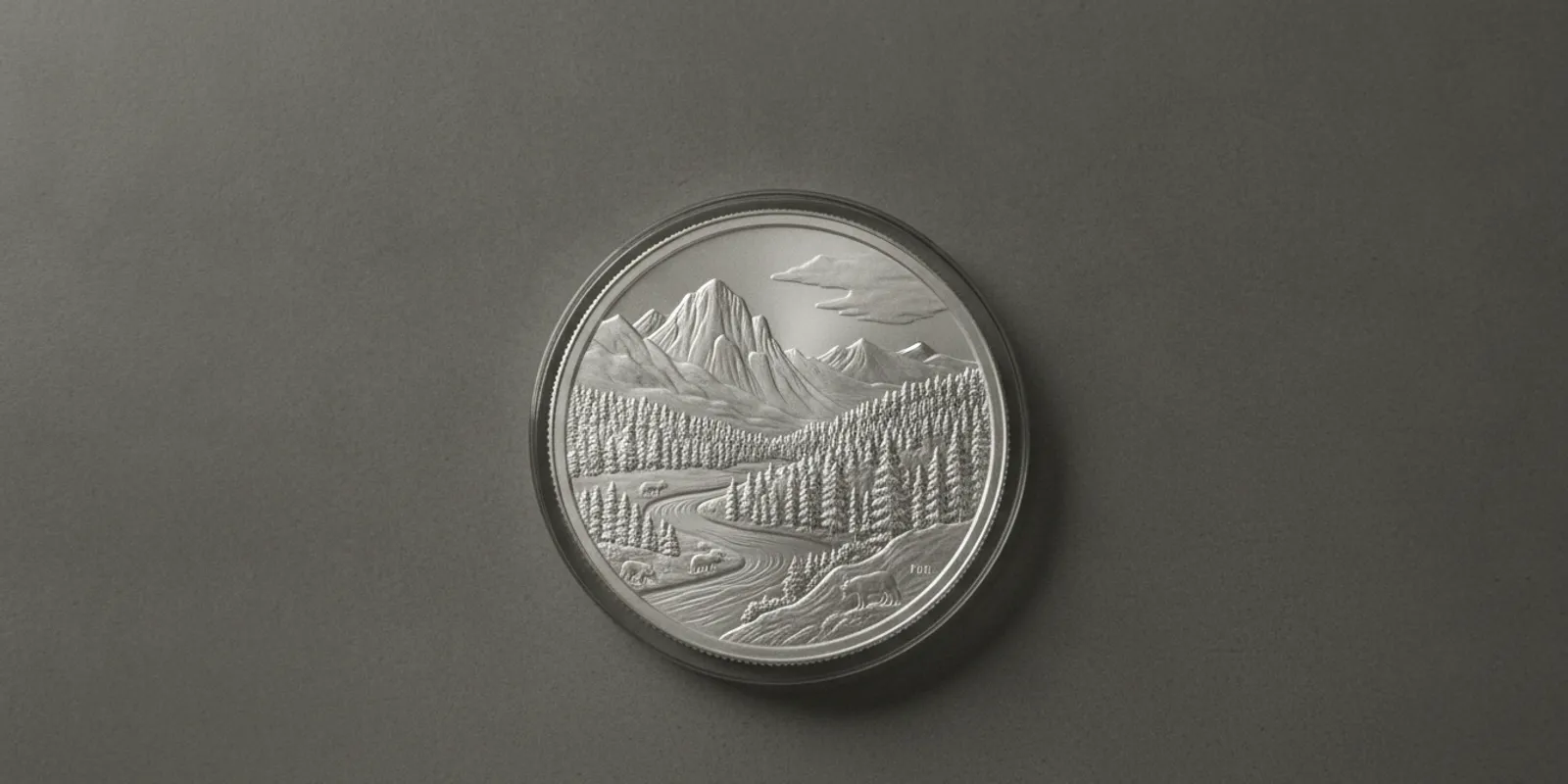
 ATB 5 oz silver coins combine large-format U.S. coin designs with five troy ounces of silver. The abbreviation ATB refers to the America the Beautiful series, which honors national parks and other national sites. If you are comparing one of these coins, its silver content is only part of the decision: design, finish, condition, packaging, and market demand can all matter.
Call 1-888-419-7136 to discuss a U.S. silver coin
What are ATB 5 oz silver coins?
America the Beautiful five-ounce coins are oversized U.S. silver coins issued in a series featuring national parks and other national sites. The program began in 2010 and ran through 2021, with designs representing sites across the states and territories. Their three-inch format gives the artwork more room than a typical circulating coin, while the five-ounce weight makes each piece substantial to handle and store.
The series is commonly discussed as both bullion and a collectible set. The bullion version is made to provide exposure to silver in a government-issued coin format. Other versions have collector-oriented finishes or presentation. A coin's exact issue, finish, and packaging should be identified before making a comparison; two coins with the same design may not be interchangeable in a collector's eyes.
ATB is sometimes used informally for the entire series, so confirm the coin's date. Site design, mint or finish markings, and product description rather than relying on the abbreviation alone. Park Avenue Numismatics is based in Miami, and its site has information about U.S. coins and precious metals.
What are the basic specifications?
For a standard ATB five-ounce silver coin, the headline specification is five troy ounces of .999 fine silver. The large diameter is approximately three inches. These details are useful for identification, but they do not by themselves establish the market value of a particular coin. Condition, finish, packaging, and current demand can all affect how buyers compare examples.
Specifications can also be misread when the coin is weighed in a different unit. A troy ounce is not the same as the everyday avoirdupois ounce used for many household goods. Five troy ounces is approximately 155.5 grams. A scale reading or a seller's description should be interpreted with that distinction in mind.
| Feature | What to expect | Why to check it |
|---|---|---|
| Series | America the Beautiful, issued 2010-2021 | Establishes the program and date range |
| Silver content | Five troy ounces of .999 fine silver for the standard coin | Helps distinguish it from smaller silver coins and plated pieces |
| Diameter | Approximately three inches | Explains the unusually large format and storage needs |
| Design | A U.S. national park or other national site | Identifies the particular release and collector interest |
| Finish and issue | Bullion or a collector-oriented version; verify the specific issue | Finish, mint marks, and original packaging can affect comparisons |
| Condition | May range from handled to carefully preserved or certified | Wear, marks, and handling can affect collector demand |
When identifying a design, compare the actual landmark depicted with the coin's date and any official issue description. A broad landscape or building may be easier to recognize in a photograph than from a short seller title, so use more than the title alone. For a planned set, keep a checklist with separate columns for date, site, version, and condition. Mark a coin complete only when those details match the collecting goal you chose. This small step makes it easier to spot duplicate designs or a finish that differs from the rest of the set.
For a focused reference example, the Newman Numismatic Portal entry for 5 oz Silver, Satin Finish lists a 2010-2021 date range, 155.5-gram weight, and .999 fineness. It is a useful reminder to consult records for the exact issue being examined rather than assuming every ATB version has identical details.
How do the designs and finishes differ?
Each release has a distinctive reverse design tied to a U.S. site. The subject can be a landscape, landmark, or other feature associated with the place. Design preference is personal: one collector may favor a familiar park, while another may focus on completing a dated sequence. A popular design does not guarantee a particular resale value, and a less familiar design is not automatically less desirable.
Finish matters as well. Bullion examples are intended primarily as silver bullion coins, while collector versions may emphasize a particular surface appearance or presentation. Satin, uncirculated, and other finish descriptions should be tied to the specific issue, not treated as synonyms. Read the exact product details and compare the coin with reliable references for that date and design.
Condition is a separate question from finish. A coin may have a specified finish yet show marks from handling or storage. Examine both sides under even light, and look at the rim and edge where practical. Avoid cleaning or polishing it to make the surface look brighter. Abrasive treatment can leave hairlines and change the appearance collectors expect.
A set-building approach raises a different set of questions from buying a single favorite design. Decide whether you want every design, one coin from each year, or only selected sites. Then write down the issue and finish you want for each addition. This prevents a common collecting mismatch: filling a gap with a visually similar coin that is actually a different finish or presentation. Set a budget before searching and account for a suitable holder or storage space as part of the plan.
The coin's size can also affect how you inspect and transport it. A three-inch piece is more exposed to accidental fingerprints and edge bumps than a smaller coin that fits a standard album. Prepare a clean, stable surface before handling it and avoid carrying an unprotected coin loose in a pocket or bag. If you are meeting a dealer or taking it for review, keep it in its protective holder and bring the related paperwork separately.
What should you check before buying?
Start by identifying the coin, then evaluate its silver and collector characteristics separately. This simple order reduces the risk of comparing unlike pieces or paying a collector premium for a coin whose issue has not been clearly established.
- Confirm the design and date. Match the site design and year to an established catalog or other dependable reference. Check that the description, coin, and packaging agree.
- Clarify the issue and finish. Ask whether it is the bullion version or a collector-oriented version. Look for mint marks, finish descriptions, and any issue-specific features instead of relying only on a generic ATB label.
- Review the condition. Inspect for scratches, dents, rim damage, spots, and signs of cleaning. If it is certified, verify that the holder and grade information correspond to the coin being offered.
- Understand what is included. Note whether the coin comes in its original capsule, packaging, or certificate, and whether those items are part of the offer. Missing packaging does not change the silver content, but it may matter to a collector.
- Compare like with like. Compare the same date, design, issue, finish, and condition. A bullion coin and a scarce or specially finished collector issue may not be meaningful direct comparisons.
- Ask how the offer is determined. A coin's value can vary with condition, rarity, provenance, certification, and current market demand. Ask which details have the greatest effect on the particular coin rather than assuming a fixed price based only on weight.
When comparing offers, separate the metal component from any premium associated with the specific coin. Premiums and the difference between buying and selling offers can change with market conditions, product availability, and buyer demand. Neither a past sale nor a quoted price guarantees what the coin will bring later.
How can you assess authenticity?
Use multiple observations rather than relying on one quick test. Begin with the stated specifications: diameter, weight, and design details. A significant mismatch deserves further review. However, measurement alone cannot authenticate a coin; equipment, wear, and measurement technique can introduce uncertainty.
Examine the surfaces, lettering, edge, and relief for details consistent with the specific issue. Compare them with trusted reference images, preferably for the same date and version. Check any mint mark or certification information against the coin and its holder. A slab or capsule can help protect a coin, but packaging alone is not proof of authenticity.
If the coin is valuable or its identity is uncertain, seek an in-person assessment from a knowledgeable coin professional. Avoid destructive tests, harsh chemicals, and improvised scratching or acid methods. These can damage the piece and make a later evaluation more difficult. A professional can explain what can be established from inspection and what may require additional verification.
How should you store a five-ounce coin?
The wide diameter creates a practical storage challenge: standard coin albums and holders may not fit. Keep the coin in a suitable inert holder or its original protective capsule when possible. Hold it by the edge with clean, dry hands, and avoid touching the design surfaces. If gloves are used, make sure they provide a secure grip; dropping a large coin can cause edge or surface damage.
Choose a dry, stable place away from direct sunlight, excess humidity, and household chemicals. Do not stack bare coins against one another. Store paperwork and certificates separately but label them clearly so the information stays with the correct coin. For a larger collection, a written inventory with each coin's date, design, issue, and storage location can make later review easier.
Silver can develop toning or spots over time, and appearance may change depending on storage conditions. Do not assume that every change is damage, and do not try to remove it with polish. If you are unsure whether a mark is environmental, handling-related, or part of the coin's finish, ask for an assessment before taking action.
Are ATB coins bullion or collectibles?
They can have characteristics of both. Their substantial silver content gives them a bullion dimension, while the dated designs, issue types, and condition can interest collectors. Which aspect matters most depends on the exact coin and the person evaluating it. Someone building a complete design series may care about the date and finish. Someone focused on silver may pay closer attention to metal content and the current bullion market.
That distinction is important when deciding what to buy or sell. A coin's market value is not a guaranteed multiple of its silver weight. Collector demand may add to or fail to add a premium, and the level can shift. Similarly, a collectible designation does not ensure that a future buyer will pay more than the metal value. Consider your collecting goals, budget, storage plans, and ability to verify the issue before making a purchase.
Think about liquidity as well as potential appeal. A widely recognized bullion issue may be easier for a buyer to evaluate quickly, while a less familiar finish or unusual condition can call for more research. That does not make one choice automatically better. It means you should understand who might want the coin later and what documentation could help establish its identity. If you are collecting for enjoyment, select designs you genuinely like. If you are focused on silver content, compare the relevant metal terms and the total cost of ownership.
Market risk works in both directions. The silver market can move, and premiums on collectible coins can expand or contract separately from the underlying metal. A coin purchased at a premium may not resell at the same premium, even if silver prices have changed little. Treat historical sales and current asking prices as context, not a promise of what you can recover. Avoid making a decision based on a projected return that assumes prices will rise or that demand will stay constant.
Collectors also benefit from maintaining a simple record. Note when and where a coin was acquired, its stated issue and finish, the condition description, and any certificate or receipt. This record helps you compare coins in your own set and provides useful context if the piece is evaluated later. Keep your notes factual, and update them if a professional confirms or corrects the identification.
For readers comparing silver products locally, Park Avenue Numismatics also has a page about buying silver in Miami. If your collection includes gold coins as well, its information on selling gold coins in Miami covers a separate category. Confirm the details of any item individually; a page about another silver or gold product does not establish the characteristics or value of an ATB coin.
How can you compare two offers fairly?
Make sure each offer refers to the same coin and terms. Start with the exact date, site design, finish, and condition, then note whether the coin is certified and whether original packaging is present. An offer for a bullion issue should not be compared casually with a quote for a different collector version. If one buyer has not inspected the coin, treat an initial estimate as preliminary rather than as a final offer.
Ask what the evaluation includes. A useful conversation should explain how the coin's silver content is considered, whether the issue has collector demand, and which visible condition details matter. If the coin is certified, make clear whether the offer assumes the grade shown on the holder. If it is raw, ask what aspects of condition or authenticity remain uncertain. Specific explanations make it easier to understand why two buyers may reach different conclusions.
Record the date of each quote and the conditions attached to it. Precious-metal markets and collector demand can change, so an older estimate may not remain current. Also clarify whether the quoted amount assumes an in-person inspection, a particular payment method, or other terms. Do not feel obliged to make a decision before you understand how the coin was identified and what factors were considered.
For a first inquiry, clear photographs can help a dealer determine whether an in-person assessment makes sense. Photograph the obverse and reverse straight on in natural, indirect light, and include a separate image of the edge or holder label when relevant. Keep the coin in its capsule or holder and avoid filters that alter color or contrast. Images can support an initial discussion, but they do not replace physical inspection of the coin's surfaces, weight, and condition.
Where can you have one evaluated in Miami?
If you own an ATB five-ounce coin and want to understand its issue, condition, or potential market, gather the coin and any paperwork before arranging an evaluation. Take clear photographs of both sides and the edge if requested, but do not remove a coin from a sealed holder just to photograph it. Provide the date, site design, finish description, and certification details if available.
Park Avenue Numismatics is located at 5084 Biscayne Blvd, Suite 105, Miami, Florida 33137. An assessment should distinguish what is known about the coin's silver content from factors that can vary, including condition, rarity, provenance, certification, and current market demand. No estimate should be treated as a guaranteed future price.
Call 1-888-419-7136 to ask about an in-person coin evaluation
Frequently asked questions about ATB 5 oz silver coins
How much silver is in an ATB five-ounce coin?
The standard coin contains five troy ounces of .999 fine silver. That is about 155.5 grams. Check the exact issue description if the coin is unusual or has been altered.
Are all America the Beautiful five-ounce coins the same finish?
No. The series includes bullion and collector-oriented issues, and finish descriptions depend on the specific version. Verify the year, design, mint or finish marking, and original documentation.
Does a five-ounce coin always sell for the value of five ounces of silver?
No. Silver market conditions are one factor, but a coin's condition, rarity, provenance, certification, and demand can also affect an offer. There is no guaranteed price based only on its weight.
Should I clean an ATB coin before selling it?
No. Cleaning can scratch or otherwise alter a coin's surface and may affect collector interest. Keep it protected and ask a knowledgeable professional to assess it before attempting any treatment.
Key takeaway
ATB 5 oz silver coins pair five troy ounces of .999 fine silver with large U.S. designs. But the exact issue, finish, condition, and market context matter when comparing them. Identify the coin carefully, store it safely, and seek an informed assessment when you need help understanding its characteristics.





