
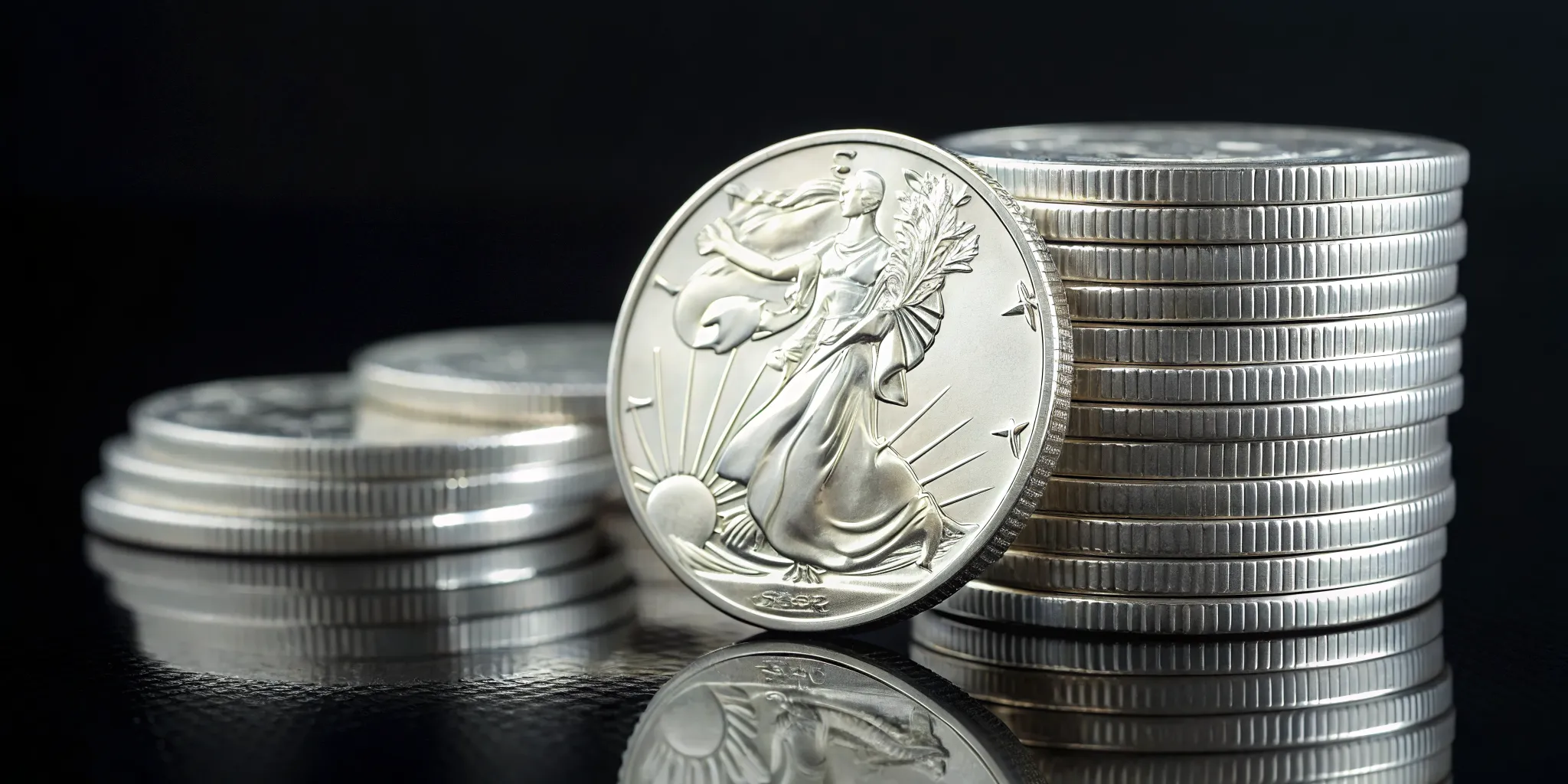
Many people have a few American Silver Eagles tucked away, perhaps as a gift or a past investment. The big question is always the same: is it just an ounce of silver, or is it something more? The answer is that it depends entirely on the specific coin you're holding. While millions of these coins are valued primarily for their silver bullion content, certain key-date issues or perfectly graded specimens can be worth hundreds or even thousands of dollars. This is where an American Silver Eagle value chart becomes your guide, helping you distinguish a common coin from a genuine numismatic treasure. Let’s explore the factors that create this value, so you can finally know what your collection is really worth.
Key Takeaways
- Look beyond the spot price: A Silver Eagle's base value is tied to silver, but its collector value comes from its condition, rarity, and finish (Bullion, Proof, or Burnished). These are the factors that separate a standard coin from a valuable collectible.
- Understand what premiums are telling you: The premium over spot price is not random; it reflects minting costs, dealer services, and current market demand. High premiums often signal a strong market and high investor interest, making them a key indicator to watch.
- Vet your dealer to protect your investment: The best way to ensure you get an authentic coin at a fair price is to work with a reputable dealer. Look for a long history, industry credentials, and a commitment to transparency to build a confident, long-term partnership.
What Determines an American Silver Eagle's Value?
Figuring out the value of an American Silver Eagle goes beyond checking the daily price of silver. While the precious metal content provides a solid floor for its worth, several other factors come into play. A coin’s rarity, its physical condition, and the current market demand all combine to create its final price. For both collectors and investors, understanding these key elements is the first step to making a smart purchase or sale. It’s the difference between seeing a coin as just an ounce of silver and appreciating its full numismatic and market potential.
The Key Factors Behind Their Worth
The foundation of a Silver Eagle's value is, of course, the silver itself. The coin contains one troy ounce of .999 fine silver, so its base value will always track the spot price of silver. If silver prices go up, the coin's intrinsic value rises with it. However, its condition is just as important. Coins in perfect or near-perfect shape are worth much more to collectors. Professional grading services use a scale to describe this condition, with top grades like MS-70 and PR-70 designating a flawless coin. A higher grade almost always means a higher price.
Beyond its metal content and grade, rarity plays a huge role. Coins from years with lower mintage figures are naturally more sought after. These key-date coins, especially when professionally graded, can command significant prices. This brings us to the concept of a "premium." American Silver Eagles almost always sell for more than the basic price of silver. This added cost, or premium, reflects the coin's desirability as a collectible, its minting costs, and dealer markups. You can explore a wide selection of these sought-after rare coins for sale to see how these factors influence pricing firsthand.
How the Market Prices Silver Eagles Today
Market dynamics have a major impact on Silver Eagle prices. In recent years, for instance, a combination of supply chain issues and a surge in investor demand caused both the value and the premiums for these coins to climb. When demand for physical silver is high, you can expect to pay a few dollars more than the current silver price. This premium isn't arbitrary; it accounts for the coin's exceptional quality, iconic design, and its status as the official silver bullion coin of the United States.
These premiums are not static. During periods of unprecedented supply constraints and high investor interest, premiums can easily rise to $5, $8, or even more over the spot silver price. This is why you might see two Silver Eagles from common years with different prices at different times. An investor might focus on acquiring coins with the lowest possible premium, while a serious collector may be willing to pay a much higher premium for a specific rare date or a perfectly graded coin. Understanding this interplay between the silver price and market premiums is essential for timing your purchases.
American Silver Eagle Values: A Year-by-Year Guide
The American Silver Eagle has been a cornerstone of the precious metals market since it first appeared in 1986. While every Silver Eagle contains one troy ounce of .999 fine silver, their values can vary dramatically. Some are worth just a bit more than the current silver spot price, while others can command thousands of dollars. The difference often comes down to the year it was minted, its condition, and its finish. Understanding these details is the first step in accurately valuing your collection or making a smart purchase. Let's walk through the key factors that separate a standard bullion coin from a prized collectible.
Key Dates and High-Premium Years
Since their introduction, American Silver Eagles have become the most popular silver bullion coin in the world. While their base value is tied to the price of silver, certain years carry a much higher premium. These "key dates" are typically years with low mintage numbers, making them harder to find. Strong investor demand and occasional supply issues can also push premiums higher across the board, sometimes adding several dollars to the price of even common-date coins. When you're looking to buy or sell, knowing which years are in high demand is essential for getting a fair price. These coins are a great way to add government-guaranteed silver bullion to your portfolio.
Spotlight on Rare and Low-Mintage Coins
Some Silver Eagles are more than just an investment in silver; they are true numismatic treasures. The undisputed king is the 1995-W Proof Silver Eagle. With a mintage of only 30,125, it was only available as part of a special 10th-anniversary set, and today it can be worth thousands of dollars. Other notable years that collectors hunt for include 1986 (the first year of issue), 1994, and 1996, all of which had relatively low mintages. More recently, coins like the 2019-S Enhanced Reverse Proof have become highly sought after. Checking your collection for these specific dates could reveal a hidden gem. These are the types of rare coins for sale that excite both collectors and investors.
Bullion, Proof, or Burnished: Know the Difference
Not all Silver Eagles are created equal. They are produced in different finishes, and knowing which type you have is critical for valuation. The most common is the Bullion version, which is the standard investment-grade coin intended for stacking. Then there are Proof coins, which are specially struck for collectors. They have a sharp, detailed design with a mirror-like background and are sold directly from the U.S. Mint at a higher premium. Finally, there's the Burnished finish, also made for collectors. These coins have a unique matte-like surface and carry the "W" mint mark for West Point. Each type has its own market and collector base.
How Condition Impacts a Silver Eagle's Value
When you move beyond buying Silver Eagles purely for their silver content, condition becomes everything. For collectors, the physical state of a coin is one of the most significant factors determining its numismatic value. Two coins from the same year can have vastly different prices based on a few microscopic imperfections. Understanding what makes a coin "high-quality" is the first step to making smarter purchases and appreciating the true value of your collection. It’s the difference between owning a piece of silver and owning a piece of history preserved in its finest form.
A Guide to Professional Grading Standards (MS-69, MS-70, etc.)
In the coin world, condition is described using a numerical grading scale from 1 to 70. For a modern issue like the American Silver Eagle, you’ll mostly see the highest grades: Mint State (MS) for uncirculated coins and Proof (PR or PF) for special collector editions. A grade of MS-70 or PR-70 represents a flawless coin, perfect in every way with no visible blemishes even under magnification. An MS-69 is nearly perfect but may have one or two tiny, almost unnoticeable flaws. While that might not sound like a big difference, the jump in value between a 69 and a 70 can be substantial, as a perfect 70 is much rarer. When you browse rare coins for sale, you'll see how this grading directly translates to price.
Why Surface Quality and Luster Matter
Grading is essentially a detailed assessment of a coin's surface quality and luster. Surface quality refers to the presence, or hopefully absence, of any contact marks, scratches, or hairlines. Luster is the original, satiny sheen that comes from the minting process; it’s the glow that seems to radiate from the coin's surface. The research is clear: the surface quality and luster of a coin significantly influence its market value. Even a single, poorly placed scratch can downgrade a coin and reduce its worth. This is why proper handling and storage are so important. Protecting these two attributes is key to preserving the value of your silver bullion and numismatic coins.
Avoid These Common Grading Mistakes
One of the biggest mistakes new buyers make is a lack of research into a coin's condition. Understanding grading can help you avoid costly errors. First, never assume an "uncirculated" coin is a perfect MS-70. Coins can get jostled in mint bags, leaving behind small marks that prevent a top grade. Second, never, ever clean your coins. Cleaning, no matter how gently, creates tiny scratches that will permanently damage the coin’s surface and destroy its numismatic value. Finally, be cautious when buying "raw" or ungraded coins with the hope they’ll grade high. It’s often safer to trust coins already certified by a reputable grading service. Working with a dealer who has decades of experience can give you the confidence you need to make the right choice.
What Drives the Price of American Silver Eagles?
Understanding what gives an American Silver Eagle its value is key to making smart decisions as a collector or investor. It’s not as simple as looking up the daily price of silver. The final price you pay or receive for one of these iconic coins is a blend of several important factors. Think of it as a three-part equation: the raw value of the metal, the coin’s rarity, and the current economic climate. Each piece of this puzzle can shift, causing the coin's overall value to change.
The foundation of the coin's worth is its one troy ounce of .999 fine silver. This ties its base value directly to the global commodities market. But Silver Eagles are more than just a lump of metal; they are official, government-backed bullion coins. This status, combined with their beautiful design, adds a layer of value that simple silver bullion bars don't have. On top of that, some years are much rarer than others, turning a standard bullion coin into a sought-after collectible. By learning to read these different value drivers, you can better identify fair prices, spot opportunities, and build a collection that holds both tangible and numismatic worth.
The Role of Silver Spot Price and Premiums
At its core, an American Silver Eagle’s value starts with the spot price of silver. This is the live market price for one troy ounce of the metal, and it changes throughout the day. As the research notes, "The main value comes from the price of silver itself. If silver prices go up, the coin's value usually goes up too." This is the floor price for your coin.
However, you will always pay more than the spot price. This extra amount is called a premium. Premiums cover the costs of manufacturing the coin, distributing it, and the dealer's operational costs. They also reflect the coin's status as a trusted, government-minted product. Premiums aren't fixed; they can rise and fall based on market demand, meaning they are an important indicator of the coin's popularity at any given moment.
How Mintage and Supply Affect Price
Beyond its silver content, a Silver Eagle's rarity plays a huge role in its value. This is where collecting meets investing. The U.S. Mint produces a different number of coins each year, a figure known as the "mintage." As one analysis points out, "Coins from years where fewer were made are more sought after by collectors."
This is a classic case of supply and demand. A low-mintage year, often called a "key date," means fewer coins are available for the millions of people who want them. This scarcity drives up the premium significantly, especially for coins in pristine, graded condition. While a common-date coin might trade for a small premium over spot, a key-date Silver Eagle can be one of the most valuable rare coins for sale on the market.
The Influence of Market Demand and the Economy
Broad economic trends have a major impact on Silver Eagle prices. During times of economic uncertainty, inflation, or stock market volatility, many people turn to physical assets like silver to protect their wealth. This surge in interest creates a huge spike in demand.
We saw a perfect example of this recently. As one report highlighted, "Starting in 2020, their value and premiums went up a lot. This was due to problems with getting enough silver and a very high demand for silver." When everyone wants to buy at once, the limited supply of coins can’t keep up, pushing premiums higher. This is why Silver Eagles are not just a hedge against inflation but also a direct reflection of investor sentiment. It's a core reason why many people diversify their portfolios with precious metals.
A Look Back: Silver Eagle Price History
Understanding the price history of the American Silver Eagle offers a fascinating look into the forces of economics, market sentiment, and supply and demand. Since their debut, these coins have not only reflected the intrinsic value of silver but have also told a story about investor behavior and the health of the global economy. Their journey is marked by periods of steady growth, punctuated by dramatic shifts that have captured the attention of collectors and investors alike. By examining these key moments, you can gain a deeper appreciation for what drives the Silver Eagle's value and make more informed decisions for your own collection or portfolio.
Tracking Performance Through the Decades
The American Silver Eagle has been a dominant force in the precious metals market since it was first minted in 1986. It quickly became the world's most popular silver bullion coin, with more units sold than any other comparable coin in history. This isn't by chance. Its U.S. government backing guarantees its weight and purity, providing a level of trust that resonates with buyers. Over the decades, it has proven to be a consistent and reliable choice for those looking to own physical silver, maintaining its popularity through various economic cycles and solidifying its status as a cornerstone of any precious metals portfolio.
Key Market Events That Shifted Values
While Silver Eagles have a history of stability, they are not immune to major market events. Starting around 2020, the coin's value and its premiums saw a dramatic increase. This surge was a direct result of a perfect storm: unprecedented global uncertainty fueled a massive spike in demand for physical silver, while at the same time, production and supply chains were significantly disrupted. For many investors, this period reinforced the value of holding tangible assets. Events like these demonstrate how quickly market dynamics can shift, turning a popular bullion coin into a highly sought-after item with premiums that reflect its scarcity and desirability.
How Supply Chain Issues Affect the Market
The sharp rise in premiums for Silver Eagles was directly tied to supply chain problems. The U.S. Mint struggled to acquire enough silver planchets, the blank discs used to strike the coins, from its suppliers. This bottleneck created a significant shortage of new coins entering the market, even as demand was reaching all-time highs. When demand outstrips supply, prices naturally rise. In the case of Silver Eagles, this meant premiums climbed significantly, sometimes reaching $5 to $8 or more over the spot price of silver. This is why working with a reputable dealer who maintains expertly curated selections is so important, as they can help you find value even in a tight market.
Where to Buy American Silver Eagles
American Silver Eagles are a fantastic choice for both new and seasoned collectors, but where you buy them is just as important as what you buy. The right dealer ensures you get an authentic coin at a fair price, while the wrong one can lead to disappointment and financial loss. Your goal is to find a source that is trustworthy, transparent, and knowledgeable. Whether you're adding to a collection or making your first precious metals investment, the path to a successful purchase starts with choosing the right partner. This section will walk you through how to find a reputable dealer, weigh the benefits of online versus local shops, and spot potential red flags before you buy. With a bit of know-how, you can confidently acquire beautiful, authentic coins for your portfolio.
How to Choose a Reputable Dealer
Finding a dealer you can trust is the most critical step. Start by looking for a long-standing reputation backed by positive customer reviews and industry credentials. A company with decades of experience and a high rating from the Better Business Bureau is a great sign. A reputable dealer is always happy to answer your questions and provide transparent information about their coins and pricing. You can learn a lot about a company's credibility by reviewing its history and credentials, which are often shared on its About Us page. Be cautious of sellers on social media or unverified websites; it's always better to work with an established expert who stands behind their inventory and prioritizes your long-term success as a collector or investor.
Online vs. Local Coin Shops: Which Is Better?
The choice between an online dealer and a local coin shop really comes down to your personal preference. Local shops offer a great hands-on experience, allowing you to inspect coins in person and take them home immediately. It’s a tangible process that many collectors enjoy. On the other hand, established online dealers typically provide a much wider selection and more competitive pricing due to lower overhead. You can browse extensive inventories of rare coins for sale from the comfort of your home. The best online dealers combine this vast selection with the trust and expertise you'd expect from a top-tier local shop, offering detailed descriptions, high-quality images, and expert guidance to help you make an informed decision.
Spot Red Flags and Authenticate Your Purchase
Protecting your investment starts with knowing what to watch out for. The biggest red flag is a price that seems too good to be true. Unusually low prices often signal a counterfeit coin or a scam. Always be skeptical of sellers who can't provide verifiable credentials or a clear history. When you buy, especially for investment purposes, it's essential that the coins are authentic. Reputable dealers guarantee the authenticity of their products and often sell coins graded by professional services like PCGS or NGC. This third-party verification ensures you are getting exactly what you paid for. By sticking with trusted sources for your silver bullion, you can avoid the risks and build a collection with confidence and peace of mind.
Decode Premiums and Other Costs
When you start buying American Silver Eagles, you'll quickly see the price tag is higher than the daily spot price of silver. This isn't a mistake; it's a fundamental part of how the precious metals market works. Understanding these additional costs, from mint premiums to dealer markups, is key to becoming a savvy investor. It helps you accurately calculate your total investment and evaluate offers from different sellers. Let's break down exactly what you're paying for beyond the raw silver.
Why Do Silver Eagles Cost More Than Spot Price?
The extra amount you pay over the spot price is called a premium. Think of it as the cost of turning raw silver into a beautiful, government-guaranteed coin. The U.S. Mint incurs costs for designing, minting, and distributing each Silver Eagle, and this is passed on to the buyer. The premium also reflects the coin's status as the official silver bullion coin of the United States, which gives it a level of trust and recognizability that a generic silver bar doesn't have. This built-in collectibility and liquidity mean you're not just buying silver; you're buying a specific, sought-after product.
What Are Dealer Premiums and Markups?
On top of the mint's base premium, dealers add their own markup. This is how they cover business expenses like secure storage, expert staffing, and authentication services, while also turning a profit. These markups aren't fixed; they can fluctuate based on market dynamics. When demand for Silver Eagles is high and supply is tight, dealer premiums often rise. Working with a trusted dealer means this markup also pays for their expertise and the assurance that you are buying an authentic coin. A company with a long history, like our team at Park Avenue Numismatics, builds its reputation on fair pricing and transparency.
Factor in Shipping, Insurance, and Storage
Your total investment doesn't end with the dealer's price. You also need to account for the practical costs of owning physical silver. Secure, insured shipping is essential to protect your purchase as it makes its way to you. Once you have your coins, you need a plan for storing them safely. This could be a high-quality home safe or a third-party depository service, both of which have associated costs. These aren't just minor details; they are crucial for protecting your assets for the long term. For some investors, including precious metals in a self-directed IRA can streamline the storage process, as the assets are held by a secure custodian.
Avoid These Common Collector and Investor Mistakes
Building a collection of American Silver Eagles is an exciting process, but it's easy to make a few costly mistakes along the way. A little bit of caution and knowledge can make all the difference between a smart purchase and a regrettable one. Let's walk through some of the most common missteps I see collectors and investors make, so you can approach your next acquisition with confidence and clarity.
Overpaying Without Proper Research
One of the quickest ways to lose money is to buy without doing your homework. A lack of research can lead you to overpay, especially when you're new to collecting. Before you purchase any Silver Eagle, take a moment to understand the current market. This means checking the silver spot price, but it also means learning about typical dealer premiums for the specific coin you want. Is it a common bullion coin or a low-mintage key date? The answer dramatically changes its value. Taking just a few minutes to compare prices and understand the item you're interested in will ensure you pay a fair price every time. You can start by exploring current offerings of silver bullion to get a feel for the market.
Ignoring a Coin's Condition and Type
Smart collectors know that a Silver Eagle's value goes far beyond its silver content. The coin's condition and type are critical factors that can mean the difference of hundreds or even thousands of dollars. A common bullion coin is valued differently than a pristine Proof or Burnished version from the same year. Similarly, key dates and specific mint marks carry significant premiums. Pay close attention to the coin's grade, as a top-graded MS-70 coin will always command a higher price than a slightly less perfect MS-69. Ignoring these details is like buying a car without checking the mileage or model year. Always examine the specifics before you commit. You can see how condition affects value by looking at professionally graded rare coins for sale.
Buying from the Wrong Seller or at the Wrong Time
Who you buy from is just as important as what you buy. Choosing the right seller is crucial for protecting your investment and ensuring you receive an authentic, fairly priced coin. Look for dealers with a long history of expertise, transparent pricing, and a solid reputation. A trustworthy dealer will help you make informed decisions rather than pressure you into a sale. While timing the market perfectly is impossible, partnering with a reputable seller minimizes risk. A great dealer provides fair market value whether the market is up or down. Learning about us and our commitment to our clients is a great first step in finding a partner you can trust for the long term.
How to Value Your American Silver Eagles
Figuring out what your American Silver Eagles are worth involves more than a quick glance at the daily silver price. While the spot price sets the baseline, a coin's true value depends on its condition, rarity, and specific type. Understanding these factors is the key to accurately assessing your holdings and making informed decisions about your collection. Here’s how to get started.
Use Professional Appraisals and Grading
The single most important factor for a collectible Silver Eagle is its condition. A coin in pristine condition will always be worth more than one with visible wear. Professional grading services use a 70-point scale to assess quality, with top grades like MS-70 (Mint State) or PR-70 (Proof) fetching the highest prices. An expert appraisal from a trusted dealer can help you understand where your coins fall on this scale. With over 35 years of experience, our team provides the expert evaluation you need to uncover the true numismatic value of your collection.
Find the Right Tools to Assess Value
Once you know your coin's grade, you can use a few tools to estimate its market value. Online price guides and recent auction results for similarly graded coins are great starting points. It's also helpful to compare prices on dealer websites to understand the 'premium' you might expect over the silver spot price. This premium reflects the coin's numismatic value, which includes its rarity and collector demand. Browsing a curated inventory of rare coins for sale is an excellent way to get a real-time feel for market pricing on specific Silver Eagles.
Decide When to Sell or Hold Your Coins
Deciding whether to sell or hold your Silver Eagles is a personal choice that depends on your financial goals. Because they often sell for more than standard silver bars, they are a popular way to invest in silver. If you're investing for the long term, holding onto key-date or high-grade coins could lead to significant appreciation. However, if you need liquidity or see a favorable market peak, selling can be a smart move to lock in your gains. Consider your overall portfolio strategy and whether your coins fit into your long-term plans for wealth preservation, like a precious metals IRA.
Related Articles
- Precious Metals Glossary | Precious Metals & Rare Coins Dealer | Antique Coins - Park Ave Numismatics
- Glossary of Terms | Precious Metals & Rare Coins Dealer | Antique Coins - Park Ave Numismatics
- Park Ave Numismatics | Rare Coins | Precious Metals | Collectible Coins | Precious Metals & Rare Coins Dealer | Antique Coins - Park Ave Numismatics
- Blog | Rare Coins, Gold & Silver for Discerning Collectors
Frequently Asked Questions
Why is the price of a Silver Eagle always higher than the spot price of silver? The price you pay includes a "premium" on top of the silver's base value. This added cost covers the U.S. Mint's expenses for designing and producing the coin, as well as distribution and dealer costs. The premium also reflects the coin's trusted status as an official U.S. government product, which gives it a level of security and desirability that a simple silver bar does not have.
I have a Silver Eagle from a common year. Is it only worth its silver value? Not necessarily. While its silver content gives it a solid floor price, its condition is also very important. A common-year coin that is in perfect, professionally graded condition can be worth significantly more to a collector than its simple metal value. Scratches, dings, or signs of cleaning can lower this potential numismatic value, so proper handling is always key.
What's the difference between a regular "bullion" Silver Eagle and a "proof" one? Think of it as the difference between a standard edition and a collector's edition. The bullion version is the standard investment-grade coin. A proof coin, however, is struck multiple times using specially polished dies to create a beautiful, mirror-like background and a sharp, frosted design. They are made specifically for collectors and are sold by the Mint at a higher initial price.
Is it safe to buy an ungraded Silver Eagle, or should I only buy ones that are professionally graded? For common, recent-year bullion coins, buying ungraded is typical. However, for older dates, key years, or any coin being sold as "perfect," buying graded is the safer path. A coin that has been certified by a reputable service like PCGS or NGC comes with a guarantee of its authenticity and condition. This removes the risk and guesswork, ensuring you get exactly what you are paying for.
How do I know if I'm getting a fair price when I buy or sell? A fair price is based on the silver spot price, the coin's specific date and condition, and current market demand. Before buying, do a little research by checking what several reputable dealers are charging for a similar coin. A trustworthy dealer will have transparent pricing that reflects these factors. The goal isn't to find the absolute cheapest coin, but to find a quality coin from a seller you can trust.





