
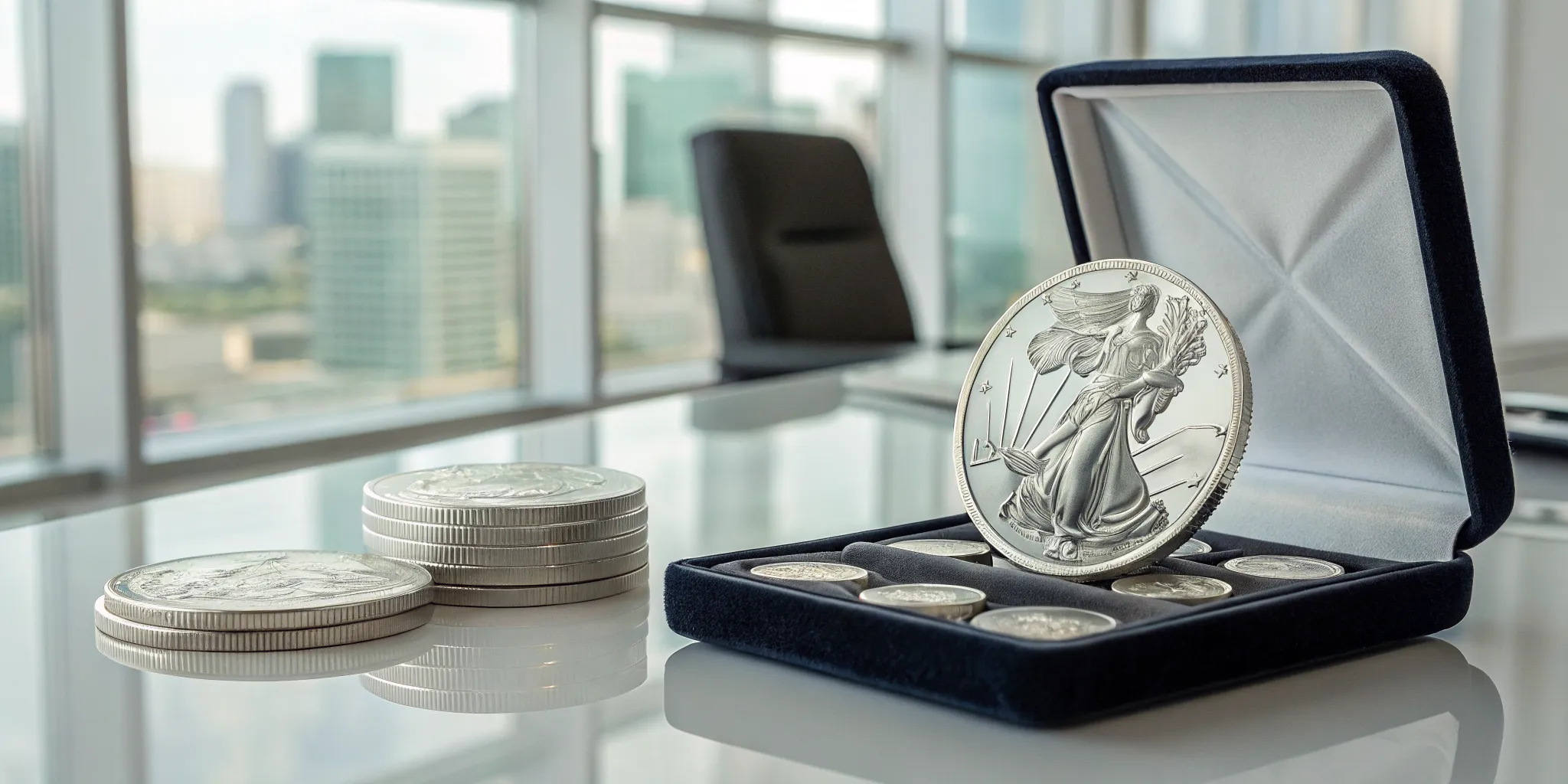
One of the most common mistakes new investors make is confusing a coin's face value with its market value. An American Eagle Platinum Coin has "$100" stamped on it, but spending it at a store would be a costly error. Its real worth is tied to its one troy ounce of pure platinum, which is worth many times that symbolic number. This is just one of several myths that can cloud an investor's judgment. To make smart decisions, you need to look past the surface and understand the real drivers of price. This article will demystify the process, giving you a clear-eyed view of the true American Eagle Platinum Coin value.
Key Takeaways
- Look beyond the metal's price: A Platinum Eagle's total value is determined by four key factors: the current spot price of platinum, its physical condition (or grade), its mintage numbers (which dictate rarity), and overall market demand.
- Balance cost with flexibility: The 1 oz coin is the most cost-effective way to buy platinum, as it has the lowest premium per ounce. Smaller fractional coins cost more per ounce but offer an easier entry point and more options when it's time to sell.
- Buy from a trusted source: The U.S. Mint does not sell these coins directly to the public, so you must work with a reputable dealer. Prioritize sellers who offer professionally certified coins to guarantee authenticity and protect your investment.
What Determines an American Eagle Platinum Coin's Value?
When you're looking at an American Eagle Platinum Coin, you're holding more than just a piece of precious metal. Its total worth is a blend of several key factors, each playing a distinct role. The coin's value starts with the raw worth of its platinum content, but that's just the beginning. From there, its physical condition, rarity, and the current economic climate all add layers to its final price. Understanding these elements is the first step to making a smart investment.
Whether you're a seasoned collector or new to precious metals, getting a handle on these four components will help you see the full picture. It’s the difference between simply buying platinum and strategically investing in a numismatic asset with multifaceted value. Let's break down exactly what drives the price of these beautiful and sought-after coins.
The Role of the Platinum Spot Price
The foundation of any American Eagle Platinum Coin's value is the spot price of platinum. Think of this as the live market price for one troy ounce of the metal itself. This price is constantly in motion, influenced by global supply and demand dynamics. The amount of platinum being mined versus the industrial and investment demand for it creates a daily tug-of-war that sets the baseline cost. So, before any other factors are considered, the coin's intrinsic value is tied directly to the current market rate for its weight in pure platinum bullion. This is why you'll see prices for platinum coins change daily, reflecting the shifts in the broader commodities market.
Why Condition and Grading Matter
While the spot price sets the floor, a coin's physical condition can significantly raise its ceiling. A pristine, uncirculated coin will always be worth more than one that shows signs of wear and tear. For serious collectors, this is where professional grading comes in. When a coin is graded by a reputable service, its condition is officially certified and it's sealed in a protective, tamper-evident holder. These graded coins, especially those with high ratings, carry a premium. Special "Proof" versions, which are struck with a special, mirror-like finish for collectors, also command higher prices. The better the condition, the more desirable the coin becomes to the numismatic community, which directly increases its value beyond its metal content.
How Mintage and Rarity Drive Value
How many of a certain coin were made? This question is central to its rarity and, consequently, its value. The U.S. Mint's production numbers, or mintage, vary from year to year. A coin from a low-mintage year is naturally scarcer, making it a prized find for collectors. American Platinum Eagles are already highly regarded for their .9995 purity and government backing. When you add the element of rarity, their collector appeal grows even stronger. Certain years or special editions can develop a significant numismatic premium, meaning their value as a collectible far exceeds the base price of the platinum they contain. This is why some Platinum Eagles are worth much more than others of the same weight.
Market Demand and the Economy's Influence
Beyond the coin itself, broader economic forces have a major say in its value. Platinum often performs well during times of economic uncertainty. When investors feel nervous about the stock market or the stability of currencies, they frequently turn to tangible assets like precious metals as a safe haven. This increased demand can drive up the price of platinum and, in turn, the value of Platinum Eagle coins. Because of our team's extensive experience, we've seen how market sentiment can shift demand toward physical assets. This dynamic makes platinum not just a collector's item but also a strategic tool for portfolio diversification, especially when economic waters get choppy.
How Much Are American Eagle Platinum Coins Worth?
The value of an American Eagle Platinum Coin isn't a single, fixed number. It’s a dynamic figure that shifts with the market and depends on several key characteristics of the coin itself. The primary driver of its base value is the current spot price of platinum. Think of the spot price as the live market rate for one troy ounce of the metal. If platinum is trading at $1,000 per ounce, a one-ounce Platinum Eagle contains at least $1,000 worth of metal.
However, these coins almost always trade for more than their simple melt value. This additional cost, known as a premium, accounts for factors like the coin’s condition, its rarity, and whether it’s a standard bullion version or a special collector's edition. A pristine, rare coin from a low-mintage year will be worth significantly more than a common, circulated one. Understanding these nuances is what separates a casual buyer from a savvy investor. By looking at the coin's size, finish, and even its face value, you can get a complete picture of its true market worth.
Current Market Prices by Size
American Eagle Platinum Coins are produced in four different sizes: one ounce, one-half ounce, one-quarter ounce, and one-tenth ounce. The price for each is directly tied to its platinum content and the metal's current spot price. For example, if a one-ounce coin is valued around $1,050, you can expect the half-ounce version to be priced at a little more than half of that.
It's important to know that smaller, fractional coins typically carry a slightly higher premium per ounce. This is because the costs to mint and distribute a 1/10 oz coin are not that different from a 1 oz coin, so that cost is spread over less metal. For the most up-to-date pricing, you can always check a dealer’s live inventory of platinum bullion.
Proof vs. Uncirculated: Understanding the Premiums
Not all Platinum Eagles are created equal. The U.S. Mint produces two main versions: Uncirculated and Proof. Uncirculated coins, often called Brilliant Uncirculated (BU), are the standard investment-grade version. They have a consistent, matte-like finish and are minted for investors who are primarily focused on acquiring platinum bullion.
Proof coins, on the other hand, are made for collectors. They are struck multiple times with specially prepared dies to create a stunning, mirror-like background with frosted, detailed designs. Because they are produced in smaller numbers and require a more intensive process, Proof coins carry a higher numismatic premium. Coins that have been professionally graded and sealed in a protective holder will also command higher prices, as their condition is certified. These are often the types of coins you'll find among collections of rare coins for sale.
Face Value vs. Market Value: What's the Difference?
One of the first things new investors notice is the face value stamped on the coin. A one-ounce American Eagle Platinum Coin has a face value of $100, the highest of any U.S. coin. However, this number is purely symbolic. It serves as a legal tender denomination but has no connection to the coin's actual market value.
The coin's true worth is based on its intrinsic metal content, which is its melt value, plus any additional numismatic premium. With platinum prices often hovering around $1,000 per ounce, the market value of a one-ounce coin is many times its $100 face value. You would never want to spend it at a store, as you’d be losing hundreds or even thousands of dollars in real value.
How Your Payment Method Can Affect the Final Price
A savvy tip for investors is that the way you pay for your precious metals can impact the final cost. Most dealers, including Park Avenue Numismatics, offer different pricing tiers based on your payment method. Paying with a credit card or PayPal is convenient, but it’s almost always the most expensive option. This is because payment processors charge merchants a fee, typically around 3%, which is then passed on to the buyer.
To get the best price, consider paying with a bank wire or check. While these methods might take a little longer to process, they don’t involve extra fees. On a large purchase, saving that 3% can add up to a significant amount, allowing you to get more metal for your money. Reputable dealers are transparent about their payment options, a practice we stand by in our commitment to our clients, which you can learn more about on our About Us page.
Which Platinum Eagle Size Offers the Best Value?
When you're ready to add Platinum Eagles to your portfolio, a common question is: which size should I buy? The answer really depends on your personal investment strategy and goals. "Best value" can mean getting the most metal for your dollar, or it could mean having more flexibility when it's time to sell. American Eagle Platinum Coins come in several sizes, from the flagship one-ounce coin to smaller fractional options. Each has its own set of advantages, so let's walk through them to help you decide which is the right fit for you.
The 1 oz American Eagle Platinum Coin
The one-ounce Platinum Eagle is the most popular and widely traded size, and for good reason. If your goal is to acquire the most platinum for your investment, the 1 oz coin is almost always your best bet. Larger coins generally carry a lower premium over the spot price of platinum compared to their smaller counterparts. This is because the minting costs don't scale down perfectly with size, making the one-ounce version more cost-efficient. While it has a face value of $100, its true worth is tied directly to its one troy ounce of .9995 fine platinum bullion. This makes it a straightforward way to invest in the fluctuating global platinum market.
Fractional Sizes: 1/2 oz, 1/4 oz, and 1/10 oz
While the 1 oz coin offers a great per-ounce price, fractional sizes provide unique benefits, especially when it comes to flexibility. These smaller coins (1/2 oz, 1/4 oz, and 1/10 oz) are perfect if you're just starting your platinum journey or prefer to invest in smaller increments. Their main advantage is divisibility. If you need to liquidate part of your holdings, you can sell a few 1/10 oz coins without having to part with a full ounce. This flexibility comes at a cost, as fractional coins have a higher premium per ounce. Think of it like buying in bulk at a grocery store; the larger package usually has a lower per-unit price.
Breaking Down the Cost Per Ounce
So, how does this all translate to your final cost? The key is to look at the cost per ounce. When you buy a 1 oz Platinum Eagle, the price you pay is the spot price of platinum plus a small premium for minting and distribution. For fractional coins, that premium is proportionally higher. For example, if a 1 oz coin has a 5% premium, a 1/10 oz coin might have a 15% premium. While you pay more per ounce for the smaller coins, you gain affordability and liquidity. The "best value" truly comes down to what you prioritize as an investor. If you have questions about which approach aligns with your portfolio, our team of experts is always here to help you make an informed decision.
Common Myths About Buying Platinum Eagles
When you're considering adding American Platinum Eagles to your portfolio, it's easy to run into some common misconceptions. These coins have a unique place in the market, and understanding the truth behind the myths can help you make much smarter decisions. Let's clear up a few of the most persistent misunderstandings so you can invest with confidence.
Myth: Face Value Equals Market Value
One of the first things people notice about the 1 oz American Platinum Eagle is its $100 face value, the highest of any U.S. coin. It’s a common mistake to think this number has anything to do with its actual worth. In reality, the face value is purely symbolic; it confirms the coin's status as legal tender but doesn't reflect its intrinsic value. The coin's true market price is tied to the spot price of platinum, which is significantly higher. Think of it as an investment asset, not currency. When you're ready to buy platinum bullion, always check the current market rates, not the number stamped on the coin itself.
Myth: All Coins of the Same Type Are Equal in Value
It’s tempting to assume that one 1 oz Platinum Eagle is the same as any other, but that's far from the truth. A coin's value can vary dramatically based on its condition, mintage year, and whether it's a proof or uncirculated version. A flawless, professionally graded coin from a low-mintage year will command a much higher premium than a common, circulated one. This is where the collector aspect of numismatics comes into play. Factors like rarity and demand can make two seemingly identical coins have vastly different values in the market. That's why browsing a selection of rare coins for sale often reveals a wide range of prices for the same type of coin.
Myth: Platinum Is Just as Stable as Gold and Silver
While platinum is rarer than gold, it doesn't always behave the same way as an investment. Gold is often seen as a safe-haven asset that performs well during economic uncertainty. Platinum, on the other hand, has significant industrial applications, especially in the automotive industry for catalytic converters. This means its price can be more sensitive to economic downturns and shifts in industrial demand. While it's an excellent tool for diversification, it's important to recognize its unique volatility. Many investors use gold as the foundation of their precious metals portfolio, which you can learn more about with a Gold IRA Starter Kit, and then add assets like platinum for further diversification.
Myth: You Can Spend Them Like Regular Money
Technically, since American Platinum Eagles are legal tender, you could use a 1 oz coin to pay for a $100 purchase. But you absolutely shouldn't. This is perhaps the most costly myth to believe. If you were to spend it, you would only receive its face value in return, effectively losing the entire market value of the platinum it contains, which could be well over a thousand dollars. These coins are investment assets, not transactional currency. Their legal tender status is more of a guarantee of authenticity from the U.S. Mint. Reputable dealers and collectors, like our team of experts you can read about on our About Us page, treat these coins as the valuable investments they are.
Where to Buy American Eagle Platinum Coins
The U.S. Mint produces American Eagle Platinum Coins, but it doesn't sell them directly to the public. So, where do you turn? Finding a trustworthy source is the most important step in adding these valuable coins to your portfolio. Your choice of seller directly impacts the price you pay, the quality of the coin you receive, and the security of your transaction. The primary channels for acquiring these coins are through reputable dealers, many of whom also operate online. Let's walk through your options and what to look for in a seller to ensure you make a sound investment.
Working with Reputable Dealers
Working with a reputable dealer is often the best path for both new and seasoned investors. A trusted dealer offers more than just a transaction; they provide expertise, guidance, and a curated inventory of authentic coins. Because American Platinum Eagles are the official platinum bullion coins of the United States and are made of .9995 fine platinum, their authenticity is paramount. An experienced dealer can verify each coin, giving you confidence in your purchase. With over 35 years of experience, a firm like Park Avenue Numismatics offers a level of trust and expertise that is hard to find elsewhere. They can help you understand the market, select coins that align with your goals, and answer any questions you have along the way.
Buying from Online Retailers
The convenience of buying online is undeniable, and many of the most established precious metals dealers now have robust online storefronts. This gives you access to a wide inventory from the comfort of your home. However, the internet is a vast place, and not all sellers are created equal. It's critical to do your homework before making a purchase. Look for retailers with a long, verifiable history in the business, transparent pricing, and positive customer reviews. When you browse a curated selection of platinum bullion from an established company, you get both convenience and confidence. Always check for a secure website (look for "https" in the URL), clear policies on shipping and insurance, and a physical address and phone number.
Why Certification and Authentication Are Crucial
Platinum is significantly rarer than gold, and the limited mintage of American Platinum Eagles adds to their scarcity and value. This unfortunately also makes them a target for counterfeiters. This is why certification and authentication are so important. Professional grading services like the Professional Coin Grading Service (PCGS) and the Numismatic Guaranty Company (NGC) authenticate and grade coins, then seal them in a protective, tamper-evident holder. This certification guarantees the coin's authenticity and its physical condition, or grade. Buying certified coins removes the guesswork from your investment and ensures you are paying a fair price for a genuine item. Many of the finest rare coins for sale are certified, providing a clear record of their quality and making them easier to sell in the future.
How Historical Trends Affect Platinum Eagle Values
Understanding the value of an American Eagle Platinum Coin isn't just about checking today's market price. It's also about looking at historical patterns to see the bigger picture. Like any valuable asset, these coins are influenced by economic cycles, supply and demand, and their own unique characteristics. By examining these trends, you can get a much clearer idea of their potential and make more informed decisions for your collection or portfolio. Let's explore the key historical factors that shape the value of these beautiful coins.
Price Swings and Market Cycles
Platinum's price history is marked by significant swings, which can present both challenges and opportunities. Unlike gold, which is primarily an investment and jewelry metal, platinum has major industrial uses, especially in catalytic converters for vehicles. This means its value is tied to both investment demand and the health of the global manufacturing economy. When industrial demand is high, prices can climb, and when it wanes, they can fall. Watching these market cycles can help you identify strategic times to buy. An experienced dealer can help you interpret these trends and find value within the fluctuations of the platinum bullion market.
How Supply Shortages Affect Price
The simple rule of supply and demand has a powerful effect on Platinum Eagle values. Platinum is an incredibly rare metal, mined in only a few places on Earth, primarily South Africa. Any disruption in mining or refining can quickly tighten the global supply. On top of that, the U.S. Mint occasionally faces production challenges or pauses, leading to coin shortages. When fewer coins are available to meet investor and collector demand, the premiums over the platinum spot price can increase significantly. This scarcity makes the available rare coins for sale even more sought-after and can drive their market value well beyond their metal content.
The Appeal of Different Designs
One of the most exciting aspects of the American Platinum Eagle series is its numismatic appeal, which is largely driven by its design. While the obverse consistently features the striking "Portrait of Liberty," the proof versions of the coin are famous for their annually changing reverse designs. This practice is unique among American Eagle bullion coins and creates a strong following among collectors who aim to acquire each year's new release. This collectibility adds a layer of value that is separate from the metal's price. A coin with a particularly popular or low-mintage design can command a much higher premium in the secondary market for years to come.
Potential for Long-Term Value Growth
When you look at the fundamentals, the case for platinum's long-term value growth becomes clear. Platinum is about 30 times rarer than gold, a fact that provides a strong foundation for its intrinsic worth. The American Platinum Eagle coins, with their government guarantee of weight and purity and often limited mintage numbers, combine this natural scarcity with numismatic desirability. For investors looking beyond short-term market noise, these coins represent a tangible asset with the potential for significant appreciation over time. This makes them an excellent option for diversifying a portfolio or including in a precious metals IRA.
Related Articles
- 1 oz Platinum American Eagle Backdate
- 1 oz American Platinum Eagle
- 1/2 oz American Platinum Eagle
- Gold American Eagle
- Precious Metals Glossary
Frequently Asked Questions
Why should I consider adding platinum to my portfolio instead of just sticking with gold? Think of it as a different kind of diversification. While gold is primarily a monetary metal, platinum has significant industrial uses, especially in the auto industry. This means its price can be influenced by different economic factors than gold's. Adding platinum can give your precious metals holdings another layer of balance, as it doesn't always move in lockstep with gold or silver. Its extreme rarity also provides a compelling fundamental reason for its long-term value.
I'm new to this. Which Platinum Eagle coin is the best one to start with? For most people starting out, the one-ounce Uncirculated American Platinum Eagle is the most direct and cost-effective choice. You get the most metal for your money because larger coins typically have the lowest premium over the spot price. If you're working with a smaller budget or want the flexibility to sell smaller portions of your holdings later, the fractional sizes (like the 1/10 oz or 1/4 oz) are excellent options, just be aware their premiums per ounce will be a bit higher.
How can I be sure the Platinum Eagle I'm buying is authentic and fairly priced? The best way to ensure authenticity is to buy from a well-established and respected dealer. A trustworthy seller guarantees the genuineness of their products. For an even higher level of assurance, consider buying coins that have been professionally graded and sealed by a third-party service like PCGS or NGC. This not only verifies the coin's authenticity but also its condition, which helps justify its market price.
What's the real difference in value between a regular 'Uncirculated' coin and a 'Proof' coin? The main difference comes down to purpose and rarity. Uncirculated coins are the standard bullion version, intended for investors who are primarily focused on owning platinum. Proof coins are special collector's editions made with a beautiful mirror-like finish. They are produced in much smaller numbers and often feature unique, annually changing designs. This collectibility gives them a numismatic value that can be significantly higher than their base metal worth.
If I need to sell my Platinum Eagles in the future, how easy is it? American Platinum Eagles are highly liquid, meaning they are very easy to sell. Because they are official, government-backed bullion products with a guaranteed weight and purity, dealers are always looking to buy them. Any reputable dealer who sells these coins will also have a straightforward process for purchasing them back from you, ensuring you can convert your investment to cash when you decide the time is right.





