
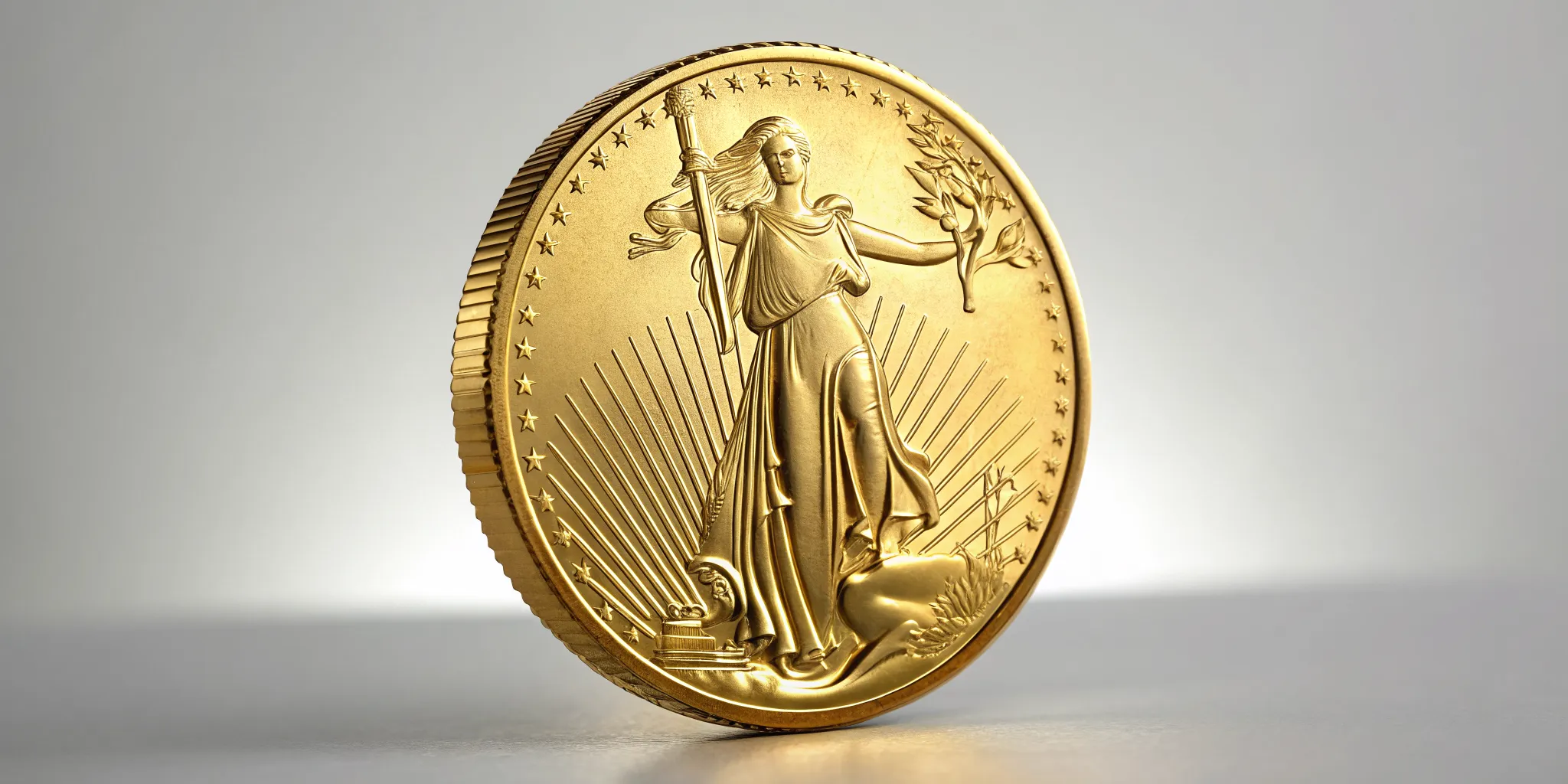
For nearly every other coin in existence, ownership is a simple matter of purchase. But for one coin, possession is a federal crime. The U.S. government considers any privately held 1933 Double Eagle to be stolen property, subject to seizure without compensation. This is because the coins were never officially issued to the public. This legal barrier has created a decades-long saga of secret service investigations, court battles, and high-stakes recoveries. With only one single, famous exception, the 1933 double eagle $20 gold coin remains a forbidden treasure, making its story as much about law and intrigue as it is about numismatics.
Key Takeaways
- Born from a Presidential Order: The coin's rarity isn't from a low mintage but from a government recall; President Roosevelt's order to melt nearly half a million of these coins during the Great Depression transformed them from currency into a legendary collectible.
- Ownership Is a Legal Minefield: It is illegal to own a 1933 Double Eagle because the coins were never officially issued. The U.S. government considers them stolen property, with only one famous exception that was legally monetized for private ownership.
- Value Lies in the Story, Not the Gold: The coin's multi-million dollar price tag comes from its incredible backstory and legal drama, not just its gold weight. It's a trophy asset whose value is determined by intense demand from top-tier collectors for its unique status.
What's the Story Behind the 1933 Double Eagle?
The 1933 Double Eagle isn't just a coin; it's a legend wrapped in history, intrigue, and immense value. Its story begins at a critical turning point for the American economy, involves a presidential order that changed the country's relationship with gold, and ends with nearly half a million coins being melted into oblivion. Understanding its past is key to appreciating why this particular piece of gold is one of the most sought-after collectibles in the world.
The Great Depression and Executive Order 6102
The story of the 1933 Double Eagle is set against the backdrop of the Great Depression. The nation was facing a severe banking crisis, and public trust in the financial system was at an all-time low. To stabilize the economy, President Franklin D. Roosevelt took a drastic step by issuing Executive Order 6102. This order made it illegal for individuals to hoard gold coins, bullion, and certificates. Americans were required to turn in their gold to the Federal Reserve in exchange for paper currency. The goal was to stop the run on the banks and give the government more control over the money supply.
Why the Coins Were Never Released
Even as the government was recalling gold, the U.S. Mint produced a run of 445,500 Double Eagles dated 1933. However, because of Executive Order 6102, these coins were never officially issued for circulation. Since private ownership of gold was now illegal, the government ordered the entire mintage to be melted down before it ever left the Mint. Only a tiny number of coins escaped this fate, smuggled out in mysterious circumstances. This act of melting down nearly the entire production run is what transformed the 1933 Double Eagle from a standard piece of currency into an object of extreme rarity and fascination for collectors.
The Iconic Saint-Gaudens Design
Adding to its allure is the coin's breathtaking design, widely considered the most beautiful in American coinage history. Created by the renowned sculptor Augustus Saint-Gaudens, the obverse features a powerful image of Lady Liberty striding forward, torch in one hand and an olive branch in the other. The reverse shows a majestic eagle in flight. The design was originally commissioned by President Theodore Roosevelt, who wanted to bring artistic elegance to the nation's currency. This artistic merit, combined with its incredible backstory, makes the 1933 Double Eagle a true masterpiece of numismatics.
Why Is It Illegal to Own a 1933 Double Eagle?
The story behind the 1933 Double Eagle’s illegality is a direct result of the economic turmoil of the Great Depression. In short, the coin was never officially issued as legal tender. As President Franklin D. Roosevelt took the United States off the gold standard to stabilize the economy, the entire mintage of nearly half a million 1933 Double Eagles was ordered to be melted down before ever leaving the U.S. Mint.
Because they were never lawfully released into circulation, the U.S. government considers any surviving examples to be stolen federal property. This simple fact is the foundation of the coin's complicated legal status. Over the decades, this has led to numerous investigations, seizures, and court cases as a handful of these coins have surfaced on the market. There is, however, one famous exception to this rule, which only adds to the coin's mystique. For collectors and investors, understanding this legal history is just as important as appreciating the coin's beauty and rarity.
The Gold Reserve Act: Declaring the Coins Government Property
The primary legal barrier to owning a 1933 Double Eagle is the Gold Reserve Act of 1934. This act, which followed FDR’s Executive Order 6102, outlawed the private ownership of most gold coins and bullion, requiring citizens to turn their gold over to the government. Since the 1933 Double Eagles were still sitting in the Mint’s vaults and had never been officially paid out, they remained government property.
When the order came to melt them down, a few coins managed to escape the Mint, likely through illicit means. The government’s position is firm: because these coins were never legally issued, they are considered stolen assets. This is why any newly discovered specimen is subject to seizure.
The Weitzman Specimen: The Only Legal Exception
There is only one 1933 Double Eagle that a private citizen can legally own. This coin, known as the Weitzman Specimen, has a truly unique history. It was once part of the famed collection of King Farouk of Egypt. After disappearing for nearly 50 years, it resurfaced and became the subject of a long legal battle.
Ultimately, the U.S. government reached a one-of-a-kind settlement that allowed the coin to be legally monetized and sold. This historic agreement granted it a legal status that no other 1933 Double Eagle can claim. This singular exception confirms the rule for all other specimens and is a major reason why the Weitzman Specimen became the most valuable coin ever sold at auction.
What Happens If You Own One Illegally?
The consequences of possessing an illegal 1933 Double Eagle are severe. The U.S. Secret Service actively investigates any reports of these coins surfacing and has a long history of tracking them down. If an individual is found to be in possession of one, the coin will be confiscated by the government without any form of compensation.
Beyond the complete loss of the asset, the owner could also face criminal prosecution for possessing stolen government property. This significant legal risk is why authentication and provenance are so critical when dealing with ultra-rare coins. The story of the 1933 Double Eagle serves as a powerful reminder that in numismatics, a coin’s legal history can be just as important as its physical condition.
Just How Rare Is the 1933 Double Eagle?
The story of the 1933 Double Eagle is a lesson in how a coin can become legendary not just for its design, but for its scarcity. Its rarity isn't due to a low initial mintage; it's the result of a dramatic series of events that saw nearly half a million coins created and then systematically destroyed. This journey from mass production to near extinction is what makes it one of the most sought-after and elusive coins in the world. Understanding its history reveals why it commands such attention from collectors and investors alike.
From 445,500 Minted to Nearly All Melted
In 1933, the U.S. Mint produced 445,500 Double Eagle gold coins. Under normal circumstances, this would have made them relatively common. However, these coins were struck at the height of the Great Depression. In a move to stabilize the economy, President Franklin D. Roosevelt issued an executive order that made it illegal for private citizens to own most forms of gold. As a result, the entire mintage of the 1933 Double Eagle was ordered to be melted down before ever entering circulation. This government recall transformed what should have been a standard issue of gold bullion into an accidental rarity, with almost every single coin being destroyed.
The Few Known Surviving Coins
Out of the nearly half-million coins minted, only a handful escaped the melting pots. Today, just 13 examples are known to exist, and their legal status is incredibly complex. Two are held by the U.S. National Numismatic Collection, and ten are secured at the Fort Knox Bullion Depository. It is illegal for a private individual to own a 1933 Double Eagle, with one famous exception: the Weitzman Specimen. This single coin was legalized through a unique set of circumstances, making it the only one that can ever be privately owned. This extreme scarcity makes it a centerpiece of numismatic lore and a dream for collectors of rare coins for sale.
Famous Thefts and Recoveries
The story of how any 1933 Double Eagles survived is filled with intrigue. It’s believed that at least 20 coins were stolen from the U.S. Mint, likely by a cashier, before the official melting order. These coins were then sold to collectors through a Philadelphia jeweler named Israel Switt. For decades, the Secret Service tracked down and seized these coins as they surfaced. The tale took another turn in 2005 when ten more stolen Double Eagles were discovered with Switt's family. After a lengthy court battle, the coins were officially ruled to be U.S. government property in 2016, further cementing the coin's dramatic and contested history.
What Makes the 1933 Double Eagle So Valuable?
The 1933 Double Eagle's incredible value comes from a perfect storm of rarity, history, and legal drama. It’s not just a piece of gold; it’s a tangible piece of American history with a story that captivates collectors and investors alike. Several key factors work together to make this coin one of the most coveted numismatic treasures in the world. Understanding these elements is key to appreciating why it commands such breathtaking prices at auction and why it remains a legend in the world of coin collecting.
Its journey from the U.S. Mint to the melting pots, with a few escaping into the wild, creates a narrative that is simply unmatched. Unlike other gold bullion coins that were produced for circulation or investment, the 1933 Double Eagle was never meant to be owned by the public. This forbidden status, combined with its stunning Saint-Gaudens design, adds to its mystique. The interplay between its extreme scarcity, its historical context during the Great Depression, its legal controversies, and the fierce demand from the world's wealthiest collectors all contribute to its monumental valuation. It represents the pinnacle of numismatic collecting, a true "holy grail" item.
Unmatched Rarity and Historical Significance
The core of the 1933 Double Eagle's value is its astonishing rarity. While the U.S. Mint struck 445,500 of these coins, none were ever officially circulated. Following President Roosevelt's executive order to take the U.S. off the gold standard, nearly all were ordered to be melted down. Today, only 13 are known to exist, with only one legal for private ownership. This extreme scarcity, tied directly to a pivotal moment in American economic history, gives it a significance that few other rare coins for sale can claim. It’s a tangible artifact from a bygone era.
The Role of Condition and Grading
For any collectible coin, condition is paramount, and the 1933 Double Eagle is the ultimate example. The coin's physical state, professionally graded for details, wear, and luster, dramatically affects its value. When one specimen sold for a record $18.9 million in 2021, its exceptional condition was a key driver of the price. Among the few surviving examples, even minor differences in grade can translate to millions of dollars in value. This highlights why professional appraisal is not just important but absolutely essential for any high-value numismatic piece, ensuring its quality and authenticity are accurately documented.
Why Provenance and Authentication Matter
Provenance, the documented history of a coin, is uniquely critical for the 1933 Double Eagle. Since these coins were never officially issued, the U.S. government considers them stolen property. It is illegal for a private citizen to own one, with the sole exception of the "Weitzman Specimen," which was officially monetized by the U.S. Mint. This legal status means any legitimate example must have an ironclad, government-approved ownership history. Authentication confirms not just that the coin is genuine, but that it can be legally owned, a distinction our team of experts at Park Avenue Numismatics understands deeply.
Demand from Top-Tier Collectors
This coin is the ultimate prize for the world's most serious collectors. Its legendary status ensures that whenever one becomes available, it draws intense competition from individuals eager to own a masterpiece of numismatics. The 2021 Sotheby's sale of the Faruq specimen for $18.9 million perfectly illustrates this demand. That event reaffirmed the coin's position as the most valuable in the world, driven by a small circle of elite collectors willing to pay a premium for the absolute best. This powerful demand from the top of the market is a key factor that sustains its incredible value and legendary status.
A Record-Breaking Coin: Why It Sells for Millions
The 1933 Double Eagle isn't just a coin; it's a numismatic legend. Its astronomical value is the result of a perfect storm: extreme rarity, a dramatic backstory tied to the Great Depression, and a legal saga that makes owning one a singular privilege. This powerful combination has driven its price into the millions, far beyond the value of its gold content. When this coin appears at auction, the price reflects more than just a piece of metal. It represents the value of history, intrigue, and the ultimate collector's trophy. It’s a tangible piece of American history that was never supposed to be in private hands, and that forbidden allure makes it irresistible to the world's most serious collectors. The journey of this coin through history is as captivating as its design, culminating in record-setting sales that capture global attention.
The $18.9 Million Sale That Made History
On June 8, 2021, the numismatic world watched as the only 1933 Double Eagle legal for private ownership crossed the auction block at Sotheby's. When the final bid was placed, the coin had sold for a breathtaking $18.9 million, shattering its own previous record and reaffirming its status as the most valuable coin in the world. This historic sale wasn't just a transaction; it was a major event that made international headlines. It underscored the intense demand among elite collectors to own a piece of numismatic royalty, an artifact with a story unlike any other.
Tracking Its Value Over the Years
The 2021 sale was monumental, but it wasn't the first time this specific coin made waves. Nearly two decades earlier, in July 2002, it captured the world's attention when it sold for an already impressive $7.5 million. The incredible leap in value from $7.5 million to $18.9 million in just 19 years showcases its remarkable performance as a tangible asset. This level of appreciation is what serious investors and collectors look for, highlighting how truly unique and historically significant rare coins can perform within a diversified portfolio.
Understanding Its Current Market Value
It’s crucial to understand that the multi-million-dollar price tag is exclusive to the 1933 issue. Other Saint-Gaudens Double Eagles, while beautiful and valuable in their own right, trade for a fraction of that price. For instance, a common-date Saint-Gaudens Double Eagle in uncirculated condition might be valued from a few thousand dollars up to ninety thousand, depending on its specific date and grade. The 1933 specimen's value is an anomaly, driven entirely by its unique story and the fact that only one is legally available for private ownership. This distinction is key for any collector considering adding historic gold bullion to their holdings.
How to Authenticate a 1933 Double Eagle
Authenticating a 1933 Double Eagle is unlike verifying any other coin, given its unique legal status and incredible rarity. The simple truth is that nearly all examples that surface are counterfeits or replicas. Because any genuine 1933 Double Eagle is considered U.S. government property and is subject to seizure (with only one legal exception), the authentication process is less about adding one to your collection and more about identifying fakes. If you believe you have an authentic coin, the only path forward is through official government channels. For collectors, however, knowing the key markers is a fascinating look into one of numismatics' greatest stories.
The Importance of Professional Grading
For almost all high-value rare coins for sale, professional grading is the gold standard, but for the 1933 Double Eagle, it’s the only place to start. Self-authentication is not a reliable option. Any potential specimen requires the highest level of scrutiny from top-tier experts and, ultimately, government authorities. A reputable third-party grading service can offer an initial opinion on its physical characteristics, but true authentication involves a deep investigation into its history. The U.S. Mint is the final arbiter of authenticity for this specific coin. Working with a trusted dealer can help you understand the complexities involved in handling such a significant piece of American history.
Key Features to Verify Authenticity
While a professional eye is essential, you can look for a few key characteristics to perform a preliminary check. An authentic 1933 Double Eagle features the renowned Saint-Gaudens design, with a walking Lady Liberty on the obverse and a flying eagle on the reverse. The details should be crisp and sharply defined. The coin’s composition is 90% gold and 10% copper, with a standard weight of 33.44 grams. A significant deviation in weight is an immediate red flag. Crucially, since these coins were struck at the Philadelphia Mint, they do not have a mint mark. The presence of any mint mark is a clear sign of a counterfeit.
How to Spot a Fake
Spotting a fake 1933 Double Eagle is often straightforward, as most are not made of gold. The simplest method is the magnet test. Since gold is not magnetic, any attraction to a magnet instantly disqualifies the coin. You should also examine the surface quality. Counterfeits often have a soapy or greasy luster, mushy details, and uneven edges from poor casting processes. Authentic coins have a sharp strike and a clean, smooth finish. Many replicas are also marked with the word "COPY" as required by law, though this can sometimes be faint or cleverly hidden. If you have any doubts, it's always best to consult an expert.
Where Can You Find a 1933 Double Eagle?
Given its legendary status and tangled legal history, you won’t find a 1933 Double Eagle in a typical dealer’s inventory. Acquiring this coin is a major event, not a simple transaction. The path to ownership is incredibly narrow and reserved for the world’s most serious collectors. If you’re ever in a position to pursue this numismatic holy grail, you’ll be operating through specific, high-level channels. Understanding these avenues is key to protecting yourself from the many illegal coins that surface.
The Role of Major Auction Houses
The world’s only legal-to-own 1933 Double Eagle has a history of trading hands at major international auction houses. When the famous Faruq-Weitzman specimen sold, it was Sotheby’s that handled the monumental transaction, fetching $18.9 million in 2021. For a coin of this magnitude, a premier auction house is the only venue that can provide the global stage, security, and transparent process required. These events are rare and highly publicized, drawing attention from top collectors. Any legitimate sale of this specific coin will almost certainly happen in this type of high-profile setting, ensuring its provenance is meticulously documented.
Working with Reputable Rare Coin Dealers
While you won’t find a 1933 Double Eagle in a display case, a reputable dealer is your most essential partner. For an acquisition of this caliber, an expert acts as your trusted advisor, helping you through the complexities of a major auction. They can verify the coin’s history, advise on bidding strategy, and handle logistics. This principle applies to all high-value acquisitions. When you’re looking for any rare coins for sale, partnering with an established dealer ensures you receive fair pricing and expert authentication. It’s about making an informed decision with a professional in your corner.
Understanding the Legal Requirements
This is the most critical piece of information: it is illegal to own a 1933 Double Eagle. With the sole exception of the single, specially monetized Weitzman specimen, all others are considered stolen property of the U.S. government. These coins were never officially released, and the government has actively pursued and seized them over the decades. Any offer to sell you one privately should be seen as a major red flag. The legal risks are immense, and authentication is impossible outside of the one known example. Protecting your collection means staying away from any coin that lacks a flawless, legally sanctioned provenance.
Is the 1933 Double Eagle a Good Investment?
The 1933 Double Eagle is more than just a coin; it's a piece of history, a legal anomaly, and a trophy asset. When you're talking about an item that holds the world record for the most expensive coin ever sold, the question of its investment potential is a big one. Unlike standard gold bullion, its value isn't just tied to the spot price of gold. Instead, its worth is driven by an incredible story, extreme rarity, and intense demand from the world's most elite collectors. But does that make it a smart addition to a portfolio? Let's look at its performance, its role in diversification, and the significant hurdles involved.
Analyzing Its Performance as an Asset
When you look at the 1933 Double Eagle's track record, its performance is nothing short of spectacular. This isn't an asset that sees minor fluctuations; it makes massive leaps in value. In 2002, the Weitzman Specimen sold at auction for an already impressive $7.5 million. Fast forward to June 2021, and the same coin shattered records by selling for an astounding $18.9 million. This incredible growth highlights its power as a long-term store of value. The coin's appreciation isn't just about inflation or the rising price of gold; it's a direct result of its legendary status and the fact that it is, for all practical purposes, a one-of-a-kind collectible.
How It Fits into a Diversified Portfolio
The 1933 Double Eagle is the ultimate example of a numismatic asset. Unlike gold bars or standard issue coins, its value is composed of its intrinsic gold content plus a significant premium for its rarity and historical importance. This "collectible" factor is what sets it apart as a diversification tool. While the value of rare coins can fluctuate with the market, ultra-rare coins often move independently, driven by collector demand. Adding an asset like this to a portfolio introduces an element that isn't directly correlated with stocks or bonds. It acts as a powerful hedge against economic uncertainty, preserving wealth through its tangible, historical, and artistic value that transcends typical market cycles.
Weighing the Risks and Legal Hurdles
The biggest challenge with the 1933 Double Eagle isn't market risk; it's legality. It is illegal for a private citizen to own any 1933 Double Eagle, as they were never officially released and are considered stolen government property. The only exception is the single Weitzman Specimen, which was specially monetized by the U.S. Treasury for private ownership. Any other specimen that surfaces is subject to seizure without compensation. This legal barrier makes the coin almost impossible to acquire and adds a layer of complexity unlike any other collectible. For investors, this means the only path to ownership is through the legitimate sale of the one legal coin, making it an exclusive and incredibly high-stakes transaction.
Related Articles
- Buy $20 St. Gaudens | Buy $20 Liberty Double Eagle | Precious Metals & Rare Coins Dealer | Antique Coins - Park Ave Numismatics
- Park Ave Numismatics | Rare Coins | Precious Metals | Collectible Coins | Precious Metals & Rare Coins Dealer | Antique Coins - Park Ave Numismatics
- Park Ave Numismatics | Rare Coins | Precious Metals | Collectible Coins | Precious Metals & Rare Coins Dealer | Antique Coins - Park Ave Numismatics
- Liberty Gold Double Eagle | Buy $20 Liberty Double Eagle | Precious Metals & Rare Coins Dealer | Antique Coins - Park Ave Numismatics
- LIBERTY HEAD DOUBLE EAGLES WITH MOTTO AND TWENTY D. (1866-1876) | Precious Metals & Rare Coins Dealer | Antique Coins - Park Ave Numismatics
Frequently Asked Questions
Why is only one 1933 Double Eagle legal for a private citizen to own? The simple reason is that the entire mintage was never officially released to the public. Due to a presidential order taking the U.S. off the gold standard, these coins were ordered to be melted down before they ever left the Mint. The single exception, known as the Weitzman Specimen, went through a unique legal process involving the U.S. Treasury that officially monetized it, granting it a legal status no other 1933 Double Eagle has. All others are still considered stolen government property.
How is the 1933 Double Eagle different from other Saint-Gaudens gold coins? While they share the same beautiful design by Augustus Saint-Gaudens, their histories and values are worlds apart. Most other Saint-Gaudens Double Eagles were minted for circulation and are valued based on their date, mint mark, and condition, with prices ranging from a few thousand dollars to ninety thousand for more common issues. The 1933 coin's value is driven by its unique story of being almost entirely destroyed, making it an extreme rarity with a legal status that sets it completely apart from any other coin.
What makes this coin so much more valuable than its weight in gold? Its value comes from a combination of factors that go far beyond its gold content. The primary driver is its incredible rarity, with only one specimen legally available to the public. This is combined with its significant historical context, tying it directly to the Great Depression and a major shift in U.S. economic policy. Finally, the decades of legal battles and Secret Service investigations add a layer of intrigue that makes it the ultimate prize for top-tier collectors.
What happened to the other known 1933 Double Eagles? Of the handful of coins known to exist, none are in private hands. Two of the coins are part of the U.S. National Numismatic Collection at the Smithsonian Institution, preserved for their historical importance. The other ten are held under high security at the Fort Knox Bullion Depository. This consolidation of all other known examples by the U.S. government reinforces the absolute scarcity of the one specimen available to collectors.
What should I do if I find a coin that looks like a 1933 Double Eagle? Given the coin's history, the chances of finding a genuine, unknown specimen are incredibly slim, and most examples that appear are counterfeits. The first step should be to seek a professional opinion from a trusted and established numismatic expert. They can help verify its physical characteristics and advise you on the complexities involved. Due to the serious legal implications, it is critical to proceed with caution and professional guidance.





