
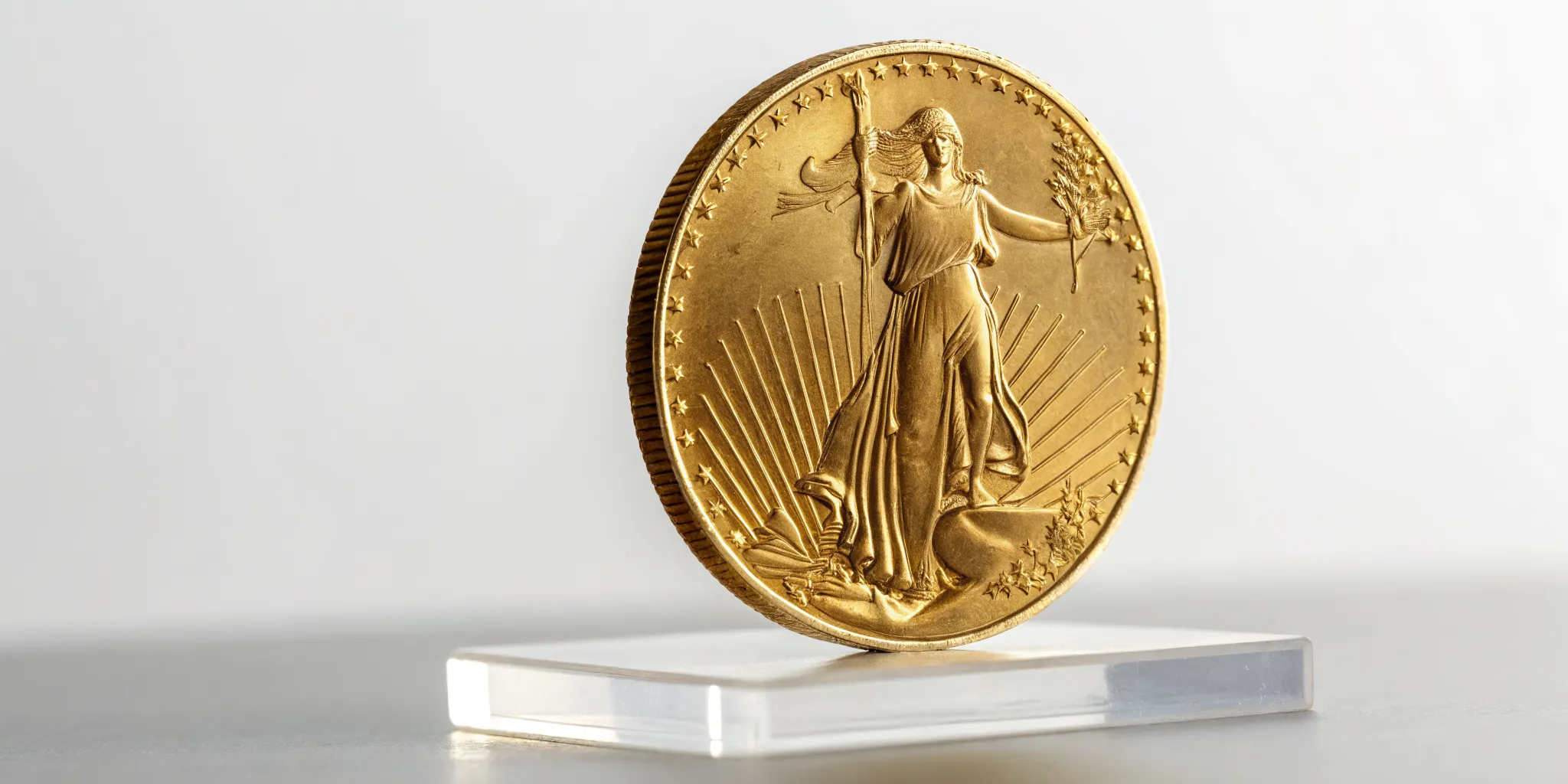
Many gold coins have value, but few have a story as compelling as the 1907 Saint-Gaudens Double Eagle. It represents a turning point in U.S. Mint history, a deliberate effort to transform everyday currency into a national symbol of artistic achievement. This coin carries the legacy of President Roosevelt's vision for a more beautiful America. That powerful narrative is why collectors prize it so highly and why its market price goes far beyond its weight in gold. Appreciating this history is essential to fully grasping the 1907 Saint-Gaudens Double Eagle value and its enduring appeal in the world of numismatics.
Key Takeaways
- Look beyond the gold content: The 1907 Saint-Gaudens's value is primarily determined by its artistic and historical details, not just its weight in gold. The rare, sculptural "High Relief" version is far more valuable than the common "Low Relief" variety, making this distinction the most important factor to identify.
- Professional grading is non-negotiable: A coin's physical condition is a top value driver, and professional certification is the best way to confirm it. A grade from a trusted service like PCGS or NGC verifies authenticity and provides the standardized quality assessment needed to secure its true market value.
- Diversify with a historic, tangible asset: This coin is an excellent way to add a physical asset to your portfolio. It offers the security of gold bullion combined with the long-term growth potential of a world-renowned collectible, ensuring strong and consistent demand from other collectors and investors.
The Making of America's Most Beautiful Coin
The Saint-Gaudens Double Eagle isn't just a piece of gold; it's a masterpiece born from a president's vision and an artist's genius. Before 1907, American coins were often seen as functional but artistically uninspired. President Theodore Roosevelt, a man of action and refined taste, believed the nation's currency should reflect its growing power and cultural sophistication. He wanted to create coins that could rival the beautiful, high-relief currency of ancient Greece. To achieve this, he turned to the most celebrated sculptor of his time, Augustus Saint-Gaudens.
This partnership marked a turning point for the U.S. Mint. It was a deliberate effort to transform everyday objects into works of art that every citizen could hold in their hands. The result was a coin so striking that it's still celebrated as the pinnacle of American numismatic design. Its story is one of ambition, artistic struggle, and the creation of a lasting national symbol.
The Roosevelt and Saint-Gaudens Collaboration
In 1905, President Roosevelt took the unusual step of personally commissioning Augustus Saint-Gaudens to redesign the nation's gold coinage. He felt the existing designs were bland and unworthy of a great nation. The collaboration between Roosevelt and Saint-Gaudens is now legendary among collectors, representing a shared goal to beautify U.S. currency. Roosevelt gave the artist free rein, encouraging him to create a design with immense artistic merit, regardless of the production challenges it might pose for the U.S. Mint. This presidential push for artistic excellence is what set the stage for such a revolutionary coin.
A Closer Look at the Design
The design of the Saint-Gaudens Double Eagle is breathtaking in its detail and symbolism. The obverse features a powerful, full-length figure of Lady Liberty striding forward. In one hand, she holds a torch, representing enlightenment, and in the other, an olive branch, a classic symbol of peace. This dynamic portrayal was a dramatic departure from the static, bust-style portraits common on earlier coins.
On the reverse, a majestic eagle soars in flight against the rays of a rising sun, capturing a sense of freedom and national strength. Saint-Gaudens’s original vision was for a coin struck in ultra-high relief, giving the design a sculptural, three-dimensional quality. However, this proved incredibly difficult for the minting process. The final version was modified to a lower relief to allow for mass production, but it still retained the core of its stunning artistic integrity.
What Is a 1907 Saint-Gaudens Double Eagle Worth?
Determining the value of a 1907 Saint-Gaudens Double Eagle is more complex than simply checking the daily spot price of gold. While each coin contains nearly a full ounce of gold, its true worth is a blend of its precious metal content, historical significance, artistic merit, and, most importantly, its specific variety and condition. The 1907 issue is especially fascinating for collectors because it was the first year of this iconic design and was struck in several variations, including the coveted High Relief version.
The value can swing dramatically, from a modest premium over its gold melt value for a common, circulated coin to well into the six-figure range for a rare, high-grade specimen. Understanding what makes one 1907 Double Eagle more valuable than another comes down to a few key factors: the relief of the strike, the professional grade it has received, and current market demand. These elements work together to create the final market value for what many call America’s most beautiful coin.
High Relief vs. Low Relief: How It Affects Value
The most significant factor affecting a 1907 Saint-Gaudens' value is its relief. President Roosevelt and sculptor Augustus Saint-Gaudens envisioned a coin with deep, sculptural details, like an ancient Greek relic. This vision produced the stunning "High Relief" version. However, the immense pressure needed to strike these coins made mass production impractical. After minting a small number, the U.S. Mint transitioned to a "Low Relief" design that was easier to produce.
Because so few High Relief coins were struck, their rarity makes them far more valuable. These early strikes, sometimes called "wire rim" or "flat rim" varieties, are prized by collectors. A High Relief 1907 can command prices from $15,000 to over $100,000, depending on its specific grade and condition, making it one of the most desirable rare coins for sale in American numismatics.
1907 Double Eagle Value by Grade
For any collectible coin, condition is everything. A professional grade assigned by a third-party service provides a universal standard for a coin's state of preservation. The higher the grade, the more valuable the coin. For an uncirculated 1907 Saint-Gaudens, the difference of just a few points on the grading scale can translate to thousands of dollars.
For instance, a High Relief specimen in a solid MS-63 (Mint State 63) grade might be valued around $5,100. That figure can climb to nearly $10,000 for a superb MS-66 example. For a virtually perfect MS-67 coin, the value can soar to over $80,000. Even for the more common Low Relief versions, grade plays a critical role in separating a standard bullion piece from a valuable collectible.
Current Market Trends and Pricing
The market for 1907 Saint-Gaudens Double Eagles is dynamic, influenced by both the precious metals market and collector demand. The coin’s base value is always anchored to the current price of gold, so a common, circulated Low Relief coin will often trade for a small premium above its melt value. The collectible High Relief versions, however, move in a different market.
According to the NGC Price Guide, even a circulated 1907 High Relief coin can be worth between $4,650 and $4,750. Because prices are constantly shifting based on auction results and private sales, the best way to understand a coin's current market value is to consult with a numismatic expert who can provide an up-to-date appraisal.
What Drives the Value of a 1907 Double Eagle?
Several key factors come together to determine the market price of a 1907 Saint-Gaudens Double Eagle. It’s not just about the gold content; the coin’s history, condition, and rarity play a huge role. Understanding these elements will help you appreciate why this particular coin is so prized by collectors and investors alike. Let's break down what you should be looking for when evaluating one of these beautiful coins.
Coin Condition and Professional Grading
The physical condition, or grade, of a 1907 Double Eagle is one of the most significant factors in its valuation. A coin that has seen little to no circulation will always be worth more than one that shows signs of wear. Uncirculated (MS) examples command the highest prices, with those graded MS-64 and above being especially desirable. Professional grading provides a standardized assessment of a coin's quality, giving you a clear picture of its condition. This helps you understand its potential market value when you decide to buy or sell rare coins.
Rarity, Mintage, and Collector Demand
With a total mintage of 361,667, the 1907 Saint-Gaudens Double Eagle is relatively scarce, which adds to its appeal. However, the High Relief version is what truly captures the imagination of collectors. Widely considered a masterpiece of American numismatics, its stunning design makes it one of the most sought-after coins in the world. This high collector demand, combined with its limited availability, consistently supports its value. It's a perfect example of how artistry and scarcity create a prized piece of gold bullion with a story to tell.
Why PCGS and NGC Certification Matters
When you're dealing with a coin of this caliber, authentication is everything. Certification from a reputable grading service like the Professional Coin Grading Service (PCGS) or Numismatic Guaranty Corporation (NGC) is essential. These organizations verify a coin's authenticity and assign it a specific grade, which removes guesswork and provides peace of mind. A certified coin almost always fetches a higher price because the grade is backed by trusted experts. As experienced numismatists, we know that this third-party verification is crucial for building a valuable and secure collection.
How Does Its Value Compare to Other Gold Coins?
The 1907 Saint-Gaudens Double Eagle holds a special place in American numismatics, but understanding its value requires looking at it next to other significant gold coins. Its worth is shaped not just by its own unique story and design, but by how it stacks up against other coins from its own series and the one that came before it. This context is key for any serious collector or investor.
Versus Other Saint-Gaudens Issues
The Saint-Gaudens Double Eagle series, struck from 1907 to 1933, includes some of the most studied and collected rare coins for sale in the world. While the 1907 High Relief is a standout, its value can be compared to other key dates in the series. For instance, a common date Saint-Gaudens in good condition might trade close to the current price of gold. However, a rarer issue like the 1908-S can sell for over $8,600 in uncirculated condition. The 1907 issue itself, particularly the Low Relief or "Arabic Numerals" version, is more accessible. A circulated 1907 Saint-Gaudens can be worth between $4,650 and $4,750, making it a significant but attainable piece for many collectors compared to the ultra-rare High Relief variants.
Versus the Liberty Head Double Eagle
Before the Saint-Gaudens, the Liberty Head Double Eagle was the standard $20 gold piece. Comparing the two shows how artistry and collector demand influence price. While both contain the same amount of gold, their numismatic values differ. A high-grade Liberty Head, like a PCGS-graded MS62, might sell for around $4,700. In contrast, a Saint-Gaudens in a higher grade, like an MS65, often commands a premium due to its celebrated design and popularity. The Liberty Head was a workhorse coin, produced for decades. The Saint-Gaudens, however, was a renaissance in American coinage. This distinction means that beyond their shared gold bullion content, they appeal to different collecting sensibilities and their market values reflect that.
How to Evaluate a 1907 Saint-Gaudens Coin
When you hold a 1907 Saint-Gaudens Double Eagle, you’re holding a piece of American history. But determining its true value requires more than just appreciating its beauty. A careful evaluation is key to understanding what your coin is worth, whether you’re looking to buy, sell, or simply insure your collection. The process involves examining the coin’s physical condition, understanding formal grading standards, and knowing what red flags to look for. It’s a skill that combines a keen eye with deep market knowledge. Let’s walk through the essential steps to properly assess one of these iconic gold coins.
What to Look For: Wear and Luster
The first thing to assess is the coin's physical condition, which boils down to two key elements: wear and luster. Wear refers to any signs of circulation, like scratches, smoothing of the design's high points, or nicks on the rim. An uncirculated coin will show no wear. Luster is the original satiny sheen the coin had when it left the mint. Tilting the coin under a light should reveal a cartwheeling effect as the light moves across its surface. A coin with strong, original luster and minimal wear will always command a higher price, as its condition is the primary driver of its value.
How Coin Grading Standards Work
While you can perform a preliminary inspection, the gold standard for determining a coin’s condition is professional grading. Independent services like the Professional Coin Grading Service (PCGS) and the Numismatic Guaranty Company (NGC) use a 70-point scale to assign a precise grade. A grade of 1 indicates poor condition, while a 70 signifies a perfect coin. Coins authenticated and graded by these top-tier companies are encapsulated in a protective holder, guaranteeing their grade and authenticity. This certification is crucial, as professionally graded rare coins for sale often achieve higher, more consistent market prices.
Red Flags That Lower Its Value
Certain issues can significantly reduce a 1907 Saint-Gaudens' value, even if it appears to be in good shape. The most common red flag is cleaning. Any attempt to polish or harshly clean a coin leaves microscopic scratches and strips away its original luster, permanently damaging its surface and value. Other red flags include rim dings, deep scratches, or environmental damage. Beyond the coin's physical state, remember that market prices can change frequently. The final value is influenced by acquisition costs, supply, and recent auction results, which can cause sharp fluctuations in the market.
Where to Buy and Sell a 1907 Saint-Gaudens
Whether you’re looking to acquire a 1907 Saint-Gaudens or sell one from your collection, the partner you choose for the transaction is critical. A high-value, historic coin demands a process that is secure, transparent, and fair. Working with a knowledgeable professional ensures you’re not only getting a genuine piece but also paying or receiving a price that accurately reflects its current market value. This is where expertise and reputation make all the difference, giving you peace of mind with your investment.
Get Expert Guidance from Park Avenue Numismatics
When you’re ready to make a move, starting with a trusted specialist is your best first step. At Park Avenue Numismatics, we have over 35 years of experience helping collectors and investors with high-end numismatics. Our team can help you discover Saint Gaudens Gold Double Eagle coins for sale, including both the iconic $20 St. Gaudens and Liberty Double Eagles. We pride ourselves on offering a curated inventory of rare, graded coins, ensuring you can shop with complete confidence. Our experts are here to answer your questions and guide you through every step, from selection to secure delivery.
Finding Other Reputable Dealers and Auction Houses
A smart collector is an informed collector, and it’s always a good idea to see what the broader market looks like. Beyond specialists, you can find Saint-Gaudens Double Eagles at major online dealers and auction houses. Companies like APMEX and Finest Known also carry these historic coins, and exploring their inventory can give you a better sense of market availability and pricing. Comparing options from a few different reputable dealers helps ensure you find the right coin at a competitive price. Just be sure to vet any dealer thoroughly by checking their credentials and customer reviews before committing to a purchase.
Tips for a Secure and Fair Transaction
To protect your investment, a few best practices can ensure your transaction is both secure and fair. If you plan to sell a St. Gaudens Double Eagle, your first step should be to get a professional appraisal. This will give you an accurate, unbiased assessment of its grade and value. When buying, always work with established businesses that have a strong public reputation, such as an A+ rating from the Better Business Bureau. Look for clear terms of sale, insured shipping options, and a straightforward return policy. These details provide a safety net and are the hallmarks of a trustworthy dealer.
Why Invest in the 1907 Saint-Gaudens Double Eagle?
Beyond its stunning appearance, the 1907 Saint-Gaudens Double Eagle represents a significant opportunity for both collectors and investors. This coin is more than just a piece of precious metal; it's a tangible piece of American history with a story that continues to captivate the numismatic world. Its unique combination of artistic merit, historical importance, and intrinsic value makes it a standout choice for anyone looking to add a cornerstone piece to their collection or portfolio. Let's explore the key reasons why this particular coin is such a compelling investment.
Its Potential for Long-Term Growth
The 1907 Saint-Gaudens Double Eagle holds immense investment potential because its value is twofold. It balances its intrinsic gold value with extraordinary numismatic appeal. This means you're not just investing in nearly an ounce of gold; you're acquiring a coveted collectible whose value can grow independently of the spot price of gold bullion. While the gold content provides a solid price floor, the coin's rarity, beauty, and historical significance drive its numismatic premium. As one of the most celebrated coins in American history, its demand among collectors remains consistently high, creating a strong foundation for long-term appreciation.
Diversify Your Portfolio with a Tangible Asset
Adding a 1907 Saint-Gaudens Double Eagle to your portfolio is an excellent way to diversify with a tangible asset. Unlike stocks or bonds, a rare coin is a physical item you can hold, offering a sense of security and permanence. These notable coins represent both artistic brilliance and historical drama, which significantly elevates their value across collector and investor markets. Holding assets like rare coins can help protect your wealth against inflation and economic uncertainty. The 1907 Saint-Gaudens is a particularly strong choice because its desirability is rooted in its iconic status, ensuring it remains a sought-after asset for generations to come.
Understanding Its Market Liquidity
While millions of Saint-Gaudens Double Eagles were produced over the years, these issues stand among the most studied and collected coins in existence. This widespread recognition creates a robust and active market, ensuring strong liquidity for the 1907 issue. You’ll find a consistent pool of interested buyers, making it relatively easy to sell when the time is right. Of course, the price you can expect will vary based on the coin's condition, specific variety (like High or Low Relief), and professional grade. This is why working with a trusted dealer is so important for navigating the market and realizing the full value of your investment.
Related Articles
- Buy $20 St. Gaudens | Buy $20 Liberty Double Eagle | Precious Metals & Rare Coins Dealer | Antique Coins - Park Ave Numismatics
- Park Ave Numismatics | Rare Coins | Precious Metals | Collectible Coins | Precious Metals & Rare Coins Dealer | Antique Coins - Park Ave Numismatics
- Park Ave Numismatics | Rare Coins | Precious Metals | Collectible Coins | Precious Metals & Rare Coins Dealer | Antique Coins - Park Ave Numismatics
- Liberty Gold Double Eagle | Buy $20 Liberty Double Eagle | Precious Metals & Rare Coins Dealer | Antique Coins - Park Ave Numismatics
- LIBERTY HEAD DOUBLE EAGLES WITH MOTTO AND TWENTY D. (1866-1876) | Precious Metals & Rare Coins Dealer | Antique Coins - Park Ave Numismatics
Frequently Asked Questions
What makes the 1907 Saint-Gaudens so special compared to other gold coins? This coin was a true game-changer. It was born from President Theodore Roosevelt's personal mission to make American currency as beautiful as the coins of ancient Greece. He hired the famous sculptor Augustus Saint-Gaudens, and the result was a design so artistic and powerful that it completely broke from the functional, less-inspired coins that came before it. It’s celebrated as a work of art you can hold in your hand.
What's the biggest difference between the High Relief and Low Relief 1907 coins? The High Relief version is the artist's original vision brought to life. It has incredibly deep, sculptural details that make the design pop. However, it was very difficult for the U.S. Mint to produce, so only a small number were made before they switched to the Low Relief version for mass production. Because of their rarity and artistic purity, the High Relief coins are significantly more valuable to collectors.
Is the value of a 1907 Double Eagle just based on its gold content? Not at all. While the nearly one ounce of gold gives it a solid base value, its true worth comes from its numismatic, or collectible, value. Factors like its condition, whether it's a rare High Relief version, and overall collector demand are what push its price far beyond the simple spot price of gold. Think of it as the difference between a generic gold bar and a historical artifact.
Why is getting a coin graded by PCGS or NGC so critical? For a coin of this caliber, authentication and condition are everything. A grade from a top-tier service like PCGS or NGC acts as a universal guarantee of its authenticity and quality. This removes any guesswork for both buyers and sellers, providing a standardized basis for its market value. A certified coin is almost always easier to sell and commands a higher, more stable price.
How can I tell if a 1907 Saint-Gaudens has been cleaned or damaged? Look for a few key signs. A cleaned coin often has a dull, unnatural look or tiny, hairline scratches across its surface, especially in the open fields of the design. Its original mint luster, which looks like a cartwheeling sheen under a light, will be gone. Also, check the rim for any significant dents or nicks. Any of these issues can seriously lower the coin's value, so a careful inspection is essential.





