
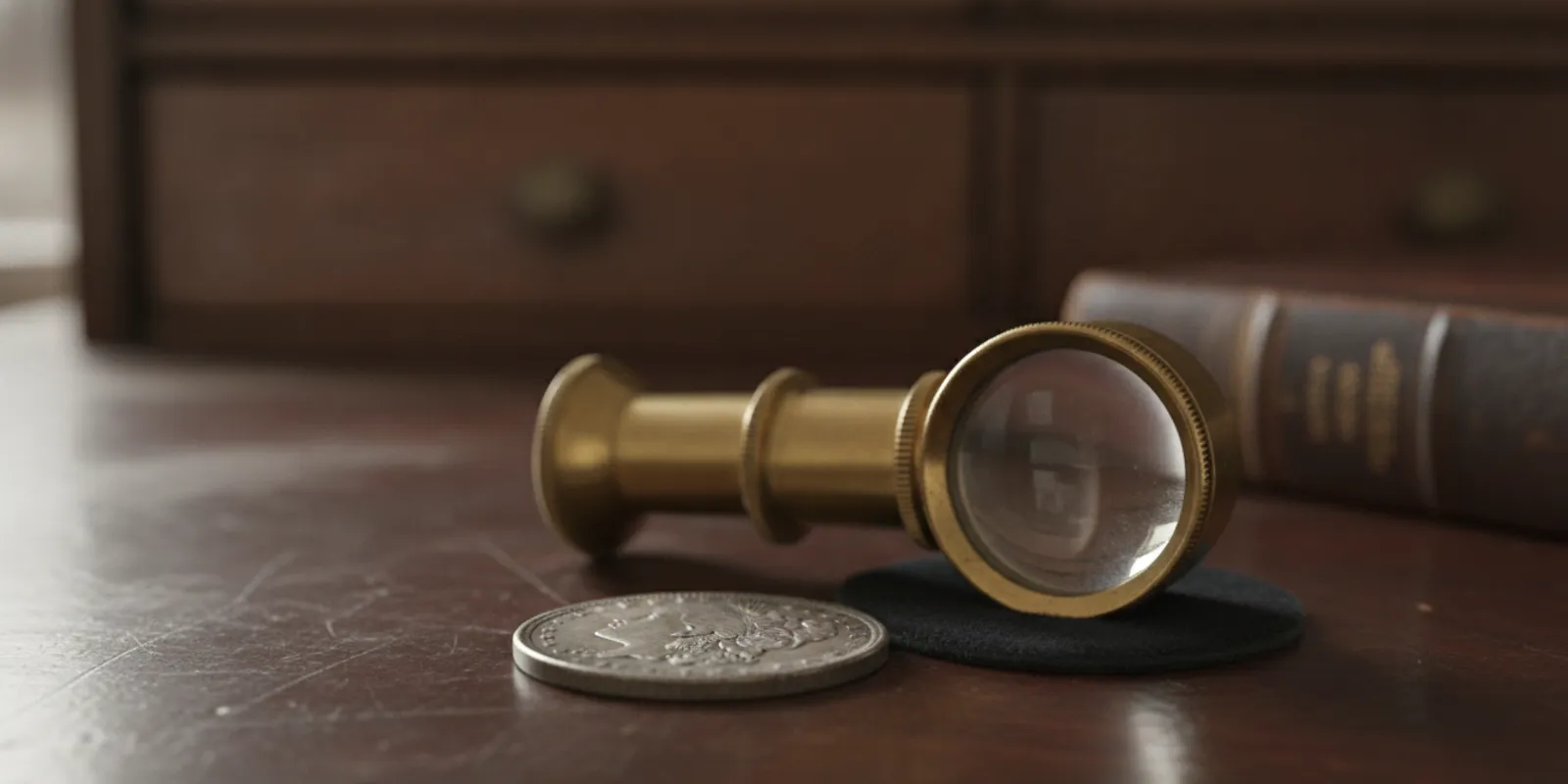
The 1885 Morgan silver dollar value depends first on its mint mark, then on condition, originality, certification, and current collector demand. The date alone is not enough to price one coin. An 1885-CC from Carson City is a different collecting proposition from a common 1885 Philadelphia issue, and even two coins from the same mint can differ substantially if one is worn, cleaned, or unusually well preserved. Start by identifying the mint mark and assessing the coin without cleaning it.
Call to discuss your Morgan dollar
What determines 1885 Morgan silver dollar value?
There is no single price that applies to every 1885 Morgan dollar. The market considers a combination of characteristics, and those characteristics need to be assessed together. A catalog price or online estimate can help frame a question, but it cannot substitute for examining the coin itself. The most useful starting point is to identify the exact issue, then determine what condition and market comparisons actually apply.
- Mint mark: It identifies where the coin was struck and helps determine its relative scarcity.
- Grade and eye appeal: Wear, remaining detail, luster, marks, and overall appearance all matter.
- Originality and surface condition: Cleaning, polishing, scratches, or other changes can affect collector interest.
- Certification and attribution: A recognized grading service's opinion may help buyers compare a coin, especially when its condition is significant.
- Provenance and demand: Documented history, collector interest in a particular issue, and current market conditions can influence what a buyer is willing to pay.
These factors explain why a circulated coin and a high-grade certified example should not be treated as interchangeable, even when both have the same date and mint mark. Values change with the coin's actual characteristics and market demand. Any estimate should be understood as an assessment at a particular time, not a guaranteed price. A useful estimate therefore states what coin is being assessed, its apparent condition, and whether the figure is an asking price, a recent sale comparison, or an offer.
It also helps to separate a coin's historic or collector interest from its likely transaction value. A date can be appealing because of its mint, design, or place in a collection, but the amount someone may pay still depends on condition, authenticity, surface quality, and the terms of the transaction. When you compare two figures, first check that they describe the same mint issue and similar condition. A broad range with no grade or sale context may be informative background, but it is not a valuation of the coin in your hand.
Which mint marks appear on 1885 Morgan dollars?
Four mints produced Morgan dollars dated 1885: Philadelphia, Carson City, New Orleans, and San Francisco. The mint mark is on the reverse, below the eagle and above the letters in “DOLLAR.” Philadelphia coins have no mint mark. The other three carry a small “CC,” “O,” or “S.” Use a magnifier and good light, but avoid rubbing the area to make the mark easier to see.
| Issue | Mint mark | Approximate mintage | What the mint mark suggests |
|---|---|---|---|
| 1885 Philadelphia | None | 17,787,000 | Large production; condition and surface quality are important to the assessment. |
| 1885-CC Carson City | CC | 228,000 | Much lower original mintage and strong collector interest; grade and originality still matter. |
| 1885-O New Orleans | O | 9,185,000 | Substantial production; the specific coin's condition can make a meaningful difference. |
| 1885-S San Francisco | S | 1,497,000 | Lower production than the Philadelphia and New Orleans issues; assess grade and eye appeal closely. |
Mintage is a historical production figure, not a count of how many examples survive today and not a price guide. Coins can be scarce in a particular grade even when the original mintage was relatively high. Conversely, a low-mintage coin may have more surviving examples than its production figure alone suggests. Use the mint mark to identify the variety, then evaluate the actual coin.
The table is a sorting tool, not a ranking of guaranteed values. For instance, the 1885-CC stands out by original mintage, but that fact alone cannot tell whether an individual piece is genuine, whether it has been altered, or how it compares with other examples in the same grade. A Philadelphia dollar with exceptional preservation may also interest a collector, despite its larger production total. Think of mintage as one part of the issue's background, then look at the coin and the market evidence.
For comparison, collectors can view other Morgan-dollar issues such as the site's 1883 Morgan dollar and 1891-O Morgan dollar. These examples show why date and mint mark should be recorded together when discussing a coin; they are not direct substitutes for an appraisal of an 1885 issue.
How do you identify the mint mark?
Hold the coin by its edge and look at the reverse. The small mint mark, if present, is located beneath the wreath near the bottom of the design, above the “D” and “O” in “DOLLAR.” An “O” can be mistaken for a blemish or a different mark when the coin is dirty or worn. On a Philadelphia issue, the space is blank. Check the position and shape rather than relying only on a quick impression of the letter.
- Use a bright, diffuse light and a magnifier. Keep the coin over a soft surface in case it slips.
- Look at the reverse below the wreath. Do not scrape, brush, or polish the area.
- Record exactly what you see: no mark, CC, O, or S. If the mark is unclear, note that rather than guessing.
- Photograph both sides straight-on, with the date and mint-mark area in focus. Avoid filters that change the coin's color or hide surface marks.
When you photograph the mint mark, try a couple of angles and lighting positions instead of pressing a phone or loupe against the coin. Diffuse light can make the recesses and raised details easier to distinguish, while harsh glare may hide the shape. Keep the images unedited apart from ordinary cropping. A clear record helps you ask a focused question and allows someone reviewing the images to see the same details you observed.
Do not try to remove toning or dirt to reveal a mint mark. Cleaning can leave hairlines or alter the original surface, and those changes may matter to collectors. If you are uncertain, let a knowledgeable coin professional examine it before taking further steps. A blank-looking space may simply be the Philadelphia issue, but a worn or poorly lit photograph is not enough to confirm that conclusion.
How does condition change the estimate?
Condition is often described by a grade, but a grade is more than a quick judgment of whether a coin looks shiny. A specialist considers wear on the highest design points, the amount of remaining detail, luster, contact marks, scratches, and the overall quality of the surfaces. The result is an informed opinion, not a promise that every buyer will value the coin identically.
On a Morgan dollar, compare the hair above Liberty's forehead and ear, the cotton leaves, and the eagle's breast and wings. These raised areas tend to show wear first. A circulated coin may have flattened detail and a smoother appearance in those places. An uncirculated coin may retain more original luster, though it can still have marks or other condition issues. Look at both sides, since an attractive obverse does not erase problems on the reverse.
Do not grade from one feature alone. Brightness does not prove that a coin is uncirculated: a cleaned coin can look bright, while an original coin may have natural toning. Nor does a single small mark tell the whole story. The location, size, and number of marks, plus the coin's remaining detail and eye appeal, all contribute to its assessment. Compare the way light moves across the fields and raised design, but treat that observation as a preliminary clue rather than a final grade.
Condition differences matter within each 1885 mint issue. A common date in a worn grade may be readily available, while a well-preserved example with attractive surfaces may be harder to find. For a lower-mintage issue such as the 1885-CC, scarcity does not remove the need to evaluate grade and originality. The exact coin, rather than a broad label like “rare,” is what a buyer examines.
A practical first pass is to separate what you can observe from what requires expertise. You can note obvious wear, scratches, rim damage, or a visible holder label. You should avoid declaring a precise grade from a phone photo or a single detail. Make a short description such as “1885-O, circulated, small marks near the cheek, not certified” and leave the formal grade open. That description is more useful than an unsupported grade guess because it distinguishes visible facts from an opinion.
When comparing examples, ask whether the photos show comparable lighting and angles. A sharp image may make marks easier to see than a soft image, but image quality itself does not change the coin. Auction descriptions, dealer listings, and grading labels can also use different levels of detail. A responsible comparison accounts for those limits rather than assuming that two coins with the same printed grade will look exactly alike.
Why do online price estimates differ?
Price references may use different grades, sale dates, and assumptions. One source may show a retail asking price, another a completed transaction, and another a broad range that groups coins with different certification or surface quality. The listed number may also be stale as market demand changes. Compare only references that describe a similar mint mark and condition, and check whether they refer to an asking price or a completed sale.
For example, an online Morgan dollar value guide presents date-by-date estimates. Such a guide can be a starting point for research, but it should not be treated as a guaranteed offer or a valuation of your particular coin. Confirm the coin's variety, grade, and surface condition before drawing a conclusion from a published range. When a source does not clearly state its date, grade assumptions, or sale basis, use it only as a prompt for further questions.
Certification can make comparisons easier by recording a third-party opinion about authenticity and grade. It does not eliminate differences in eye appeal, market timing, or buyer preferences. If a coin is already certified, note the grading service and the grade shown on its holder. Avoid paying for additional grading before considering the coin's likely interest and the total cost involved; a professional can help you decide whether further review makes sense.
Here is a disciplined way to use an online reference. First, record the date and mint mark from the coin rather than selecting a result based on the date alone. Second, filter the comparison to the closest grade and certification status you can reasonably support. Third, look for completed sales when available, and note the sale date because older results may describe a different market. Finally, compare several similar examples instead of anchoring on one unusually high or low result. This process produces context, not a guaranteed figure.
Also distinguish the amount a seller asks from the amount a buyer has paid. A listing can remain unsold, and its displayed figure may reflect the seller's expectations rather than an agreed transaction. A completed sale is stronger evidence of a transaction, but it still needs context: the coin's grade, holder, appearance, and sale timing matter. If you cannot tell whether a reference is an asking price or a completed result, do not treat the distinction as settled.
What should you do before seeking an appraisal?
A little preparation helps make an in-person assessment more useful. Keep the coin as you found it, gather any records that came with it, and make clear photographs. If you have several Morgan dollars, keep each coin separate and list the date and mint mark for each one. This reduces mix-ups and gives the reviewer a clear starting point.
- Do not clean or polish it. Leave the surfaces untouched, even if the coin appears dull or dirty.
- Note the visible details. Write down the date, mint mark, any holder or certification information, and anything unusual you have noticed.
- Bring relevant paperwork. Previous appraisals, receipts, inherited collection notes, or provenance documents may provide helpful context.
- Ask how the assessment is made. You can ask which factors influence the opinion and whether the assessment reflects a purchase offer, a retail reference, or another basis.
- Take time to understand your options. If you are considering a sale, make sure you understand the proposed terms before deciding.
For a collection, make a simple inventory before the appointment. Give each coin a line with its date, apparent mint mark, holder details if any, and a short note about visible damage or unusual features. Keep the coins in separate holders or envelopes and label those containers rather than writing on the coin. If a family member supplied background or purchase records, bring copies or notes so the coin's history can be discussed without relying on memory alone.
Good photographs can help with initial communication, but they do not replace hands-on review. Photograph the obverse, reverse, date, and mint-mark area in focus. Keep the coin level and use neutral light; avoid dramatic filters that add color or conceal marks. If you are contacting a buyer before visiting, ask what images or details are useful and whether the next step is an in-person examination. Do not send an item through the mail unless you have independently understood the procedure and terms.
Collectors researching other U.S. silver dollars may also find it useful to compare the 1888-S Morgan dollar or browse the site's silver dollar selection. These links offer context for exploring other issues; a listed coin or offer does not determine what an 1885 dollar is worth.
How should you think about selling an 1885 Morgan dollar?
If you are considering a sale, first make sure the coin has been identified correctly. Record the mint mark, note whether it is certified, and take clear photographs of both sides. Then ask a prospective buyer to explain how the date, grade, originality, and current demand factor into the assessment. If you have several coins, request that the assessment identify each coin individually rather than relying only on a single total.
Different selling routes can involve different timelines and terms. A direct dealer purchase can be straightforward, while an auction or consignment may involve additional steps, fees, and a wait for the sale to conclude. Compare the terms that apply to your situation, including what happens if you decide not to proceed. Do not assume that an online estimate or a past sale guarantees the proceeds for your coin.
When comparing routes, focus on the net amount and the process, not simply the highest number mentioned at the beginning. Ask whether any fees, shipping, insurance, or other costs apply, when payment would occur, and whether you can decline after the examination. An auction may expose a coin to a broader group of bidders, but it can take time and include charges or conditions. A direct transaction may have a different timetable and basis. The better fit depends on your priorities and the coin, so understand the terms before choosing.
Park Avenue Numismatics buys rare coins and precious metals from the public in Miami. If you want to discuss an 1885 Morgan dollar, you can call and ask about the process before deciding whether to bring it in. An assessment depends on the specific coin and current conditions; no date alone establishes a guaranteed purchase price.
Speak with Park Avenue Numismatics about your coin
Frequently asked questions about 1885 Morgan silver dollar value
Is every 1885 Morgan dollar valuable?
All Morgan dollars have collector interest, but value varies. The mint mark, grade, originality, certification, provenance, and current demand affect an individual coin's assessment. There is no single price that applies to every 1885 example.
Which 1885 mint mark is the hardest to find?
The 1885-CC had the lowest original mintage among the four 1885 issues listed above. Mintage alone does not establish present-day availability or price, so the coin's grade, originality, and market demand still need to be considered.
Where is the mint mark on an 1885 Morgan dollar?
Look on the reverse below the wreath, near the bottom of the design and above “DOLLAR.” Philadelphia dollars have no mint mark; Carson City, New Orleans, and San Francisco issues show CC, O, or S respectively.
Should I clean a Morgan dollar before having it examined?
No. Cleaning or polishing can change the coin's surfaces and may reduce collector interest. Leave it untouched and let a qualified professional examine it as it is.
Does a grading label determine exactly what my coin will sell for?
No. A holder records an opinion about the coin, but market demand, eye appeal, sale timing, and transaction terms still influence what a buyer may pay. Use the label as one useful comparison point, not a guaranteed sale amount.
Key takeaway
To understand 1885 Morgan silver dollar value, identify the mint mark first, then consider the coin's grade, surfaces, certification, provenance, and current demand. Use published estimates as research starting points, not promises, and have the specific coin examined before making a selling decision.





