
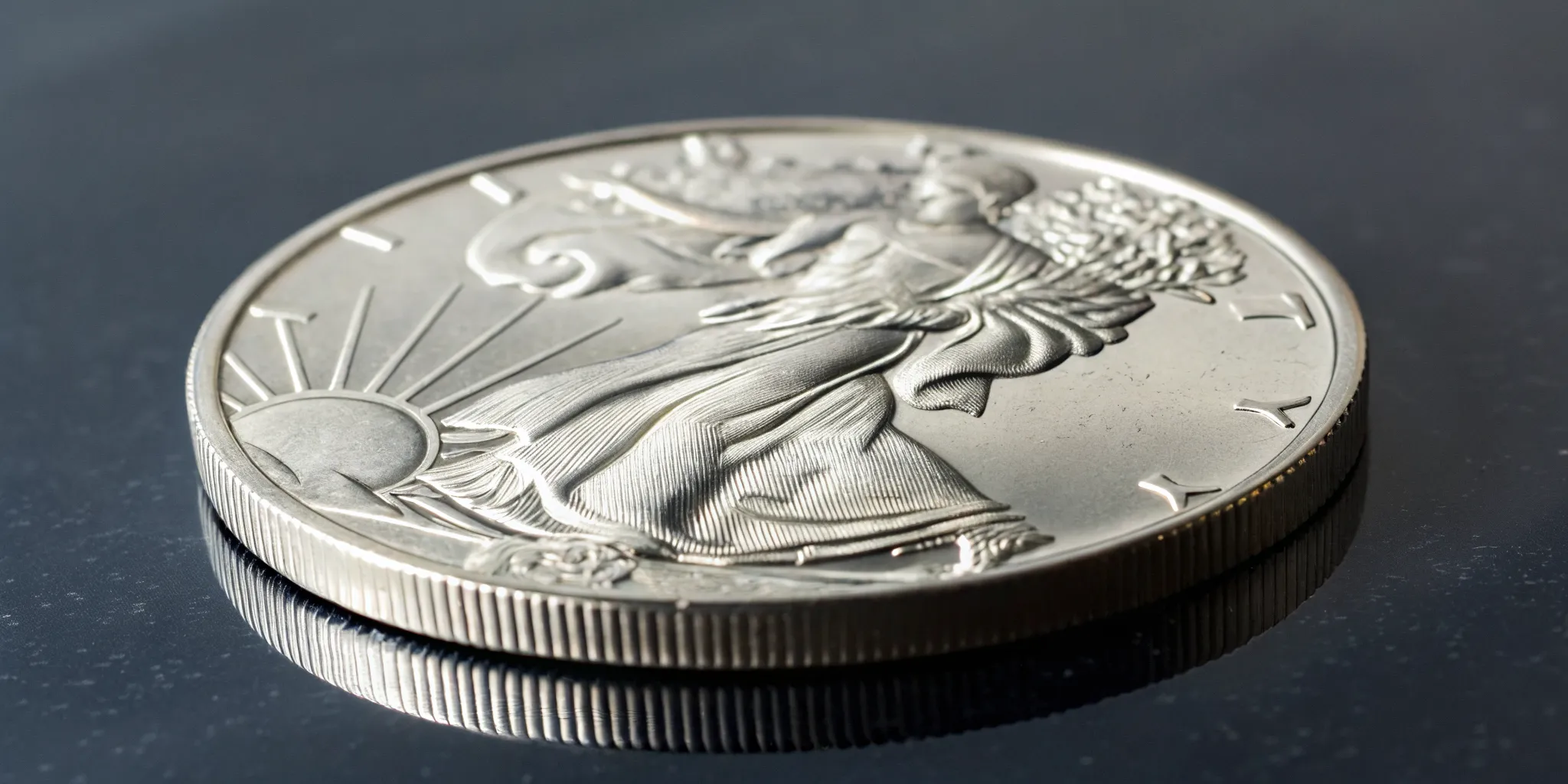
If you are researching 1 oz fine silver one dollar 2000 value, the coin in question is usually a 2000 American Silver Eagle. It carries a one-dollar legal tender denomination, but its market value is based mainly on its silver content, condition, certification, and collector demand. A typical ungraded example is usually considered a bullion coin first, while a scarce, attractive, or exceptionally certified example can have additional numismatic value.
Call 1-888-419-7136 to discuss a 2000 American Silver Eagle with a Park Avenue Numismatics specialist.
Key Takeaways About the 2000 Silver Eagle
- The 2000 American Silver Eagle contains one troy ounce of 99.9% pure silver and has a legal tender value of one dollar.
- Its bullion value changes with the silver spot price. The face value printed on the coin is not a useful estimate of its market value.
- Most raw examples trade primarily in relation to silver and the normal premium for a recognizable U.S. bullion coin.
- Proofs, unusual varieties, attractive toning, and coins certified in top grades can bring a larger premium, but premiums are not guaranteed.
- Before buying or selling, confirm whether you have a regular bullion strike, a proof, or a certified coin.
What Is the 2000 American Silver Eagle?
The American Silver Eagle is the United States Mint's official one-ounce silver bullion coin. The U.S. Mint identifies the series as containing a minimum of one troy ounce of 99.9% pure silver, with a weight of 31.103 grams, a diameter of 40.60 millimeters, a reeded edge, and a one-dollar face value. The official specifications are available in the U.S. Mint's American Eagle Silver Bullion reference.
The 2000 issue uses Adolph A. Weinman's Walking Liberty design on the obverse. The reverse carries the heraldic eagle design used on American Silver Eagles before the 2021 reverse redesign. The regular 2000 bullion strike generally has no mint mark, which is normal for an American Eagle bullion coin and is not a defect.
The phrase "fine silver one dollar" describes the inscriptions and specifications on the coin, not a circulated one-dollar piece made from ordinary silver. The coin is much larger and heavier than a modern one-dollar coin, and its value is tied to the precious metal market and the collector market.
2000 Silver Eagle Mintage and Issue Types
Mintage is one part of the value discussion, but it should not be confused with rarity. PCGS CoinFacts lists a mintage of 9,239,132 for the regular 2000 $1 Silver Eagle. That is a substantial production figure, so the date is generally available in raw condition. You can review the date's specifications and population information in the PCGS CoinFacts record for the 2000 Silver Eagle.
Collectors may also encounter a 2000 proof Silver Eagle. A proof is made with specially prepared dies and planchets, producing sharper design details and a more reflective field. Proofs are collectible issues and should not be valued by the same standard as a common bullion strike. Packaging, certification, haze, spots, hairlines, and the presence of the original government presentation materials can all affect the market.
When someone asks about the 2000 date, start by identifying the issue. A regular bullion strike, a proof, and a professionally certified coin may share the same year but have different buyers and different pricing behavior.
How to Calculate 1 oz Fine Silver One Dollar 2000 Value
The simplest starting point is the coin's silver value. Because the coin contains one troy ounce of silver, its approximate melt value can be expressed as:
Silver melt value = current silver spot price x 1.000 troy ounce x the coin's fineness.
For a 2000 American Silver Eagle, the fineness is 99.9%. The spot price changes throughout the trading day, so a melt estimate is a snapshot rather than a permanent price. A dealer's buy offer may also reflect wholesale spreads, inventory needs, authentication, shipping, payment method, and the cost of reselling the coin.
The U.S. Mint notes that bullion coin prices are based on the market price of silver, which fluctuates daily. That is why a value answer without a date and a source can become inaccurate quickly. If you see a dollar figure in an old listing, auction result, or price guide, treat it as historical evidence, not as a guaranteed current offer.
Why the one-dollar face value is not the market value
The denomination can confuse new collectors because the coin says one dollar even when its silver content is worth more than that amount. The denomination is a legal tender feature established for the American Eagle program. It does not cap the coin's collectible or bullion market value. Similar patterns appear across many precious-metal coins: the face value provides a denomination, while the metal and collector markets determine what buyers are willing to pay.
It is also important to distinguish a value estimate from a dealer offer. An estimate describes a reasonable range based on available evidence. An offer reflects a specific buyer, the buyer's costs, inventory position, and the terms of the transaction. Those numbers may not match, and neither one is permanent. Asking how the estimate was formed is more useful than relying on a single figure copied from an old listing.
What Gives a 2000 Silver Eagle Numismatic Value?
Numismatic value is the portion of a coin's market value that comes from collector interest beyond the underlying metal. For a 2000 Silver Eagle, the main factors include:
- Issue type: A proof and a regular bullion strike have different production methods and collector markets.
- Condition: Contact marks, milk spots, haze, scratches, rim damage, and cleaning can reduce desirability.
- Certification: A PCGS or NGC holder can verify the coin's identity and grade, but the fee and premium are not automatically recovered.
- Grade: Higher grades can be more desirable, particularly when the population at that grade is limited.
- Eye appeal: Attractive surfaces and strong luster can matter when two coins have similar technical grades.
- Provenance and packaging: Original sets, documented ownership, and special labels may appeal to particular collectors.
- Market demand: Buyer interest, current silver prices, and the availability of comparable coins can move prices in either direction.
These factors interact. A raw coin with a small premium over silver may be the right choice for a bullion buyer, while a certified top-grade coin may be evaluated as a collectible. Neither category guarantees a profit or a particular resale price.
Raw, PCGS MS69, and NGC MS70: Why Grade Matters
A raw coin has not been encapsulated and graded by a third-party service. It may be attractive, but its final grade is uncertain until an expert examines it. Handling a modern silver coin by the faces can add hairlines or fingerprints, so use the edge when examining it and avoid cleaning or polishing. Cleaning can permanently impair collector value.
MS means Mint State, a grading category used for coins that show no evidence of circulation. MS69 generally indicates a nearly perfect coin with a very small imperfection under close examination. MS70 is the numerical top of the Mint State scale, but not every coin described as flawless by eye will qualify for that grade.
PCGS and NGC certification can reduce uncertainty about authenticity and grade. It does not make every coin rare, and a holder does not eliminate market risk. Population reports, recent auction results, the grading service, label details, and the coin's appearance should all be considered together. For NGC's general grading framework, see the NGC grading scale reference.
Be cautious when comparing MS69 and MS70 prices. A dramatic result for one exceptional coin may reflect a special label, pedigree, registry competition, or a strong auction environment. It should not be used as a guaranteed estimate for every 2000 Silver Eagle.
2000 Silver Eagle Bullion Value vs. Collector Value
| Coin situation. | Main value driver. | What to check. |
|---|---|---|
| Common raw bullion strike. | Silver spot price plus a normal bullion premium. | Authenticity, weight, diameter, surfaces, and current dealer demand. |
| Proof issue. | Silver value plus proof and set-collector demand. | Proof characteristics, haze, packaging, certification, and issue identification. |
| Certified MS69. | Silver value plus a condition premium. | Service, label, population, eye appeal, and comparable sales. |
| Certified MS70. | Silver value plus demand for the top grade. | Certification number, population data, label details, and recent sales. |
This comparison is a framework, not a price chart. The same grade and date can bring different results at different times. Current market demand, the silver spot price, and the exact coin in front of you all matter.
How Should You Buy or Sell a 2000 American Silver Eagle?
When buying, ask whether the coin is a regular bullion strike or a proof, whether it is raw or certified, and whether the seller provides a clear return policy. Compare the total cost, not just the advertised price. A coin with a higher premium may be justified by certification or condition, but only if those features are meaningful to your collecting goals.
When selling, gather the coin, its holder or original packaging, and any purchase records. Do not clean the coin before an evaluation. A specialist can separate its metal value from any collectible premium and explain how condition, authenticity, and current demand affect an offer. Comparing more than one qualified buyer can also help you understand the range of the market.
If you own several silver coins, organize them by date, issue type, and certification before requesting an evaluation. This makes it easier to identify proofs, common bullion pieces, and coins that may deserve closer numismatic review. For broader inventory context, explore Park Avenue Numismatics' silver bullion selection or rare coin inventory.
A simple evaluation checklist
- Confirm that the coin is an American Silver Eagle and not a different one-ounce silver issue.
- Weigh and measure it without cleaning or altering the surfaces.
- Identify whether it is a regular bullion strike, a proof, or a certified example.
- Check current silver spot pricing and compare the coin with recent, similar sales.
- Ask a qualified dealer to explain any premium above the metal value before accepting an offer.
These steps help separate the facts that can be verified from estimates that depend on the market. They also help prevent a common mistake: treating a high auction result for a certified outlier as a normal value for every raw coin from the same year.
Call 1-888-419-7136 or visit the Park Avenue Numismatics contact page to ask about buying or selling a 2000 American Silver Eagle.
Frequently Asked Questions
Is a 2000 American Silver Eagle worth more than one dollar?
Yes. Its one-dollar denomination is legal tender, but the coin's market value is usually based on its one troy ounce of silver and any collector premium. The exact amount depends on silver prices, condition, issue type, and demand.
Is the 2000 Silver Eagle rare?
The regular bullion issue had a large production run, so a common raw example is not automatically rare. Scarcity can be more relevant for specific proof or certified high-grade populations, unusual varieties, and coins with exceptional eye appeal.
Should I have a raw 2000 Silver Eagle graded?
It depends on the coin's condition, likely grade, value, and the cost of certification. Grading is more likely to make sense when the coin appears exceptionally clean or when a higher grade would materially change its collector market. A common bullion coin may not justify the expense.
Does a 2000 Silver Eagle have a mint mark?
The regular American Silver Eagle bullion issue generally does not have a mint mark. Proof and other collector versions can have different identifying features, so the issue should be confirmed before drawing conclusions from the absence or presence of a mark.
Can you guarantee what my 2000 Silver Eagle is worth?
No. A responsible estimate must account for the exact issue, authenticity, silver spot price, grade, certification, provenance, and current buyer demand. An in-person or specialist review is the best way to narrow the range without making a guaranteed valuation claim.
Sources and Further Reading
For specifications, consult the U.S. Mint American Eagle Silver Bullion page. For the regular 2000 issue's reported mintage and certification research, see PCGS CoinFacts. Market values remain variable and should be checked against current, comparable sales rather than treated as permanent figures.





