
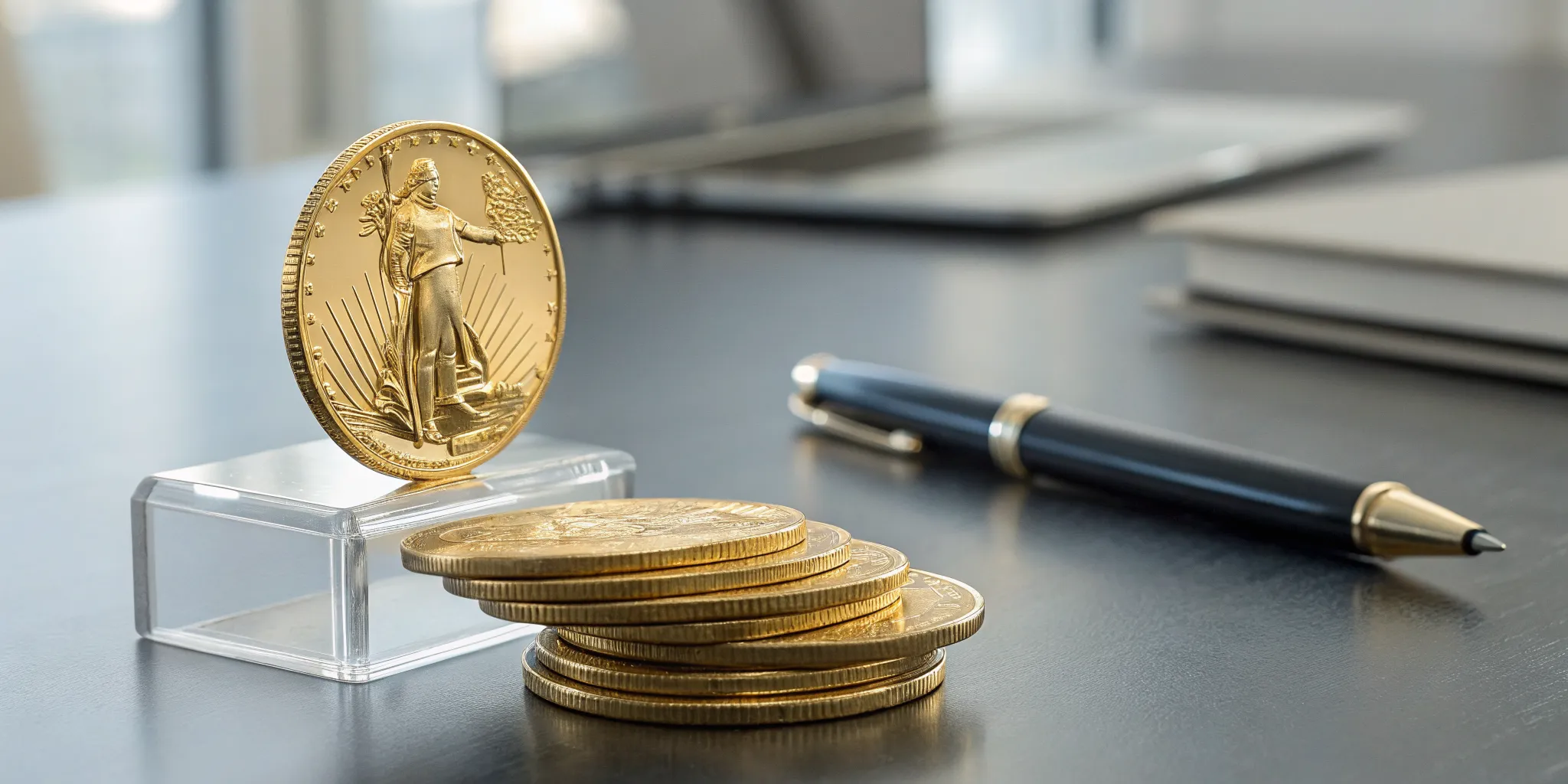
 Before you invest in a Gold Eagle, it’s important to ask yourself one question: am I a collector or an investor? Your answer will directly influence which type of coin offers you the best value and what you can expect to pay. The standard bullion version is priced for its gold content, while special Proof and Burnished editions carry higher premiums for their rarity and artistry. Understanding the difference is crucial for making a smart acquisition that aligns with your financial goals. This article will explain how these distinctions affect the 1 oz American Gold Eagle price and help you choose the right coin for your portfolio.
Key Takeaways
- A Gold Eagle's Price Has Two Parts: The final cost is the current spot price of gold plus a dealer premium. This premium covers minting and business costs and changes based on market demand, so it's important to understand both components before you buy.
- Choose a Coin That Fits Your Strategy: For pure gold investment, the standard Bullion coin offers the best value with the lowest premium. If you're a collector interested in rarity and artistry, Proof and Burnished coins have numismatic potential beyond their metal content.
- Vet Your Seller to Protect Your Investment: The most critical step is buying from a reputable dealer to guarantee authenticity and fair pricing. A trusted source eliminates the risk of counterfeits and provides peace of mind for your purchase.
What Determines a Gold Eagle's Price?
Figuring out the price of a 1 oz American Gold Eagle isn't as simple as looking up one number. The final cost you pay is a blend of several key factors, each playing a distinct role. The foundation is always the raw value of the gold itself, known as the spot price. But that’s just the starting point. From there, you have to account for additional costs, called premiums, which cover everything from manufacturing to the dealer's business operations.
On top of that, the simple economic principle of supply and demand has a major say. When more people want to buy Gold Eagles than are available, prices naturally rise. Understanding these three components, the spot price, dealer premiums, and market dynamics, is the first step to making a smart purchase. It helps you see exactly what you're paying for and why the price can shift from one day to the next. Let's break down each of these elements so you can feel confident in what you're buying.
Starting with the Spot Price of Gold
The most significant factor in a Gold Eagle's price is the spot price of gold. Think of the spot price as the live market rate for one troy ounce of pure gold before it’s been minted into a coin or shaped into a bar. This price fluctuates throughout the day based on trading in global markets. It’s the baseline value that all gold bullion products are built upon. So, when you hear that gold is trading at a certain price per ounce, that’s the spot price. The value of the gold contained within your 1 oz Gold Eagle will move in lockstep with this figure.
Understanding Dealer Premiums
A Gold Eagle will always cost more than the spot price of gold, and that extra amount is called the premium. This isn't just a random markup; the premium covers several real-world costs. It includes the expenses the U.S. Mint incurs for fabricating and designing the coin, the costs of securely distributing it, and the dealer's overhead for running their business. For example, if the spot price of gold is $2,300, a 1 oz Gold Eagle might sell for $2,450, carrying a premium of $150. American Gold Eagles are highly trusted and in-demand worldwide, so their premiums are often slightly higher than those for other government-minted coins.
How Supply and Demand Affect Cost
Premiums aren't set in stone. They can rise and fall based on supply and demand. When economic uncertainty pushes more investors to buy physical gold, demand for Gold Eagles can surge. If the U.S. Mint can't produce coins fast enough to meet this new demand, dealer inventories get tight. This scarcity causes premiums to increase. We often see this happen during periods of high inflation or geopolitical tension. Conversely, when the market cools and demand softens, premiums may shrink. This dynamic is why you might see prices for rare coins for sale change even when the spot price of gold remains relatively stable.
How Much Does a 1 oz Gold Eagle Cost?
When you decide to buy a 1 oz American Gold Eagle, you’ll quickly notice that there isn’t one single price. The cost is influenced by several factors, from the live price of gold to the specific coin you’re interested in. Understanding these elements will help you make a confident and informed purchase. Let’s break down what you can expect to pay and why.
Typical Price Ranges and Premiums
The price of a 1 oz American Gold Eagle is based on two main components: the current spot price of gold and a dealer's premium. The spot price is the live market price for one ounce of gold, and it changes constantly throughout the day. The premium is the amount charged over the spot price, which covers the costs of minting, distribution, and the dealer's business operations. Generally, you can expect the price for a 1 oz Gold Eagle coin to be a certain percentage above the gold spot price. This premium can vary between dealers and depends on market demand, so it's always a good idea to check current listings for the most accurate pricing.
Face Value vs. Market Value: What's the Difference?
When you look at a 1 oz American Gold Eagle, you'll see "$50" stamped on it. This is its face value, which means it's technically legal tender in the United States. However, this number is purely symbolic. You should never spend it for $50. The coin's real value, its market value, is based on its one troy ounce of pure gold content. With gold trading for thousands of dollars per ounce, the intrinsic value of the metal far outweighs its face value. You are purchasing the coin for its precious metal content and its status as a world-renowned bullion product, not as a piece of currency to spend. Think of the face value as a government guarantee of its weight and purity.
Why Prices Vary by Coin Type and Year
Not all 1 oz Gold Eagles are created equal, and their prices reflect that. One of the biggest factors is the year of mintage. Certain years had lower production numbers or are in higher demand among collectors, which adds a numismatic premium to their price. If you're looking for a coin from a specific year, you'll likely pay a bit more. The coin's condition and finish also play a major role. A standard Brilliant Uncirculated (BU) coin will cost less than a special collector's edition, like a Proof coin, which has a beautiful mirror-like finish and is produced in smaller quantities. As one of the world's most popular gold bullion coins, the American Gold Eagle's premium can also be slightly higher than other sovereign coins due to its strong global demand and liquidity.
What Makes Gold Eagle Prices Change?
The price of a 1 oz American Gold Eagle isn’t set in stone. It’s a dynamic figure that shifts with the currents of the global economy, investor sentiment, and the simple mechanics of supply and demand. Understanding these key drivers is crucial for making informed buying and selling decisions. Several major factors work together to determine the daily market value of these iconic coins, from broad economic indicators to the specific costs of pulling gold from the earth and striking it into a coin. Let's look at the three biggest influences on Gold Eagle pricing.
Economic Trends and Safe-Haven Appeal
Gold has long been considered a “safe-haven” asset. This means that during times of economic uncertainty, stock market volatility, or geopolitical instability, investors often move their money into gold to protect their wealth. This increased demand naturally pushes the price of gold bullion higher. For example, when economic forecasts are shaky, you’ll often see the spot price of gold climb as more people seek its stability. The American Gold Eagle, backed by the U.S. government, is a particularly popular choice for investors looking for a secure asset, causing its price to reflect these broader market anxieties and trends.
The Impact of Inflation and Currency Value
Inflation and the strength of the U.S. dollar have a direct relationship with gold prices. When inflation rises, the purchasing power of the dollar decreases. Because gold is a tangible asset with intrinsic value, it tends to hold its value better than paper currency during these periods. As a result, many people buy gold to hedge against inflation, which drives up demand and prices. Similarly, a weaker dollar can make gold more affordable for foreign investors, also increasing demand. This is why you'll often see the price of Gold Eagles rise when inflation reports are high or the dollar shows signs of weakening.
Central Bank Actions and Production Costs
The world’s central banks are major players in the gold market. When they buy gold to hold in their reserves, it reduces the overall supply available to the public, which can lead to higher prices. Their monetary policies, especially decisions about interest rates, also play a role. Additionally, the fundamental costs of producing a Gold Eagle affect its final price. This includes everything from mining and refining the gold to minting and distributing the coins. If any of these production costs increase, that expense is typically passed on to the buyer, influencing the coin's premium over the spot price of gold.
Which 1 oz Gold Eagle Offers the Best Value?
Deciding which 1 oz Gold Eagle offers the best value really comes down to your personal goals. Are you primarily an investor looking to add physical gold to your portfolio, or are you a collector who appreciates rarity and artistry? The American Gold Eagle series was designed to meet both needs, offering three distinct finishes that cater to different buyers. Each type carries its own pricing structure and potential for appreciation.
The three main versions are Bullion, Proof, and Burnished. Bullion coins are the workhorses of the investment world, with their value tied almost directly to the fluctuating spot price of gold. Proof and Burnished coins, on the other hand, are crafted with collectors in mind. They involve special minting processes, have lower production numbers, and are treated as numismatic pieces. Understanding the purpose behind each coin is the first step in determining which one represents the best value for your collection or investment strategy. By aligning your purchase with your objectives, you can ensure you’re not just buying gold, but making a smart acquisition that fits your vision.
Bullion, Proof, or Burnished: Which Is for You?
Let's break down the three finishes. The Bullion Gold Eagle is the standard investment-grade coin. It features a "Brilliant Uncirculated" finish and is produced in large quantities to satisfy investor demand. If your goal is to own gold for its intrinsic value and as a hedge, this is your coin. Proof Gold Eagles are the showpieces. They are struck multiple times to create a sharp, detailed design with a frosted finish against a mirror-like background. Made for collectors, they come in special packaging and have much lower mintages. Finally, Burnished Gold Eagles offer a unique, soft matte-like finish. They are also aimed at collectors and can be a great modern addition to any collection.
Choosing Between Investment and Collector Coins
Your choice between these coins hinges on whether you're investing or collecting. If your main objective is to add the weight of gold to your portfolio, investment-grade gold bullion is the most direct and cost-effective route. The premiums are lower, meaning more of your money goes toward the metal itself. However, if you are drawn to the artistry, history, and potential for numismatic appreciation, then collector coins are a better fit. Proof and Burnished Gold Eagles are beautiful rare coins whose value is influenced by their condition, mintage, and collector demand, giving them the potential to appreciate far beyond their base metal value.
Comparing Premiums and Resale Value
Premiums and resale potential differ significantly across the three types. Bullion Gold Eagles have the lowest premium over the spot price of gold, making them an accessible entry point for investors. Their resale value will closely follow the live market price of gold. In contrast, Proof and Burnished coins command much higher premiums from the start. This is due to their specialized minting process, superior finish, and limited availability. When it comes time to sell, their value isn't just about gold content. It’s also determined by collector demand, the coin’s certified grade, and its rarity, which can lead to a substantial return for a sought-after piece.
Where Is the Best Place to Buy Gold Eagles?
Finding the right place to purchase your 1 oz Gold Eagles is just as important as deciding to buy them in the first place. The seller you choose impacts the price you pay, the authenticity of your coin, and your overall confidence in the investment. While you have several options, from online dealers to local coin shops and even private sellers, they aren't all created equal. The key is to work with a source that is transparent, knowledgeable, and has a proven track record.
Making an informed decision means understanding the pros and cons of different sellers and knowing what to look for in a trustworthy partner. A reputable dealer not only offers fair pricing but also provides peace of mind, guaranteeing that the Gold Eagle you receive is genuine. Let’s walk through what to consider, from the benefits of working with an established dealer to the price differences you might find between online and local sellers, and finally, how to verify you’re getting the real deal.
Why Choose a Reputable Dealer?
When you’re investing in gold, trust is everything. The American Gold Eagle is one of the most counterfeited gold coins in the world, and the single most effective way to avoid fakes is to purchase from an established, reputable dealer. A trustworthy seller provides a crucial layer of security. Look for dealers with a long history in the industry, positive customer reviews, and proper accreditation, like a high rating from the Better Business Bureau. These are all signs of a business that values its reputation and its clients. A great dealer will also offer transparent pricing, so you know exactly what you’re paying for without hidden fees. Our team at Park Avenue Numismatics has over 35 years of experience helping investors and collectors.
Online vs. Local Shops: A Price Comparison
You might wonder whether it’s better to buy from a local shop or an online dealer. While a local shop lets you see the coin in person, you often pay a higher premium for that convenience. Online dealers typically have lower overhead costs and can operate on a larger scale, which allows them to offer more competitive pricing. In fact, on a single 1 oz American Gold Eagle, the price difference between a competitive online dealer and an average local shop can be anywhere from $60 to $100. By choosing a well-regarded online dealer, you can often secure the same high-quality gold bullion for a much better price, maximizing your investment from day one.
How to Verify Your Dealer and Coin
Verifying your purchase involves two steps: confirming your dealer’s credibility and inspecting the coin itself. Before buying, do a quick search on the dealer. Do they have a professional website and a physical address? Are they accredited? Once you have the coin, you can perform a basic inspection. Familiarize yourself with the coin's anatomy, including the obverse ("heads") side featuring Lady Liberty and the reverse ("tails") side with the eagle design. Check the details and the finish. Any reputable dealer will guarantee the authenticity of their rare coins for sale, but knowing these details helps you become a more confident buyer. Working with an expert removes the guesswork and ensures your investment is secure.
How to Evaluate a Coin's Condition
When you're ready to buy a 1 oz Gold Eagle, its condition is one of the most important factors influencing its price, especially for collector pieces. While bullion coins are valued primarily for their gold content, the grade of a numismatic or proof coin can dramatically change its market value. Think of it like a quality check. A coin with sharp details and a clean surface will always be more desirable than one that's scratched or worn.
Evaluating a coin isn't just about spotting flaws; it's about verifying its authenticity and understanding its history. You don't need to be a professional grader to perform a basic assessment. By paying close attention to a few key areas, you can get a much better sense of what you're buying. I always recommend a three-step process: look at the surface quality, check the physical specifications, and inspect the fine details like mint marks. This approach helps you confirm you're getting a genuine coin and paying a fair price for its condition.
Assessing Surface Quality and Wear
The first thing to do is simply look at the coin. Examine both the obverse (the "heads" side with Lady Liberty) and the reverse (the "tails" side with the eagle). You're looking for the overall quality of the coin's finish and any signs of wear. Are there noticeable scratches, dings, or rim damage? Does the coin still have its original luster, or does it look dull or like it's been harshly cleaned? Cleaning can leave fine scratches and actually lower a coin's value. The goal is to find rare coins for sale that are as close to their original mint state as possible, with crisp details and minimal imperfections.
Verifying Weight and Dimensions
This step is your best defense against counterfeits. A genuine 1 oz American Gold Eagle has precise specifications set by the U.S. Mint. It should weigh 33.931 grams (or 1.0909 troy ounces) and have a diameter of 32.70 mm. A coin that perfectly matches these measurements is almost certainly authentic. I suggest using a calibrated digital scale and a pair of calipers to check for yourself. If a seller is hesitant to let you verify these specs, that's a major red flag. Any reputable dealer will have no problem with you confirming the authenticity of their gold bullion.
Inspecting Mint Marks and Design Details
Finally, get a closer look with a magnifying glass or a jeweler's loupe. This is where you can appreciate the artistry and confirm key details. Check for the mint mark, which is a small letter indicating where the coin was produced (for example, "W" for the West Point Mint). On proof and burnished Gold Eagles, this is a crucial detail. You should also examine the fine lines in Lady Liberty's hair and the feathers on the eagle. These intricate designs are difficult to replicate, and any fuzziness or lack of sharpness could point to a fake. Our team has over 35 years of experience, and we know that paying attention to these small details is what separates a good investment from a bad one.
Common Gold Eagle Pricing Myths to Avoid
When you’re ready to invest in Gold Eagles, it helps to have your facts straight. The world of precious metals has its share of myths, and believing them can lead to confusion and missed opportunities. Let’s clear up a few common misconceptions about Gold Eagle pricing so you can approach your purchase with confidence and a clear understanding of the market. By knowing what to expect, you can better evaluate offers and make choices that align perfectly with your investment goals.
The Myth of Paying Only the Spot Price
One of the most common beliefs is that you can buy a 1 oz American Gold Eagle for the spot price of gold. While the spot price is the foundation of the coin's value, it's not the final sale price. Think of the spot price as the raw material cost. The final price includes a premium, which covers the costs of minting, distribution, and the dealer's overhead. Because the American Gold Eagle is so widely recognized and in-demand, its premium reflects its status as a highly liquid and trusted form of gold bullion. You are paying for a finished, government-backed product, not just an ounce of raw gold.
Why Premiums Aren't Fixed
Another myth is that the premium on a Gold Eagle is a fixed, unchanging percentage. In reality, premiums are dynamic and can shift based on market conditions. A premium is simply the amount you pay over the gold spot price, and it fluctuates with supply and demand. When investor demand surges, dealer inventories can tighten up. Mints may not be able to increase production quickly enough to meet this new demand, which often causes premiums on popular rare coins for sale to rise. Conversely, during periods of lower demand, premiums may shrink. This flexibility is a normal part of the precious metals market.
The Truth About Smaller Coin Costs
Many investors assume that buying smaller, fractional Gold Eagles (like the 1/10 oz or 1/4 oz coins) is a more budget-friendly way to get started. While the upfront cost is lower, these smaller coins almost always carry a higher premium relative to their gold content. The cost to manufacture and distribute a 1/10 oz coin is not much different from that of a 1 oz coin. Because those fixed costs are spread over a smaller amount of gold, the percentage-based premium is higher. For this reason, the 1 oz Gold Eagle generally offers the best value when you compare its price to the actual amount of gold you receive.
What to Know Before You Buy
Once you've decided the 1 oz American Gold Eagle is right for you, there are a few final details to sort out before you buy. Thinking through these steps ahead of time ensures a smooth transaction and helps you protect your investment for the long haul. From figuring out where you'll keep your coins to understanding the fine print on taxes and payment, a little planning goes a long way. Here’s what you need to know.
Planning for Storage and Insurance
Your investment isn't complete until your gold is stored securely. Where will you keep your American Gold Eagles? For smaller quantities, a high-quality home safe might work, but for larger investments, you may want to consider a bank's safe deposit box or a specialized third-party depository. If you purchase 20 coins at once, they often arrive in sturdy tubes from the U.S. Mint, which are perfect for stacking and organizing. Don't forget about insurance. Your standard homeowner's policy likely has limits on precious metals coverage, so you may need to add a rider or get a separate policy to fully protect your gold bullion investment.
Understanding Tax Rules and Payment Options
Before you buy, it’s wise to get familiar with the tax rules. The sale of precious metals can have tax implications, and these can vary by state. If you're adding Gold Eagles to a self-directed IRA, it's especially important to speak with a financial advisor who understands the requirements. We offer a Gold IRA Starter Kit to help you get started. You should also pay attention to payment methods, as they can affect your final cost. Paying by bank wire or check often secures a lower price than using a credit card, which carries processing fees that dealers typically pass on to the buyer. Always check the price differences before you commit.
How to Time Your Purchase
Everyone wants to buy low, but timing the gold market perfectly is nearly impossible. Gold Eagle prices are based on the fluctuating spot price of gold plus a dealer premium. This premium can also change based on market conditions. For example, during periods of high demand and low supply, like the early days of the COVID-19 pandemic, premiums on popular coins temporarily soared. Instead of trying to catch the absolute bottom of the market, focus on your long-term goals. A better strategy is to stay informed about economic trends and buy from a trusted dealer when you're ready to invest. You can always view our current inventory of rare coins for sale to see what's available.
Related Articles
- 1 oz American Gold Eagle (Random Year)
- American Gold Eagle
- 1/2 oz American Gold Eagle (Random Year)
- 1/10 oz American Gold Eagle (Random Year)
- Gold Coins for Sale | Golden Eagle Coins
Frequently Asked Questions
Why can't I just buy a Gold Eagle for the spot price of gold? The spot price represents the value of raw, unrefined gold on the open market. An American Gold Eagle is a finished product, meticulously designed and struck by the U.S. Mint. The price you pay includes a premium over the spot price to cover the costs of fabrication, distribution, and the dealer's business operations. You are purchasing a government-guaranteed coin, not just a lump of metal.
Is a bullion or a proof Gold Eagle a better investment? This really depends on your goals. If you want to own gold for its intrinsic value and as a direct play on the precious metals market, the standard bullion coin is your most cost-effective choice. If you are a collector who appreciates artistry, rarity, and the potential for a coin's value to grow beyond its gold content, then a proof Gold Eagle, with its beautiful finish and lower mintage, is the better fit.
How can I be sure the Gold Eagle I'm buying is authentic? The single most important step is to purchase from a well-established dealer with a long history and a solid reputation. Beyond that, you can familiarize yourself with the coin's official specifications. A genuine 1 oz Gold Eagle has a precise weight and diameter, and verifying these measurements with a calibrated scale is a reliable way to spot a counterfeit.
Does the year a Gold Eagle was minted affect its price? For a standard bullion Gold Eagle, the year of mintage typically has little to no impact on its price, which is tied almost entirely to the current spot price of gold. For collector coins like Proofs or Burnished Gold Eagles, however, the year can be very important. Certain years with lower production numbers are rarer and more sought-after by collectors, which can add a significant numismatic premium to their value.
Why do smaller Gold Eagles, like the 1/10 oz coin, cost more per ounce? The costs associated with minting and distributing a coin are largely the same regardless of its size. Because those fixed costs are spread over a much smaller amount of gold in a fractional coin, the premium you pay relative to the gold content is significantly higher. For this reason, the 1 oz Gold Eagle almost always offers the best value in terms of getting the most gold for your money.





